
Home Inspection Before the Mortgage Process: What Buyers Need To Know Before Closing
This guide covers home inspection before proceeding with the mortgage process. A home inspection is an inspection of a home purchased by home buyers where they hire an independent home inspector to go over the subject property with a fine tooth comb.
Learn why a home inspection matters before closing, how it differs from an appraisal, and what buyers should check before the mortgage process ends.
Lenders do not require home inspections. It is voluntary for the buyers to have an inspection done. However, it is highly recommended. Home inspections are done before the home appraisal. This article will discuss the importance of property inspection before proceeding with the mortgage process.
Home Inspection Before the Mortgage Process: Why It Matters
A home inspection is one of the most important steps a homebuyer can take before finishing the mortgage process. Many buyers focus on credit scores, down payment, pre-approval, interest rates, and closing costs. Those items matter, but the condition of the property matters too.
A mortgage approval tells you whether you may qualify for financing. A home inspection helps you understand what you are buying.
This is important because a lender’s approval does not mean the home is perfect. A lender is mainly concerned with loan eligibility, property value, collateral, and whether the property meets the basic requirements for the loan program. A home inspector looks deeper into the condition of the house, including items such as the roof, foundation, plumbing, electrical system, HVAC system, windows, drainage, appliances, safety issues, and possible defects. The Consumer Financial Protection Bureau recommends scheduling an independent home inspection as soon as possible after choosing a home so buyers have enough time to identify and address major problems.
What Is a Home Inspection?
A home inspection is a professional review of a property’s visible and accessible condition. The inspector checks the home’s major systems and components and prepares a written report for the buyer. A home inspection is not a mortgage approval. It is not a home appraisal. It is not a guarantee that every hidden problem will be discovered. However, it can give buyers valuable information before they move forward with the purchase.
What Does a Home Inspector Look At?
A home inspector may review the roof, attic, insulation, foundation, basement, crawl space, walls, ceilings, floors, plumbing, electrical system, heating and cooling systems, water heater, drainage, windows, doors, appliances, and general safety concerns. The inspection report may identify minor repairs, maintenance issues, safety concerns, aging systems, water damage, structural warning signs, or items that may need specialist review.
Why Home Inspection Reports Matter
The inspection report gives buyers a clearer picture of the home’s condition. This can help buyers decide whether to move forward, ask the seller for repairs, negotiate a seller credit, request additional inspections, or walk away if the contract allows it.
A home inspection can also help buyers plan for future expenses. Even when a home is acceptable, the report may show that certain systems are older and may need replacement in the future.
Home Inspection vs. Home Appraisal
One of the biggest mistakes buyers make is confusing a home inspection with a home appraisal. A home inspection is mainly for the buyer. A home appraisal is mainly for the lender.
Fannie Mae explains that a home appraisal is separate from a home inspection, and a home inspection involves more thorough testing of the home’s components.
What Is a Home Appraisal?
A home appraisal is an opinion of value prepared for the lender. The appraiser reviews the property, comparable sales, market conditions, and property characteristics to help determine whether the home supports the purchase price.
The lender uses the appraisal to protect its collateral. If the home does not appraise for enough value, the buyer may need to renegotiate, bring more money to closing, or cancel the transaction depending on the contract and financing terms.
Why Buyers Should Not Skip the Inspection Just Because There Is an Appraisal
A lender appraisal does not replace a home inspection. Even if the appraiser visits the property, the appraiser is not doing the same level of inspection that a home inspector performs.
This is especially important for first-time homebuyers, buyers using FHA loans, VA loans, USDA loans, conventional loans, or non-QM loans, and buyers purchasing older homes.
Should You Get a Home Inspection Before Starting the Mortgage Process?
In most cases, buyers do not order a full home inspection before they are pre-approved. The better order is usually: Get mortgage pre-approved first, find a home, make an offer, then schedule the home inspection quickly after the offer is accepted. However, buyers should understand home inspections before starting the mortgage process. This helps them budget, ask better questions, and avoid surprises.
Why Pre-Approval Usually Comes First
A mortgage pre-approval tells you what price range may fit your income, credit, debts, assets, and loan program. Without pre-approval, you may spend money inspecting a home you cannot finance. Pre-approval also makes you a stronger buyer. Sellers and real estate agents usually want to know that a buyer has already spoken with a lender before accepting an offer.
Why Inspection Planning Should Start Early
Even though the inspection usually happens after the contract is accepted, buyers should plan for it early. You should know what a home inspection costs, what it covers, how quickly it must be scheduled, and how the inspection contingency works in your purchase contract. A buyer who waits too long may lose negotiation power or miss contract deadlines.
Why Home Inspection Is Important Before Closing
A home inspection can protect buyers from expensive surprises after closing. Once the home closes, the buyer usually owns the problem unless there is fraud, a warranty, or another legal remedy.
A Home Inspection Can Reveal Major Repairs
Major repairs may include roof issues, foundation concerns, plumbing leaks, electrical defects, HVAC problems, mold concerns, water intrusion, drainage problems, or structural issues.
These problems can be expensive. A buyer who discovers them before closing may have options. A buyer who discovers them after closing may have fewer options.
A Home Inspection Can Help With Negotiations
The inspection report may give buyers room to negotiate repairs, seller credits, price reductions, or closing cost assistance. Not every seller will agree, and not every issue is worth renegotiating. However, the report gives buyers facts they can use.
A Home Inspection Can Help Buyers Avoid Buyer’s Remorse
Many buyers fall in love with the home’s appearance. They notice the kitchen, flooring, paint, layout, and backyard. A home inspector looks behind the emotional excitement and focuses on the property’s condition. That is why the home inspection can bring balance to the homebuying process.
Home Inspection Contingency Explained
A home inspection contingency is language in a purchase contract that gives the buyer time to inspect the property and respond based on the findings. The exact rules depend on the contract, state law, local customs, and negotiation terms. Buyers should review all contract deadlines with their real estate agent and attorney where applicable.
What an Inspection Contingency May Allow
An inspection contingency may allow the buyer to inspect the property, request repairs, ask for seller credits, renegotiate the contract, order additional inspections, or cancel the contract within the allowed timeframe.
Why Inspection Deadlines Matter
Inspection deadlines are serious. If the buyer misses the deadline, the buyer may lose certain rights under the contract. This is why the CFPB recommends scheduling the inspection as soon as possible after choosing a home.
Thinking About Buying a Home? Get a Home Inspection Before Starting Your Mortgage Process!
Contact us today to learn how to schedule your home inspection and ensure a smooth mortgage process.Should Buyers Waive the Home Inspection?
Some buyers waive inspections to make their offer more competitive. This can be risky, especially for first-time buyers, older properties, homes with visible defects, homes sold as-is, or buyers with limited cash reserves. Waiving a home inspection may help win a bidding war, but it can also expose the buyer to costly repairs after closing.
Home Inspection And Mortgage Approval
A home inspection normally does not directly approve or deny a mortgage. The lender usually does not require a standard buyer’s inspection for most loans. However, inspection findings can still affect the mortgage process indirectly.
When Inspection Findings Can Affect Financing
If the inspection reveals major problems, the buyer may ask for repairs or credits. This can change the contract. If the contract changes, the lender may need updated documents.
If the inspection reveals serious property issues that are also seen by the appraiser, the lender may require repairs before closing. This is common when property conditions affect health, safety, security, structural soundness, or loan program requirements.
FHA, VA, USDA, And Conventional Loan Considerations
Different loan programs have different property standards. FHA, VA, USDA, and conventional loans may handle property condition issues differently.
For example, FHA and VA appraisals may pay closer attention to certain safety and habitability issues. USDA loans may require the property to meet program standards. Conventional loans may be more flexible in some cases, but the property still needs to meet lender and investor requirements.
Home Inspection Is Still The Buyer’s Responsibility
Even when the lender orders an appraisal, buyers should not assume the lender is protecting them from every property defect. The lender is protecting the lender’s loan. The buyer needs the home inspection to protect their own understanding of the property.
Home Inspection Before Mortgage Application: What Buyers Should Know
The best time to understand inspections is before making an offer. Buyers should not wait until they are under contract to learn how inspections work.
Home Inspection Process

The majority of inspectors have the same home inspection process. The inspection depends on the individual inspector and the policies of the company. Inspectors will normally inspect any minor as well as major defects that he or she finds on the home they inspect. They will note whether the inspection item they inspect is functional and in good working order. If the subject needs a specialist, the inspector will note the concern and recommend hiring one. For example, if the home inspector notices a potential problem on a well, he may not have the concerns that he recommends a good inspection. The home inspection report is normally ready a few days after the site inspection.
What A Home Inspection Entail
Home inspectors will generally inspect both the interior and exterior of the home such as the following:
- HVAC systems
- windows
- appliances
- millwork
- kitchens
- bathrooms
- attic
- basement
- exterior siding
- roofing
- gutters
- foundation
- inspect the house for general mold and termites
A home inspector is not an expert in all areas. Home inspectors are generally knowledgeable in basics where. If the home inspector sees a potential problem with an item in the home, the inspector will note it in his report and recommend that a specialist take a different look.
Budget For The Home Inspection Early
A home inspection is usually paid by the buyer. Costs vary depending on the property size, location, age, and additional inspections needed.
Buyers should budget for the general inspection and possible add-ons, such as radon testing, termite inspection, septic inspection, well inspection, sewer scope, mold assessment, chimney inspection, pool inspection, or structural engineer review.
Ask What The Inspection Includes
Not every inspection covers the same items. Buyers should ask what is included, what is excluded, how long the inspection takes, when the report will be delivered, and whether the buyer can attend.
Choose An Independent Home Inspector
The CFPB recommends scheduling an independent inspection. Buyers should choose a qualified inspector who works for the buyer’s interests, not someone who simply rushes through the process.
Common Home Inspection Problems Buyers Should Watch For
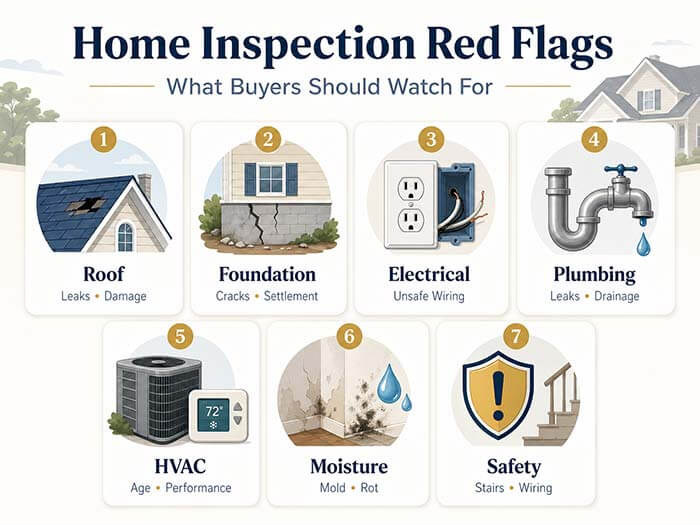
A home inspection can uncover many issues. Some are minor. Others can be deal-breakers.
Roof Problems
Roof issues can be expensive. Missing shingles, leaks, poor flashing, sagging areas, or signs of water intrusion should be reviewed carefully. A bad roof may also raise concerns for the lender or insurance company.
Foundation And Structural Issues
Cracks, settlement, sloping floors, water intrusion, or bowing walls may require further evaluation. Structural issues can be costly and may affect the buyer’s willingness to proceed.
Electrical Problems
Outdated wiring, overloaded panels, unsafe outlets, missing GFCI protection, or amateur electrical work can create safety concerns.
Plumbing Problems
Leaks, poor water pressure, old pipes, drainage problems, water heater issues, and sewer line problems can create repair costs after closing.
HVAC System Issues
Heating and cooling systems can be expensive to repair or replace. Buyers should pay attention to the system’s age, condition, maintenance history, and performance.
Water Damage And Moisture
Water damage can lead to mold, wood rot, structural concerns, and indoor air quality problems. Signs of moisture should not be ignored.
Safety Issues
Safety concerns may include missing handrails, trip hazards, exposed wiring, carbon monoxide risks, mold concerns, radon concerns, or unsafe stairs.
Do Mortgage Lenders Require a Home Inspection?
A property inspection is not required by mortgage lenders unless an appraisal notes on his appraisal report about issues on the home, where then the mortgage lender can require an inspection. A property inspection is highly recommended for all home buyers. Inspections are normally done before the appraisal. If a home buyer does not like the inspection report, then buyers can back out and cancel the real estate purchase transaction. A typical inspection normally costs between $300 and $500, depending on the county and state of the subject property.
What Does Inspection Mean in Mortgage?
In a mortgage, an inspection usually refers to a specific assessment or check conducted on the purchased property. As you consider purchasing a property, it’s important to be aware of the home’s physical condition. The home inspection is a common inspection that can provide you with this valuable information.
During a home inspection, a licensed inspector checks various aspects of the house, such as the structural integrity, roofing, foundation, HVAC systems, plumbing, and electrical systems, to identify any potential issues that might need repair or could affect the property’s value.
While a home inspection is primarily for the buyer’s benefit, it can influence the mortgage process. For example, suppose significant problems are uncovered during the inspection. As a buyer, it is crucial to understand that negotiating repairs with the seller, requesting a price reduction, or withdrawing the offer are all viable options if necessary. Remember that certain loans, such as those insured by the FHA or VA, may have property standards that must be met, which could require an inspection to ensure compliance.
Is a Home Inspection and Appraisal the Same Thing?
It’s important to understand that a home inspection and appraisal differ. These two processes serve different purposes and are typically conducted by different professionals.
Home Inspection:
- This is performed by a licensed home inspector and focuses on the home’s condition.
- The inspector assesses the structural integrity and the state of the heating system, plumbing, electrical systems, and other house components to identify any defects or issues.
- The goal of a home inspection is to provide the buyer with a detailed report on the home’s condition, highlighting any repairs that may be necessary.
Appraisal:
- A licensed appraiser conducts an appraisal to ensure the lender’s property valuation is accurate.
- The appraiser evaluates the home’s location, condition, and comparable properties to estimate its market value.
- This helps the lender decide on the appropriate mortgage amount to offer since it must not exceed the home’s value.
- Both processes are crucial in home buying but cater to different needs: the inspection for assessing the property’s physical condition and the appraisal for establishing its market value.
What is the Biggest Red Flag in a Home Inspection?
Significant structural damage is one of the biggest red flags in a home inspection. This can include issues such as:
- Foundation problems: Cracks or shifts in the foundation can lead to major structural instability.
- Roof damage: Significant deterioration or improper installation can result in leaks and water damage.
- Water damage: Past or current leaks can cause mold, rot, and structural issues in the home.
- Electrical issues: Outdated wiring, insufficient electrical service, aluminum wiring, or improper DIY electrical work can pose a fire hazard.
- Plumbing problems: Old or failing plumbing can lead to water damage and costly repairs.
These issues often require extensive and expensive repairs and can indicate potential safety hazards. Addressing these problems early is crucial to avoiding further damage and ensuring the home’s safety.
Ready to Buy a Home? Make Sure to Get a Home Inspection Before Starting the Mortgage Process!
Reach out now to get tips on when to schedule your inspection and how it can streamline your mortgage process.Wear and Tear Home Inspection
Normally estimate the longevity of the functionality and the age of the item inspected, such as HVAC units, leaks, wiring and electrical, mold, termites, roofing, gutters, soffits, fascia, foundation, windows, and other items. Specialty defects such as well and septic will be noted on the home inspection report. The home inspector may recommend a special inspection be done if it is a specialty defect.
Home Inspection of Safety and Hazard Issues
Home inspectors will also check for hazards and inspect for safety issues. Home inspectors will check for items that are not visible to the average human eye. They have tools to test for mold and structural issues. Appliances and the remaining life of the appliances will also be checked, and will note if the appliances need to be replaced soon. Pest control inspection and mold remediation inspectors are separate home inspection specialists. If buyers want a full detailed report, they need to hire these specialists separately, aside from the general home inspector.
Why Hire a Home Inspector?
There are a lot of costs and fees in the home-buying process. Many buyers want to save every nickel and dime on moving costs and new furniture. However, a home purchase is probably a person’s biggest investment. A home inspection should be considered an insurance policy protecting one’s investment. Many sellers will window-dress their homes before listing them in the market. All homes will look like everything is functional and in mint condition. However, there could be many issues with the subject property that are not visible to the naked eye.
Hiring a Home Inspection and Home Inspection Company
A home inspector is a professional who knows exactly where to look and what items to look for in inspecting properties. Things that are revealed by many inspectors that surprise buyers are prior water damage, foundation cracks, prior termite damage, and mold behind the drywall that is not visible to the human eye. Other issues inspectors reveal are homes that are not properly insulated or ventilated. Also, work that has been done without proper building permits and which are safety hazards will be revealed.
How Long Does Mortgage Approval Take After Appraisal?
After an appraisal is completed, the mortgage approval process typically takes a few days to a few weeks. As you go through this process, it’s important to understand that the lender will carefully review the appraisal report to ensure that the property’s value justifies the loan amount.
Simultaneously, they verify the accuracy of all financial information provided against their underwriting criteria. If any discrepancies or issues arise during the appraisal, further review or adjustments may be needed, which can extend the timeline.
Underwriting is another crucial step where the lender reviews your income, credit, and property details. This can be quick if your documentation is complete and accurate but may be delayed if additional verification or documents are required. Once you have fulfilled all the requirements, your lender will grant final approval and provide a “clear to close” status, indicating that everything is for the closing phase.
During this stage, closing arrangements are made, including scheduling the signing of the final documents and coordinating the funds’ disbursement. To help speed up this process, it’s beneficial to promptly respond to any lender requests for additional documentation or clarification. Delays often occur due to appraisal issues, discrepancies in application data, or missing documents.
Home Inspection For First-Time Homebuyers
First-time homebuyers often need the most guidance with inspections. Buying a home is emotional, and many first-time buyers focus on the payment and the approval. The home inspection helps first-time buyers slow down and understand the property before closing.
Do Not Focus Only On Cosmetic Issues
Paint, carpet, cabinet style, and light fixtures are usually easy to change. Major systems are more important. Roof, foundation, HVAC, plumbing, electrical, drainage, and safety issues should carry more weight.
Attend The Home Inspection When Possible
Attending the inspection can help buyers learn about the home. The inspector may show where the main water shutoff is, where the electrical panel is, how the HVAC system works, and which maintenance items matter.
Read The Full Inspection Report
Do not only read the summary page. The full report may include photos, comments, maintenance tips, safety notes, and items that may need future attention.
Home Inspection For FHA, VA, USDA, And Conventional Buyers
Buyers using mortgage financing should understand the difference between inspection issues and lending issues.
FHA Loan Home Inspection Considerations
FHA does not replace the buyer’s home inspection with the FHA appraisal. FHA appraisals may identify certain property issues, but the buyer should still order an independent home inspection.
VA Loan Home Inspection Considerations
VA buyers should also consider a home inspection. A VA appraisal reviews value and minimum property requirements, but it is not the same as a full buyer’s inspection.
USDA Loan Home Inspection Considerations
USDA buyers should pay attention to property condition because USDA loans are often used for homes in eligible rural or suburban areas. Older homes may have wells, septic systems, private roads, or repairs that need review.
Conventional Loan Home Inspection Considerations
Conventional buyers should still inspect the home, even when the lender has flexible appraisal options or valuation alternatives. Fannie Mae has appraisal alternatives in some cases, but those alternatives do not replace the buyer’s need to understand the property condition.
Home Inspection And Appraisal Waivers
Some conventional loans may receive an appraisal waiver or valuation alternative. This can speed up parts of the mortgage process, but it should not be confused with waiving the home inspection.
Appraisal Waiver Does Not Mean Inspection Waiver
An appraisal waiver means the lender may not require a traditional appraisal in certain eligible cases. It does not mean the buyer should skip the home inspection.
Why Inspection Still Matters With Strong Financing
Even if the borrower is well-qualified, has excellent credit, and receives automated approval, the property may still have issues. Mortgage strength does not eliminate property risk.
What Happens After The Home Inspection?
After the home inspection, the buyer should review the report carefully and decide what to do next.
Review The Report With Your Real Estate Agent
The real estate agent can help separate normal maintenance items from bigger concerns. Buyers should avoid overreacting to minor issues but should take major problems seriously.
Decide Whether To Request Repairs Or Credits
Buyers may ask the seller to repair certain items, provide a seller credit, reduce the price, or make another concession. The right strategy depends on the contract, local market, loan program, appraisal, and seller motivation.
Notify The Lender If The Contract Changes
If the purchase price, seller credit, closing cost credit, or repair agreement changes, the lender may need updated documents. This can affect underwriting, disclosures, and closing timing.
Can A Bad Home Inspection Kill A Mortgage?
A bad home inspection by itself usually does not kill a mortgage because the inspection is for the buyer. However, the findings can lead to decisions that stop the deal.
The Buyer May Cancel The Contract
If the contract allows it, the buyer may cancel after unacceptable inspection findings.
The Seller May Refuse Repairs
If the seller refuses to make repairs or offer credits, the buyer may decide not to move forward.
The Appraiser May Flag Similar Issues
If the appraiser notices safety, structural, or property condition issues, the lender may require repairs before closing. This can delay or stop the loan if the repairs are not completed.
Should You Share The Home Inspection Report With The Lender?
In many cases, the buyer does not need to send the full home inspection report to the lender unless requested. However, if repairs, credits, or contract changes result from the inspection, the lender may need documentation.
Buyers should ask their loan officer before sending unnecessary documents. Sending extra information can sometimes create additional underwriting questions.
How Gustan Cho Associates Helps Buyers Through The Mortgage Process
Gustan Cho Associates helps borrowers understand the mortgage process from pre-approval through closing. Many buyers come to us after being denied by another lender because of credit issues, debt-to-income ratio concerns, recent late payments, bankruptcy, foreclosure, self-employment income, or lender overlays.
The home inspection is not the same as mortgage underwriting, but both are important parts of buying a home. Buyers need loan approval, but they also need to understand the property they are purchasing
At Gustan Cho Associates, our team helps buyers stay focused on the mortgage side while encouraging them to work with qualified real estate professionals, home inspectors, insurance agents, and other service providers during the transaction.
Home Inspection Before Starting The Mortgage Process FAQ
How Is A Home Inspection Different From An Appraisal?
Home inspections and appraisals are both crucial in the home-buying process. Inspections identify necessary repairs and ensure you know the property’s condition, while appraisals determine the property’s market value. Prioritize both to ensure your financial stability in the long run.
What Does An Inspection Mean In A Mortgage Context?
An inspection assesses the property’s condition in a mortgage context. Buyers must be aware of any issues that might need repair, as these can affect the property’s value and the buyer’s willingness to proceed with the purchase.
What Are The Major Red Flags In A Home Inspection?
Significant structural damage, including foundation problems, roof and water damage, outdated or hazardous electrical systems, and failing plumbing, is a major red flag. Detecting these issues early through a comprehensive inspection is crucial since they can be costly to repair and present safety risks.
Why Hire A Home Inspector?
Hiring a home inspector is crucial as it acts like an insurance policy for your investment. Inspectors can uncover issues not visible to the untrained eye, such as water damage, structural defects, and safety hazards. A home is likely one of the largest purchases. Hence, a detailed inspection ensures you know of potential problems before committing.
How Much Does A Typical Home Inspection Cost?
When considering purchasing a property, it’s important to factor in the cost of a home inspection. Depending on the location and size of the property, a home inspection typically costs between $300 and $500. It is a valuable investment because it comprehensively evaluates the property’s condition, giving you the assurance you need.
What Should I Do If I Find Issues During The Home Inspection?
Suppose significant problems are identified during the inspection. In that case, you have several options, including negotiating with the seller for repairs, asking for a price reduction, or even withdrawing your offer. These steps can protect you from unforeseen expenses and ensure the property meets your expectations.
How Long Does Mortgage Approval Take After An Appraisal?
After the appraisal, the mortgage approval can take a few days to a few weeks, depending on the underwriting process. This includes reviewing the appraisal, verifying financial information, and resolving discrepancies. Prompt communication with your lender can help expedite this process.
What Are Safety And Hazard Issues Checked During A Home Inspection?
Inspectors look for a variety of safety and hazard issues, including structural integrity, mold presence, and appliance functionality. They use specialized tools to detect problems not visible to the average person, ensuring a comprehensive property safety evaluation.
If you have any questions about Home Inspection Before Starting The Mortgage Process or you need to qualify for loans with a lender with no overlays, please contact us at 800-900-8569. Text us for a faster response. Or email us at alex@gustancho.com. The team at Gustan Cho Associates is available 7 days a week, on evenings, weekends, and holidays.
Related> Hiring a home inspector
This Guide About Home Inspection Before Starting The Mortgage Process Was Updated on April 30, 2026.