Qualifying For FHA Loan During Chapter 13 Bankruptcy: FHA Mortgage Approval While In Repayment Plan
In this article, we’ll explore the process of Qualifying For FHA Loan During Chapter 13 Bankruptcy. Homebuyers can secure an FHA loan even during their Chapter 13 Bankruptcy repayment plan before the discharge of the bankruptcy.
After completing one year into the repayment period, individuals may become eligible for an FHA loan, whether seeking to purchase a home or refinance.
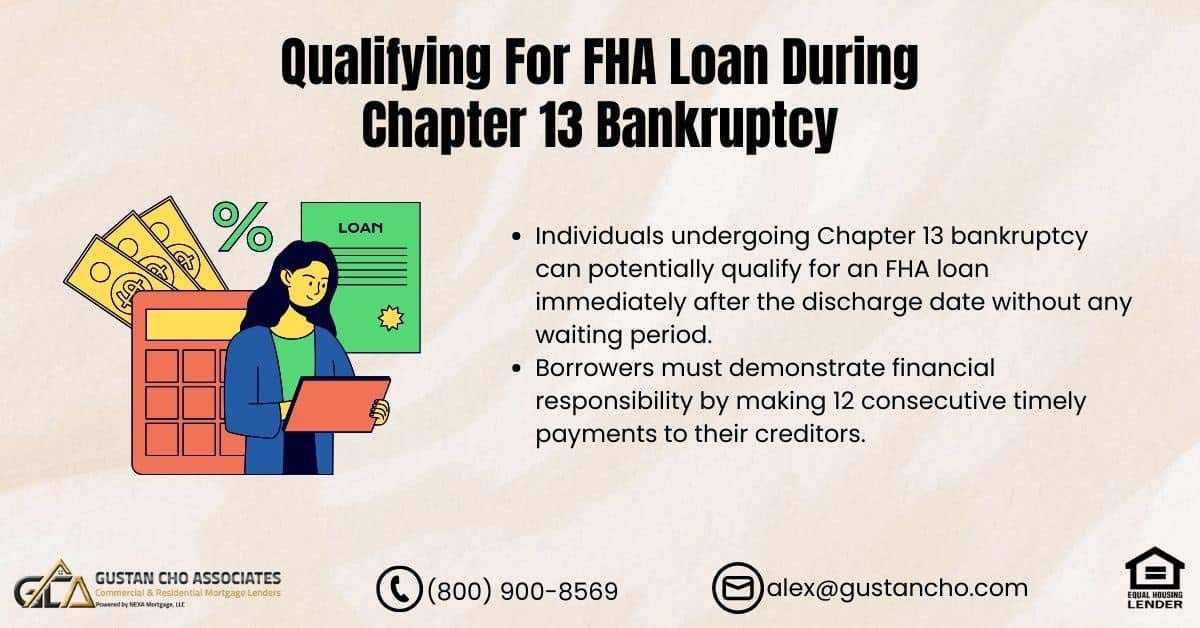
To qualify, borrowers must have made 12 consecutive timely payments to their creditors. Remember that completing Chapter 13 Bankruptcy is one of many ways to fulfill this requirement. However, approval from the bankruptcy trustee is necessary for the mortgage transaction to proceed. In the following paragraphs, we will cover qualifying for FHA loan During Chapter 13 Bankruptcy.
Steps In Qualifying For FHA Loan During Chapter 13 Bankruptcy?
Qualifying for FHA loan during Chapter 13 bankruptcy can be nerve-wracking for many borrowers. However, there’s no need for concern regarding the approval from bankruptcy trustees for a mortgage or home purchase.
You may qualify for an FHA loan during Chapter 13 bankruptcy if you have made 12 consecutive on-time payments to your trustee and obtained court approval.
Gustan Cho Associates has successfully facilitated numerous FHA loans during Chapter 13 bankruptcy. Notably, this is the first time we have encountered a situation where a bankruptcy trustee refused to approve an FHA loan for a home purchase during the Chapter 13 bankruptcy repayment period. Trustees typically approve such purchases if the new mortgage is within the borrower’s means and they demonstrate the ability to repay it.
Qualifying For FHA Loan During Chapter 13 Bankruptcy: FHA Mortgage Approval While In Repayment Plan
Many homebuyers can qualify for an FHA loan while still in a Chapter 13 repayment plan. Contrary to common belief, bankruptcy need not be fully discharged before applying for a mortgage. FHA guidelines let borrowers qualify for an FHA-insured mortgage during Chapter 13 bankruptcy if they meet certain requirements.
Usually, you need to have completed at least 12 months of your repayment plan, made all payments on time, and have written permission from the bankruptcy court or trustee.
According to HUD, meeting these requirements means Chapter 13 bankruptcy does not automatically disqualify you from FHA financing. Gustan Cho Associates assists borrowers in these situations. Many clients come to us after another lender has said they do not qualify for an FHA loan during Chapter 13 bankruptcy. Often, the issue is not FHA guidelines but additional lender-imposed requirements, known as overlays.
Qualifying For FHA Loan During Chapter 13 Bankruptcy Is Possible
FHA loans are highly flexible for individuals with previous credit challenges, bankruptcy, lower credit scores, higher debt-to-income ratios, or limited funds for a down payment.
Many individuals file Chapter 13 bankruptcy to prevent foreclosure, protect assets, reorganize debts, and regain financial stability.
These government-insured mortgages are intended to help borrowers qualify more easily than many conventional loans. In a Chapter 13 bankruptcy, rather than eliminating debts immediately as in Chapter 7, consumers repay part or all of their debts over time through a court-approved repayment plan.
FHA Loan During Chapter 13 Bankruptcy Versus After Chapter 13 Discharge
There is a major difference between qualifying during Chapter 13 bankruptcy and qualifying after Chapter 13 bankruptcy discharge. During an active Chapter 13 bankruptcy, the borrower is still making payments under a court-approved repayment plan. The lender needs proof of at least 12 months of on-time payments and written permission from the bankruptcy court or trustee.
After Chapter 13 discharge, the borrower has completed the repayment plan. FHA may still require manual underwriting if the Chapter 13 discharge is less than two years old, depending on the file and underwriting findings.
FHA does not require all Chapter 13 borrowers to wait until their repayment plan is complete. You may be eligible for an FHA loan during the repayment plan if you have made at least 12 on-time payments and obtained permission from the bankruptcy court or trustee (HUD Answers). Bankruptcy does not automatically disqualify an applicant for an FHA loan. Lenders will review your credit profile, income, assets, debt-to-income ratio, housing payment history, and your explanation for the bankruptcy.
How Long After Chapter 13 Bankruptcy Can I Get An FHA Loan?
The courts recognize housing as an essential need. If you have recently received a Chapter 13 Bankruptcy discharge, you may be eligible for an FHA loan without any waiting period. However, your application will require manual underwriting if your Chapter 13 Bankruptcy discharge has not been established for at least 24 months. Manual underwriting is exclusive to FHA and VA loans among home mortgage programs, as conventional loans do not offer this option.
Qualifying For FHA Loan During Chapter 13 Bankruptcy: HUD Guidelines Versus Lender Overlays

There Are Two Types Of FHA Guidelines:
- HUD Guidelines on FHA Loans mandated by HUD 4000.1 FHA Handbook
- Mortgage Lender Overlays
Why FHA Loans Are Popular After Bankruptcy
FHA loans are popular after FHA loans are popular after bankruptcy due to their flexible credit guidelines. You may qualify with a credit score as low as 580 with a 3.5% down payment, or between 500 and 579 with a 10% down payment under FHA rules. their own stricter rules, called overlays. For example, a lender might require your Chapter 13 bankruptcy to be discharged for two years, even though FHA guidelines may allow you to get financing during the repayment plan.
FHA Chapter 13 Bankruptcy Guidelines For Mortgage Approval
FHA Chapter 13 bankruptcy guidelines are very specific. The borrower must show that the bankruptcy repayment plan has been handled responsibly. The lender and underwriter will look closely at the payment history after the bankruptcy filing. The key issue is whether the borrower has made all Chapter 13 trustee payments on time for at least 12 months. The lender will also need written permission from the bankruptcy court or trustee allowing the borrower to apply for and close on the new mortgage.
At Least 12 Months Of Chapter 13 Payments Must Be Made
To qualify for an FHA loan during Chapter 13 bankruptcy, the borrower generally needs to have made at least 12 payments under the bankruptcy repayment plan. These payments need to be made on time. Late trustee payments can create significant issues. Missing Chapter 13 payments may indicate the borrower is not ready for FHA mortgage approval, as underwriters must document the ability to manage financial obligations.
Trustee Or Bankruptcy Court Approval Is Required
Borrowers in an active Chapter 13 bankruptcy repayment plan need written permission from the bankruptcy court or trustee to enter into the mortgage transaction. This is one of the most important requirements. The trustee’s approval letter informs the lender that the borrower is permitted to take on new mortgage debt while still under bankruptcy court protection. Without this approval, the FHA loan cannot move forward.
The Borrower Must Meet All Other FHA Loan Requirements
Qualifying for an FHA loan during Chapter 13 bankruptcy does not mean the bankruptcy approval alone is enough. The borrower must still meet normal FHA loan requirements. The lender must verify income, employment, assets, credit history, debt-to-income ratio, down payment, property eligibility, appraisal requirements, and ability to repay. The new mortgage payment must make sense based on the borrower’s documented income and debts.
FHA Manual Underwriting During Chapter 13 Bankruptcy
Most FHA loans today are run through an automated underwriting system. However, borrowers who are currently in an active Chapter 13 bankruptcy repayment plan often require manual underwriting. Manual underwriting involves a human underwriter reviewing the file instead of relying solely on automated approval. This process is required for a more thorough review due to the Chapter 13 bankruptcy.
What FHA Manual Underwriting Means
FHA manual underwriting is a full review of the borrower’s financial profile. The underwriter looks at the story behind the credit history, the borrower’s payment pattern after bankruptcy, income stability, reserves, housing history, and compensating factors. Manual underwriting can be powerful for borrowers who do not receive an automated approval but still meet FHA guidelines.
Why Many Lenders Avoid Manual Underwriting
Many lenders avoid manual underwriting because it requires additional effort, more documentation, and greater underwriter expertise. Some prefer automated approvals only, while others impose overlays that make it difficult for Chapter 13 borrowers to qualify. A denial at one lender may not be due to FHA guidelines, but rather to the lender’s unwillingness to do manual underwriting or to its overlays on active Chapter 13 bankruptcy loans.
Gustan Cho Associates Works With Borrowers; Other Lenders Cannot Help.
Gustan Cho Associates specializes in assisting borrowers Cho were turned down by other lenders due to overlays. Many homebuyers with Chapter 13 bankruptcy, lower credit scores, higher debt-to-income ratios, recent credit events, or manual underwriting needs seek our help after being declined elsewhere. Ines permits the loan, Gustan Cho Associates seeks to identify a solution without imposing unnecessary lender overlays.
FHA Loan During Active Chapter 13 Bankruptcy
A borrower may qualify for an FHA loan during an active Chapter 13 bankruptcy after making 12 timely payments to the trustee and receiving trustee or court approval. The file will typically require manual underwriting. This is a significant benefit for homebuyers who prefer not to wait several years before buying.
FHA Loan After Chapter 13 Discharge
After Chapter 13 discharge, borrowers may have more options. However, many lenders still apply overlays. Some lenders may require one or two years after discharge, even when FHA guidelines may allow the borrower to move forward sooner with proper underwriting. Borrowers should not assume that a denial from one lender means they are ineligible for an FHA loan elsewhere.
Qualifying for FHA Loan During Chapter 13 Bankruptcy Is Possible
We work with trustee approval and manual underwriting every dayNo Waiting Period After Chapter 13 Discharge With The Right FHA Lender
One of the biggest advantages of FHA financing is that there may be no mandatory waiting period after Chapter 13 discharge if the borrower otherwise qualifies. However, if the discharge is less than two years old, the file may require manual underwriting. At this stage, working with an experienced FHA lender is essential.
Common Lender Overlays On FHA Chapter 13 Bankruptcy Loans
Lender overlays are additional rules created by individual lenders. These rules are stricter than the FHA minimum guidelines. For example, FHA may allow a borrower to qualify for a mortgage after 12 months of on-time payments and trustee approval during a Chapter 13 bankruptcy. However, a lender may say they will not approve any borrower until the Chapter 13 bankruptcy has been discharged for two years. That is not an FHA rule. That is a lender overlay.
Common FHA Chapter 13 Lender Overlays
Many lenders add overlays such as requiring the Chapter 13 bankruptcy to be discharged before applying, requiring a two-year waiting period after discharge, requiring higher credit scores, limiting debt-to-income ratios, refusing manual underwriting, or requiring large reserves. These overlays may result in unnecessary mortgage denials.
Why Borrowers Get Denied Even When FHA Allows The Loan
Borrowers are often denied because the loan officer or lender does not understand FHA manual underwriting, does not work with active Chapter 13 bankruptcy cases, or has internal company overlays. This can be frustrating for borrowers who meet FHA guidelines but are denied by lenders with stricter internal requirements.
How A No-Overlay FHA Lender Can Make a Difference
A no-overlay FHA lender follows FHA agency guidelines without adding unnecessary restrictions. This can make a major difference for borrowers in Chapter 13 bankruptcy. Gustan Cho Associates is known for helping borrowers who meet FHA guidelines but were denied by other lenders because of overlays.
Qualifying For FHA Loan During Chapter 13 Bankruptcy Waiting Period
When qualifying for FHA loan while in Chapter 13 bankruptcy, it is crucial to follow the guidelines set by the United States Housing and Urban Development (HUD), which supervises the Federal Housing Administration (FHA). If you are an FHA lender, it is important to follow these guidelines to ensure that the loans you originate and fund meet the criteria set by HUD for insurance eligibility.
Consequently, lenders must closely follow HUD’s directives to navigate the complexities of lending during Chapter 13 bankruptcy proceedings, maintaining compliance to offer borrowers the opportunity to secure FHA loans under such circumstances.
HUD’s role as the governing body behind FHA guidelines underscores the importance of its oversight in the lending process. By mandating compliance with its regulations, HUD safeguards the integrity of FHA loans, promoting accessibility to homeownership even amidst financial challenges like Chapter 13 bankruptcy. Lenders play a critical role in this process by meticulously adhering to HUD’s guidelines, thus enabling individuals qualifying for FHA loan during Chapter 13 Bankruptcy to work towards their homeownership goals.
What Is The Role of HUD on FHA Loans
If you’re considering qualifying for FHA loan during Chapter 13 bankruptcy, it’s important to understand the specific guidelines set forth by the Department of Housing and Urban Development (HUD). HUD offers insurance to lenders to mitigate losses in cases of borrower default and subsequent foreclosure.
Gustan Cho Associates Works With Borrowers Other Lenders Cannot Help
Lenders must adhere to HUD guidelines for FHA loans to qualify for this insurance coverage. However, it’s essential to note that lenders may impose additional criteria, known as lender overlays, which surpass the minimum requirements set by HUD.
How A No-Overlay FHA Lender Can Make a Difference
Lender overlays can vary from institution to institution, potentially making the qualification process more stringent for individuals seeking Chapter 13 bankruptcy FHA loans. While HUD sets the baseline standards, borrowers should be prepared to meet any additional criteria their chosen lender sets. Thus, understanding HUD guidelines and any lender-specific requirements is crucial for securing an FHA loan during Chapter 13 bankruptcy.
Do Lenders Have Different Requirements on FHA Loans During Chapter 13 Bankruptcy?
If you are in Chapter 13 bankruptcy, qualifying for an FHA loan can be difficult, particularly if lenders set additional requirements beyond the minimum HUD Guidelines. These additional requirements, known as FHA Lender Overlays, often act as hurdles for borrowers seeking approval. However, Gustan Cho Associates, a reputable national mortgage company licensed in multiple states, distinguishes itself by having zero overlays on FHA loans.
How Gustan Cho Associates Helps Borrowers Qualify For FHA Loan During Chapter 13 Bankruptcy
If you are qualifying for FHA loan during Chapter 13 Bankruptcy, you may need help qualifying for an FHA loan through Gustan Cho Associates. This is because you won’t have to deal with extra obstacles the lender imposes.
Gustan Cho Associates extends its commitment to simplicity and accessibility beyond FHA loans, offering the same zero overlays policy on government and conventional loans.
This streamlined approach ensures that borrowers facing financial challenges, such as Chapter 13 bankruptcy, have a viable path to homeownership without unnecessary barriers. If you seek to rebuild your financial stability and secure a home loan during Chapter 13 bankruptcy, Gustan Cho Associates offers a welcoming opportunity that prioritizes transparency and minimizes additional requirements.
Homebuyers Qualifying For FHA Loan During Chapter 13 Bankruptcy
According to FHA guidelines, individuals in Chapter 13 bankruptcy can still qualify for an FHA loan during the repayment period. This means borrowers don’t have to wait until the bankruptcy is discharged to be eligible. Additionally, FHA guidelines state that borrowers can qualify for FHA loans immediately after the discharge date of a Chapter 13 bankruptcy without any waiting period. However, it’s important to note that many lenders impose additional requirements, known as lender overlays.
Qualifying For FHA Loan During Chapter 13 Bankruptcy After Getting Denial Due From a Lender to Overlays
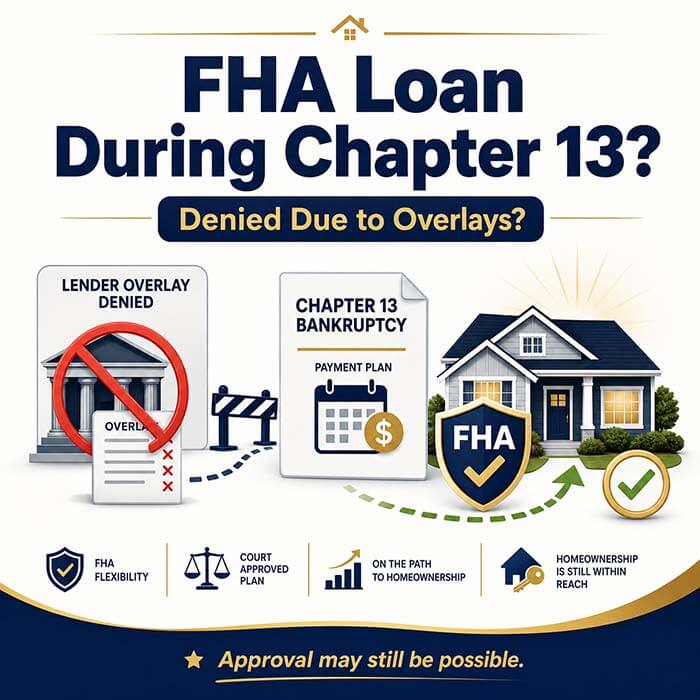
If you are going through Chapter 13 Bankruptcy, qualifying for an FHA loan may be difficult because of strict lender requirements. Typically, lenders impose a two-year waiting period after the discharge date of Chapter 13 Bankruptcy. This condition is often included in their lending guidelines. However, at Gustan Cho Associates, a significant portion of our clients fall into the category of individuals either currently in a Chapter 13 Bankruptcy Repayment Plan or lacking the required two-year seasoning post-bankruptcy discharge.
Qualifying For FHA Loan During Chapter 13 Bankruptcy under Manual Underwriting
Homebuyers undergoing Chapter 13 Bankruptcy may find hope in qualifying for an FHA loan through a manual underwriting process, even amidst their repayment journey. At Gustan Cho Associates Mortgage Group, we understand individuals’ unique challenges during this period. Therefore, we offer tailored solutions to help applicants navigate the complexities of mortgage approval, ensuring their Chapter 13 status supports their homeownership dreams.
The Loan Officer Must Know FHA Manual Underwriting
Our commitment extends beyond the discharge date of Chapter 13 Bankruptcy. Unlike conventional lenders, we eliminate the waiting period, enabling eligible candidates to qualify for an FHA loan immediately after their bankruptcy is discharged.
With our expertise in manual underwriting, we assess each case diligently, considering factors beyond traditional credit scores to provide opportunities for those seeking FHA loans during Chapter 13 Bankruptcy.
This approach reflects our dedication to fostering financial stability and homeownership accessibility for all, regardless of past setbacks. At Gustan Cho Associates Mortgage Group, we prioritize empowering individuals on their path to homeownership, ensuring that Chapter 13 Bankruptcy doesn’t stand as a barrier but rather a stepping stone toward achieving their housing goals.
Types Of Bankruptcies And Qualifying For FHA Loan During And After Chapter 13 Bankruptcy
Homebuyers can qualify for FHA loans after Chapter 7 and Chapter 13 Bankruptcies. However, there are FHA Requirements that borrowers need to qualify for FHA loans after Chapter 7 and Chapter 13 Bankruptcy. There are two types of bankruptcies for individuals drowning in debt and needing relief from creditors and collections agencies.
- A Chapter 7 Bankruptcy
- Chapter 13 Bankruptcy
How Does Chapter 7 Bankruptcy Work?
It’s challenging qualifying for FHA loan during Chapter 13 bankruptcy. Unlike Chapter 7 bankruptcy, which involves total liquidation, Chapter 13 allows consumers to restructure their debts while retaining some assets. Consumers must pass the Chapter 7 Means Test, which evaluates their income levels, to qualify for Chapter 7 bankruptcy. If you have significant assets, choosing to file for Chapter 7 bankruptcy may lead to liquidation of those assets, with the proceeds being distributed among your creditors by the Bankruptcy Trustee. This is done to prevent individuals with high incomes from filing for Chapter 7 bankruptcy.
Qualifying For A Mortgage After Bankruptcy
Most consumers who file Chapter 7 Bankruptcy are those who have little to no assets and little to no income. All debts, with the exception of government debts, will get discharged with a Chapter 7 Bankruptcy. The consumer can get a fresh financial start where they will no longer owe anything to any creditors. Outstanding collection accounts no matter how much the outstanding unpaid balance is, as well as any judgments get wiped out with a Chapter 7 Bankruptcy discharge. Homebuyers can qualify for FHA loans two years from the discharged date of a Chapter 7 Bankruptcy.
How Does Chapter 13 Bankruptcy Work?
With A Chapter 13 Bankruptcy, the consumer needs to have a source of income. Whether it is a job, business, or other documented source of income is required in order to qualify for a Chapter 13 Bankruptcy Repayment Plan. A Chapter 13 Bankruptcy is when the courts will appoint a Chapter 13 Bankruptcy Trustee. The Chapter 13 Bankruptcy Trustee will go over the overall finances of the Chapter 13 Bankruptcy petitioner and allocate a certain percentage of the consumer’s income to pay the creditors.
Credit Score Requirements for an FHA Loan During Chapter 13 Bankruptcy
Credit score requirements matter, but FHA loans are more flexible than many borrowers realize. FHA minimum guidelines allow borrowers with a credit score of 580 or higher to qualify with a 3.5% down payment. Borrowers with credit scores between 500 and 579 may need 10% down under the FHA minimum down payment requirements. However, lender overlays can affect the approval process. Many lenders require credit scores of 620, 640, or higher, even though the FHA minimum standards allow scores as low as 580.
FHA 580 Credit Score Requirement For 3.5% Down Payment
A 580 credit score is important because it allows the borrower to qualify for the minimum 3.5% down payment under FHA guidelines. This is one reason FHA loans are popular among borrowers recovering from bankruptcy.
FHA Credit Scores Between 500 And 579
FHA may allow borrowers with credit scores between 500 and 579, but the down payment requirement is generally higher at 10%. Many lenders do not approve FHA loans below 580 due to overlays.
Credit After Chapter 13 Bankruptcy Matters
The credit activity after the Chapter 13 filing is extremely important. Underwriters want to see responsible payment behavior. New late payments, collections, overdrafts, missed trustee payments, or unpaid obligations after the bankruptcy filing can weaken the file. Borrowers are advised to avoid incurring new credit issues while preparing for FHA mortgage approval.
The mortgage underwriter will look at the proposed housing payment, monthly debts, trustee payment, income stability, and overall ability to repay the new mortgage.
Debt-To-Income Ratio Borrowers should avoid incurring new credit issues while preparing for FHA mortgage approval. The borrower’s gross monthly income is used for monthly debt payments. FHA loans are known for their flexible DTI guidelines, but Chapter 13 manual underwriting can require a more thorough review.
Chapter 13 Trustee Payment Must Be Counted
The monthly Chapter 13 trustee payment must be included in the borrower’s debt-to-income ratio unless it is scheduled to be paid off or treated differently under acceptable underwriting documentation. This is important because the trustee payment can affect how much home the borrower can afford.
Compensating Factors Can Help FHA Manual Underwriting
Compensating factors are strengths that help offset risk. Examples may include strong reserves, low payment shock, stable employment, additional income not used to qualify, minimal new debt, or a history of making housing payments on time. Manual underwriting evaluates the borrower’s entire financial profile rather than focusing on a single metric.
Payment Shock Matters During Manual Underwriting
Payment shock is the difference between the borrower’s current housing payment and the proposed new mortgage payment. If the new mortgage payment is much higher than the current rent or housing payment, the underwriter may require stronger compensating factors. Borrowers in Chapter 13 bankruptcy should carefully assess the affordability of a new mortgage.
Documents Needed for an FHA Loan During Chapter 13 Bankruptcy
Documentation is critical when qualifying for an FHA loan during Chapter 13 bankruptcy. The underwriter needs to verify that the borrower meets FHA guidelines and can afford the new mortgage. Prepare a well-organized application file before submitting it for underwriting.
Chapter 13 Bankruptcy Documents
Borrowers should be prepared to provide the Chapter 13 bankruptcy petition, repayment plan, trustee payment history, bankruptcy court documents, and written permission from the trustee or bankruptcy court. The trustee payment history is especially important because it proves whether the borrower has made the required payments on time.
Income And Employment Documents
Borrowers normally need recent pay stubs, W-2s (if applicable), tax returns (if applicable), verification of employment, and documentation of any other qualifying income. Self-employed borrowers may need additional documentation, including business tax returns, profit-and-loss statements, and bank statements, depending on the loan file.
Asset And Down Payment Documents
FHA borrowers must document the source of down payment and closing costs. Bank statements, gift letters, retirement account statements, or other asset documents may be needed. Large deposits must be explained and sourced.
Letter Of Explanation For Bankruptcy
A strong letter of explanation can clarify the circumstances behind the bankruptcy. It should detail the cause of financial hardship, what has changed, and why you are now financially stable. The explanation should be honest, simple, and supported by the rest of the loan file.
Buying A House During Chapter 13 Bankruptcy
Buying a house during Chapter 13 bankruptcy requires careful planning. Do not begin the process casually. The loan officer, bankruptcy attorney, and trustee may all need to be involved. Experienced in FHA Chapter 13 manual underwriting.
Step One: Confirm 12 Months Of On-Time Trustee Payments
The borrower should first confirm that at least 12 months of Chapter 13 trustee payments have been made on time. If there are any missed or late payments, the borrower should speak with the lender before proceeding.
Step Two: Speak With An FHA Lender Experienced In Chapter 13 Bankruptcy
Not every FHA lender works with active Chapter 13 bankruptcy borrowers. Borrowers should ask whether the lender allows FHA manual underwriting during Chapter 13 bankruptcy. Asking this question can help you avoid unnecessary delays and complications.
Step Three: Get Pre-Approved Before Shopping For A Home
A borrower in Chapter 13 bankruptcy should undergo a full review before making an offer on a home. A basic pre-qualification is not sufficient. The lender should review credit, income, assets, trustee payment history, debt-to-income ratio, and bankruptcy documentation before issuing a strong pre-approval.
Step Four: Request Trustee Or Court Approval
Once the borrower has a proposed mortgage payment and purchase details, the bankruptcy attorney may help request trustee or court approval. The trustee may want to review the new payment, loan terms, and affordability.
Step Five: Complete the FHA Appraisal And Underwriting
After the purchase contract is accepted, the lender orders the FHA appraisal and submits the file for underwriting. The underwriter reviews the full file and may ask for updated documents or additional explanations.
Refinancing During Chapter 13 Bankruptcy With An FHA Loan
Qualifying for an FHA loan during Chapter 13 bankruptcy is not limited to home purchases. Some homeowners may also qualify for an FHA refinance while still in Chapter 13 bankruptcy. This may be helpful if the refinance improves the borrower’s financial position, lowers the payment, pays off debts allowed under the bankruptcy plan, or helps restructure the mortgage.
FHA Refinance During Chapter 13 Repayment Plan
A borrower may be able to refinance during Chapter 13 bankruptcy if they have made at least 12 months of on-time trustee payments and receive trustee or court approval. The refinance must still meet FHA guidelines and underwriting requirements.
Why Trustee Approval Still Matters On A Refinance
Even if the borrower already owns the home, trustee approval remains important because the refinance alters the debt structure. The bankruptcy court or the trustee must allow the borrower to enter into the new mortgage transaction.
Cash-Out Refinance During Chapter 13 Bankruptcy
Cash-out refinance during Chapter 13 bankruptcy can be more complex. The trustee, bankruptcy attorney, and lender must review whether the cash-out proceeds are allowed and how they affect the bankruptcy. Borrowers should not assume that cash-out refinancing is automatically available during bankruptcy.
FHA Chapter 13 bankruptcy loans are complex and require experience, clear communication, thorough documentation, and a strong understanding of the FHA manual.
A loan officer unfamiliar with Chapter 13 bankruptcy guidelines may provide incorrect information. A lender with overlays may deny the file even if FHA guidelines allow approval. approval.
The Loan Officer Must Know the FHA Manual Underwriting
Manual underwriting is different from automated underwriting. The loan officer needs to package the file correctly, identify compensating factors, review the trustee payment history, and prepare the borrower for documentation requests.
The Underwriter Must Understand Chapter 13 Guidelines
The underwriter must be comfortable reviewing active bankruptcy files. Not all lenders have underwriters who work with the FHA Chapter 13 manual underwriting.
Communication With The Bankruptcy Attorney May Be Needed
The borrower’s bankruptcy attorney may need to help obtain trustee or court approval. The lender may need to provide the proposed mortgage payment, loan estimate, purchase contract, or pre-approval information. Effective communication among all parties can help prevent delays in the mortgage process.
Turn Your Chapter 13 Plan Into a Path to Homeownership
Learn step-by-step how to qualify for FHA loan during Chapter 13 bankruptcyCommon Mistakes Borrowers Make During Chapter 13 Mortgage Approval
Borrowers can improve their chances of approval by avoiding common errors. FHA Chapter 13 mortgage approval is attainable, but the application must be managed carefully.
Applying With The Wrong Lender
The most significant mistake is applying with a lender that does not allow FHA loans during Chapter 13 bankruptcy. This can result in a denial even if you may qualify with another lender.
Missing Trustee Payments
Late or missed trustee payments can derail the mortgage process. Borrowers should make every Chapter 13 payment on time and keep proof of payment.
Taking On New Debt Before Approval
New credit cards, auto loans, personal loans, or other debts can increase the debt-to-income ratio and hurt approval chances. Borrowers should speak with their loan officer before opening any new credit accounts.
Large bank deposits must be properly documented. Avoid transferring funds without clear documentation, as unexplained deposits can create challenges during underwriting.
Shopping For Homes Before Getting Fully Pre-Approved
Borrowers in Chapter 13 bankruptcy should not rely solely on a basic pre-qualification. A robust pre-approval requires a comprehensive review of credit, income, assets, bankruptcy documentation, and trustee payment history.
How Gustan Cho Associates Helps Borrowers Qualify for an FHA Loan During Chapter 13 Bankruptcy
Gustan Cho Associates helps borrowers who need mortgage options after bankruptcy, foreclosure, collections, charge-offs, lower credit scores, high debt-to-income ratios, and lender overlays. Many borrowers are told they cannot qualify for an FHA loan during Chapter 13 bankruptcy. In many cases, that answer comes from a lender overlay rather than from FHA guidelines.
No Lender Overlays On FHA Loans
Gustan Cho Associates is known for working with borrowers who meet agency guidelines but do not fit the tighter rules of many banks and lenders. If FHA guidelines allow the loan, the team works to structure the file properly and find a path forward.
Help For Borrowers Turned Down By Other Lenders
Many Gustan Cho Associates borrowers come after a last-minute denial, an overlay denial, or a lender that refused manual underwriting. A denial from one lender does not necessarily mean you are ineligible for an FHA loan.
Same-Day Review For FHA Chapter 13 Mortgage Options
Borrowers in Chapter 13 bankruptcy should have their files reviewed as early as possible. Early review of income, credit, assets, trustee payment history, and bankruptcy documentation helps identify the necessary next steps.
Qualifying For FHA Loan During Chapter 13 Bankruptcy With Bankruptcy Trustee Approval
The Chapter 13 Bankruptcy Trustee will propose a three to a five-year repayment plan for the creditors. After that period is over, whatever balance is remaining will be discharged and the consumer will be debt-free. Both Chapter 7 Bankruptcies and Chapter 13 Bankruptcies are federal laws to help consumers who had financial problems due to extenuating circumstances.
Qualifying For FHA Loan During Chapter 13 Bankruptcy Under Today’s Federal Bankruptcy Laws
Bankruptcy Laws were created to give relief to consumers to restart their lives and get a fresh start. Those who want to purchase a home can qualify for an FHA Loan During Chapter 13 Bankruptcy one year into a Chapter 13 Bankruptcy Repayment Plan. Homebuyers can qualify for an FHA loan two years after a Chapter 7 Bankruptcy discharge date.
Requirements Qualifying For FHA Loan During Chapter 13 Bankruptcy Repayment Plan
Those who filed a Chapter 13 Bankruptcy and have been into a repayment plan for at least a year can qualify for an FHA loan. Borrowers need to have been one year into their repayment plan with no late payments. Homebuyers will need the approval of their Chapter 13 Bankruptcy Trustee. Getting Trustee Approval is normally never an issue.
Will I Have An Issue Buying A Home and Qualifying For FHA Loan During Chapter 13 Bankruptcy With Trustee Approval?
Most Chapter 13 Bankruptcy Trustees encourage homeownership and do not have any problems and/or issues signing off on a home purchase with an FHA loan during Chapter 13 Bankruptcy. FHA mortgage lenders will require at least 12 months of timely payments without any late payments in the past 12 months.
Getting Pre-Approved and Qualifying For FHA Loan During Chapter 13 Bankruptcy
All FHA loan applications for borrowers applying for FHA loans during Chapter 13 Bankruptcy repayment plans are manual underwrites. On manual underwrites rental verification is required. Exceptions on verification of rent (VOR) can be made if homebuyers are living with family to save money for the down payment. All manual underwriting and compensating factors are positive and will help borrowers.
Importance of Compensating Factors on Manual Underwriting When Qualifying For FHA Loan During Chapter 13 Bankruptcy
Examples Of Compensating Factors Are The Following:
- Larger down payment
- Reserves
- Longevity on the job or second job that is not used as qualified income and borrower had it for at least a year
- Other income that is not used as qualifying income
- As standard automated approved FHA Loans, the down payment requirement is a 3.5% down payment on a home purchase
The minimum credit score to qualify for FHA Loan During Chapter 13 Bankruptcy Repayment Plan is 580 FICO credit scores.
Qualifying For FHA Loan After Chapter 7 Bankruptcy
Homebuyers who cannot qualify for an FHA loan after a Chapter 7 Bankruptcy until they have passed a mandatory two-year waiting period after a Chapter 7 Bankruptcy discharged date. Lenders will want to see re-established credit after the Chapter 7 Bankruptcy discharged date. No late payments after Chapter 7 bankruptcy. The majority of lenders will not accept any borrowers who had any late payments after a Chapter 7 Bankruptcy. They also do not accept any borrowers who had late payments during and/or after a Chapter 13 Bankruptcy.
The Difference in Qualifying For FHA Loan During Chapter 13 Bankruptcy Versus After Discharged Date
There is no waiting period to qualify for an FHA loan after a Chapter 13 Bankruptcy discharge date. However, most lenders will have a two-year waiting period after a Chapter 13 Bankruptcy discharge date as part of their overlays. Under no circumstances be late on any debt payments after a bankruptcy and/or foreclosure. Again, any late payments after bankruptcy and/or foreclosure may ruin your chances of qualifying for FHA loans as well as other loan programs.
Qualifying For FHA Loan During Chapter 13 Bankruptcy With A Lender With No Overlays
Borrowers who have any late payments after bankruptcy and/or foreclosure are told that they do not qualify for an FHA loan. However, one or two late payments after bankruptcy and/or foreclosure are not a deal killer. Gustan Cho Associates is a national mortgage company licensed in multiple states with no lender overlays on government and conventional loans.
Qualifying For FHA Loan During Chapter 13 Bankruptcy and Getting Pre-Approved
Homebuyers who need a lender with no lender overlays on FHA Loan during Chapter 13 Bankruptcy and/or after Chapter 13 Bankruptcy discharge, please contact us at Gustan Cho Associates at 800-900-8569 or text us for a faster response. Or email us at alex@gustancho.com. Our team of licensed loan officers will do everything possible to pre-approve our borrowers. We are confident not just to close on your home loan but close it on time. The team at Gustan Cho Associates is available 7 days a week, on evenings, weekends, and holidays.
Final Thoughts On Qualifying For an FHA Loan During Chapter 13 Bankruptcy
Qualifying for an FHA loan during Chapter 13 bankruptcy is possible for borrowers who have made at least 12 months of on-time trustee payments, received trustee or court approval, and meet FHA mortgage guidelines. A Chapter 13 bankruptcy does not automatically stop a borrower from buying or refinancing a home.
The main challenge is often not the FHA guidelines, but finding a lender who understands the FHA manual underwriting and does not impose unnecessary restrictions.
Gustan Cho Associates assists borrowers with Chapter 13 bankruptcy, recent credit challenges, lower credit scores, and prior mortgage denials. If another lender has said you do not qualify, this may not be final. A second review by an experienced FHA mortgage team may reveal additional options that were previously missed.
FAQ: Qualifying For FHA Loan During Chapter 13 Bankruptcy
Can I Qualify For An FHA Loan During Chapter 13 Bankruptcy?
Yes. Qualifying for FHA loan during Chapter 13 bankruptcy may be possible if you have made at least 12 months of on-time payments under the bankruptcy repayment plan and receive written permission from the bankruptcy court or trustee. You must also meet all other FHA loan requirements.
How Long Do I Need To Be In Chapter 13 Before I Can Apply For An FHA Loan?
You generally need at least 12 months of the Chapter 13 repayment plan completed before applying for an FHA loan during an active Chapter 13 bankruptcy. The payments must be made on time.
Do I Need Trustee Approval To Buy A House During Chapter 13 Bankruptcy?
Yes. Borrowers in an active Chapter 13 bankruptcy repayment plan need written permission from the bankruptcy court or trustee before closing on a new FHA mortgage.
Is FHA Manual Underwriting Required During Chapter 13 Bankruptcy?
In many cases, yes. FHA loans during active Chapter 13 bankruptcy often require manual underwriting because the borrower is still in a bankruptcy repayment plan. Manual underwriting allows a human underwriter to review the full financial picture.
Can I Get An FHA Loan After A Chapter 13 Discharge?
Yes. Borrowers may be eligible for an FHA loan after a Chapter 13 discharge. If the discharge is less than two years old, the file may require manual underwriting depending on the circumstances and underwriting findings.
What Credit Score Do I Need For An FHA Loan During Chapter 13 Bankruptcy?
FHA minimum guidelines allow a 3.5% down payment with a credit score of 580 or higher. Borrowers with credit scores between 500 and 579 may need to put down 10%. However, many lenders have overlays requiring higher credit scores.
Why Did One Lender Deny My FHA Loan During Chapter 13 Bankruptcy?
The lender may have denied the loan because of lender overlays, not because FHA guidelines prohibit the loan. Some lenders do not allow manual underwriting or active Chapter 13 bankruptcy loans even when FHA guidelines may permit them.
Can I Refinance My Home During Chapter 13 Bankruptcy?
Yes, refinancing during Chapter 13 bankruptcy may be possible with an FHA loan if you meet FHA guidelines, have made at least 12 months of on-time trustee payments, and receive trustee or court approval.
Does Chapter 13 Bankruptcy Have To Be Discharged Before I Buy A House?
Not always. FHA guidelines may allow borrowers to qualify for a mortgage after 12 months of on-time payments and written trustee or court approval during Chapter 13 bankruptcy.
Who Should I Contact For An FHA Loan During Chapter 13 Bankruptcy?
Borrowers should contact an FHA lender experienced in Chapter 13 bankruptcy, FHA manual underwriting, and lender overlay issues. Gustan Cho Associates helps borrowers who were denied by other lenders but may still meet FHA guidelines.
What Are The Steps In Qualifying For An FHA Loan During Chapter 13 Bankruptcy?
Qualifying for an FHA loan during Chapter 13 bankruptcy involves specific steps. Borrowers must demonstrate financial responsibility by making 12 consecutive timely payments to their creditors. However, obtaining approval from the bankruptcy trustee for the mortgage transaction to proceed smoothly is essential.
How Long After Chapter 13 Bankruptcy Can I Get An FHA Loan?
Individuals undergoing Chapter 13 bankruptcy can potentially qualify for an FHA loan immediately after the discharge date without any waiting period. However, if the bankruptcy discharge has not been established for at least 24 months, manual underwriting may be required for the FHA loan application.
What Are HUD Agency Mortgage Guidelines And Lender Overlays In Qualifying For An FHA Loan During Chapter 13 Bankruptcy?
HUD sets the baseline standards for FHA loans, ensuring accessibility to homeownership even during financial challenges like Chapter 13 bankruptcy. However, lenders may impose additional criteria, known as lender overlays, which can vary between institutions. Borrowers must understand both HUD guidelines and any lender-specific requirements.
Do Lenders Have Different Lending Requirements On FHA Loans During Chapter 13 Bankruptcy?
Yes, lenders may have varying lending requirements, particularly during Chapter 13 bankruptcy. While some lenders may impose strict criteria, others, like Gustan Cho Associates, offer FHA loans with zero overlays, simplifying the qualification process for borrowers.
How Does Manual Underwriting Help Qualify For An FHA Loan During Chapter 13 Bankruptcy?
Manual underwriting allows individuals undergoing Chapter 13 bankruptcy to qualify for an FHA loan. It allows lenders, like Gustan Cho Associates, to assess each applicant’s unique circumstances beyond traditional credit scores, potentially offering a path to homeownership despite financial setbacks.
What Is The Difference In Qualifying For An FHA Loan During Chapter 13 Bankruptcy Versus After The Discharged Date?
Qualifying for an FHA loan during Chapter 13 bankruptcy may involve additional steps, such as trustee approval and meeting specific lender requirements. However, after the discharge date, individuals can potentially qualify without a waiting period, though some lenders may still have their own overlays in place.
Can Late Payments After Bankruptcy Affect Qualifying For An FHA Loan?
Late payments after bankruptcy can impact eligibility for FHA loans and other loan programs. While one or two late payments may not be a deal-breaker for lenders like Gustan Cho Associates, maintaining financial responsibility post-bankruptcy is crucial for securing mortgage approval.
How Can Gustan Cho Associates Assist In Qualifying For An FHA Loan During Chapter 13 Bankruptcy?
Gustan Cho Associates, a national mortgage company licensed in multiple states, offers FHA loans with no lender overlays on government and conventional loans. Their streamlined approach prioritizes transparency and accessibility, providing a welcoming opportunity for borrowers navigating Chapter 13 bankruptcy.
This Guide About Qualifying For FHA Loan During Chapter 13 Bankruptcy Was Updated on May 3, 2026.