
Feds start land seizures along the Texas border when the federal government begins acquiring private property to clear the way for new border wall construction. For affected homeowners, this can raise urgent questions about eminent domain, property rights, compensation, relocation assistance, and what happens next. In this guide, we explain why the feds start land seizures, how the legal process works, which Texas communities may be affected, and what property owners should know if their land is targeted.
Feds Start Land Seizures Along Texas Border To Prepare To Build Wall
Feds Start Land Seizures months ago after President Donald Trump got sworn in for his second term. The Trump Administration are continuing with negotiation talks with Texas homeowners to purchase their property through eminent domain. Mike Gracz, a senior mortgage loan originator at Gustan Cho Associates says the following about Feds start land seizures in Texas:
According to U.S. Rep. Henry Cuellar, he told a group that he was told that the Feds announced they have the initial funding and authorization for the Feds start land seizures. Cuellar is a Laredo Democrat who was at a border security meeting in McAllen Texas. Those attending were local, county, and state government officials who their citizens will be affected with the installation of the Texas-Mexico Border Security Wall.
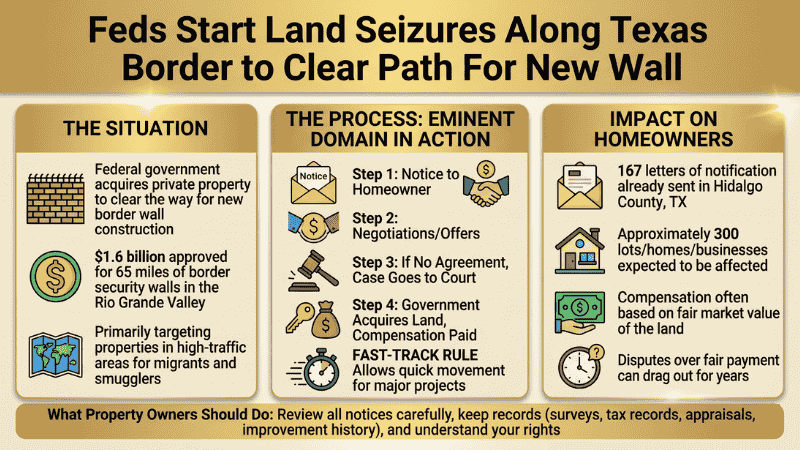
$1.6 billion dollars was approved already for 65 miles of border security walls in the Valley. This amount is just a partial amount needed but at least it is a start. As the fight for border security funding and family separations continue with Republicans and Democrats, U.S. Customs And Border Protection announced in moving forward with land acquisition. Feds Start Land Seizures in the Rio Grande Valley and surrounding areas. They plan on building sections after sections of border walls.
Feds Start Land Seizures Along Texas Border to Clear Path For New Wall
In a surprising and heated step, federal agents have started taking private land along the Texas border so work on the new border wall can begin. People on both sides of the issue agree this action is a Turning Point in President Donald Trump’s push to make the U.S.-Mexico border more secure. The first properties targeted are mostly in the Rio Grande Valley, long known as a high-traffic area for migrants and smugglers.
Why Feds Start Land Seizures Along the Texas Border
Feds start land seizures when the federal government needs private property to move forward with border wall construction. In many cases, this process begins when agencies identify land along the project’s proposed path and contact owners to acquire all or part of their property. If a voluntary sale cannot be reached, the government may use eminent domain to take the land for public use, while still being required to provide compensation under the law.
For Texas homeowners, the more important issue is not the political debate surrounding the wall but how the process may affect their homes, land, businesses, and access to their property. Once the government begins taking steps to acquire land, owners may receive notices, appraisal information, or offers based on the government’s estimate of value.
Some property owners may accept an offer, while others may challenge the amount or the terms in court. This is why understanding the process matters. Homeowners in affected border areas need clear information on how eminent domain works, their rights, how compensation may be calculated, and what steps to take if their land is targeted. For many families, the immediate concern is not Washington politics. It is whether they may lose part of their property, how long the process may take, and whether the payment offered will be fair.
Feds Start Land Seizures Along Border and The Impact on Texas Homeowners: Eminent Domain in Action
Eminent domain lets the government take private land if the project serves the public good, promising fair payment to the owner. Here, that power is being used so crews have enough room to build new wall sections along the Texas border with Mexico. Customs and Border Protection, the federal agency in charge, sits down with individual landholders, hoping they will agree to sell rather than face a long court battle. Much of the focus is on the Rio Grande Valley because its location makes it ground zero for the first stretch of wall.
Feds Start Land Seizures – What are the Current Plans
Since the plan was first made public, hundreds of property owners in Hidalgo County, Texas, have received notifications. To date, 167 letters have gone out, and officials expect around 300 lots, including homes and businesses, will eventually be affected. Each notice tells owners the government wants to buy their land, yet the exact list of addresses and how the process will roll out is still unclear. Marga Jurilla, the assistant of Gustan Cho says the following about the Feds start land seizures and how homeowners come out with the proceeds:
Others are in court over the fair market value of their seized land. Eminent domain opens up another controversy among politicians, homeowners, and the courts.
Federal agencies are already putting compensation offers on the table, but that is only the start of the story. If a homeowner feels the payout is too low and decides to fight back, the matter can end up in court, dragging negotiations out for years. Even without a legal challenge, the government can use eminent domain under a fast-track rule that dates back to the Great Depression, allowing major public projects to move ahead quickly.
What Eminent Domain Means
Eminent domain is when the government can take someone’s private property for public use. In border wall cases, the public use is the construction of barriers, access roads, or related infrastructure along the Texas border. When this happens, property owners do not simply lose their land without a process. The government must follow legal steps and offer compensation for the property it takes.
How the Process Works
The process usually begins when a federal agency identifies land needed for the project and contacts the property owner. In many cases, the government first tries to buy the land through negotiation. That may involve an appraisal, a written offer, and discussions of the property’s value. If the owner does not agree to sell, the government may move forward with eminent domain. At that point, a legal case can be filed to acquire the property through the courts. Some owners accept the offer and move on, while others challenge the amount being offered or other parts of the process.
What Homeowners May Receive
When the government takes land through eminent domain, homeowners are usually compensated based on the property’s value. In some cases, if the takeover affects their home or forces them to move, they may also receive help with relocation costs. The compensation can vary quite a bit depending on factors such as the size and use of the land, any improvements made, and how the government values it. Because of this, some homeowners might think the initial offer is too low and choose to challenge it.
Why Delays Happen
Land seizure cases are often not resolved quickly. Delays can occur when there are disagreements over fair market value, questions about the amount of land being taken, or when property owners file legal challenges. Court proceedings, appraisals, and negotiations can all stretch the timeline. That is why some eminent domain cases can take months or even years to fully resolve. Even when the government moves quickly to acquire land, disputes over compensation can continue long after the initial notice is sent.
What Property Owners Should Do Next
Homeowners affected by land seizure should review every notice carefully and keep copies of all documents related to their property. It is also important to gather records that may help show the property’s value, such as surveys, tax records, appraisals, and improvement history. Because eminent domain cases can be complex, property owners may also want to speak with a qualified real estate or eminent domain attorney to better understand their rights, the compensation being offered, and whether they should challenge the government’s valuation.
Texas Counties Affected by Land Seizure Efforts
 In Hidalgo County, federal land acquisition activity has already drawn attention as officials move forward with planning tied to border wall construction. Property owners in Hidalgo and nearby counties, including Starr, Cameron, and Willacy, may be watching closely as more information becomes available about which parcels could be affected. For many homeowners, the biggest concerns are whether their property may be included, how much notice they will receive, and what compensation may be offered if land is taken.
Reports indicate that dozens of property owners in Hidalgo County have already received notices related to possible land acquisition, and more properties could be affected as the project moves forward in phases. As additional sections of the border wall are planned, more Texas communities may see appraisal activity, government outreach, and compensation offers tied to eminent domain proceedings.
Because land acquisition efforts can expand over time, affected homeowners should pay close attention to official notices, property maps, and any communication related to their land. For property owners in border-area counties, staying informed early can make it easier to understand the process, review offers carefully, and prepare for the next steps if their property is targeted.
Compensation for Seized Land and Possible Relocation Assistance
The federal government is already taking land in several Texas communities, and lawmakers warn the process is just getting started. Rep. Henry Cuellar says planning for the border wall moves in stages, so more properties will probably be seized as building crews move forward. The Biden administration has cleared the first money and green light to buy land. A $1.6 billion pot is meant to pay for roughly 65 miles of new fence. Yet, billions more will be needed before the entire project is finished. When the government takes private property through eminent domain, homeowners are generally entitled to compensation for the portion of land being acquired. Usually, the compensation you get is based on what the government thinks the property is worth. But keep in mind that the amount they offer might not always align with what you believe your land is actually worth.
How Compensation Is Generally Determined
The amount offered in an eminent domain case is often based on factors such as the size of the property being taken, its location, its current use, and any improvements that may affect its value. If only part of a property is taken, the impact on the remaining land may also become an issue. Because valuation can be complex, property owners sometimes disagree with the government’s initial offer.
What Relocation Assistance May Cover
In some situations, affected homeowners or occupants may also qualify for relocation assistance. This can include certain moving-related costs or other support connected to displacement from the property. Whether relocation benefits apply, and how much help may be available, can depend on the facts of the case, the type of property involved, and the status of the person occupying it.
Why Payment Disputes Happen
Disputes often arise when property owners believe the government’s valuation is too low or does not fully account for the real impact of the taking. For example, disagreements may involve the value of structures or improvements, loss of access, damage to the remaining property’s usefulness, or whether a partial taking creates additional financial harm. When that happens, the matter may move into further negotiations or court proceedings.
Why Some Cases Take Longer to Resolve
Even when the government moves forward quickly with land acquisition, compensation issues are not always resolved right away. Appraisals, negotiations, legal filings, and court review can all add time to the process. As a result, some eminent domain cases may take months or longer to determine the final compensation amount.
Why Homeowners Should Review All Notices Carefully
Property owners affected by a land seizure should keep copies of all notices, offers, appraisals, and property-related records they receive. It is also important to carefully review all documents and understand which part of the property is being taken, what compensation is being offered, and whether any relocation benefits may apply. Because these cases can involve important legal and financial rights, homeowners may also want to speak with a qualified eminent domain or real estate attorney for guidance.
The Controversy Around Eminent Domain
Eminent domain has generated headlines and dinner-table talk because it lets the government take private land in the name of the public good. Agencies can use this power to build highways, schools, and, yes, even a border wall. Still, people who live near the edge of Texas, and many advocates, say the process hits low-income and minority families the hardest.
There are still pending eminent domain cases from over a decade away when President George W. Bush Administration invoked eminent domain to build walls. There is a loophole in our federal laws that our government can invoke eminent domain where it expedites the process.
As lawsuits pile up and talks stretch on between federal lawyers and local homeowners, observers will want to keep a close eye on the situation. What courts decide—or what negotiators agree to—could set the rules for border security projects and everyday American landowners for years.
How the Feds Start Land Seizures Will Shape Bigger Border-Wall Plans
The government’s first steps to claim land along the Rio Grande are only the opening act in a much bigger show. If the wall moves forward, dozens or even hundreds of other properties may undergo the same twist of appraisals, court filings, and surprise easements. Additional information could help future borrowers protect their homes or, at the very least, prepare for the legal road ahead. Dale Elenteny, a senior loan officer at Gustan Cho Associates says the following about the Feds start land seizures in Texas:
In general, land seizures by the federal government take time. It is not done and finalized in a matter of days and/or weeks. It may take years if uncooperative homeowners decide to sue the government
If the government is taking your land for the border wall, Gustan Cho Associates is ready to step in. Our Texas-licensed team knows how to turn the pain of a seizure into a fresh start. We offer loans that pay for a new house, refinance your current mortgage, and even cover moving expenses.
Final Thoughts on Feds Start Land Seizures Along the Texas Border
When feds start land seizures for border wall construction, the issue can quickly become stressful for affected homeowners and property owners. Questions about eminent domain, compensation, relocation assistance, and legal timelines are often the biggest concerns. That is why it is important to understand how the process works, what rights property owners may have, and what steps to take if the government contacts them about their land. For many Texas homeowners, the most important goal is getting clear information early. Reviewing notices carefully, keeping property records organized, and understanding how compensation may be determined can make a difficult situation easier to navigate. Because every property and land acquisition case can be different, some owners may also need guidance from a qualified eminent domain or real estate attorney to better understand their options. As more land-acquisition efforts move forward along the border, property owners should stay informed and pay close attention to official notices affecting their areas. A well-informed homeowner is better positioned to respond, protect their interests, and make sound decisions throughout the process.
Frequently Asked Questions About Why Feds Start Land Seizures:
What Does it Mean When the Feds Start Land Seizures?
When the feds start land seizures, it usually means the federal government has begun acquiring private property for a public project, such as border wall construction. In legal terms, this often involves eminent domain, which allows the government to take private land for public use, provided compensation is paid.
Can the Government Take Private Land for a Border Wall?
Yes. The government can take private land for a border wall if the project is treated as a public use under eminent domain law. That does not mean the process is unlimited, though. Property owners may still have rights related to notice, valuation, compensation, and, in some cases, whether the taking is legally justified.
What Rights do Homeowners have if Their Land is Targeted?
Homeowners generally have the right to receive notice, review the government’s offer, challenge the value being assigned to the property, and present evidence if they believe the compensation is too low. In Texas eminent domain matters, owners may also dispute how the taking affects the remaining property if only part of the land is acquired.
How is Compensation Determined in a Land Seizure Case?
Compensation is typically based on the property’s fair market value. If only part of a property is taken, the impact on the remaining land may also matter. That can include issues such as reduced access, reduced usability, or a loss in value of what remains after the taking. Because valuation disputes are common, some property owners choose to obtain their own appraisal or challenge the government’s offer.
Do Homeowners Have to Accept the Government’s First Offer?
No. Property owners are not automatically required to accept the government’s initial offer. If they believe the amount is too low, they may reject it, and the case can move further into the condemnation process, where value may be reviewed more formally.
What Should I do if I Receive a Land Seizure or Condemnation Notice?
Start by reading the notice carefully and keeping copies of every document, appraisal, map, and offer you receive. It is also wise to gather your own property records and understand exactly what land is affected. Because eminent domain cases can become technical and time-sensitive, many landowners seek qualified legal guidance early, especially when they want to review valuation, access issues, or damage to the remaining property.
This article about “Feds Start Land Seizures Along Texas Border To Build Wall” was updated on April 21st, 2026.