
Why Credit Reports Matter in the Mortgage Application Process Your credit report plays a major role in whether you qualify for a mortgage, what interest rate you get, and how much you may need for a down payment or a monthly housing payment. Just because your credit score hits the minimum doesn’t mean you’re in the clear. Mortgage lenders dig a bit deeper by checking out your whole credit history, looking for things like late payments, collections, how much you owe, disputes, and other stuff that might make them nervous.
For homebuyers and homeowners, understanding the importance of credit reports in the mortgage application process can help prevent delays, improve loan options, and increase the chance of approval. A credit report is more than a number. It gives lenders a detailed picture of how you have handled debt and whether you are ready to take on a home loan.
In this guide, you will learn about the importance of credit reports, what they are, what mortgage lenders look for, how credit reports affect mortgage approval, and what steps you can take to strengthen your credit before applying.
The Importance of Credit Reports in the Mortgage Process

What Is a Credit Report?
At its core, a credit report serves as a comprehensive record detailing every instance of borrowing money or opening accounts, demonstrating your ability to manage those accounts responsibly. The importance of credit reports is underscored by the roles of the three primary credit bureaus—Equifax, Experian, and TransUnion—that gather and compile this critical information. This report contains an extensive list of all credit accounts you have ever opened, tracks your payment history, assesses your outstanding debts, and highlights significant issues like bankruptcies. When lenders review your mortgage application, they often prioritize this report as it plays a pivotal role in assessing your likelihood of repaying the loan on time.
Key Parts of a Credit Report
A credit report has different parts that give mortgage lenders a good look at your financial background. Understanding the importance of credit reports is essential, as each part provides insights into your debt management and highlights potential risks that could affect your mortgage approval.
Personal Information
This section shows basic identifying details such as your name, current and previous addresses, date of birth, and Social Security number. Lenders review this area to confirm that the credit report belongs to you and that the information in your mortgage application matches your file.
Credit Accounts
This part lists your credit cards, auto loans, student loans, personal loans, and other accounts. It shows when each account was opened, how much is owed, the payment history, and whether the account is up to date, late, or closed. For mortgage lenders, this is one of the most important sections because it shows how you have handled borrowed money over time.
Payment History
Your payment history shows whether you paid your accounts on time. Late, missed, and delinquent payments, collections, and charge-offs can raise concerns for mortgage lenders. A strong payment history helps show that you are likely to manage a future mortgage responsibly.
Credit Inquiries
This section shows who’s been checking your credit. Hard inquiries happen when you go for new credit, like a mortgage, car loan, or credit card. Soft inquiries pop up when you check your own credit or when companies peek at your file for marketing. If you have too many recent hard inquiries, it might look like you’re racking up new debt.
Public Records and Negative Items
This section may include major derogatory events such as bankruptcies, foreclosures, judgments, or tax liens when applicable. These items can affect mortgage eligibility depending on the loan program, the event date, and whether waiting periods have passed.
The Importance of Credit Reports and Why it Matters in the Mortgage Process
Mortgage lenders don’t make assumptions about your financial behaviors; they analyze your credit report to make informed decisions. Understanding credit reports can really boost your chances of landing a better deal or even getting a loan in the first place. Here are the essential functions that the report serves:
The Importance of Credit Reports: It Determines Loan Approval
- Alongside income and assets, your report decides if you walk away with signed papers or a “try again” note.
- A long history of timely bills paints you as a safe bet, while missed payments and collections scream risk.
- Even solid income may not save the file from rejection when those red flags appear.
Credit Reports Influence Your Interest Rate
The importance of credit reports cannot be overstated, as they can significantly influence the interest rates borrowers receive. Typically, those with stronger credit profiles are more likely to secure favorable mortgage rates, while those with lower scores or recent negative credit events may face higher rates. Even a slight change in interest rates can result in higher monthly payments and a larger total amount paid over the life of the loan.
Impacts Loan Terms and Conditions
Interest is only one piece. Your report also steers things like how much money you must put down or whether you’ll pay monthly private mortgage insurance. People with lower scores may face larger down-payment demands and must carry PMI, a monthly fee that shields lenders if the loan goes bad.
Affects Debt-to-Income Ratio (DTI)
When lenders size you up, they look closely at your debt-to-income ratio, or DTI, which divides your monthly bills by paycheck. Your credit report lists those bills, which clearly show what you owe. A high DTI, often seen as anything over 43 percent, can dim your odds of getting approved for the new mortgage you want.
Potential Red Flags
Recognizing errors or indications of fraud on your credit report is important, as it can determine whether you secure a straightforward mortgage approval or face significant challenges. An overlooked medical bill or an incorrectly noted late payment could lower your score just enough to hinder your chances of obtaining a better interest rate. This underscores the importance of credit reports; by reviewing them regularly, you can address these issues well before a lender evaluates your financial history.
How Mortgage Lenders Review Your Credit Report
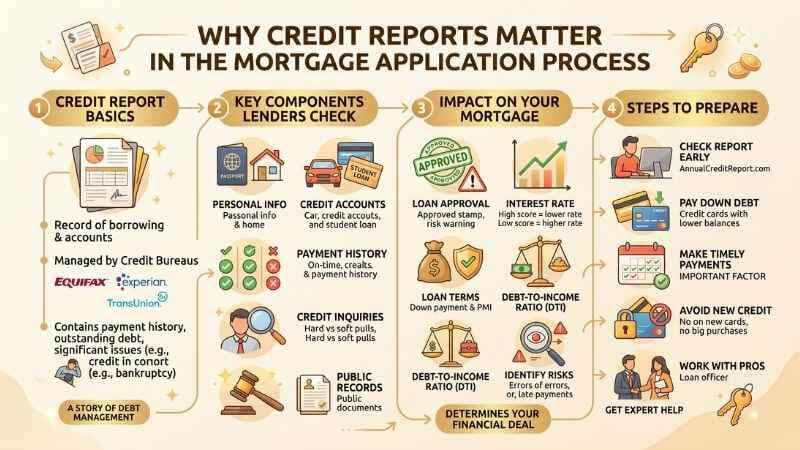 Mortgage lenders assess your credit report multiple times throughout the home loan process. This highlights the importance of credit reports, which provide insight into your debt management, reveal whether your payments have been punctual, and help identify potential credit issues that could impact your loan approval.
During Pre-Approval
At the start of the process, lenders review your credit to estimate whether you qualify for a mortgage and what loan options may be available. This early review helps determine how much home you may be able to afford and whether there are any credit concerns to address before moving forward.
During Loan Review
After you send in your complete mortgage application, the lender will dig deeper into your credit history, as well as check out your income, assets, and job situation. They may review late payments, collections, high balances, disputed accounts, or recent new debt to make sure your file meets mortgage guidelines.
Before Closing
Lenders may review your credit again before closing to make sure nothing major has changed since your application was approved. Taking on new debt, opening new accounts, or missing payments during this time can create problems and may delay the loan.
Don’t Let Credit Surprises Delay Your Loan
We’ll help you review, correct, and strengthen your credit before submitting your mortgage application.How to Prepare Your Credit Before Applying for a Mortgage
Getting your credit ready before applying for a home loan can improve your approval chances and help you qualify for better terms. The goal is not perfection. The goal is to make sure your credit report is accurate, stable, and as strong as possible before a lender reviews it.
Check Your Credit Report Early
Review your credit report before you apply for a mortgage. Look for incorrect late payments, duplicate accounts, wrong balances, or unfamiliar accounts that may need to be disputed. Fixing errors early can help prevent delays later in the mortgage process.
Pay Down Credit Card Balances
Lowering your credit card balances can strengthen your credit profile and reduce your monthly obligations. Having a lot of debt on your credit cards can really mess with your credit score and your debt-to-income ratio. Both of these things are important when you’re trying to get approved for a mortgage.
Make Every Payment on Time
On-time payments are among the most important factors in a strong credit profile. Even a single recent late payment can hurt your mortgage application, especially if it occurs shortly before you apply.
Avoid Opening New Credit Accounts
Avoid applying for new credit cards, car loans, or personal loans while you’re going through the mortgage process. New accounts can lead to hard inquiries, increase your monthly debt, and create additional risk in the lender’s eyes.
Work With a Mortgage Professional if Needed
If your credit needs improvement, a knowledgeable loan officer or mortgage broker can help you understand what issues may need attention before you apply. In some cases, a borrower may qualify now. In other cases, a short plan to improve credit can lead to better loan options.
Get Help from a Mortgage Pro
A good loan officer or mortgage broker can pull your credit report, spot weak spots, and tell you exactly what you need to fix. If your score is lower, they’ll also match you to the best loan option, like an FHA program.
Mistakes to Avoid Before Applying for a Mortgage
When preparing for a mortgage, it’s crucial to recognize the importance of credit reports and to avoid common mistakes that can undermine your application. Steer clear of applying for new credit, missing payments, maxing out credit cards, or overlooking errors on your credit report. Even minor adjustments to your credit profile can affect your approval or delay loan approval.
The Long-Term Impact of a Good Credit Report.
A healthy credit report does more than get you a mortgage; it steers your financial future. Strong scores can trim your interest rate, lower your monthly bill, and change loan details, so you spend less over the decades. Keep those good habits after closing; you might also snag an easy refinance or kinder deals on the next big purchase. Your credit report is at the heart of the mortgage game, shaping everything from whether you get approved to the monthly payment you see. When you know that, keep an eye on your scores and tackle small fixes over time, you set the stage for a faster and cheaper home-buying trip. To begin the credit clean-up now, talk to a mortgage pro about your next move, and watch how a healthy report brings that dream front door closer.
Call to Action
Excited to kick off your mortgage journey? Grab a free copy of your credit reports now at AnnualCreditReport.com, then reach out to a lender who can walk you through options. If you found this guide helpful, pass it to a friend planning to buy a home, and drop a comment below about the steps you’re taking to boost your credit for the big application!
What Your Credit Report Shows
- Credit Inquiries: This section lists everyone who reviewed your credit file. It has hard pulls, like when you apply for a mortgage, and soft pulls, like a free credit check.
- Public Records: Here, you’ll see major legal marks, such as bankruptcies, foreclosures, or unpaid tax liens, all of which can weigh down your score.
- Credit Score: Your actual number sits separate from the report, but it gets whipped up using the info inside—that score, whether FICO or Vantage, nearly always sways a lender’s mortgage decision.
Why Credit Reports Matter in the Mortgage Process
The importance of credit reports lies in their role in helping mortgage lenders assess risk. These reports reflect how you handle debt, your payment history, the amount you currently owe, and any potential red flags that could impact your ability to repay a home loan. Even if you have a solid income, issues on your credit report can restrict your mortgage options.
Credit Reports Affect Mortgage Approval
Lenders review your credit report to decide whether you meet the basic credit standards for a home loan. A strong report with on-time payments and manageable debt can support approval. Recent late payments, collections, charge-offs, or major derogatory events may create problems, especially if they are recent.
Credit Reports Influence Your Interest Rate
Your credit profile affects mortgage pricing. In general, borrowers with stronger credit histories often qualify for lower interest rates. In contrast, borrowers with weaker credit may pay more. Even a small rate difference can raise the monthly payment and increase the total cost of the loan over time.
Credit Reports Can Affect Loan Terms
Credit reports not only affect approval and rate. They can also affect the type of loan you qualify for, the amount of money required at closing, and whether extra conditions apply. Depending on the loan program and lender guidelines, weaker credit may reduce flexibility.
Credit Reports Help Lenders Review Monthly Debt
Your credit report shows many of the monthly debts that lenders use when reviewing your debt-to-income ratio. This includes credit cards, auto loans, student loans, and other obligations. Higher monthly debt can reduce how much home you qualify for, even if your income is stable.
Credit Reports Can Reveal Errors or Risk Flags
Credit reports sometimes contain mistakes, outdated information, or signs of identity issues. Lenders may ask questions about disputed accounts, unexplained collections, or recent credit activity. Reviewing your credit report early gives you time to correct errors before they delay your mortgage process.
How Lenders Use Your Credit Report
When lenders pull your file, they don’t look at just one bureau. Instead, they order a tri-merge report, which blends records from Experian, TransUnion, and Equifax into a single document. After that, they grab the middle score, or the lower one if they see only two, to guide their decision. Here’s the routine step-by-step:
- Pre-Approval: First, during pre-approval, the lender uses the score to guess how much money you can borrow and what interest rate you’ll see.
- Underwriting: Later, a second look helps them double-check your income and debts and determine whether anything still mismatches.
- Final Approval: Just before closing, they pull the report one last time to ensure no new loans or surprises have occurred since you started the process.
How to Get Your Credit Ready for a Mortgage
- Your credit report can greatly affect whether lenders say yes to your mortgage.
- Try these simple steps to polish your credit before you apply:
Check Your Credit Report Early
- Start by getting free copies of your credit reports from Equifax, Experian, and TransUnion at AnnualCreditReport.com.
- Look carefully for incorrect balances, duplicate accounts, or unfamiliar inquiries.
- If you spot anything off, dispute it immediately; fixes usually take 30 to 60 days.
Boost Your Credit Score
- Pay Down Debt: Bring credit card balances down so your overall use stays under 30 percent.
- Make Timely Payments: Since payment history makes up 35 percent of your FICO score, always pay bills on time.
- Avoid New Credit: Wait to open new cards or make big purchases, because fresh accounts create hard inquiries that can drag your score down.
- Clean Up Negative Marks: Take action if your report still shows late payments or collections.
- Pay off outstanding debts: Set up a plan you can stick with, or let older items age off.
- Most bad marks drop off after seven years.
Keep Your Debt-to-Income Ratio Low
One of the easiest ways to boost your mortgage application is to lower your debt-to-income (DTI) ratio. Focus on paying down current bills instead of picking up new loans, especially while your mortgage is in process.
Get Help from a Mortgage Pro
A good loan officer or mortgage broker can pull your credit report, spot weak spots, and tell you exactly what you need to fix. If your score is lower, they’ll match you to the best loan option, like an FHA program.
Common Credit Report Blunders to Watch Out For
- Ignoring Mistakes: Skipping credit checks lets errors hide and damage your mortgage chances.
- Multiple Applications at Once: Nailing a bunch of loan apps in a week triggers several hard inquiries, which drop your score.
- Closing Old Accounts: Shuttering unused cards shrinks your credit age and raises your utilization, two strikes against your score.
- Late Payments: One missed payment can hit your score hard, so set up autopay alerts to stay on time.
How Mortgages Treat Your Credit
- Conventional Loans: Usually ask for at least a 620 score.
- Rates improve once you climb past 740.
- FHA Loans accept scores as low as 580, and even 500 if you put down 10%.
- VA Loans technically have no cut-off, yet lenders usually look for around 620 or better.
- USDA Loans work much the same way, letting families in rural areas borrow with flexible credit, though 640 is the sweet spot many lenders like.
- Always ask your lender what standard they use.
The Long-Term Impact of a Good Credit Report
A healthy credit report is important not only for securing a mortgage but also for shaping your financial future. The importance of credit reports lies in their ability to influence your interest rate, reduce your monthly payments, and adjust loan terms, ultimately saving you money over time. By maintaining good credit habits even after closing, you can position yourself for easier refinancing options or better deals on future purchases. Your credit report is central to the mortgage process, determining everything from your approval status to your monthly payment. Understanding this, it’s important to monitor your scores and address minor issues gradually. This proactive approach sets you up for a smoother and more affordable home-buying experience. To kickstart your credit clean-up, consider consulting a mortgage professional to discuss your next steps and see how a strong credit report can bring homeownership closer to reality.
What Lenders Notice on a Credit Report
A credit report contains several types of information, including your identifying details, open and closed credit accounts, payment history, credit inquiries, and certain public-record items when they apply. For mortgage purposes, lenders usually focus most on whether you pay on time, how much debt you carry, and whether there are any negative items such as collections, charge-offs, bankruptcies, or foreclosures. For borrowers, the importance of credit reports lies not in memorizing every detail but in ensuring that the report is accurate, up-to-date, and devoid of issues that could hinder the mortgage process.
Why Mortgage Lenders Focus So Closely on Credit Reports
Mortgage lenders place great importance on credit reports because home loans represent significant long-term financial commitments. These reports help lenders assess how well you handle debt, whether you’ve been making your payments on time, and any red flags that could affect your chances of getting a mortgage. Consequently, the importance of credit reports can greatly affect your approval chances, the terms of the loan, and the overall costs associated with the mortgage.
What Mortgage Underwriters Look for in a Credit Report
Mortgage underwriters check the importance of credit reports by examining them for patterns that could influence a borrower’s capacity to repay a home loan. Their evaluation goes beyond just checking the credit score; they also analyze the complete credit profile for indications of financial stability or potential risk.
Recent Late Payments
Underwriters pay close attention to recent late payments, especially within the past 12 months. A recent pattern of missed payments may raise concerns even if the credit score meets minimum requirements.
Collections and Charge-Offs
Collections and charged-off accounts can affect mortgage approval depending on the loan program, the amount owed, and whether the accounts remain outstanding. These items may also lead to additional lender questions during the review process.
Bankruptcies, Foreclosures, and Other Major Credit Events
If a borrower has a prior bankruptcy, foreclosure, deed-in-lieu, or short sale, underwriters carefully review the dates and surrounding credit history. Waiting periods and guideline requirements may apply depending on the loan type.
Disputed Accounts and Recent Credit Activity
Disputed accounts, new debt, or recent credit inquiries may also be subject to closer review. Lenders want to confirm that the borrower’s credit profile is stable and that no new financial obligations could affect the mortgage decision.
Other Monthly Obligations That Affect Qualification
Underwriters may also review obligations such as student loans, child support, or alimony when those items affect monthly debt or overall qualification. These factors can play an important role in the borrower’s full financial picture.
Final Thoughts on the Importance of Credit Reports in the Mortgage Application Process
Your credit report is one of the most important parts of the mortgage process because it helps lenders evaluate how you have managed debt over time. It can affect your approval, your interest rate, your loan options, and how smoothly your application moves from pre-approval to closing.
The good news is that many credit issues can be addressed before you apply. Reviewing your credit report early, correcting errors, paying down balances, and avoiding new debt can strengthen your overall mortgage profile. Even if your credit isn’t great, knowing what lenders want can really help you get ready.
For most borrowers, the key takeaway is simple: do not focus only on your credit score. Focus on the full credit report. A strong, accurate, and stable credit profile can make a major difference when applying for a home loan. If you are thinking about buying a home or refinancing, reviewing your credit report before applying can help you avoid surprises and make the mortgage process easier.
Frequently Asked Questions About the Importance of Credit Reports:
What is a Credit Report, and Why Does it Matter for a Mortgage?
A credit report is a record of how you have handled credit accounts, payments, balances, and certain negative items over time. Mortgage lenders use it to help decide whether to approve your loan and what interest rate or terms to offer. That is why the importance of credit reports goes far beyond just knowing your score.
Do Mortgage Lenders Look at My Credit Score or My Full Credit Report?
Lenders look at both, but the full credit report matters because it shows the details behind the score. They review payment history, current debts, recent inquiries, collections, and other risk factors when evaluating your mortgage application. This is one of the main reasons the importance of credit reports should be explained clearly to borrowers.
Can I Still Get a Mortgage if My Credit Report has Late Payments or Collections?
Yes, in many cases you still may qualify, but it depends on how recent the late payments are, how serious the negative items are, and the loan program or lender guidelines. A weaker credit report may limit your options or raise your borrowing costs, but it does not always mean automatic denial.
Does a Mortgage Credit Check Hurt My Credit Score?
A mortgage credit check usually results in a hard inquiry, which can have a slight negative effect on your credit scores. Even so, the impact is often limited, and shopping for a mortgage is still a normal part of the homebuying process.
What Should I Check on My Credit Report Before Applying for a Home Loan?
Before applying, review your credit report for incorrect late payments, wrong balances, unfamiliar accounts, duplicate debts, and other errors. Lenders rely on this information when reviewing your application, so correcting mistakes early can help avoid delays or pricing issues.
How Does My Credit Report Affect My Mortgage Interest Rate?
Your credit report helps lenders assess repayment risk, which can directly affect mortgage pricing. Borrowers with stronger credit histories often receive better rates and terms, while borrowers with weaker credit profiles may pay more over time.
This article about “Importance of Credit Reports In the Mortgage Process” was updated on April 14th, 2026.