Buying A House With Unpermitted Work: What Homebuyers Need To Know
Buying a house with unpermitted work can create problems that many homebuyers do not discover until they are already under contract. A home may look beautifully remodeled, but if the seller renovated the kitchen, bathroom, basement, attic, garage, electrical, plumbing, roof, or addition without proper permits, the buyer needs to slow down and ask the right questions before closing.
Unpermitted work does not always mean you should walk away from the home. However, it can affect the mortgage approval, appraisal, homeowners’ insurance, resale value, and local code compliance. In some cases, the lender or appraiser may require repairs, documentation, or additional review before the loan can close.
Homebuyers should also understand that permit rules vary by city, county, and state. Some unpermitted work may be minor and manageable. Other issues, such as structural changes, illegal basement apartments, garage conversions, electrical or plumbing work, or additions, can pose greater risks.
In this guide, we will explain what buyers should know before buying a house with unpermitted work, including the risks, financing issues, appraisal concerns, insurance problems, seller disclosure questions, and steps to take before making a final decision. The original article already covers key concerns such as legal issues, insurance, resale complications, and financing challenges, but the updated version should lead with the buyer’s main question: Can I still buy and finance this home safely?
How to Navigate the Legalities of Buying a House with Unpermitted Work

When buying a house with unpermitted work, several risks and challenges should be considered. One of the most critical issues is the potential for legal complications. Doing renovations without the necessary permits can get you in trouble with local building codes and rules. This could mean fines, penalties, or even legal trouble with local authorities. If you buy a property with unapproved changes, you may have to fix any code violations.
What To Do Before Buying A House With Unpermitted Work
Before buying a house with unpermitted work, slow down and gather the facts. A remodeled home may look move-in ready, but renovations completed without permits can create problems with the appraisal, mortgage approval, homeowners’ insurance, resale value, and local building department. The original article already mentions financing challenges, insurance concerns, resale issues, and possible legal problems, but buyers need a clear action plan before closing.
Get A Full Home Inspection
Start with a detailed home inspection. Ask the inspector to pay close attention to any areas that appear to have been recently remodeled, including the kitchen, bathroom, basement, attic, garage, electrical system, plumbing, roof, and additions.
A home inspection does not replace a building permit review, but it can help identify visible safety concerns, poor workmanship, or signs that the remodel may not meet local code.
Ask The Seller For Permit Records And Renovation Documents
Ask the seller for copies of permits, final inspection approvals, invoices, contractor information, plans, and disclosure forms. If the seller says the work was done by a prior owner, still ask for any documentation they received when they bought the property.
Helpful documents may include:
- Permit records
- Contractor invoices
- Before-and-after plans
- Receipts for materials
- Final inspection approvals
- Seller disclosure forms
- Names of licensed contractors used
If the seller cannot provide documents, that does not always mean the deal is dead. However, it does mean the buyer needs to investigate further.
Contact The Local Building Department
Permit regulations vary by location. When buying a house with unpermitted work, it’s important to understand that a remodeling project might be handled differently in one city compared to another county or state. Before removing contingencies, contact the local building department or consult your real estate agent, attorney, or inspector to determine whether any permits were required for the work done.
The building department can confirm whether permits were issued, whether final inspections were completed, and whether there are any open violations related to the property.
Ask Whether Retroactive Permits Are Possible
In some cases, the seller may be able to apply for retroactive permits before closing. This may require inspections, repairs, updated plans, a licensed contractor, or opening walls so inspectors can review electrical, plumbing, or structural work.
Retroactive permits can be helpful, but they can also delay closing or become expensive. Buyers should know who will pay for the process before moving forward.
Notify Your Lender Early
When buying a house with unpermitted work, it’s important not to wait for the appraisal to inform the lender about these issues. If the appraiser identifies safety concerns or flags items such as illegal living spaces, unpermitted additions, garage conversions, basement apartments, or finished areas that might not qualify as legal living space, it could affect mortgage approval.
By notifying the lender early, the loan officer can assess whether these issues will affect the loan program, appraisal process, underwriting, or closing timeline.
Ask The Insurance Company About Coverage
Before closing, ask your homeowners’ insurance agent whether the unpermitted work could affect coverage. This is especially important if the remodel involved electrical work, plumbing, structural changes, additions, a finished basement, or a converted garage.
Some insurance issues do not surface until a claim is filed. Buyers should not assume everything is covered just because they can obtain a policy.
Speak With A Local Real Estate Attorney Before Removing Contingencies
Before removing contingencies related to inspection, financing, or attorney review when buying a house with unpermitted work, it’s crucial to consult with a local real estate attorney. This becomes particularly important if the seller has not disclosed any unpermitted work, if there are safety concerns, or if the local building department might mandate repairs, fines, or removal of such work.
A qualified real estate attorney can assist the buyer in understanding their options. This may involve requesting that the seller address the issues, resolving past permits, providing a credit, negotiating a lower price, or, if permitted by the terms, allowing the buyer to withdraw from the contract.
Found a Beautifully Remodeled Home—but No Permits?
Learn what to do when buying homes remodeled without permits before you signPermit Rules Vary By City, County, And State
Permit rules vary from place to place. There is no single national rule that applies to every home with unpermitted work. A repair or remodel that requires a permit in one city may be handled differently in another city, county, or state.
This matters because buying a house with unpermitted work is not only a mortgage issue. It can also become a local code, disclosure, insurance, appraisal, resale, and legal issue.
Local Building Departments Set The Rules
Before closing, buyers should verify the property with the local building department. The building department may be able to confirm whether permits were required, whether permits were pulled, whether final inspections were completed, and whether there are open code violations on the property.
This is especially important when the home has:
- Finished basements
- Garage conversions
- Room additions
- Attic conversions
- Second kitchens
- Illegal apartments
- Electrical work
- Plumbing work
- Structural changes
- Decks, porches, or enclosed patios
Some local governments may allow retroactive permits. Others may require repairs, inspections, engineering reports, removal of the work, fines, or updated plans before the work can be approved.
Do Not Assume The Seller Knows The Rules
When buying a house with unpermitted work, it’s important to consider that a seller might genuinely believe that permits were unnecessary. The seller could have been informed by a contractor that the alterations were minor, or a previous owner may have completed the work years ago without any documentation.
However, buyers should not solely depend on verbal assurances. If the renovations affect safety, structural integrity, plumbing, electrical systems, living space, or legal use, buyers need to confirm these matters before removing contingencies.
Speak With A Local Real Estate Attorney
For legal liability, seller disclosure issues, code violations, and contract rights, buyers should speak with a local real estate attorney. State laws can vary widely on what sellers must disclose and what remedies a buyer may have if unpermitted work is discovered before or after closing.
A real estate attorney can help the buyer understand whether to ask the seller for retroactive permits, repairs, documentation, a price reduction, a credit, or the right to cancel the contract.
Why This Protects The Buyer
Buying a house with unpermitted work does not always mean the buyer should walk away. However, the buyer needs to know how the local building department, lender, appraiser, insurance company, and state disclosure laws may treat the issue.
The safest approach is to verify before closing, not after. Once the buyer owns the home, they may become responsible for correcting unpermitted work, addressing local code violations, or disclosing the issue when they sell or refinance later.
Quality of Work When Buying a House With Unpermitted Work
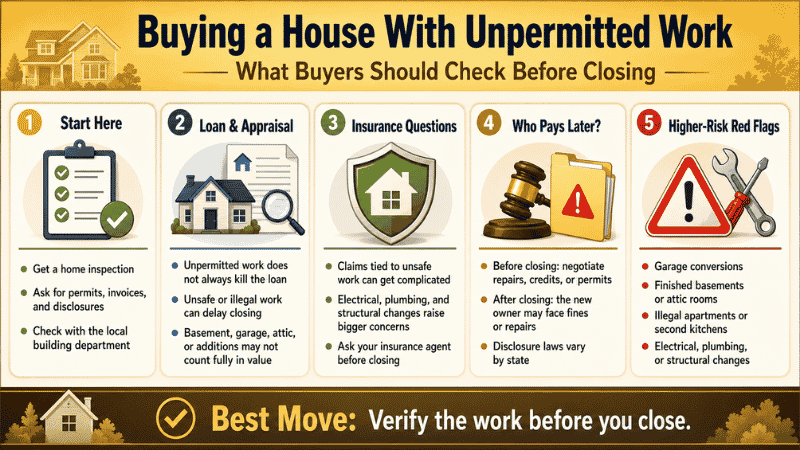
Without permits, building inspectors have no oversight to ensure the renovations are done correctly and up to code. This could mean that the quality of work may need to be better or meet safety standards, potentially leading to issues down the line.
Can Homeowners Insurance Deny A Claim For Unpermitted Work?
When buying a house with unpermitted work, homeowners’ insurance might still provide coverage; however, claims could become complicated if the damage is linked to unsafe, improper, or undisclosed renovations. This highlights the importance of asking insurance-related questions before closing the deal, rather than waiting until after the home is purchased.
Why Unpermitted Work Can Create Insurance Problems
Insurance companies care about risk. If a remodel was completed without permits, there may be no official inspection showing that the work was done safely or in compliance with local code. That can become a problem if the unpermitted work later causes damage.
For example, insurance concerns may be greater when the unpermitted work involves:
- Electrical wiring
- Plumbing changes
- Structural changes
- Room additions
- Finished basements
- Garage conversions
- Attic conversions
- Illegal apartments
- Second kitchens
- Roof or major exterior work
Minor cosmetic updates, such as paint, flooring, cabinets, or trim, may not create the same level of concern. However, anything involving safety, structure, water, fire risk, or habitability should be reviewed carefully.
Claims Related To Unsafe Work Can Be Challenged
A homeowner’s insurance policy typically provides coverage for the property as a whole, but claims can become complicated, especially when they involve buying a house with unpermitted work. For instance, if a fire is caused by unpermitted electrical installations or water damage arises from unpermitted plumbing, the insurance company may investigate whether the work was done correctly and disclosed.
The concern extends beyond just the lack of a permit; the critical issue is whether the unpermitted work was unsafe, defective, concealed, or falls under exclusions in the policy.
Be Honest With The Insurance Agent Before Closing
Buyers should not hide unpermitted work from the insurance company. Before closing, tell the insurance agent what you know about the remodeled areas and ask whether the work could affect coverage.
Good questions to ask include:
- Will this home qualify for coverage with the unpermitted work?
- Could the remodeled area be excluded from coverage?
- Would electrical, plumbing, structural, or basement work require additional review?
- Will the insurance company need photos, inspections, or documentation?
- Could a future claim be denied if damage is tied to the unpermitted work?
- Should the seller obtain retroactive permits before closing?
Do Not Wait Until After Closing To Ask
The worst time to discover an insurance problem is after closing or after a claim happens. If the home has unpermitted work, buyers should review the issue with their insurance agent, lender, home inspector, real estate agent, and attorney before removing contingencies.
Buying a house with unpermitted work does not always mean the home is uninsurable. However, buyers need to understand whether the insurance company is comfortable with the remodel, whether any exclusions apply, and whether repairs or documentation should be handled before closing.
Resale Complications Buying Homes Remodeled Without Permits
When it comes time to sell the property, you may encounter difficulties if the unpermitted work is discovered during the sales process. Buyers may be wary of purchasing a home with unpermitted renovations, which could impact the property’s resale value.
Who Is Responsible For Unpermitted Work After Closing?
When it comes to buying a house with unpermitted work, the responsibility for those issues varies based on when they are identified, the details in the purchase contract, the seller’s disclosures, and the relevant local laws. Before closing, buyers have more avenues to address these concerns. Once the sale is finalized, however, the new homeowner may be liable for resolving the problems.
Before Closing, Buyers May Have More Options
If unpermitted work is discovered before closing, the buyer may be able to negotiate with the seller. Depending on the contract, inspection contingency, attorney review period, and local rules, the buyer may be able to ask the seller to fix the issue before closing.
Possible options may include asking the seller to:
- Obtain retroactive permits
- Complete required repairs
- Provide contractor records and invoices
- Reduce the purchase price
- Offer a closing credit, if allowed by the loan program
- Extend the closing date
- Cancel the contract, if allowed under the agreement
This is why buyers should investigate unpermitted work early, before removing contingencies.
After Closing, The New Homeowner May Become Responsible
After closing, the buyer becomes the homeowner. If the local building department later discovers unpermitted work, the new owner may have to address the issue, even if a previous owner completed the remodel.
That may include:
- Applying for retroactive permits
- Paying permit fees or fines
- Hiring licensed contractors
- Making repairs to bring the work up to code
- Opening walls for inspection
- Removing unsafe or illegal improvements
- Explaining the issue when refinancing or selling
This can become expensive, especially if the unpermitted work involves electrical, plumbing, structural changes, additions, garage conversions, illegal apartments, or finished basements.
What If The Seller Did Not Disclose The Unpermitted Work?
Seller disclosure laws vary by state. In certain cases, when buying a house with unpermitted work, a seller may be obligated to disclose any known issues related to that work. In some instances, the buyer must prove that the seller was aware of the unpermitted work and failed to disclose it.
If a buyer suspects that the seller knowingly omitted information about unpermitted work, it is advisable to consult with a local real estate attorney. The attorney can evaluate the contract, seller disclosure form, inspection reports, local permit records, and relevant state laws.
Can The Buyer Make The Seller Fix It?
Before closing, the buyer may be able to ask the seller to fix the issue, obtain permits, provide documentation, or renegotiate the deal. After closing, it becomes harder. The buyer’s options depend on the contract, disclosures, inspection findings, local law, and whether the seller misrepresented the property.
That is why buyers should not ignore unpermitted work during the purchase process. It is much easier to negotiate repairs, credits, permits, or cancellation before closing than to fight over responsibility after becoming the owner.
Bottom Line On Liability
Buying a house with unpermitted work does not always mean the buyer should walk away. However, buyers need to know who may be responsible if the local building department, lender, appraiser, or insurance company raises concerns.
Before closing, get inspections, review disclosures, check permit records, notify the lender, ask the insurance company about coverage, and speak with a local real estate attorney before removing contingencies.
Can You Get A Mortgage On A House With Unpermitted Work?
Yes, you can still secure a mortgage when buying a house with unpermitted work, but approval will hinge on the nature of that work, the appraiser’s feedback, the lender’s policies, and whether the property is deemed safe, habitable, and marketable.
Unpermitted work doesn’t necessarily disqualify you from a loan, but it can lead to challenges if it compromises the property’s structure, safety, legal use, or overall value.
Lenders are primarily concerned with whether the home meets minimum property standards. If the unpermitted work is minor and cosmetic—like flooring, paint, trim, cabinets, or other non-structural updates—some lenders may not consider it a significant issue. However, substantial renovations can be a different story. Concerns arise with finished basements, garage conversions, attic conversions, additions, illegal apartments, or any unpermitted electrical, plumbing, or bedroom installations, as these can raise red flags during appraisal and underwriting.
How The Appraisal Can Affect Mortgage Approval
When buying a house with unpermitted work, it’s important to know that appraisers typically do not verify every permit with the local building department. However, if the appraiser identifies unpermitted work, unsafe conditions, illegal living spaces, poor craftsmanship, or areas that seem to fall short of local codes, these issues may be documented in the appraisal report.
If any health, safety, structural, or habitability concerns are flagged, the lender might mandate repairs, permits, inspections, documentation, or further review before closing. Additionally, the appraiser may not assign the full value to remodeled areas. For instance, an unpermitted garage conversion, basement apartment, or finished attic may not be valued the same as legally permitted living space.
FHA, VA, USDA, And Conventional Loan Concerns
FHA, VA, USDA, and conventional loans can all be affected by unpermitted work, but the issue is usually not the missing permit itself. The bigger issue is whether the property meets the loan program’s property standards and whether the lender is comfortable with the risk.
FHA, VA, and USDA loans can be more sensitive to safety, habitability, and property condition issues. If the appraiser calls out defective conditions, unsafe electrical work, plumbing problems, structural concerns, or illegal living areas, repairs may be required before closing.
Conventional loans may allow more flexibility in some cases. However, the property still needs to be acceptable to the lender, investor, and appraisal review team. If the unpermitted work affects marketability, value, safety, or legal use, the lender may still require the issue to be resolved.
Lender Overlays Can Also Matter
Even if agency guidelines do not automatically reject a home with unpermitted work, individual lenders may have overlays. A lender overlay is an extra rule added by the lender beyond the basic FHA, VA, USDA, Fannie Mae, or Freddie Mac guidelines.
One lender may be willing to review the file with proper documentation, while another may decline the property due to the same unpermitted work. This is why borrowers should work with a mortgage team that understands appraisal conditions, property issues, agency guidelines, renovation options, and lender overlays.
Can A Renovation Loan Help?
A renovation loan may help in some situations, especially if repairs or updates are needed to bring the property into acceptable condition. FHA 203k, conventional renovation loans, and other renovation financing options may allow certain repairs to be completed after closing through an approved renovation process.
However, renovation loans also have rules. The work usually needs to be documented, approved, completed by qualified contractors, and inspected. If the issue involves illegal living space, zoning problems, unsafe structural changes, or work that the local building department will not approve, a renovation loan may not solve the problem.
When Unpermitted Work Becomes A Bigger Mortgage Problem
Unpermitted work is more likely to affect mortgage approval when it involves:
- Structural changes
- Room additions
- Garage conversions
- Finished basements are used as a living space
- Attic conversions
- Illegal apartments or rental units
- Non-permitted bedrooms
- Electrical or plumbing work
- Health and safety concerns
- Open code violations
- Appraisal conditions that require repairs
Bottom Line For Borrowers
Buying a house with unpermitted work does not always mean the mortgage will be denied. Minor cosmetic work may not be a major issue. Major unpermitted renovations can create problems if they affect safety, habitability, marketability, value, legal use, or insurance coverage.
Before moving forward, borrowers should inform their lender of the issue early, review the appraisal carefully, ask what documentation may be needed, and determine whether the loan can still close. Gustan Cho Associates can help borrowers review FHA, VA, USDA, conventional, renovation, and non-QM options when a property has unpermitted work or appraisal concerns.
Hurdles With Getting Permits When Buying a House With Unpermitted Work
Municipalities require building permits to take in revenue, see if the improvement justifies property tax increase and human safety. However, most homeowners will disregard obtaining a permit and do the work without it. However, doing home improvement without a permit can end up backfiring on the homeowner when selling their home. It is best recommended to get proper permits when doing home renovation projects. This holds especially true when you are doing larger structural projects.
Why Are Building Permits Required
A permit is normally required for all types of repairs including a general repair permit on most municipalities and counties. Permits have two functions:
- Safety
- Revenue
Pulling the proper permit will require that all electricians, plumbers, HVAC professionals are properly licensed and bonded. The municipality will most likely send out a building inspector to inspect the finished product and make sure everything has been done per code. Building permits also cost money. The city or county will charge for permits and inspection fees. Depending on the type of work you do, cities and counties can raise your property taxes when they see that you have pulled a building permit to do enhancements to your home.
Home improvement such as adding a room, remodeled your basement, or turned the attic into a living space adds value to your home. Increased value to your home means higher property taxes.
Worried Unpermitted Work Will Kill Your Loan or Appraisal?
We’ll help you understand how lenders and underwriters see itWhy Some Homeowners Skip Building Permits
Many homeowners undertake remodeling projects without obtaining permits due to practical, financial, or timing considerations. This choice doesn’t necessarily imply that the seller aimed to conceal significant issues. However, when buying a house with unpermitted work, buyers need to understand the reasons for the lack of permits and make sure the renovations were carried out safely and in compliance with local regulations.
Permits Can Be Expensive
Building permits can add to the cost of a remodeling project. Depending on the city, county, and type of work, homeowners may need to pay application, inspection, plan review, contractor, or other fees to bring older parts of the home up to current code.
Because of that, some homeowners skip permits to save money. Buyers should be careful with this. Saving money on permits may lead to higher costs later if repairs, retroactive permits, fines, or corrections are required.
Permit Approvals Can Delay The Project
Some homeowners avoid permits because they do not want delays. Permit approval, inspections, corrections, and final sign-offs can slow down a renovation. This is especially true for larger projects involving electrical, plumbing, structural work, additions, finished basements, or garage conversions.
However, the permit process is designed to help confirm that work is safe and compliant. A faster remodel is not always a safer remodel.
Some Owners Do Not Know Permits Are Required
Not every homeowner understands local building rules. A seller may think permits are only needed for major additions or new construction. In reality, many cities and counties require permits for work such as electrical updates, plumbing changes, water heaters, finished basements, structural changes, roofing, windows, decks, and garage conversions.
This is why buyers should verify permit history rather than rely solely on the seller’s claims.
Some Sellers Want To Avoid Higher Property Taxes
In some areas, permitted improvements may alert the local assessor that the home has been upgraded. If the remodel increases the property’s assessed value, the homeowner’s property taxes may go up.
Some owners avoid permits because they do not want the added cost. Buyers should understand that this can create problems later if the local building department discovers the work or if the appraiser does not give the remodeled area its full value.
Some Contractors Tell Homeowners Permits Are Not Necessary
A homeowner may rely on a contractor who says permits are not needed. Sometimes that advice may be correct for minor cosmetic work. Other times, it may be wrong.
Buyers should be cautious when the seller says, “The contractor told me we did not need permits.” The better question is whether the local building department required a permit for that specific work.
Why This Matters To Buyers
The reason a seller skipped permits matters less than the condition, safety, legality, and insurability of the work. Before buying a house with unpermitted work, buyers should ask for documentation, review seller disclosures, get a detailed inspection, speak with the local building department, notify the lender, and ask the insurance company whether the work affects coverage.
Unpermitted work is not always a deal breaker. But buyers should not ignore it, especially when the remodel involves electrical, plumbing, structural changes, additions, finished basements, illegal units, or garage conversions.
Reasons Homeowners Do Not Pull Building Permits
Here are some of the major reasons why homeowners do work without pulling proper building permits. Building permits can be extremely costly. Building permits are normally based on the cost of the project. The higher the cost of construction or remodeling, the more the building costs will be.
One of the major reasons why homeowners get caught doing work without a permit is because their neighbors report them to the city or county building department.
If you get caught doing work without a building permit, you will get fined. The building inspector will issue a stop order until you go to an administrative hearing. At the administrative hearing, you will need to get the proper permit and pay the appropriate fines.
Buying Homes Remodeled Without Permits: Red Tape With Permits
Unnecessary stipulations: The city building code may require ridiculous stipulations on smaller remodeling projects. A city building inspector may require to redo your whole electrical system for just doing a kitchen remodeling which can add thousands of dollars. A building inspector may require to strip your roof instead of installing a new layer of roofing shingles to your existing roof. Most homes can sustain three layers of roofing. However, many municipalities have stricter requirements and may require the homeowner to strip the roof. A few hundred-dollar projects can cost thousands of dollars.
Building Permits Cause Delays To Start The Renovation Project
Building permits cause delays: Dealing with the building department is like dealing with the IRS. If you have a project that requires multiple inspections before you can proceed to the next stage, a building inspector may not be available to come out to inspect the project for days or weeks. This will cause delays in the overall project and may cost you more for the project in general. A project that could have been completed in a week could take more than a month due to having a building permit.
What to do When Buying Homes Remodeled Without Permits
Pulling building permits on a remodeling project is always a good idea and it offers the homeowner a sense of security that the contractor has done the work per code. I strongly recommend those homeowners who have little to no construction knowledge to always pull building permits even if you have a reputable contractor. There are many fly-by-night contractors and comedians who are contractor wannabees. You should not jeopardize the family’s safety. There are risks with a home purchase on a home remodeled without a building permit.
How Can I Fix To Be Compliant When Buying Homes Remodeled Without Permits
The homeowner’s insurance may not cover the area that has been remodeled without a building permit. If a remodeling project was not done correctly such as faulty wiring without the proper permits, then the insurance company might not cover the loss. If the city finds out that the work was done without pulling the proper permit, the city might issue a demolition order and require you to tear everything out and restart with a proper permit. The city can issue extremely expensive fines for those who get caught without having the proper permit. Buying homes remodeled without permits is not recommended.
How Unpermitted Work Can Affect The Home Appraisal
Unpermitted work can affect the home appraisal because the appraiser may not treat remodeled space the same way as a legal, permitted living area. A home may look larger, newer, or more valuable because of a finished basement, a garage conversion, an attic room, an addition, or a separate living area. However, if that space was completed without proper permits, the appraiser may question whether it can be counted as legal living space.
The Appraiser May Not Give Full Value To Unpermitted Finished Space
The appraiser’s job is to determine the market value of the home based on the property condition, comparable sales, legal use, and marketability. If part of the home was finished or converted without permits, the appraiser may not give that space the same value as legally permitted square footage.
For example, a finished basement may look like extra living space, but it may not be counted the same as above-grade legal living area. A garage conversion may look like a bedroom or family room, but if it was not permitted or does not meet local code, the appraiser may treat it differently.
Basement Bedrooms, Garage Conversions, Attic Rooms, And Illegal Apartments Can Be Bigger Problems
Some types of unpermitted work create more appraisal risk than others. Minor cosmetic updates may not cause major issues. However, the following improvements can raise bigger concerns:
- Finished basement bedrooms
- Garage conversions
- Attic rooms
- Room additions
- Illegal basement apartments
- Unpermitted second kitchens
- Converted porches or enclosed patios
- Non-permitted bathrooms
- Electrical or plumbing changes
- Separate rental units not approved by the city or county
These issues matter because the appraiser may question whether the space is safe, legal, marketable, and acceptable for the loan program.
The Appraiser May Call For Repairs Or More Documentation
If the appraiser sees signs of unsafe work, poor workmanship, exposed wiring, plumbing problems, missing heat, structural concerns, or illegal living space, the appraisal may come back “subject to” repairs or additional review.
That means the lender may require the issue to be fixed before closing. In some cases, the buyer, seller, lender, appraiser, and local building department may need to determine whether permits, inspections, corrections, or documentation are required.
The Home May Appraise Lower Than The Purchase Price
One of the biggest risks of buying a house with unpermitted work is that the home may appraise lower than expected. This can happen when the purchase price assumes the remodeled area adds full value, but the appraiser does not count that space as legal living area.
For example, a seller may price the home as if it has an extra bedroom, a finished basement, a converted garage, or a rental unit. But if the appraiser cannot treat that area the same as permitted living space, the appraised value may come in lower. That can affect the buyer’s loan approval, down payment, negotiations, and ability to close.
Why Buyers Should Address Appraisal Issues Early
Buyers should not wait until the appraisal is complete to address unpermitted work. Before moving forward, ask about permits, review seller disclosures, get a home inspection, notify the lender, and confirm that the remodeled area can legally be used as advertised.
Unpermitted work does not always stop a mortgage from closing. However, if the appraiser flags the issue or the lender determines the property has safety, habitability, legal use, or marketability concerns, the loan may require repairs, documentation, or further review before approval.
Final Thoughts On Buying A House With Unpermitted Work
Buying a house with unpermitted work does not always mean you should walk away. Many homes have older renovations, finished basements, garage conversions, room additions, electrical updates, plumbing changes, or remodeling work that may not have complete permit records. The key is knowing whether the work creates problems with safety, code compliance, mortgage approval, the appraisal, homeowners’ insurance, or future resale.
Before closing, buyers should slow down and get the facts. Ask the seller for permits, invoices, contractor information, plans, inspection approvals, and disclosure forms. Get a detailed home inspection, contact the local building department, notify the lender early, and ask the insurance company whether the unpermitted work could affect coverage.
If the issue involves legal liability, seller disclosure, code violations, or contract rights, speak with a local real estate attorney before removing contingencies.
The biggest mistake is assuming the remodel is fine just because it looks good. A beautifully finished basement, garage conversion, attic room, second kitchen, or illegal apartment may create appraisal, financing, insurance, and resale issues if the work was not permitted or cannot be treated as legal living space. The original article correctly warned that unpermitted work can affect financing, insurance, resale, and appraisal value, but the updated article should make the buyer’s next steps much clearer.
If the unpermitted work is minor, cosmetic, and does not affect safety or habitability, the issue may be manageable. If the work involves structural changes, electrical or plumbing work, additions, illegal units, or code violations, the buyer should be more cautious. The right decision depends on the property, the loan program, the appraiser, the lender, the insurance company, local building rules, and the buyer’s risk tolerance.
Gustan Cho Associates can help borrowers review their mortgage options when buying a house with unpermitted work. A lender familiar with FHA, VA, USDA, conventional, renovation, and non-QM loans, appraisal conditions, and lender overlays can help determine whether the property issue is manageable or whether it may delay or prevent the loan from closing.
FAQs About Buying A House With Unpermitted Work
Is Unpermitted Work Always A Deal Breaker When Buying A House?
No, unpermitted work is not always a deal breaker. Minor cosmetic updates may be manageable, especially if they do not affect safety, structure, plumbing, electrical systems, or legal living space. The bigger concern is whether the work creates problems with the appraisal, mortgage approval, homeowners’ insurance, local code compliance, or resale value. Buyers should investigate the issue before closing and avoid assuming the remodel is safe just because it looks finished.
How Can Buyers Find Out If Work Was Done Without Permits?
Buyers can request permit records, contractor invoices, final inspection approvals, plans, and disclosure forms from the seller. They can also contact the local building department to review the property’s permit history. A home inspector may also notice signs of unpermitted work, such as unusual layouts, inconsistent ceiling heights, garage conversions, added bathrooms, exposed wiring, or finished spaces that do not match public records.
Can Unpermitted Work Lower The Value Of A Home?
Yes, unpermitted work can lower a home’s value if the remodeled area cannot be counted as legal living space or if buyers view the property as risky. For example, a finished basement, an attic room, a garage conversion, or an unpermitted addition may not be valued the same as permitted square footage. The home may also attract fewer buyers when it is time to sell because future buyers, lenders, insurers, and appraisers may raise the same concerns.
Should A Buyer Ask For A Price Reduction If A House Has Unpermitted Work?
If a buyer learns of unpermitted work before closing, they might ask for a price cut, seller credit, a repair deal, retroactive permits, or extra paperwork. The right request depends on the cost to correct the work, the loan program, the appraisal, the seller’s willingness to cooperate, and what the purchase contract allows. Buyers should get contractor estimates and speak with their lender before assuming a credit or price reduction will solve the issue.
What Happens If Unpermitted Work Is Found After Closing?
If unpermitted work is discovered after closing, the new homeowner may have to address it. This could include applying for retroactive permits, paying fines, hiring licensed contractors, making repairs, removing unsafe work, or explaining the issue when refinancing or selling. If the seller knew of the unpermitted work and failed to disclose it, the buyer should speak with a local real estate attorney, as seller disclosure laws vary by state.
Is It Better To Make The Seller Fix Unpermitted Work Before Closing?
In many cases, it is safer to address unpermitted work before closing. Once the buyer owns the home, the responsibility may shift to the new homeowner. Before closing, the buyer may have greater leverage to request permits, repairs, documentation, price adjustments, or contract cancellation, if allowed. However, retroactive permits can delay closing and may uncover additional repairs, so buyers should review the issue with their real estate agent, lender, inspector, insurance agent, and attorney before deciding.
This article about “Buying A House With Unpermitted Work: Don’t Get Burned” was updated on May 20th, 2026.