
Opening a new credit card before a mortgage can help some borrowers, but it can also create problems if the timing is wrong. Some homebuyers are surprised when a new card raises their credit score instead of lowering it. This can happen when the new account increases available credit and lowers credit utilization.
But mortgage approval is not based solely on a credit score. Lenders also review debt-to-income ratio, payment history, new inquiries, new accounts, and whether the borrower has taken on new debt before closing.
A new credit card opened months before applying may help if it is managed carefully. A new card opened during underwriting or right before closing can trigger extra lender review and may put the loan at risk. Before opening a new credit card or taking out a mortgage, borrowers should understand both sides. The right move depends on timing, current credit balances, loan program, credit score, and how close the borrower is to applying or closing.
Can a New Credit Card Raise Your Credit Score?
Yes, a new credit card can raise your credit score in some cases. The most common reason is lower credit utilization. Credit utilization is how much of your available credit you are using. If a new card increases your total credit limit and you do not add more debt, your utilization may drop. That lower utilization can help your credit score. However, opening a new credit card before a mortgage can also hurt if the timing is wrong. A new card typically results in a hard inquiry. It may also lower your average credit age and add a new account to your credit report. If you charge a balance on the new card, the lender may also count a new monthly payment against your debt-to-income ratio. This is why a new credit card is not always good or bad. It depends on when the account was opened, how it is used, and whether you are applying for a mortgage or closing on a home. If you are already pre-approved or in underwriting, speak with your loan officer before opening any new credit account.
How a New Credit Card Can Lower Credit Utilization
Opening a new credit card before a mortgage may help some borrowers by improving credit utilization. Credit utilization is the percentage of available revolving credit you are using. In simple terms, it compares your credit card balances to your total credit limits.
For example, if you have a $3,000 balance and only $5,000 in total credit limits, you are using 60% of your available credit.
Opening a new credit card with a $5,000 limit increases your total available credit to $10,000. If your balance is $3,000, your credit utilization drops to 30%. This can help improve your credit score by reducing reliance on credit cards. That lower utilization may help your credit score, but only if you do not add new debt. The benefit comes from having more available credit while keeping balances low. If the new card is used for large purchases, the score benefit may disappear, and the new monthly payment could affect mortgage approval. A new credit card may also help build a payment history over time if the borrower uses it carefully and pays it on time each month. However, it does not improve payment history right away. Payment history takes time to build, which is why opening a new credit card before a mortgage is usually safer when it is done months before applying, not during underwriting or right before closing.
Why a New Credit Card Can Also Lower Your Score
A new credit card can help in some situations, but it can also lower your score at first. When applying for a new credit card, the lender typically does a hard check on your credit report. One hard inquiry may only lower a borrower’s score by a few points, but the impact can be greater if there are several recent inquiries. Opening a new account can lower your average age of credit. Credit scoring models look at how long your accounts have been open. If most of your accounts are older and you add a brand-new card, the average age may drop. This does not always cause a major score change, but it can matter when you are close to applying for a mortgage. The biggest risk is using the new card and carrying a high balance. If you open a new card and charge furniture, appliances, moving costs, or other large purchases, your credit utilization can go up instead of down. That can hurt your score and may also add a new monthly payment to your mortgage application. This is why opening a new credit card before a mortgage should be done carefully. The card may help if it lowers utilization and stays nearly unused. It may hurt if it creates new inquiries, lowers account age, adds new debt, or shows a high balance before underwriting or closing.
Why Timing Matters Before a Mortgage
Opening a new credit card before a mortgage may help if it is done early enough. In most cases, this strategy works best when you are several months away from applying. That gives the new account time to appear on your credit report, lower your utilization, and show responsible payment activity.
When you’re getting close to applying for a loan or credit, timing becomes important.
Opening a new credit card account can hit your credit report with a hard inquiry, lower the average age of your credit history, add another bill to your monthly payments, or impact your debt-to-income ratio. Even a small change can make a difference when the lender reviews your application. Once you are pre-approved, do not open a new card, finance furniture, buy a car, or take out a personal loan without first checking with your loan officer. Lenders may check your credit again before closing. If new debt appears, the file may need to be reviewed again. The safest approach is to treat opening a new credit card before a mortgage as an early credit-building step, not a last-minute fix. If you are within 30 to 60 days of applying or closing, focus on keeping balances low, making all payments on time, and avoiding new debt unless your loan officer approves it.
Why Mortgage Lenders Watch New Credit Before Closing
Mortgage lenders do not only review credit at the beginning of the loan process. Many lenders check credit again before closing to see if the borrower has opened new accounts, taken on new debt, or created new monthly payments. This is often called a credit refresh or credit update. A credit refresh can show new inquiries, new credit cards, new auto loans, personal loans, furniture financing, appliance accounts, or higher credit card balances. Even if the borrower does not think the new debt is a big deal, the lender may need to review it before the loan can close. Hidden debt is a concern when someone takes on a new loan that wasn’t disclosed during mortgage approval. A new monthly payment can affect the lender’s assessment, potentially increasing the borrower’s debt-to-income ratio. The debt-to-income ratio measures monthly debt payments against monthly income. If new debt raises the ratio too high, the loan could require re-approval. This may affect automated underwriting results, impact loan pricing, delay closing, or jeopardize final approval. This is why opening a new credit card before a mortgage closing can be risky. Once a borrower is pre-approved, the safest move is to avoid new credit, keep large credit card balances low, and speak with the loan officer before financing anything.
When Opening a New Card May Make Sense
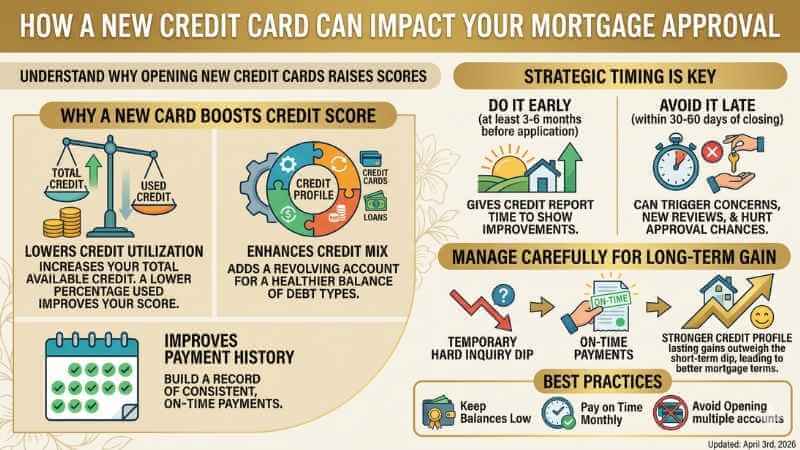 Opening a new credit card before a mortgage may make sense when the borrower is still early in the credit-building process. This is usually a better option for someone several months away from applying, not for someone who is already pre-approved or close to closing.
A new card may help borrowers with limited credit, no open revolving accounts, or older credit problems they are trying to rebuild. In some cases, a secured credit card can be a good starting point because it allows the borrower to build a recent payment history with a smaller credit limit.
A low-limit unsecured card may also help if the borrower qualifies and uses it carefully. Keep your credit card balance low. Don’t use it for big purchases like furniture or appliances before you apply for a mortgage. Pay your bills on time and keep your credit card balance low. This shows you use credit responsibly and will improve your credit score over time. Opening a new credit card before a mortgage is usually safest when it is part of a long-term credit plan. It may help when the borrower opens the account early, keeps the balance low, makes every payment on time, and avoids opening several new accounts at once.
When You Should Not Open a New Card
Opening a new credit card before a mortgage is usually not a good idea if you are already pre-approved, in underwriting, or close to closing. At that point, your lender has already reviewed your credit, income, debts, and assets. A new account can change the file and may require another review before the loan can close. Be careful if your debt-to-income ratio is already high. A small new monthly payment can impact your approval chances if you’re close to the limit. If the new credit card shows a balance, the lender might count that payment against you. This could affect the automated underwriting process and your final approval. Do not open a new card if you plan to use it for furniture, appliances, moving costs, repairs, or other large purchases before closing. Those charges can raise your credit utilization and create new debt at the worst possible time. Many borrowers get into trouble after approval because they finance items for the new home before the mortgage has closed. A new card may also be risky if you were recently denied a mortgage or are unsure how it will affect AUS findings. Automated underwriting systems review the full credit profile, not just the score. Before opening a new credit card or applying for a mortgage, ask your loan officer to review the possible impact first.
Safer Ways To Improve Credit Before Applying
Opening a new credit card before a mortgage is not the only way to improve credit. For many borrowers, the safer move is to work with the accounts they already have. Paying down your credit card balances can lower how much of your credit you’re using. Plus, you can do this without adding a new inquiry or account to your credit report.
Avoiding late payments is just as important. One recent late payment can hurt a mortgage file more than a small score increase can help it. Borrowers should make every payment on time, including credit card, auto loan, student loan, rent, and other monthly debts.
Borrowers should take a look at their credit reports for any mistakes. If you spot an account that’s not right, it’s definitely worth disputing. Just keep in mind, you shouldn’t challenge accounts that are correct just to boost your score. Disputing can sometimes trigger extra questions during the mortgage approval process, especially if it involves active accounts or anything negative on your credit. Keeping older credit cards open helps build your credit history and increases your available credit. Closing an old card can reduce your available credit, leading to higher credit utilization if you carry balances on other cards. To prepare for a mortgage application, follow these steps: pay down your balances, avoid late payments, keep older accounts open, avoid taking on new debt, and consult your loan officer before making any major credit changes. They can help you determine if a credit action will help or hurt your application.
Final Thoughts on Opening a New Credit Card Before a Mortgage
Opening a new credit card before a mortgage can help in some cases, but timing matters. If the new card lowers credit utilization, stays nearly unused, and is opened months before applying, it may support a stronger credit profile. The risk comes when new credit is opened too close to underwriting or closing. A new inquiry, new account, new balance, or new monthly payment can create extra lender review and may affect approval. Before making credit changes, borrowers should consider the full picture, not just their credit score. If you are already pre-approved or close to applying, speak with your loan officer before opening a new credit card or taking on any new debt.
FAQs About Opening a New Credit Card Before a Mortgage
Is It Better To Pay Off A Credit Card Or Open A New One Before A Mortgage?
For most borrowers, paying down existing credit card balances is safer than opening a new card before a mortgage. Paying down balances can lower credit utilization without adding a new inquiry, new account, or possible new monthly payment. A new card may help in some cases, but it can also create extra underwriting questions if it is opened too close to applying or closing.
Can Closing A Credit Card Hurt Mortgage Approval?
Closing a credit card can sometimes hurt a borrower’s credit profile by reducing total available credit. If the borrower still has balances on other cards, closing an account can raise credit utilization. It can also remove an older open account from active use. Before closing a credit card during the mortgage process, borrowers should ask their loan officer if it could affect the file.
Does Being An Authorized User Help When Applying For A Mortgage?
Being an authorized user may help if the account has a long history of on-time payments and a low balance. However, it can hurt the account if it has late payments or high utilization. Mortgage lenders may also review whether the authorized user account truly reflects the borrower’s own credit management. It should not be used as a quick fix right before applying.
Should I Use My Credit Card After Getting Pre-Approved?
Borrowers should be careful using credit cards after getting pre-approved. Small normal charges that are paid off quickly may not cause a problem, but large balances can raise credit utilization and add to monthly debt. Before making large purchases for furniture, appliances, repairs, or moving costs, borrowers should speak with their loan officer.
Can I Apply For A Mortgage With No Credit Card?
Yes, some borrowers can apply for a mortgage without a credit card, but the file may need other credit history to support approval. Lenders may review installment loans, rent history, student loans, auto loans, utility history, or other payment records, depending on the loan program and underwriting method. Having no credit card does not automatically mean denial, but limited credit can make approval more detailed.
How Soon Before Buying A House Should I Check My Credit?
Borrowers should review their credit several months before applying for a mortgage. This gives them time to spot reporting errors, pay down balances, fix late-payment habits, and avoid last-minute credit decisions. Waiting until the home search has already started can limit the borrower’s options if credit issues appear.
Can Credit Card Rewards Hurt A Mortgage Application?
Credit card rewards, by themselves, do not hurt a mortgage application. The problem is that a borrower may open a new card or spend more than usual just to earn points, miles, or cash back before closing. Large purchases can raise balances, increase utilization, and create new payments. Rewards are not worth risking a mortgage approval.
This article about “Opening a New Credit Card Before a Mortgage: Smart or Risky?” was updated on June 9th, 2026.