This guide talks about how mistakes on credit reports can mess up the mortgage loan process and slow down mortgage loan approvals. If you want to buy a house the first thing your mortgage lender will look at is your credit report. Your credit report is like a report card for how you handle money. It shows lenders how well you managed money in the past.. What if there are mistakes on your credit report? These mistakes can cause problems when you try to get a mortgage.
Learn how credit report issues can impact your mortgage approval, AUS results, and credit score. We’ll also outline steps to resolve these problems.
In this guide, we’ll explain how errors can impact your mortgage approval, how to fix them, and how Gustan Cho Associates can help you get approved even if your credit isn’t perfect. In the following paragraphs, we will cover how errors on credit reports can delay loan approvals and mortgage loan approvals.
Why Your Credit Report Matters in the Mortgage Process

Mortgage lenders look at your credit report to see if you are a borrower. The person who decides if you get a mortgage loan checks your credit report using a computer system. This computer system looks at your money situation to figure out if you can get a loan.
In this process you need to know that your credit report has an impact on whether or not you get a mortgage loan. There are two computer systems that lenders use to check credit reports. These systems are Fannie Maes Desktop Underwriter and Freddie Macs Loan Product Advisor. Your credit report is very important, in the mortgage loan process. Mortgage lenders use your credit report to decide if you can get a mortgage loan. Your credit report and mortgage loan process are closely connected.
These Systems Analyze Factors Like:
- Your credit score
- Payment history
- Balances on credit accounts
- Past bankruptcies, foreclosures, and short sales
- Judgments, liens, and collections
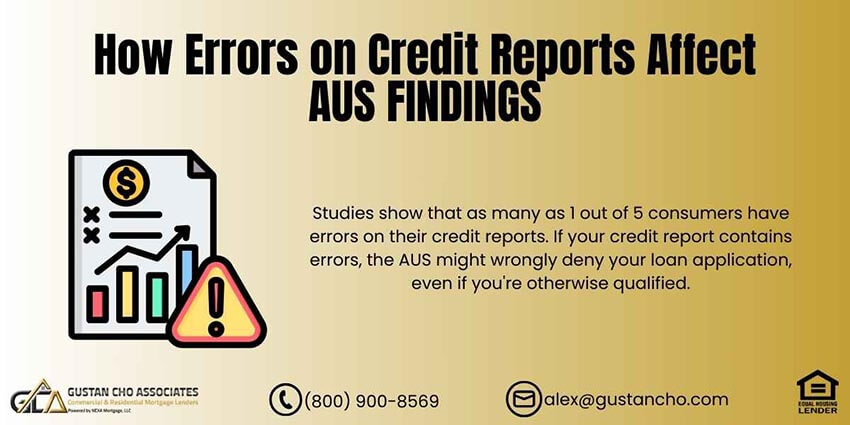
If your credit report contains errors, the AUS might wrongly deny your loan application, even if you’re otherwise qualified.
Common Errors Found on Credit Reports
Credit report errors are more common than you might think. Studies show that as many as 1 out of 5 consumers have errors on their credit reports. Here are some of the most frequent issues:
Incorrect Personal Information:
- Wrong name, address, or Social Security number.
Outdated Account Information:
- Closed accounts showing as open.
- Incorrect balances or credit limits.
Duplicate Accounts:
- The same account is listed more than once, doubling your debt.
Misreported Negative Events:
- A deed-in-lieu of foreclosure is reported as a full foreclosure.
- Wrong dates for bankruptcies, foreclosures, or short sales.
Unauthorized Accounts:
- Accounts opened due to identity theft.
These mistakes can drastically lower your credit score and create red flags during underwriting.
The Impact of Credit Report Errors on AUS and Mortgage Approval
Errors on a mortgage applicant’s credit report can significantly hinder loan approval, even with sufficient income, stable employment, and adequate down payment. AUS issues often result from inaccurate credit report information. AUS findings rely on your loan application details and the credit report obtained by your lender.
Fannie Mae claims it is the lender’s duty to confirm that the credit report data used in Desktop Underwriting is correct. Serious errors on a credit report will lead to a negative DU recommendation.
Late payments, high balances, collections, incorrect public records, or duplicate accounts can cause AUS to assess you as a higher risk. For both home buyers and current homeowners, AUS findings determine whether your loan is approved, requires further review, or is flagged for caution. Minor errors may add conditions, while significant mistakes can affect your approval status.
What Are AUS Findings in the Mortgage Process?
AUS findings are generated after your lender inputs your information into the automated system. The AUS evaluates your credit, income, assets, debts, loan amount, property type, down payment, and other relevant factors.
Fannie Mae uses Desktop Underwriter (DU), and Freddie Mac uses Loan Product Advisor (LPA). FHA loans are processed through an AUS and scored through FHA’s TOTAL Mortgage Scorecard.
According to HUD, TOTAL is used in an AUS to analyze a borrower’s credit history and application. AUS does not approve loans directly. It provides a risk recommendation and outlines any conditions. The underwriter makes the final decision and ensures all information complies with program requirements.
Why AUS Findings Matter to Borrowers
AUS findings are important because they determine whether you receive automatic approval, require manual review, what documentation is needed, and which credit issues must be addressed. If you receive an eligible finding, you are approved automatically.
If your file is referred or requires manual review, you must provide additional documentation, demonstrate strong financial factors, and undergo a detailed review of your credit and loan purpose.
Inaccurate credit reports can negatively affect AUS results, as the system assumes the report is accurate. For example, a late payment mistakenly reported will be treated as valid. Duplicate collection accounts may be counted twice, and incorrect balances can inflate your debt-to-income ratio. An accurate credit report is essential to ensure AUS findings accurately reflect your credit profile.
Why AUS Findings Are Unfavorable Due to Reported Late Payments
Mortgage underwriters consider incorrectly reported late payments among the most serious credit report errors. A false 30-, 60-, or 90-day late payment can make you appear high risk, with recent late payments being particularly damaging. To fix this, collect payment confirmations, bank statements, letters from creditors, and account statements as proof.
Why AUS Findings Are Unfavorable Due to Inaccurate Credit Report
Mistakes in your credit report can show wrong balances, making your debt-to-income ratio look higher. Even a small error in your monthly payment can matter if you’re close to the lender’s limit and still reflect a balance and payment. AUS may count it as outstanding debt, negatively impacting your credit assessment.
How Errors on Credit Reports Impact AUS Findings
The AUS needs information from your credit report to make a decision. If your credit report has mistakes the system might think you are a risk to lend to. This can result in your loan being denied. You getting bad loan terms. Let me give you an example of what can happen. A person applies for a loan after doing a deed-in-lieu of foreclosure four years ago. The AUS says you have to wait four years after this type of foreclosure. If your credit report says it was a full foreclosure, which has a seven year waiting period the AUS will deny your application. Mistakes like this can be the difference between getting a decision from the AUS and a bad one.
The Role of Lenders in Identifying and Correcting Errors
At Gustan Cho Associates we know how important it is to find and fix mistakes on your credit report before we send in your loan application. We do not just look over these things like some lenders do. We really look at your credit report. Here is what we do:
- We look at all three credit reports, from Equifax and Experian and TransUnion to make sure they are right.
- If we find mistakes we can work with companies to fix them fast.
This can update your credit report in a few days like three to five business days.
- We do not have rules that some lenders have.
At Gustan Cho Associates we only go by what the AUS says so we can approve loans based on that.
Steps to Fix Errors on Credit Reports
If you think there are mistakes on your credit report do these things to fix them:
Get Your Credit Report: You can get a copy of your credit report from AnnualCreditReport.com or from the credit bureaus themselves.
Review Your Report Carefully: Check your report for mistakes in the parts that talk about you and your accounts and the bad things like when someone sues you to get money or when you lose your house.
Dispute Errors: When you find mistakes on your credit report you need to tell the credit bureau about them. You should send them papers that prove you are right like a receipt or a court paper so they understand what you are saying and can fix the mistakes.
Monitor the Resolution: The credit bureaus have to look at what you say within 30 days. You need to watch what they do and make sure they fix the mistakes.
Work with Your Lender: If you are trying to get a mortgage tell your loan officer about the mistakes, on your credit report. They can help get the mistakes fixed faster if they need to.
Credit Report Errors Make Applications Appear Lower Quality
When more than one account shows the same debt, duplicate accounts can appear as collection accounts, charged-off accounts, accounts transferred to different lenders, some student loans, or accounts sold to a different creditor. Duplicate accounts can display multiple negative marks and overstate your debt. Both issues can adversely affect your AUS results and underwriting conditions.
Accounts That Don’t Belong to the Borrower Create Huge Issues
Sometimes you might see accounts on your credit report that’re not yours. This can happen because of up files people with similar names, mistakes when information is entered someone stealing your identity wrong Social Security numbers or creditors making errors. If someone Account is, on your report it can make your credit score go down and show that you have more debt, late payments or collections than you really do. You should fix these mistakes before you get far into the process of getting a mortgage. Accounts that are not yours can really hurt you so make sure to fix them. Fixing errors in accounts that’re not yours is very important.
Common Credit Report Issues Related to Mortgage Refusals
Not all errors on a credit report are created equally. Minor issues with a credit report may go unnoticed by lenders, but other errors may impact Automated Underwriting Systems (AUS), credit offer prices, and underwriting conditions.
An account may be incorrectly reported as open, late, charged-off, in collections, or in bankruptcy. Such errors can cause AUS and underwriters to misjudge your credit history.
According to the Consumer Financial Protection Bureau (CFPB), common issues identified on credit reports include inaccurate personal information, accounts that do not belong to the individual, inaccurate account status, erroneous account balances, and mismanaged accounts.
Clarify Your Doubts With Our Loan Officers And Finalize Your Mortgage Loans
Apply Online And Get recommendations From Loan ExpertsResolved Accounts Still Reported as Unpaid
Accounts that are paid off, settled, or resolved may still appear as unpaid or in collections. Provide your lender with documentation confirming these accounts have been resolved.
An account may be incorrectly reported as open, late, charged-off, in collections, or in bankruptcy. Such errors can cause AUS and underwriters to misjudge your credit history incorrectly.
Old negative accounts can cause trouble if you wait too long to deal with them. This can make old problems look recent. While older issues aren’t always a big deal, delays in fixing them can worry lenders.
Wrong Dispute Comments
Dispute comments can impact mortgage approval, as some loan programs do not permit accounts in dispute. If your credit report contains a dispute comment, even if it has been resolved, your lender may require its removal or an explanation.
How Disputed Accounts Affect AUS
Disputed accounts can cause problems because AUS may treat them differently from regular accounts. Sometimes you’ll need to explain the dispute or have the account reviewed manually. When disputed derogatory accounts have late payments, collection accounts, charge-offs, or fall into other categories, the HUD Handbook 4000.1 must be consulted, as it outlines the policy for the reviews that must be completed for these accounts.
Not Every Dispute Causes the Same Problem
A dispute on an account with no balance is different from a dispute on a collection or an account with late payments. The lenders look at the type of account the balance, the payment history and how the dispute affects your approval for a loan. The lenders consider the account type and the dispute when they decide if they will give you a loan.
Would You Like Help Reviewing AUS Findings?
Gustan Cho Associates assists borrowers with credit report issues, AUS findings, lender overlays, and manual underwriting. If you have experienced a mortgage delay or denial due to credit concerns, call 800-900-8569 or email gcho@gustancho.com to discuss your options.
How Credit Report Issues Can Create Conditions for a Mortgage
A problem with your credit report does not always mean you will not get a loan. Sometimes it means the lender will ask for information or papers to prove you own the account or to fix mistakes. The lender wants to make sure everything is correct before they give you a loan. Credit report issues can be a problem when you want to get a mortgage.
Credit Supplements May Help Clarify Errors
You can ask for a credit supplement to update or verify information with a credit agency. This can fix balances, payments or account status or confirm that an account is paid off. A credit supplement is helpful when you need to give information about a dispute on your credit report. Credit supplements can help clarify errors on your credit report.
Letters of Explanation Should Be Short and to the Point
A good letter of explanation should say who is involved what happened why it happened and what has changed. The letter should be short. Only include facts. The purpose of the letter is to help the underwriter understand the problem with your papers. A letter of explanation should be short and to the point like a credit supplement. It should help the lender understand your mortgage application and the credit report issues and the dispute, on your credit report.
What Borrowers Should Know About Themselves Before They Apply for a Mortgage
Review your credit report before applying for a mortgage. This allows time to address any issues before the lender runs AUS. Dispute credit report errors directly with the credit bureau. Write a letter explaining what’s wrong and include proof. The FTC says to list each mistake and send copies of your documents, not the originals, to the agency.
Review All Three Credit Bureaus
Credit errors may appear on one or all three credit bureaus. Lenders typically review Equifax, Experian, and TransUnion reports. Ensure you review your reports from each bureau. Compare the balances and monthly payments listed on your credit report with your actual statements for credit cards, car loans, student loans, personal loans, and other installment loans.
Review for Unknown Accounts
If you identify accounts you do not recognize, review them immediately. These may be reporting errors, mixed files, or identity theft. Do not ignore unfamiliar accounts.
Review Old Reporting Accounts
Carefully review collections and charge-offs to ensure they are not reported with incorrect dates or listed when they should not be. Also, review bankruptcy and closed accounts. Incorrect account status can cause underwriting issues and should be addressed promptly. Find out what the error is, gather proof, and talk to your loan officer before you dispute, pay, or change anything during the mortgage process. Don’t pay off old collections while applying for a mortgage. Paying them can update the account and may lower your credit score.
Obtain the Correct Documents from Your Creditor
If there is an error, request the appropriate documents from your creditor. This may include a letter confirming your balance, payment history, proof that you do not own the account, or confirmation that the account is closed. Ask whether your credit report has changed and ask your lender whether the AUS needs to be rerun. Updated results may alter your loan conditions, risk assessment, or review process and credit report errors. Lenders closely review credit report errors and must ensure all underwriting information is accurate. Fannie Mae requires lenders to verify that the credit report and all data used by DU are correct.
Significant Errors Versus Negligible Errors
A small mistake like a street name is usually not a big deal for AUS.. Big errors, like a wrong foreclosure or a late mortgage payment that was not really late are a problem. These errors can affect how much you can borrow your payment history. If you qualify for a loan.
Changing Credit Scores Post Dispute Removal
Removing dispute comments should be done carefully, as it can alter your credit score and may lower it if negative information is reinstated. Always consult your loan officer before disputing items during the loan process.
According to Fannie Mae, DU will assess a credit report and provide credit findings messages to Fannie Mae. Fannie Mae says DU reviews your credit report and gives lenders messages about your credit.
If your report has errors, DU’s results may be more troubling. It can lead to a refer with caution recommendation. This doesn’t necessarily mean the borrower will never qualify for the loan. It means that in most situations, the loan cannot proceed with an automated approval process because the outlined criteria are not met.
Effects of Credit Report Errors on FHA TOTAL Scorecard
FHA loans offer more options than conventional loans, yet credit report errors can negatively affect an FHA AUS. FHA TOTAL Scorecard reviews credit and application information via AUS. If inaccurate credit information increases your risk profile, your file may be subject to additional conditions or require manual underwriting. Manual underwriting simply means your file will be reviewed more thoroughly.
FHA Manual Underwriting After Credit Issues
FHA manual underwriting can occur if the loan cannot be approved via the automated system, but the borrower must comply with the manual underwriting system. The lender has the liberty to review the borrower’s payment history, housing payment history, reserves, debt-to-income ratio, and compensating factors. If your credit information is wrong do not think you cannot get a loan. First find the mistake get proof and see if you can fix it or explain it.
Improved Credit Data May Lead to More Favorable DU Results
If your credit report is corrected and the lender reruns AUS, you may receive improved results. This can occur by removing incorrect late payments, correcting balances, deleting duplicate accounts, or eliminating accounts that do not belong to you.
How Credit Disputes Affect the Mortgage Process
While disputing errors is important, timing matters. Open credit disputes can complicate your mortgage application. Here’s why:
FHA Loans:
- FHA guidelines don’t allow open credit disputes on non-medical collections with balances over $1,000.
- You may need to resolve or retract disputes before proceeding.
Other Loan Types:
- Conventional and VA loans have more flexibility, but open disputes can still cause delays or denials in AUS findings.
Impact on Credit Scores:
- Retracting disputes can sometimes lower your credit score temporarily, so plan carefully.
How Gustan Cho Associates Can Help
At Gustan Cho Associates, we focus on assisting borrowers facing credit difficulties. Whether you’re dealing with errors on your credit report or struggling to meet traditional loan requirements, we have solutions tailored for you:
Non-QM Loans:
- We have -QM loans that are more flexible for people who do not qualify for regular mortgages.
Credit Rebuilding Support:
- We will help you make your credit better including ways to pay off debt and fix mistakes.
Fast Loan Approvals:
- We can approve loans quickly if your credit report is correct.
Tips to Prevent Errors on Credit Reports
Monitor Your Credit Regularly:
- Check your credit reports at once a year to find mistakes early.
Freeze Your Credit:
- Freezing your credit is a way to protect yourself from identity theft and fake accounts.
- This can give you peace of mind.
Keep Records:
- Save papers, like payment receipts and bankruptcy papers.
Be Proactive:
- If you want to apply for a mortgage check your credit report a months before to fix any mistakes.
Errors Must be Backed by Documentation
To get a mortgage you need to have proof. Keep copies of your credit reports letters from banks, bank statements, payment receipts and letters, from creditors or credit bureaus. While some agencies have rules lenders can have their own rules, called lender overlays. A loan can meet the rules but still be denied by a lender with stricter rules, which shows how hard it can be to deal with credit report mistakes and overlays.
Why a Lender May Deny a Loan, and One May Approve
Lenders vary in how they address credit report issues. Some require all problems to be resolved before proceeding, while others may accept documented issues or use manual underwriting, depending on the loan program. These differences do not guarantee loan approval.
Being organized before applying can improve your chances, as early identification of credit report problems allows for timely resolution.
The lenders experience with credit issues, manual underwriting and agency guidelines is really important. Before you apply for a mortgage you should check your credit reports collect all your documents avoid debt keep your credit card balances low and talk to a loan officer who knows about Automated Underwriting System and credit corrections.
Make Housing Payments Timely
Timely rent or mortgage payments are essential, particularly for manually underwritten loans. Retain proof of all payments.
Avoiding New Credit Before Closing
Opening new credit accounts or increasing balances can affect your AUS results. Do not open any new credit before closing unless your loan officer advises you to do so.
Keep Paperwork Handy
You should keep your pay stubs, bank statements, tax documents, letters from creditors, payment proofs and credit correction records where you can easily find them. This preparation expedites the process. Credit report corrections can be challenging, but they do not necessarily end your mortgage prospects. Gustan Cho Associates assists borrowers with complex credit and AUS conditions. For assistance, call 800-900-8569 or email gcho@gustancho.com for a free consultation.
Final Thoughts with Credit Report Errors and AUS Findings
Credit report errors can affect AUS findings, credit scores, mortgage conditions, debt-to-income ratios, and the overall approval process. While some errors are minor, others can cause qualified borrowers to appear significantly riskier. The best approach is to identify credit errors early, maintain detailed records of corrections, avoid making credit changes without guidance, and work with a mortgage team experienced in AUS findings, manual underwriting, and credit report errors.
FAQs About Credit Report Corrections AUS Results
Will a Credit Report Correction Deny Your Mortgage?
Yes, a major credit report correction can result in mortgage denial by impacting your credit score, payment history, debt-to-income ratio, and AUS results. Some corrections to your credit report only need some documentation or an explanation. The lender has to use the updated report when they are underwriting your loan.
How Long Does It Take to Correct a Credit Report Before a Mortgage?
The time it takes to correct a credit report can be different depending on the credit bureau, the creditor and the type of error. Some issues can be resolved quickly. If you have to dispute something formally it may take longer. You should regularly check your credit reports to make sure any errors are corrected before you apply for a mortgage. You should talk to your loan officer before you dispute any credit errors while you are going through the mortgage process. Disputes can affect your credit score or result in updated AUS findings with negative consequences. While sometimes necessary, disputes can cause delays if not timed appropriately.
Can a Credit Report Change the AUS Findings After a Dispute?
AUS findings may change after a credit report update if the loan is resubmitted through AUS following a dispute. The results may lead to different outcomes or conditions and could improve or remain unchanged.
Do All Credit Report Errors Impact the Ability to Get a Mortgage?
Not all credit report errors affect mortgage approval. Minor errors may not influence the underwriting decision. If there are big errors on your credit report like payments that were reported late when they were not or collection accounts that should not be there or balances that are wrong or negative accounts that should not be on your report these things can probably affect what the Automated Underwriting System says and whether or not you get approved.
What Do You Need to Provide to Prove a Credit Report Error to a Lender?
The lender may need you to give them some documents, such as a letter to the creditor your payment history, bank statements, balance statements, a payoff letter or a credit report supplement to prove that there is an error, on your credit report. All documentation must support the credit error and clarify the correct information.
Can Old Collections Stop Loan Approval?
Approval with old collections depends on the loan program, AUS findings, credit score, payment history, and lender criteria. Unless advised otherwise, old collections should remain unpaid during the mortgage process, as paying them may negatively affect your credit report and score.
This Guide on Errors in Credit Reports was Updated: June 4, 2026.