Owner Occupancy Fraud: Everything You Need to Know to Avoid Serious Consequences in 2026
When applying for a mortgage, your lender will ask whether you plan to live in the home or use it as an investment property. If you’re tempted to say you’ll live there—even if you plan to rent it out—think twice.
Misleading your lender about the type of property you’re buying can get you into serious trouble. This is called owner occupancy fraud, and it’s a federal crime.
In this guide, we’ll explain owner occupancy fraud, why it matters, and how to avoid it. We’ll also discuss the differences between owner-occupied, second—home, and investment—property mortgages and the consequences of committing fraud. Whether buying your first home, refinancing, or considering a rental property, knowing the rules is key to staying out of trouble and making the most of your mortgage options in 2026.
What is Owner Occupancy Fraud?
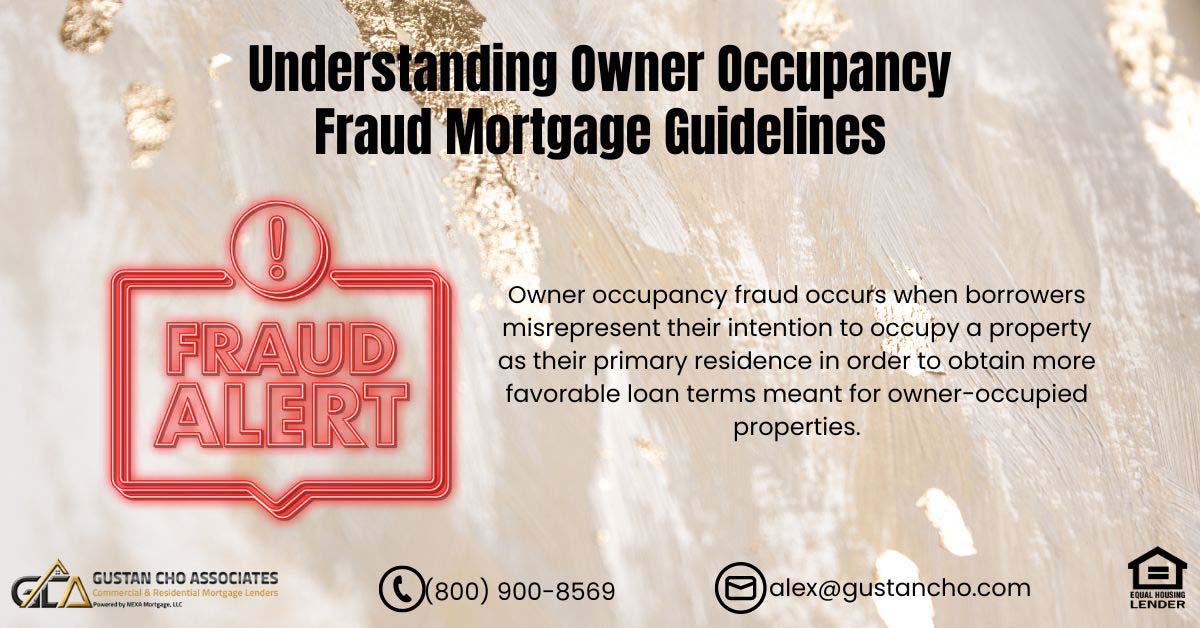
Owner occupancy fraud happens when borrowers lie about their intention to live in a home to get better mortgage terms. Lenders typically offer better interest rates and lower down payments for homes you’ll live in yourself rather than those you’re buying as rentals or investments. When someone falsely claims they will live in the home but actually intends to rent it out, they are committing fraud.
This Can Happen In A Few Ways:
- A buyer applies for an owner-occupied mortgage but rents out the property instead.
- A buyer purchases a home for a family member but claims they will live in it themselves.
- A buyer says they’ll live in the home and plan to sell it for a profit soon after.
While these scenarios might not seem like a big deal, they’re considered mortgage fraud—and lenders take this very seriously.
Owner Occupancy Fraud: What It Is, Why It Matters, and How to Avoid It
Owner-occupancy fraud is a real problem for mortgage lenders. It happens when someone claims they will live in a home but actually plans to rent it out, use it as a vacation spot, invest in it, or sell it for a profit. This matters because lenders decide on loans and rates based on risk. The homes people live in are less risky than investment properties. That’s why owner-occupied mortgages often have lower rates, smaller down payments, and easier rules than loans for rentals or flips.
Fraud occurs when someone gets a mortgage intended for a primary residence to obtain its benefits but never plans to live there. This is called occupancy or mortgage fraud.
The FBI defines occupancy fraud as a borrower claiming they will live in a home but actually using it as an investment. Gustan Cho Associates helps borrowers qualify the right way. No matter the property type—main home, second home, multi-unit building, or investment—everything should be handled openly and honestly. Owner-occupancy fraud happens when a borrower gives false information about how they plan to use the property on a mortgage application.
Type of Occupancy
Mortgage applications usually ask how you plan to use the property.
The Options Are:
- Primary residence
- Second home
- Investment property
What Is A Primary Residence
Choosing ‘Primary Residence’ but not living in the property is fraud. Fannie Mae’s rules set clear requirements and risk levels for each occupancy type. Still, fraud occurs, especially with properties intended for resale in the mortgage market.
Most owner-occupancy fraud cases are simple. Some people don’t know the difference between a main home, a second home, and an investment property.
Others think it’s fine to say they’ll live there if they might move in later. But this is a serious commitment. When you sign, the lender is trusting you.
Owner-Occupancy Fraud
Owner-occupancy fraud makes things riskier for lenders. That’s why investment property loans have tougher rules, like bigger down payments, more savings, higher credit scores, and higher interest rates. Fraud is a big concern for lenders, regulators, and mortgage insurers.
Fannie Mae tells lenders to report any suspected fraud or misrepresentation during the loan process. According to most mortgage rules and laws, a primary residence is where the borrower maintains their legal residence.
This is not a record of where the borrower is prima facie domiciled. For mortgage lenders, a primary residence is defined as the location where a borrower:
- happens to live most of the time
- happens to receive the lion’s share of their mail
- happens to be their legal domicile, where
- happens to be where they have their legal domicile
- happens to file their taxes
- happens to put their utilities
- happens to conduct life
Examples of Owner Occupancy Fraud
There are many ways owner occupancy fraud can take shape.
- Imagine a borrower purchasing a rental property but pretending to be an owner-occupant to secure a better loan.
- Sometimes, someone might buy a home for a family member and falsely claim it as their own residence.
- A common scheme involves claiming a home as a primary residence, then renting it out without ever moving in.
- Another red flag is when the borrower quickly switches their mailing address back to their old home after closing.
- Suspicion also arises when someone already owns a home but insists the new property is their main residence, without a convincing explanation.
- If a borrower intended to occupy the property at the time of application but cannot due to unforeseen life circumstances, this is not owner-occupancy fraud.
Reverse Owner Occupancy Fraud
Reverse owner-occupancy fraud flips the script: here, a borrower pretends a property is just an investment, while secretly planning to move in. Borrowers may do this to qualify for a mortgage by using projected rental income that exceeds what they can afford. According to Freddie Mac, reverse occupancy misrepresentation occurs when a borrower declares a property as an investment, qualifies for a loan by claiming rental income, and then occupies it as a primary residence. ious consequences, as loan approval may have relied on rental income that was never received.
Owner Occupancy Fraud by Borrowers
Why do borrowers take the risk? The lure of better loan terms for owner-occupants is strong. Some tempting incentives include:
- A smaller down payment
- A lower mortgage rate
- A lower closing cost
- A loan with easier-to-meet requirements
- A loan with a higher loan-to-value
- More flexible credit requirements
- Access to government-backed loan programs
Government and agency loans often roll out the red carpet for owner-occupants, offering more flexible terms than investment loans. This sometimes tempts applicants to stretch the truth on their paperwork. Owner-occupancy fraud can cause significant financial losses and penalties. It is best to comply with owner-occupancy requirements from the start.
Owner Occupancy Audit by a Lender
Lenders do not just take a borrower’s word for it. They may double-check ownership during the application, after closing, or as part of their quality control process.
Lenders May Review The Following:
- Housing history
- Credit history
- Driver’s license
- Tax returns
- Bank statements
- Utility bills
- Places of employment
- Distance
- Lease agreements
- Rental income documents
- Listing history of the property
- Homeowners insurance
- Property appraisal comments
- Housing documents
- Occupancy documents of the property
Once The Sale Is Complete, Lenders May Check If The Buyer Really Moved In By Reviewing:
- Mailing address
- Utility presence
- Property ledgers
- Rental listings
- Property use list. Frequent inquiries about Fannie Mae’s publications on occupancy misrepresentation and its consequences during post-acquisition reviews have prompted the issuance of specific guidelines to identify occupancy defects.
Owner Occupancy Certification
Borrowers must sign post-occupancy intent certificates at closing for the loan to be classified as owner-occupied. These certificates formally attest to the borrower’s intent and affirm that the information given to the lender is truthful.
Signing an owner-occupancy certificate without the genuine intention to occupy the property constitutes misrepresentation. Borrowers should not sign loan documents they do not fully understand.
Any changes or questions should be discussed with the loan officer. Occupancy information should be provided only if the borrower intends to meet the stated requirements.
FHA Loans
FHA loans principally pertain to owner-occupied property. For an FHA loan, one of the borrowers must plan to move into the house within 60 days of closing and live there as a primary residence for at least 1 year.
FHA loans have the strictest occupancy rules. They are for homebuyers who will live in the home. FHA rules require that one borrower must live in the property as their main home within 60 days of signing the loan and remain there for at least 1 year.
FHA loans cannot be used to purchase investment properties for this reason. Multi-unit owner-occupied properties are an exception. A borrower can purchase a two-unit, three-unit, or four-unit property with FHA financing, as long as the borrower occupies one of the units. This approach can be an effective house-hacking strategy, but the borrower must occupy one of the units.
VA Loan Owner Occupancy Requirements
VA loans are available to veterans, active-duty service members, and surviving spouses who satisfy the eligibility and service requirements established by the Department of Veterans Affairs.
VA loans are intended for individuals who plan to occupy the home as their primary residence. Borrowers are typically required to certify their intent to personally reside in the property.
A VA loan cannot be used to purchase a rental property unless the borrower intends to occupy the property. However, VA loans, like FHA loans, may be used to finance multi-unit properties, provided the borrower occupies one unit as their primary residence. At Gustan Cho Associates, we often help borrowers whose localled overlays. No-overlay lending means we were denied elsewhere because of extra rules that follow the agency’s guidelines, not stricter rules set by individual lenders. We still follow all occupancy requirements.
Conventional Loan Owner Occupancy Requirements
There are a few types of owner-occupancy allowed: primary residence, second home, and investment property. Fannie Mae requires borrowers to declare the intended occupancy type for the property being financed. Primary loans for primary residences typically have lower costs than those for investment properties. The selected loan type must correspond to the property’s actual use. The loan type must match how you use the property.
Already Closed and Worried You Made a Mistake on Occupancy?
Talk to us before you panic—we’ll help you understand the risks and your optionsConventional Owner Occupancy and Fraud in Multi-Unit Properties
Owner Occupancy Fraud on Multi-Unit Properties. The rules regarding multi-unit properties can be complex. A borrower may purchase a duplex, triplex, or fourplex and rent out the additional units.
House hacking is permitted when conducted in accordance with occupancy guidelines. Applying for an owner-occupied loan without the intent to reside in the property constitutes occupancy fraud.
Provided the borrower occupies one unit as a primary residence, the property qualifies as owner-occupied. This differs from purchasing a four-unit property and renting all units while falsely claiming occupancy. Such actions do not meet owner-occupancy requirements.
Implications of Moving Out After Closing
Relocating after closing on a property does not, in itself, constitute fraud. Life events like needing more space, family emergencies, military deployment, job changes, marriage, or divorce may require moving out after closing.
The borrower’s intent at loan application and closing is crucial, particularly regarding whether the property is a primary residence or an investment.
A borrower who initially intended to occupy the property but later relocated due to a significant life event is not necessarily engaging in fraudulent behavior. It is advisable to keep documentation, such as employment letters, medical records, or divorce decrees, to support any change in residence.
What Happens If You Move Out After Closing?
In the United States, renting out a primary residence is generally permitted, although certain restrictions may apply. Homeowners may generally lease properties bought as primary residences, provided they comply with regulatory or lender conditions.
Borrowers should check if their loan agreement requires occupancy. FHA loans, for example, require borrowers to intend to live in the property for at least one year.
Leaving immediately after closing may prompt the lender to scrutinize the borrower’s intent. Before leasing a recently purchased property, borrowers should review their loan documents and consult a loan officer or qualified expert.
Occupancy inquiries Look For Unusual Indicators. Issues Include:
- Owning a nearby residence
- Owning a home that is impractical or smaller than the current residence
- Employment far from the new residence
- Recently purchased a new principal residence.
- Listing the residence to rent immediately after closing
- Failure to transfer certain utilities
- Mailing address remains unchanged
- Insurance evidencing tenant occupancy
- Being unable to explain the reason for the relocation
- Advertising the residence for rent before selling
- Inability to explain the change
- Although numerous red flags may suggest inconsistencies, they do not, in themselves, constitute fraud.
- Red flags do not always indicate owner-occupancy fraud, but they may prompt lenders to investigate further or require loan repurchase.
- Possibility of a further closing or open foreclosure
- Missing future mortgage loans
- Potential civil penalties resulting from further offer exchanges
- The loss of a previously purchased future loan
- An examination by the civil enforcement unit of the mortgage loan
- Defaulting on obligations
- Professional liability
How Lenders Verify Owner Occupancy After Closing
Owner-occupancy fraud does not usually revoke the right to lease a property, but it is a serious legal and ethical violation, not a minor administrative issue. Multiple safeguards help ensure compliance with occupancy requirements. It is important to distinguish between occupancy fraud and legitimate changes in circumstances.
A legitimate change of plans occurs when a borrower has a valid reason for relocation. For example, a borrower may plan to occupy a property, but is transferred to another state and is unable to do so.
Fraud differs from a legitimate change in circumstances, though the distinction can be unclear. Lenders view fraud as a serious issue, defined as a borrower omitting or misrepresenting material information to secure mortgage approval or better terms. A borrower who relocates for legitimate reasons does not show fraudulent intent, unlike someone who planned to lease the property immediately after closing. Each case is unique, and relevant facts are usually documented in the loan file.
How To Avoid Occupancy Misrepresentation
The best way to prevent owner-occupancy fraud is to provide accurate and truthful information from the beginning. A property intended for personal occupancy qualifies as a primary residence. Properties used for business are rentals, while those for occasional use are second homes. Borrowers unsure about classification should consult their lender. Educators who deal with mortgages and lines of credit also teach about other legal options, such as different types of credit lines, including some that may not meet all legal standards.
Every Borrower’s Situation Is Unique
Some borrowers purchase homes for others, pursue multifamily properties, or relocate with multiple properties. Others are self-employed or buy multi-unit properties. Many have faced credit issues like bankruptcy, foreclosure, or late payments. Not all these problems are the borrower’s fault. Complicated situations show that mortgage rules are not always one-size-fits-all.
FHA, VA, and Conventional Owner Occupancy Guidelines
The team at Gustan Cho Associates has experience assisting borrowers facing foreclosure, credit issues, late payments, bankruptcy, and complex income. They prioritize honesty and transparency throughout the loan process.
Owner-occupancy requirements are fundamental to mortgage lending, and attempts to circumvent them are considered fraudulent.
Gustan Cho Associates also offers loan programs designed to help borrowers avoid foreclosure. When a self-stated one-lender for any government loan system restricts the accepted level of mortgage loans or factoring options, sometimes including mortgage self-factoring, Gustan Cho Associates works with agencies that regulate government and traditional loan programs and does not add extra qualification requirements.
Optimal Loan Options for Non-Owner-Occupied Properties
For borrowers who do not intend to occupy the property, several mortgage options remain available. These include:
- Conventional investment property loann
- DSCR rental property loans
- Bank statement loans
- Asset-based loans
- Non-QM investment property loans
- Portfolio loans
- Commercial or mixed-use financing
- Hard money or private money loans
The most suitable loan product depends on factors such as credit score, property type, projected rental income, available debt-to-income ratio, savings, down payment, and long-term objectives. Investment properties should not be designated as primary residences, as misclassification may cause avoidable complications.
What Is The Difference Between A Second Home And A Primary Residence?
- A second home is a residence for a borrower that is not their primary residence.
- A second home is a place you live in for part of the year, but it’s not your main home.
- It could be a vacation house, a seasonal home, or a weekend spot.
- For example, a beach house, a cabin in the mountains, or a place near family all count.
- But a second home close to your main house usually doesn’t qualify.
- The rules for loans on second homes and primary residences differ.
- Each type—main, second, or investment—has its own rates, down payment requirements, and approval steps.
- It’s important to be accurate, not just for paperwork, but to prevent people from calling a second home their main home to get better terms.
Investing In Real Estate
Investing in real estate can be a good way to build wealth. There are many legal ways to invest, depending on your goals.
Legitimate Methods of investing include:
- Purchasing a home and earning a rental income
- Purchasing a home for the purpose of short-term rental to tourists and vacationers
- Buying a home with the intention to sell to someone else for a higher value
- Buying a home for a family member, even if the new family member is also earning a rental income
It’s completely legal to buy property as an investment. Problems only start when someone claims a home is for living in, but actually plans to use it to make money. To keep things simple with your lender, always be honest about how you plan to use the property and follow the right steps, especially when applying for a standard mortgage.
The Three Types of Property Mortgages
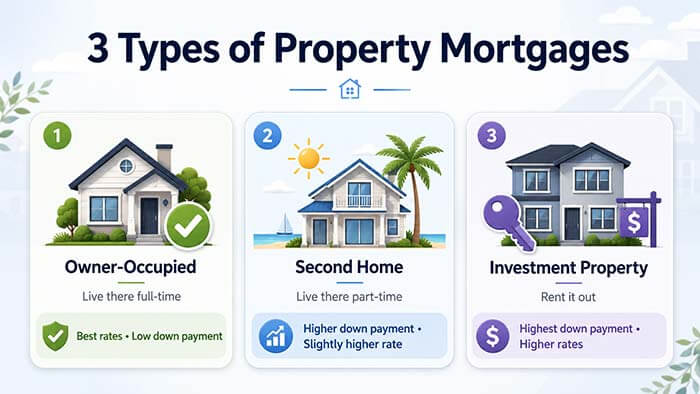 Before diving deeper into owner occupancy fraud, let’s cover the basics of mortgage types:
- Owner-Occupied Mortgage Loans: These loans are for homes where the borrower will live full-time. They have the best interest rates and the lowest down payments.
- Second Home or Vacation Home Loans: These loans are for properties you plan to live in part-time. The down payment required by lenders is typically higher for a non-owner-occupied mortgage, and the interest rates may be a bit elevated compared to those for an owner-occupied mortgage.
- Investment Property Loans: These are for homes you plan to rent out. Because rental properties are considered riskier, the down payments and interest rates are significantly higher.
Why Lenders Offer Better Terms for Owner-Occupied Homes
Mortgage lenders provide better terms for owner-occupied properties because these homes carry less risk. Living in the home makes you less likely to default on the mortgage when times get tough. You’ll do whatever it takes to keep the roof over your head. But if it’s a rental property, the risk increases. If a tenant stops paying rent or the property loses value, you may prioritize your home over the investment property. Lenders impose higher interest rates and demand high down payments for investment properties and second homes.
How Lenders Detect Owner Occupancy Fraud
Lenders use several methods to verify that you’re planning to live in the home, including:
- Check your driver’s license or utility bills for matching addresses.
- Asking for proof of your mailing address and comparing it to the loan application.
- Following up after closing to ensure you’ve moved into the property.
Many lenders require borrowers to sign an occupancy affidavit at closing. This is a legal document where you swear you’ll live in the home for at least one year. If you misrepresent your plans, you could face the consequences mentioned above.
Don’t Risk Owner Occupancy Fraud Over Confusion
We’ll explain the guidelines in plain English so you stay 100% compliantCan You Move Out Early?
Life happens. If you need to move before the one-year requirement is up, lenders will usually understand if you have a valid reason. For example:
- Job Relocation: You’re transferred to a new city.
- Family Circumstances: A death or illness in the family forces a move.
- Need for a Bigger or Smaller Home: You outgrow the home or need to downsize.
You won’t face penalties if you intend to live in the home when you bought it and circumstances change later. However, if you always planned to rent or sell the home and lied on your application, you could be charged with fraud.
What If I Want to Buy a Home for Someone Else?
Buying a home for a relative—like a child or parent—is possible, but it must be done correctly. Some mortgage programs, like FHA loans, allow for non-occupant co-borrowers. This means you can help a family member qualify for the loan, even though you won’t live in the home. However, the primary borrower must occupy the home themselves. You cannot pretend to buy the home for yourself when you plan for someone else to live there. This is considered owner occupancy fraud.
Penalties for Owner Occupancy Fraud in 2026
The penalties for owner occupancy fraud are severe and have been consistently updated to reflect the seriousness of the crime in 2026. If caught:
- Loan Acceleration: Your lender can demand you repay the entire loan balance immediately.
- Foreclosure: If you can’t repay the loan, your lender can foreclose on your home.
- Federal Charges: Engaging in this type of mortgage fraud is a federal crime. You could face fines of up to $1 million and a prison sentence of a maximum of 30 years.
- Damaged Credit: A fraud charge will stay on your credit report for years, making it hard to qualify for future loans.
Tips to Avoid Mortgage Fraud
To steer clear of owner occupancy fraud and other forms of mortgage fraud, follow these guidelines:
- Be Honest on Your Loan Application: Always be truthful about your intentions for the property.
- Know the Terms of Your Loan: Understand whether your mortgage is for an owner-occupied, second home, or investment property—and follow the rules.
- Ask Questions: If unsure about the guidelines, ask your lender for clarification.
Owner Occupied vs. Non-Owner Occupied Loans: What’s the Difference?
Knowing the difference between owner-occupied and non-owner-occupied loans can save you from making a costly mistake:
- Owner-Occupied Loans: You plan to live in the home full-time. These loans come with the best interest rates and the lowest down payment options. For example, FHA loans require just a 3.5% down payment, and VA or USDA loans require no down payment at all.
- Second Home/Vacation Home Loans: You plan to live in the home part-time. Down payments start at 10%, and interest rates are slightly higher than owner-occupied loans.
- Investment Property Loans: You plan to rent the home or flip it for a profit. These loans come with the highest down payments—usually 20% to 25%—and higher interest rates.
If you want to qualify for the lowest rates, make sure you’re applying for the right type of loan based on how you intend to use the property.
How Do Lenders Catch Occupancy Fraud?
Lenders have become more vigilant about spotting occupancy fraud. Here are some ways they might catch you:
- Surprise Visits: Some lenders send representatives to check if you live in the home.
- Looking at Social Media: Are you posting about your new rental property on social media? Your lender might see it.
- Checking Public Records: If you file a rental property declaration for tax purposes but said it was your primary home, your lender could notice the discrepancy.
In 2026, lenders have even more tools to catch borrowers committing fraud, thanks to technological advancements like AI-driven fraud detection software.
The Bottom Line: Don’t Risk It!
If you’re thinking about misrepresenting your intent to live in a home to get better mortgage terms, think again. Owner occupancy fraud can lead to severe consequences, from fines and foreclosure to prison time. It’s simply not worth the risk. If you need help deciding which type of mortgage loan to apply for, talk to your lender. Be honest about your plans for the property, and you’ll find the right loan that fits your needs without risking fraud charges.
Need Help with Your Mortgage?
If you have questions about buying a home, refinancing, or other types of mortgage loans available to you in 2026, we’re here to help. Contact Gustan Cho Associates today at 800-900-8569 or email us at alex@gustancho.com for personalized advice. We can help you get the best mortgage terms without the risk of committing fraud.
Final Thoughts On Owner Occupancy Fraud
Owner occupancy fraud is a serious mortgage issue that can cause loan denial, post-closing problems, legal exposure, and long-term financial damage. The most important rule is simple: be honest about how you plan to use the property.
If you plan to live in the home, structure it as a primary residence. If it is a second home, structure it as a second home. If it is a rental property, structure it as an investment property.
At Gustan Cho Associates, our goal is to help borrowers qualify the right way. Many borrowers who are denied by other lenders may still have options. But the file must be accurate, honest, and properly structured from the start. For questions about owner occupancy fraud, mortgage guidelines, investment property loans, or no-overlay mortgage options, contact Gustan Cho Associates at www.gustancho.com.
Frequently Asked Questions About Owner Occupancy Fraud
Why Is Owner Occupancy Fraud A Big Deal?
Lenders offer better mortgage rates and lower down payments for homes that will be lived in by the owner. Misleading the lender to get these better terms can result in serious consequences, including foreclosure, fines, and even jail time.
What Are The Penalties For Owner Occupancy Fraud?
If you commit owner occupancy fraud, the lender can demand full repayment of the loan, foreclose on your property, and report you to federal authorities. You could face hefty fines, jail time, and long-term damage to your credit score.
How Do Lenders Detect Owner Occupancy Fraud?
Lenders use several methods to catch owner occupancy fraud, such as verifying addresses with driver’s licenses and utility bills or checking social media for clues that you’re renting out the home. They may also require you to sign an affidavit confirming your intent to live in the property.
Can I Move Out Early If I Buy A Home With An Owner-Occupied Loan?
Yes, but only if you have valid reasons, like a job transfer or a family emergency. You could face fraud charges if you always planned to rent or sell the home and lied on the loan application.
Is It Illegal To Buy A Home For Someone Else And Say I’m Living In It?
Yes. If you plan to buy a home for someone else, like a relative, but claim it as your primary residence, you could be committing owner occupancy fraud. However, you can help them as a non-occupant co-borrower on certain loans.
What Is The Difference Between On Owner-Occupied And On Investment Property Loan?
An owner-occupied loan is for a home you will live in full-time. It typically offers the best interest rates and requires a lower down payment. Investment property loans are for homes you plan to rent out, and they come with higher rates and larger down payments.
How Can I Avoid Committing Owner-Occupancy Fraud?
Be truthful on your mortgage application. Clearly state whether you plan to live in the home or rent it out. If you’re unsure about the rules, ask your lender for clarification to avoid legal trouble.
What Should I Do If My Plans Change After Buying A Home With An Owner-Occupied Loan?
If your circumstances change, like a job relocation or family situation, contact your lender and explain the situation. You likely won’t face penalties if you intended to live in the home when you bought it.
Can I Face Legal Consequences If Caught In Owner-Occupancy Fraud In 2026?
Yes. In 2026, owner-occupation fraud will be treated seriously, with penalties that include loan acceleration, foreclosure, federal charges, fines of up to $1 million, and prison sentences of up to 30 years. It’s not worth the risk.
This Guide About “Understanding Owner Occupancy Fraud Mortgage Guidelines” Was Updated On April 30, 2026.