
Buying a for sale by owner home means you’re dealing straight with the homeowner instead of going through a real estate agent who lists properties on the MLS. The mortgage process is often similar to a traditional home purchase, but FSBO transactions can require more attention to the contract, earnest money, inspection terms, appraisal, title work, and who is handling each part of the deal.
Many buyers wonder whether they need a realtor, how the purchase agreement is prepared, and whether buying a for sale by owner home is riskier than buying a listed property. The answer is that an FSBO purchase can work well, but buyers need to understand the process before making an offer.
In this guide, you will learn how buying a for sale by owner home works, how it compares to buying an MLS-listed property, what steps to expect during the transaction, and what issues buyers should watch for before moving forward.
Why Some Sellers Choose FSBO
Some people decide to sell their home on their own instead of using a real estate agent to skip the full listing fees. In other cases, the buyer and seller already know each other, so they decide to handle the transaction directly. That is one reason buyers sometimes come across for sale by owner properties while searching for a home. From the buyer’s point of view, the mortgage qualification process usually does not change just because the home is being sold FSBO. Buyers still need to get pre-approved, verify that the property meets lender guidelines, complete the appraisal and inspection process, and ensure the title work and purchase contract are handled properly. The main difference when buying a for sale by owner home is that the seller is managing the sale without a traditional listing agent.
Get Pre-Approved Before Making an FSBO Offer

Buying a For Sale By Owner Home vs an MLS-Listed Home
Buying a for sale by owner home and buying an MLS-listed home both involve many of the same core steps, including getting pre-approved, making an offer, completing inspections, ordering an appraisal, verifying title, and closing with a lender or title company. The biggest difference is that an FSBO transaction usually does not have a listing agent managing the seller’s side of the deal. In a traditional MLS-listed sale, real estate agents often help negotiate the price, prepare or coordinate contract paperwork, manage deadlines, communicate inspection issues, and keep the transaction moving toward closing.
In a for sale by owner transaction, those responsibilities may fall more directly on the buyer, seller, attorneys, title company, or buyer’s real estate agent if one is involved.
That means buyers may need to pay closer attention to who is preparing the purchase agreement, where the earnest money deposit is being held, who is coordinating the inspection and appraisal timeline, and how repair requests or seller credits are being handled. Buyers should also make sure the title work is ordered properly and that all financing, inspection, and appraisal contingencies are clearly written into the contract. Another key difference is commission. In an MLS-listed transaction, the seller usually agrees in advance to pay real estate commissions based on the listing agreement. In an FSBO sale, there may be no agreement to pay a buyer’s agent, so that issue often needs to be discussed upfront before moving forward. FSBO purchases are not automatically bad deals, but they can become more complicated if the seller is unfamiliar with contracts, disclosures, deadlines, inspections, title issues, or lender requirements. That is why buyers should understand who is responsible for each step before making an offer on a for sale by owner home.
Ready to Buy a FSBO Home? Start Here
Complete a quick application or send your scenario. We’ll confirm your best loan options and guide you step-by-step through a safe FSBO purchase.Do You Need a Real Estate Agent When Buying a For Sale By Owner Home?
You do not always need a real estate agent to buy a for sale by owner home, but having one can still be helpful. In an FSBO transaction, the seller is not using a listing agent, so buyers may have less guidance during negotiations, contract preparation, inspection issues, repair requests, and closing deadlines. A buyer’s agent can help manage those details and reduce the chance of mistakes.
Who Pays the Buyer’s Agent in an FSBO Sale?
One of the biggest questions in an FSBO transaction is whether the seller is willing to pay a buyer’s agent. Some sellers agree to do that because it can help bring in more buyers and keep the transaction organized. Other sellers choose FSBO specifically to avoid paying real estate commissions, so they may not want to cover the buyer’s agent fee. That is why this issue should be discussed early, before the deal moves forward.
Can You Buy an FSBO Home Without an Agent?
Yes, buyers can choose to engage directly with the seller when buying a for sale by owner home, without hiring a real estate agent. In this case, the buyer may rely more heavily on a real estate attorney, title company, and loan officer to help keep the transaction on track. While this can work in some situations, buyers need to be particularly cautious about the contract terms, contingencies, earnest money, deadlines, inspections, appraisal, and title work.
When Buying Without an Agent May Be Risky
Buying an FSBO home without an agent can be riskier when the seller is inexperienced, the contract terms are unclear, the property has title or condition issues, or the buyer is not comfortable negotiating repairs and deadlines. For many buyers, having professional guidance is worth it, especially if the transaction becomes more complicated than expected.
Step-by-Step Process for Buying a For Sale By Owner Home
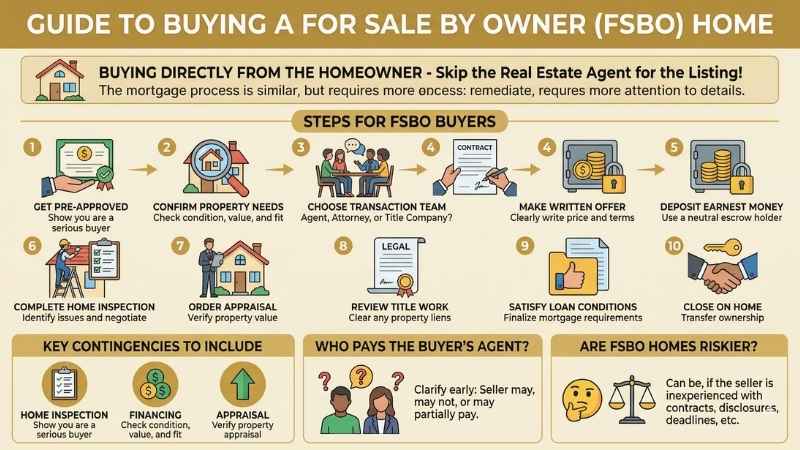 Buying a for sale by owner home usually follows the same general mortgage path as any other home purchase, but buyers often need to pay closer attention to the details because there may not be a listing agent coordinating the seller’s side of the transaction. Understanding each step can help the process move more smoothly.
Step 1: Get Pre-Approved for a Mortgage
Before making an offer, buyers should get pre-approved for a mortgage so they know their budget and can show the seller they are financially qualified. Even in an FSBO transaction, sellers usually want proof that a buyer is serious and able to obtain financing.
Step 2: Confirm the Property Fits Your Needs
Before moving forward, buyers should make sure the home meets their basic goals, budget, and lender requirements. This includes reviewing the property condition, location, estimated taxes, insurance, and whether there may be any issues that could affect financing or appraisal.
Step 3: Decide Who Will Help With the Transaction
In an FSBO purchase, buyers should decide early whether they will use a real estate agent, real estate attorney, title company, or some combination of professionals. Since the seller is handling the sale without a listing agent, buyers should know who will help with the contract, title work, deadlines, and closing process.
Step 4: Make an Offer and Sign a Purchase Contract
Once the buyer is ready, the next step is to make an offer and put the terms in writing. The purchase agreement should clearly state the price, earnest money deposit, financing terms, inspection rights, appraisal contingency, closing date, and any seller concessions or repair credits. This is one of the most important parts of the transaction.
Step 5: Deposit Earnest Money With a Neutral Escrow Holder
After the contract is accepted, the earnest money deposit is usually delivered to a title company, escrow company, or attorney, depending on local practice. Buyers should make sure the earnest money is handled by a neutral party and that the contract explains when it can be refunded.
Step 6: Complete the Home Inspection
Buyers should schedule a home inspection as soon as the contract allows. This gives the buyer a chance to identify property condition issues and decide whether to move forward, request repairs, negotiate a credit, or cancel the contract if the inspection contingency allows it.
Step 7: Move Forward With the Mortgage and Appraisal
After the contract is signed, the lender begins processing the loan and orders the appraisal. The appraisal helps confirm the property value and whether the home meets basic lending standards. If the appraisal comes in low or the property has condition issues, the buyer and seller may need to renegotiate the terms.
Step 8: Review Title and Clear Any Problems
The title company or lawyer will check the property records to ensure the seller really owns the place and that there aren’t any title problems that could hold up or mess up the closing process. If liens, ownership disputes, or other title defects are found, they usually need to be resolved before the sale can close.
Step 9: Satisfy Final Loan Conditions
As the transaction moves forward, the lender may request updated financial documents, explanations for credit or deposit questions, proof of insurance, and other final conditions. Buyers should respond quickly so the closing is not delayed.
Step 10: Close on the Home
Once the loan is fully approved and title work is complete, the buyer signs the final closing documents and brings any required funds to close. After everything is finalized, the transaction records and ownership transfers to the buyer.
Step 11: Keep Copies of Everything
After closing, buyers should keep copies of the purchase contract, inspection reports, appraisal documents, title paperwork, loan documents, and closing disclosure for their records. These documents may be important later for taxes, future refinancing, or resolving any post-closing issues.
How the Purchase Agreement Is Usually Handled in an FSBO Sale
In a for sale by owner transaction, the purchase agreement is the document that puts the deal in writing. When both the buyer and seller sign the contract, it can become a legally binding agreement, depending on the terms, deadlines, and any specific rules in that state. That is why buyers should make sure the agreement clearly covers the purchase price, earnest money deposit, financing terms, inspection rights, appraisal contingency, closing date, seller concessions, and any personal property that will stay with the home.
In many FSBO sales, the purchase agreement may be prepared or reviewed by a real estate agent, real estate attorney, title company, or another professional involved in the transaction. The exact process depends on local custom and state law. In some states, attorneys play a larger role. In others, title companies or agents handle more of the paperwork.
When it comes to buying a for sale by owner home, the key consideration for buyers is not who prepares the contract, but whether the agreement is thorough, clear, and thoroughly examined prior to signing. In an FSBO transaction, there may be less assistance compared to a conventional MLS sale, so it’s essential for buyers to ensure that all significant terms and protections are documented in writing.
Get Pre-Approved Before You Negotiate With the Seller
FSBO sellers want certainty. A strong pre-approval helps you negotiate confidently and move faster toward a clean closing.Is Your Earnest Money Safe in an FSBO Purchase?
Earnest money can be protected in a for sale by owner transaction, but buyers should make sure the deposit is handled correctly. Usually, earnest money should be held by someone who’s not on either side of the deal, such as a title company, escrow company, or real estate lawyer, depending on what people typically do in that area. Buyers should be cautious about giving earnest money directly to the seller unless a qualified professional has confirmed that it is standard and properly documented in that market. When buying a for sale by owner home, the purchase contract should also explain how the earnest money will be held, when it can be refunded, and what will happen if the deal falls through. This is especially important in an FSBO sale because there may be no listing agent helping manage the process. Buyers should make sure inspection, financing, appraisal, and other important contingencies are clearly written into the agreement so they understand when they may be able to recover their deposit.
Key Contingencies to Include in an FSBO Purchase Contract
Contingencies are contract terms that provide buyers with important protections during a for sale by owner transaction. In simple terms, a contingency can allow the buyer to cancel the contract or renegotiate the deal if certain conditions are not met within the time allowed. These protections matter in any home purchase, but they can be especially important in an FSBO sale where there may be less structure and guidance than in a traditional MLS transaction.
One of the most important contingencies is the home inspection contingency. This gives the buyer time to inspect the property and decide whether to move forward, request repairs, ask for a credit, or cancel the contract if serious issues are discovered.
Another major protection is the financing contingency, which can help protect the buyer if the mortgage loan is denied despite a good-faith effort to obtain financing. An appraisal contingency is also important because it addresses what happens if the home does not appraise for the agreed purchase price. In addition, buyers may want title-related protections to make sure the seller can deliver clear ownership without liens or other legal problems that could affect closing. In some states, attorney review periods or other local contract protections may also apply. The key is to make sure these contingencies are clearly written into the purchase agreement with specific deadlines and terms. In an FSBO sale, buyers should never assume protections are included automatically. If the contract is vague or incomplete, the buyer may have fewer options if problems come up later.
Can You Cancel a For Sale By Owner Contract?
In many cases, buyers can cancel a for sale by owner contract, but the right to cancel usually depends on the exact terms written into the purchase agreement. Buyers should not assume they can walk away at any time without consequences. Whether the earnest money is returned often depends on deadlines, contingencies, local rules, and whether the buyer complied with the contract. For example, a buyer may have the right to cancel during the inspection period, under a financing contingency if the mortgage is denied, under an appraisal contingency if the value comes in low, or during an attorney review period in states where that applies.
If the buyer misses those deadlines or cancels for a reason not protected by the contract, the earnest money deposit may be at risk.
That is why buyers should read the contract carefully before signing, especially when buying a for sale by owner home, to ensure that all major protections are clearly included in writing. In an FSBO sale, where there may be less guidance than in a traditional transaction, understanding the cancellation terms is particularly important.
Frequently Asked Questions About Buying a For Sale By Owner Home:
What Does For Sale By Owner Mean When Buying a Home?
For sale by owner, or FSBO, is when the homeowner is selling their place on their own without bringing in a listing agent. For buyers, that usually means the home purchase still includes financing, inspections, appraisal, title work, and closing, but the seller is handling the sale directly instead of working through a traditional MLS listing agent.
Can You Buy a For Sale By Owner Home With a Mortgage?
Yes. Buyers can finance a for sale by owner home the same way they would finance an MLS-listed property, as long as the borrower qualifies and the home meets lender and appraisal requirements. Current buyer guides on FSBO purchases still treat mortgage preapproval, appraisal, and loan processing as core parts of the transaction.
Do You Need a Real Estate Agent to Buy a For Sale By Owner Home?
No, but many buyers still choose to have one. In an FSBO transaction, there may be no listing agent helping organize negotiations, paperwork, deadlines, or inspection issues, so a buyer’s agent can still add value. Buyers who go without an agent often rely more on an attorney, title company, and lender to help keep the deal on track.
Who Pays the Buyer’s Agent in an FSBO Sale?
It depends on the agreement. In a traditional listed sale, commission arrangements are often established up front. In an FSBO sale, the seller may agree to pay a buyer’s agent, may offer only part of the fee, or may refuse to pay it at all, so buyers should clarify this early before making an offer.
How Do You Make an Offer on a For Sale By Owner Home?
Buying a for sale by owner home usually involves making a written offer that includes the purchase price, earnest money, financing terms, contingencies, and proposed closing timeline. Current FSBO buyer guides emphasize putting inspection, appraisal, and financing protections in writing because there may be less structure than in a standard agent-managed transaction.
Is Buying a For Sale By Owner Home Riskier Than Buying an MLS-Listed Home?
It can be, especially if the seller is inexperienced with contracts, disclosures, deadlines, repairs, or title issues. The basic transaction steps are similar, but buyers may need to be more careful about inspections, comps, contract terms, and who is handling each part of the process. That is why many current buyer guides recommend strong due diligence in FSBO purchases.