Foreclosure usually happens when a homeowner can no longer keep up with the mortgage payments, property taxes, homeowners’ insurance, HOA dues, or other housing costs. It is usually caused by financial hardship, not by a single bad decision. The most common reasons for foreclosure include job loss, reduced income, medical bills, divorce, death of a borrower, payment shock, escrow shortages, rising property taxes, higher insurance premiums, unpaid HOA dues, and major life changes. The good news is that many foreclosure situations can be handled before the home is sold. The earlier a homeowner contac
ts the mortgage servicer, reviews available options, and asks for help, the more choices they may have to avoid foreclosure.
Key Takeaways About The Reasons For Foreclosures
Foreclosure is usually caused by a payment problem, not one single event. Most homeowners fall behind after a financial hardship affects their ability to keep up with the mortgage or housing-related expenses.
The most common reasons for foreclosures include income loss, medical hardship, divorce, payment shock, escrow shortages, rising property taxes, higher insurance costs, and unpaid HOA or condo association dues.
The earlier you contact your mortgage servicer, the more options you may have. Waiting too long can reduce your choices and increase late fees, legal costs, and stress. The timeline for foreclosure, the notices involved, and homeowners’ rights can vary by state, loan type, and servicer. It’s important to note that the reasons for foreclosures can differ as well. Always examine your notices closely and consider seeking professional advice if you’re uncertain about your next steps.
Early Warning Signs Before Foreclosure Starts
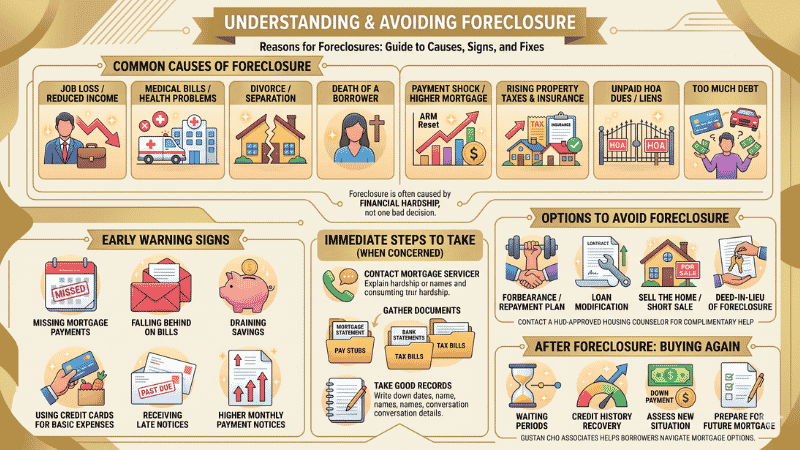
Foreclosure usually does not happen without warning. Most homeowners see signs of financial stress before the mortgage becomes seriously delinquent. The sooner these signs are addressed, the more options the homeowner may have. Common early warning signs include falling behind on bills, using credit cards for basic expenses, missing mortgage payments, receiving late notices, or draining savings to keep up with housing costs. Other reasons for foreclosures include a higher mortgage payment after an escrow analysis, rising property taxes, higher homeowners insurance premiums, HOA late notices, ARM reset letters, medical bills, reduced income, or a major life change such as divorce, the death of a borrower, or job loss.
What To Do In The Next 24 Hours
If you are worried about missing a mortgage payment, do not wait for the situation to get worse. Contact your mortgage servicer and explain the hardship. Ask about available options before the loan becomes more delinquent.
Gather your most recent mortgage statement, pay stubs, bank statements, tax bills, insurance notices, HOA letters, medical bills, and any hardship documents. Keeping records organized can help if the servicer asks for proof of income, expenses, or financial hardship.
You should also write down the date, time, name of the person you spoke with, and what they told you. Good records can help protect you if there is confusion later.
What To Do This Week
Review your full monthly budget and identify what changed. The cause may be reduced income, higher debt payments, medical bills, escrow shortages, taxes, insurance, HOA dues, or another expense. Ask your servicer about available foreclosure-prevention options. Depending on the situation, this may include forbearance, a repayment plan, a loan modification, or another loss-mitigation option. You can contact a HUD-approved housing counselor for complimentary assistance and guidance. A housing counselor may help you understand your options, prepare documents, and avoid foreclosure scams.
What To Do If You Already Received A Notice
If you received a Notice of Default, Notice of Sale, court summons, attorney letter, trustee notice, tax lien notice, or HOA foreclosure warning, act immediately. Do not ignore the notice, even if you are already speaking with the servicer. Read the notice carefully and look for deadlines, sale dates, response requirements, and contact information. Foreclosure timelines vary by state, and missing a deadline can reduce your options. Reach out to your mortgage servicer, a HUD-approved housing counselor, and, if necessary, a foreclosure attorney in your state. If a sale date is already set, acting quickly is essential. The sooner you get involved, the better your chances are of exploring options and understanding the various reasons for foreclosures.
What To Do Now If You Are Facing Foreclosure
 The best foreclosure-prevention option depends on how far behind you are, why you fell behind, and whether you can afford the home in the long term. A short-term hardship may need a different solution than a permanent income loss. The most important step is to act early. Contact your mortgage servicer before the problem gets worse and ask what options are available for your situation.
If You Are Only One Payment Behind
If you are only one payment behind, contact your mortgage servicer immediately. Ask how much is needed to bring the loan current and whether a repayment option is available. Review your monthly budget and identify the cause of the missed payment. If the problem was temporary, you may be able to catch up before the loan becomes seriously delinquent.
If You Had A Temporary Hardship
A temporary hardship, which can include reasons for foreclosures such as a short job gap, reduced work hours, a medical issue, an emergency repair, or a brief slowdown in business, may make it difficult for homeowners to keep up with payments. However, once this hardship passes, they may be able to resume regular payments. It’s advisable to speak with the servicer about options like forbearance, a repayment plan, or other short-term loss-mitigation strategies. These alternatives can provide the necessary time to recover without the immediate risk of losing the home.
If Your Income Dropped Permanently
A permanent income decline may occur after a job loss, disability, divorce, retirement, business decline, or the death of a borrower. If the original mortgage payment is no longer affordable, catching up alone may not solve the problem. Ask the servicer whether you may qualify for a loan modification. A modification may change the loan terms to make the payment more manageable, depending on the loan program, investor rules, and hardship details.
If The Mortgage Payment Increased
If your payment has risen due to reasons for foreclosures, such as an adjustable-rate mortgage reset, an escrow shortage, an increase in property taxes, a rise in homeowners’ insurance, or higher HOA dues, request that the servicer provide a written explanation of the new payment. You might consider spreading an escrow shortage over time, exploring more affordable homeowners’ insurance options, appealing a property tax assessment, or inquiring about modification options if the new payment is beyond your budget.
If You Cannot Afford The Home Long-Term
If the home is no longer affordable, waiting can make the situation worse. Late fees, legal costs, missed payments, and foreclosure expenses can grow quickly. In this situation, consider selling the home, requesting a short sale, asking about a deed-in-lieu of foreclosure, or speaking with a foreclosure attorney. If there is equity in the home, selling before foreclosure may help protect your credit and preserve remaining funds.
If A Foreclosure Sale Date Is Already Scheduled
If a foreclosure sale date is already set, it’s important to take immediate action. Reach out to your mortgage servicer, a HUD-approved housing counselor, and a foreclosure attorney in your state. Don’t rely solely on phone conversations; request written confirmation of deadlines, necessary documents, and any ongoing loss-mitigation review. Time is critical once a sale date has been established, especially considering the various reasons for foreclosures.
If You Are Considering Bankruptcy
Chapter 13 bankruptcy may help some homeowners stop a foreclosure sale and create a court-supervised repayment plan. However, bankruptcy is a legal decision and may affect credit, assets, and future mortgage options. Talk to a good bankruptcy lawyer before you make any moves. The best decision for you will depend on stuff like your income, debts, whether you’re facing foreclosure, the laws in your state, and what you want for your housing in the long run.
Avoid the Worst Clear-to-Close Mistakes—Get a “Safe to Close” Plan
he days before Clear-to-Close are when most delays happen. Get a simple checklist of what to stop doing (new debt, big deposits, job changes) and what to document so your closing stays on trackTop Reasons For Foreclosures In The U.S.
Foreclosure can occur for various reasons, but it typically stems from a single primary issue: the homeowner is unable to make full payments on their mortgage. This can include mortgage payments, property taxes, homeowners’ insurance, HOA dues, condo fees, and other essential housing costs. Below are some of the most common reasons for foreclosures that lead homeowners to fall behind, along with initial steps to take.
Job Loss Or Reduced Income
Job loss, reduced hours, seasonal income drops, or a pay cut can quickly make a mortgage unaffordable. A homeowner may stay current for a few months by using savings or credit cards, but missed payments can begin once those backup funds run out. Early warning signs include late bills, shrinking savings, and using debt to pay basic expenses. The first step is to contact the mortgage servicer to discuss forbearance, repayment plans, or loan modification options.
Medical Bills Or Health Problems
Medical hardship can cause foreclosure when illness, injury, disability, unpaid time off work, deductibles, co-pays, or large medical bills reduce monthly cash flow. Even homeowners with health insurance can fall behind if medical costs and lost income hit at the same time. Early warning signs include rising medical debt, missed work, difficult-to-manage payment plans, and using savings to cover treatment costs. The first step is to contact the mortgage servicer and explain the hardship before more payments are missed.
Payment Shock From A Higher Mortgage Payment
Payment shock happens when the monthly mortgage payment increases suddenly. This may happen after an adjustable-rate mortgage resets, a temporary rate expires, a balloon payment becomes due, or escrow costs increase. Early warning signs include ARM reset notices, escrow analysis letters, higher insurance premiums, or notices showing a new monthly payment. The first step is to call the servicer before the payment increase starts and ask about available options.
Property Tax Or Homeowners Insurance Increases
A mortgage payment can increase even when the interest rate remains unchanged. This often happens when property taxes or homeowners’ insurance premiums rise, and the escrow account does not have enough money to cover the increase. Early warning signs include an escrow shortage notice, a new, higher monthly payment, a tax bill increase, or a large homeowners’ insurance renewal. The first step is to ask the servicer if the shortage can be spread out over time and review whether taxes or insurance costs can be reduced.
Too Much Debt And Loss Of Monthly Cash Flow
Credit cards, car loans, personal loans, collections, and other monthly debts can make it harder to keep up with the mortgage. The problem is not always the total amount owed. The bigger issue is whether the homeowner has enough monthly cash flow left after all bills are paid. Early warning signs include paying only minimum balances, using cash advances, missing due dates, and relying on credit cards for groceries or utilities. The first step is to stop taking on new debt and contact the mortgage servicer before the mortgage becomes seriously delinquent.
Divorce Or Separation
Divorce or separation can make a mortgage unaffordable by turning a single household into two. The mortgage payment, taxes, insurance, and upkeep may stay the same while income and responsibility become unclear. Early warning signs include missed payments, disagreements about who should pay the mortgage, or one spouse moving out without a clear housing plan. The first step is to decide whether the home will be refinanced, sold, assumed if allowed, or handled through another written agreement.
Death Of A Borrower
The death of a borrower can create financial and legal confusion, especially if the borrower was the main income earner. Mortgage payments may fall behind while the family handles estate issues, insurance claims, or ownership questions. Early warning signs include unpaid bills, confusion about who is responsible for the loan, and delays in contacting the servicer. The first step is for the surviving spouse, heir, or authorized representative to contact the mortgage servicer and ask what documentation is needed.
HOA, Condo Association, Or Property Tax Liens
A homeowner can face foreclosure risk even if the mortgage payment is current. Unpaid HOA dues, condo association fees, special assessments, municipal bills, or property taxes can become liens against the property. Early warning signs include HOA late notices, attorney letters, lien notices, tax sale warnings, or added fees. The first thing you should do is get in touch with the HOA, condo association, tax office, or servicer right away and see if they have any payment plan options available.
Natural Disasters And Major Repairs
Storms, floods, fires, roof damage, foundation problems, or major repairs can create sudden expenses that make the mortgage harder to pay. Temporary displacement, high deductibles, and insurance delays can worsen the situation. Early warning signs include lapsed insurance, repair estimates higher than savings, unpaid contractor bills, or needing to move out temporarily. The first step is to file insurance claims and contact the mortgage servicer to ask about disaster relief or temporary hardship options.
Negative Equity Or Falling Home Values
Negative equity happens when the mortgage balance is higher than the home’s current value. Negative equity by itself does not always cause foreclosure, but it can become a serious problem when the homeowner also cannot afford the payment. Early warning signs include a home value below the loan balance, slow local sales, or being unable to refinance or sell without bringing cash to closing. The first step is to review options such as loan modification, selling, short sale, or deed-in-lieu before the missed payments grow.
Self-Employed Income Or Business Revenue Drops
Self-employed homeowners can run into trouble when business income drops, clients slow down, expenses increase, or seasonal revenue declines. Because income is not always steady, one bad period can quickly affect the mortgage payment. Early warning signs include fewer clients, lower deposits, late invoices, using personal credit cards for business expenses, or falling behind on taxes. The first step is to gather bank statements, profit-and-loss statements, invoices, and tax records before contacting the servicer about hardship options.
How Foreclosure Works
Foreclosure typically does not take place after just one missed payment. The process usually starts when a borrower becomes significantly delinquent, but the timeline can vary based on factors such as state laws, loan type, servicer practices, and whether the homeowner seeks loss mitigation options. There are several reasons for foreclosures, and regulations differ by state; some states follow a court process while others proceed via notices and a trustee sale. Homeowners need to read every notice carefully, respond promptly, and reach out to their mortgage servicer as soon as they anticipate difficulties in making payments.
Missed Payments And Delinquency
The foreclosure process typically kicks off when a homeowner falls behind on their mortgage payments. Late fees may be added, and the servicer may begin sending letters, emails, or phone calls about the past-due amount. At this stage, the homeowner may still have options. The best first step is to contact the servicer, explain the hardship, and ask about repayment plans, forbearance, or other loss-mitigation options.
Pre-Foreclosure Notices
Pre-foreclosure is the period after the loan becomes seriously past due but before the home is sold. During this stage, the homeowner may receive formal notices from the servicer, lender, attorney, trustee, or court. These notices are important. They may explain the amount needed to catch up, the deadline to respond, available assistance options, or the next step in the foreclosure process.
Judicial And Non-Judicial Foreclosure
In a judicial foreclosure state, the bank usually has to go to court. The homeowner might receive paperwork, such as a summons or a complaint, from the court. It is important to respond before the deadline because ignoring court papers can limit available options. In a non-judicial foreclosure state, the process may proceed through recorded notices and a trustee’s sale without a full court case. The homeowner may receive a Notice of Default, a Notice of Sale, or a similar document, depending on state law.
Reinstatement, Repayment, And Loss Mitigation
Many homeowners may have options before the foreclosure sale. Reinstatement means paying the past-due amount, including missed payments, late fees, and other allowed costs. Other options may include a repayment plan, forbearance, loan modification, a partial claim for certain FHA loans, refinancing if eligible, a sale of the home, a short sale, or a deed-in-lieu of foreclosure. The right option depends on the reason for the hardship and whether the homeowner can afford the home long-term.
Foreclosure Sale And Eviction
If no solution is reached, the property may be scheduled for foreclosure sale. After the sale, the homeowner may lose ownership of the home. Depending on state law, there may be additional rights, deadlines, or redemption periods. Eviction does not always happen immediately after the sale, but homeowners should not wait until this stage to act. The earlier the homeowner contacts the servicer, housing counselor, or attorney, the more options may be available.
Closing Delayed? Get a Second Opinion
If your file is stalled, we’ll review what’s missing, what changed, and the fastest path to get back to Clear-to-CloseHow Gustan Cho Associates Helps Borrowers After Foreclosure
Gustan Cho Associates assists borrowers in navigating their mortgage options after experiencing major credit events, such as foreclosures, short sales, deed-in-lieu transactions, or bankruptcy. The appropriate course of action depends on various factors, including the loan program, waiting period, credit history, down payment, income, assets, and any documented extenuating circumstances. It’s essential to consider the reasons for foreclosures, as they can impact the waiting period before qualifying for a new mortgage. Some borrowers may need to wait longer, while others may find suitable options sooner, depending on the type of loan, the timing of the foreclosure or housing event, and the overall strength of their mortgage file. Our team is dedicated to helping borrowers assess their circumstances, explore potential mortgage programs, and prepare for their next steps when the timing is ideal. This process includes reviewing credit, income, debt-to-income ratios, savings, waiting periods, and necessary documentation for future mortgage approval. If you’re looking to buy again after experiencing a foreclosure, our team can evaluate your mortgage options and guide you through the next steps.
Final Thoughts On The Reasons For Foreclosures
The reasons for foreclosures are usually tied to financial hardship, changes in payments, or major life events. Job loss, reduced income, medical bills, divorce, death of a borrower, rising taxes, higher insurance premiums, escrow shortages, HOA liens, and payment shock can all make a once-affordable home difficult to keep.
The most important thing to remember is that foreclosure usually does not happen overnight. Homeowners often have warning signs before the situation reaches a sale date. Late notices, escrow shortage letters, ARM reset notices, HOA warnings, tax bills, and shrinking savings should all be taken seriously.
If you are struggling to make your mortgage payment, contact your mortgage servicer as early as possible. Ask about available options such as forbearance, repayment plans, loan modification, reinstatement, short sale, deed-in-lieu, or other loss-mitigation programs. You can contact a housing counselor approved by HUD for free assistance and guidance. If foreclosure has already happened, homeownership may still be possible again in the future. Waiting periods, loan program rules, credit history, income, down payment, and the recorded foreclosure date can all affect when you may qualify for another mortgage. Gustan Cho Associates helps borrowers understand mortgage options after foreclosure, short sale, deed-in-lieu, bankruptcy, or other major credit events. If you are planning to buy again after foreclosure, our team can review your situation and help you understand the next steps.
FAQs About The Reasons For Foreclosures
What Are The Most Common Reasons For Foreclosures?
The most common reasons for foreclosures include job loss, reduced income, medical bills, divorce, the death of a borrower, payment shock, rising property taxes, higher homeowners’ insurance premiums, unpaid HOA dues, and excessive monthly debt. Most foreclosures are caused by a cash-flow problem that makes the full housing payment unaffordable.
How Many Missed Mortgage Payments Before Foreclosure Starts?
Foreclosure usually does not begin after one missed mortgage payment. Many lenders may begin the foreclosure process after several missed payments, but the exact timing depends on the lender, loan type, servicer, and state law. If you miss a mortgage payment, it’s a good idea to reach out to your mortgage servicer right away.
Can Property Taxes Or Homeowners Insurance Cause Foreclosure?
Yes. Property taxes and homeowners’ insurance can increase foreclosure risk if they make the monthly mortgage payment unaffordable or if unpaid taxes result in a lien against the property. Even if the mortgage interest rate remains unchanged, escrow shortages can increase the total monthly payment.
Can HOA Dues Cause Foreclosure?
Yes. In some states and communities, unpaid HOA dues, condo association fees, special assessments, or related legal fees can become liens against the property. A homeowner may face foreclosure risk from an HOA or condo association even if the mortgage payment is current.
Can Foreclosure Be Stopped After It Starts?
Foreclosure may be stopped or delayed in many situations, but timing matters. Possible options include reinstatement, repayment plans, forbearance, loan modification, selling the home, short sale, deed-in-lieu, or legal options such as Chapter 13 bankruptcy. The right option depends on the homeowner’s hardship, loan type, state law, and the proximity of the property to a foreclosure sale.
What Should I Do First If I Cannot Make My Mortgage Payment?
The first step is to contact your mortgage servicer before you miss more payments. Explain the hardship and ask about foreclosure-prevention options. Since the reasons for foreclosures are often tied to income loss, medical hardship, escrow shortages, or life changes, homeowners should also gather proof of income, bank statements, tax bills, insurance notices, HOA letters, and hardship documentation.
This article about “Reasons for Foreclosures: Guide to Causes, Signs, and Fixes” was updated on May 7th, 2026.