Mortgage Broker Vs Lender: What Homebuyers Need To Know When comparing a mortgage broker versus lender, the main difference is simple. A mortgage broker helps you shop around by connecting you with different lenders so you can compare loan options. On the other hand, a direct lender or mortgage banker offers its own mortgage products and handles the entire loan process. This is what Dale Elenteny of Gustan Cho Associates has to say about mortgage brokers versus lenders:
A mortgage broker may be a better fit if you want help shopping for rates, have a more complex file, or want access to multiple loan programs in one place. A direct lender may be a better choice if you already have a strong relationship with a bank or lender and prefer a more direct process.
Neither option is automatically better for every borrower. The right choice depends on your credit profile, income, down payment, loan type, and the level of guidance you want during the mortgage process. This guide breaks down the difference between a mortgage broker versus lender, how their rates and fees can change, and gives you some tips on figuring out which option is the best fit for your home loan.
The Role of Mortgage Brokers Versus Lenders
A mortgage broker helps borrowers compare loan options from multiple lenders. Brokers act as intermediaries, meaning they do not fund the loan themselves. Instead, they review the borrower’s situation, match the file with a lender that fits the guidelines, and help manage the process from application to closing. A direct lender offers its own mortgage products and handles the loan within its own system. In many cases, the lender underwrites, processes, and funds the mortgage directly rather than placing the loan with another company. The biggest difference is that mortgage brokers shop lender options, while direct lenders offer their own in-house loan products. A broker can be useful when a borrower wants more choices. A direct lender may appeal to borrowers who prefer a more direct application process with one institution.
How Do Mortgage Brokers Decide Which Wholesale Lender To Use

After that, the broker checks out different wholesale lenders based on their loan rules, interest rates, fees, turnaround times, and programs. Some lenders might be a better match for first-time homebuyers. In contrast, others could be easier for folks with lower credit scores, higher debt-to-income ratios, or unique income situations.
Once the broker identifies the best match, the loan is submitted to that lender. The broker then helps manage the process by gathering documents, answering questions, communicating with the lender, and helping move the loan toward closing. In simple terms, a mortgage broker chooses a wholesale lender by matching the borrower’s profile with the lender’s guidelines, pricing, and ability to close the loan smoothly.
Responsibilities of Mortgage Brokers Versus Lenders
A mortgage broker’s main responsibility is to help the borrower find a loan that fits their financial profile and goals. Brokers compare lender options, explain available programs, collect documents, submit the loan to the chosen lender, and help guide the file through the mortgage process. A direct lender’s responsibility is different. The lender processes the application, reviews documentation, underwrites the loan, issues the approval, prepares closing documents, and funds the mortgage if the loan is cleared to close. The broker helps the borrower shop and navigate the process. At the same time, the lender handles loan approval and funding.
Mortgage Broker vs Lender—Which Is Better for You?
The best choice depends on your credit, down payment, timeline, and how many loan options you want. Get a quick review and we’ll match you with the smartest path for approval and pricing.Rates of Mortgage Brokers Versus Lenders
Mortgage rates can vary whether you work with a broker or a direct lender, but the difference is not as simple as one always being cheaper than the other. Rates can vary based on a bunch of things, like your credit score, how much you put down, the type of loan, what kind of property it is, whether you’re living in it or renting it out, the size of the loan, and when you decide to lock in the interest rate.
Mortgage brokers can compare pricing from multiple wholesale lenders, giving borrowers more options. Direct lenders, on the other hand, offer their own loan pricing and may have competitive terms for certain borrowers or loan programs.
The most important step is not to focus only on an advertised interest rate. Borrowers should compare official Loan Estimates and look at the full picture, including the interest rate, APR, lender fees, credits, and total closing costs. In basic terms, the optimal mortgage rate is influenced by the borrower’s characteristics and the overall expense of the loan, rather than solely by whether the loan is sourced from a broker or a lender.
How Rates Are Priced for Mortgage Brokers Versus Lenders
Mortgage brokers and direct lenders may use different pricing models, but the most important factor for borrowers is the total loan cost. The best way to compare offers is to review the Loan Estimate carefully and compare the interest rate, APR, lender fees, credits, points, and closing costs. A lower rate does not always mean a lower-cost loan. John Strange of Gustan Cho Associates has worked as a mortgage banker and a mortgage banker. Here is what he says about the difference between mortgage brokers versus lenders.
The borrower and variety pay borrower charges from 1% to 2% of the entire mortgage quantity. They can be brought as a lump sum at closing however are occasionally rolled into the whole mortgage quantity or otherwise included in mortgage charges.
What Is a Mortgage Banker Compared To Mortgage Brokers?
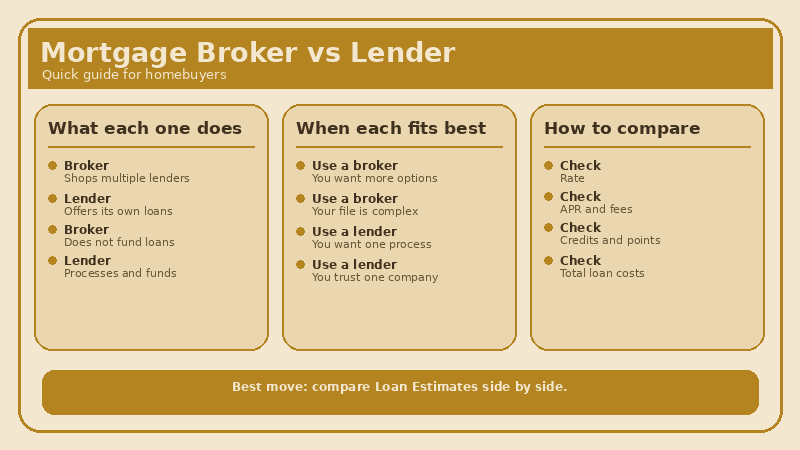 A mortgage broker helps borrowers shop multiple lenders and does not fund the loan directly. A direct lender or mortgage banker offers its own mortgage products, underwrites the loan, and funds it through its own company. A mortgage banker may later sell the loan after closing, but from the borrower’s point of view, it functions as the lender.
The Role of Mortgage Brokers Versus Lenders
Mortgage lenders provide the actual loan funds and handle the approval process within their own company. They usually manage the application, processing, underwriting, closing, and funding of the mortgage.
Mortgage brokers do not lend money directly. Instead, they help borrowers compare loan options from different lenders and guide them through the application process. A broker can be especially helpful for borrowers who want more choices or have a more complex loan scenario.
The main difference is simple: a lender provides the loan, while a broker helps the borrower find and place the loan with a lender. Neither option is automatically better. Choosing the best option really comes down to what the borrower wants, their financial situation, and the loan options on the table.
How To Compare Mortgage Costs the Right Way
Do not focus only on how a broker or lender is paid. Focus on the total loan cost shown on the Loan Estimate. Compare the interest rate, APR, lender fees, points, credits, and closing costs side by side. That will give you a clearer picture of which mortgage offer is actually better.
Mortgage Broker Versus Lender: Which One Should You Choose?
If you’re looking to explore different lenders and find more loan options, a mortgage broker is a smart choice. But if you want to keep things simple and deal with just one bank or mortgage company, a direct lender is the way to go. Whichever route you take, make sure to compare Loan Estimates side by side before you make your final choice.
Frequently Asked Questions About Mortgage Brokers Versus Lenders:
Is it Better to Use a Mortgage Broker or a Direct Lender?
It depends on your situation. A mortgage broker may be better if you want help comparing multiple lenders, need more loan options, or have a more complex file. A direct lender may be better if you already trust a bank or mortgage company and want a more direct process from application through closing.
What is the Difference Between Mortgage Brokers Versus Lenders?
A mortgage lender is the company that makes and funds the home loan. A mortgage broker does not lend money directly. The broker helps you compare lenders and find a mortgage that matches your financial situation and goals.
Is it Cheaper to Use a Mortgage Broker or a Lender?
Not always. A broker may find a lower-cost option by shopping several lenders. In contrast, a direct lender may offer competitive pricing for certain borrowers or relationship discounts. The best way to tell is to compare Loan Estimates side by side and review the rate, APR, lender fees, credits, and closing costs together.
Do Mortgage Brokers Get Better Rates Than Direct Lenders?
Sometimes, but not in every case. Mortgage brokers can compare rates from multiple wholesale lenders, which may help some borrowers find a better deal. Direct lenders can still be competitive, especially for borrowers with strong credit, simple files, or existing banking relationships.
Should First-Time Homebuyers Use a Mortgage Broker or a Lender?
First-time homebuyers may benefit from a mortgage broker if they want more guidance and help comparing loan programs. A direct lender may also work well if the borrower prefers a straightforward process with one company. The better choice depends on how much support the buyer wants and whether comparing multiple options is important.
Can a Mortgage Broker Help if My Loan Scenario is More Complicated?
Yes, in many cases. If you’ve got a lower credit score, a higher debt-to-income ratio, or you’re self-employed, you might want to consider working with a broker. They can help you tap into different lender guidelines that could really work in your favor. That does not guarantee approval, but it can improve the chances of finding a lender that fits the file.