How does the Federal Reserve affect mortgage rates? The Fed does not set mortgage rates directly. It manages short-term monetary policy, such as the federal funds rate, affecting inflation, borrowing costs, and investor expectations. Mortgage rates are shaped more directly by long-term market forces, including inflation expectations, 10-year Treasury yields, mortgage-backed securities, lender pricing, and your own loan profile. Your credit score, down payment, debt-to-income ratio, loan program, property type, and rate-lock timing can all affect the rate you are offered.
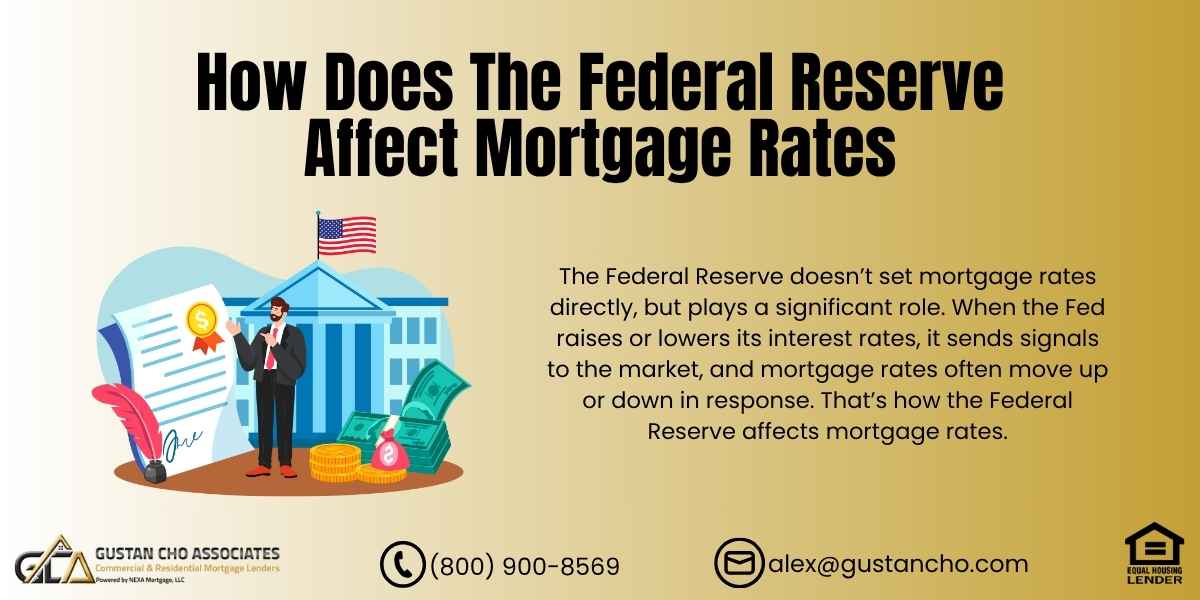
The Federal Reserve does not directly set mortgage rates.
The Federal Reserve doesn’t set mortgage interest rates directly. Instead, it sets a target range for the federal funds rate, the short-term rate banks use for overnight loans to one another. So, when considering how the Federal Reserve affects mortgage rates, it’s important to understand that its decisions on the federal funds rate can influence overall borrowing costs in the economy, including mortgages.
Mortgage rates for 15-year and 30-year home loans are set by lenders and investors in the broader market. They are influenced by long-term inflation expectations, Treasury yields, mortgage-backed securities, lender pricing, and the details of your loan application.
This is why a Fed rate cut does not always cause mortgage rates to fall right away. Markets may have already expected the move, or investors may still be concerned about inflation and long-term borrowing costs.
Federal Funds Rate vs. Mortgage Rates
The federal funds rate and a mortgage rate are not the same thing. The federal funds rate is an overnight rate banks use when they lend reserve balances to one another. The Federal Reserve establishes a target range for the short-term interest rate to influence borrowing, spending, inflation, and financial conditions. A 15-year or 30-year mortgage is a long-term loan. Lenders and investors must account for what may happen over many years, including inflation, economic growth, bond market conditions, and the possibility that borrowers may refinance or pay off their loans early. Because mortgage rates are based on long-term expectations, they may move differently from the federal funds rate. The Fed can raise or lower short-term rates, but mortgage rates may already reflect investors’ expectations for the Fed, inflation, and the economy.
The Reasons Mortgage Rates Can Move Before a Fed Meeting
Mortgage rates can shift before the Federal Reserve announces anything, as financial markets anticipate the Fed’s actions. Investors watch inflation reports, jobs data, consumer spending, Treasury yields, and comments from Fed officials. When new information changes expectations, lenders may adjust mortgage pricing right away. This is why the answer to the question “How does the Federal Reserve affect mortgage rates?” is not always tied to the day of a Fed meeting. For example, rates may rise before a meeting when inflation comes in higher than expected. They may improve before a rate cut if investors believe inflation is easing and the Fed may lower short-term rates in the months ahead. Mortgage rates respond to what markets expect, not only to what the Fed has already done.
What Moves Mortgage Rates the Most?
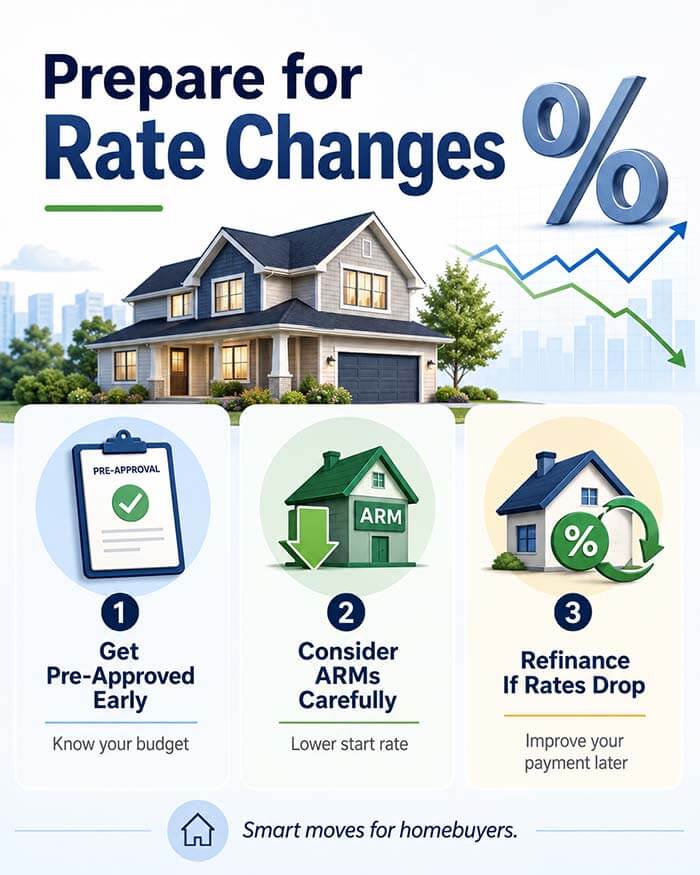
Several factors can affect the rate shown on a mortgage quote. The Federal Reserve is important, but mortgage rates also respond to market conditions and the details of the individual loan.
Inflation Expectations
Inflation is one of the biggest drivers of long-term mortgage rates. When investors anticipate rising prices, they typically seek higher returns on long-term investments. That can push mortgage rates higher. When inflation appears to be cooling, mortgage rates may improve. This is one reason mortgage pricing can change quickly after major inflation reports.
Treasury Yields
Mortgage rates often move in the same general direction as the 10-year Treasury yield. They are not the same rate, and one does not directly set the other. However, both reflect investors’ expectations for the economy, inflation, and long-term borrowing costs. When Treasury yields rise, mortgage rates often rise as well. When yields fall, mortgage pricing may improve.
Mortgage-Backed Securities
Many home loans are packaged into investments called mortgage-backed securities, or MBS. Investors buy these securities because they are backed by payments from mortgage borrowers. When demand for mortgage-backed securities is strong, lenders can offer better pricing. When investors seek higher returns due to inflation, uncertainty, or market risk, mortgage rates can rise.
Lender Pricing and Market Volatility
Lenders adjust mortgage pricing based on current market conditions, loan demand, operating costs, and the speed of bond market movements. During volatile periods, rates can change more than once in a day. This is why two lenders may quote different rates and costs for similar borrowers. It is important to compare the full Loan Estimate, including points, lender credits, fees, and the total monthly payment.
Credit Score, Down Payment, and Loan Details
Your personal loan profile also affects the rate you are offered. Credit score, down payment, debt-to-income ratio, loan amount, loan type, occupancy, and property type can all change pricing. For example, a primary residence may be priced differently from a second home or investment property. A condo, multi-unit property, or lower down payment may also affect the available rate and closing costs. Understanding how does the Federal Reserve affect mortgage rates is helpful, but borrowers should also review the loan factors they can control.
What a Fed Rate Cut, Hike, or Pause Can Mean
A Federal Reserve decision can influence mortgage markets, but it does not automatically determine what happens to mortgage rates. Lenders and investors often react to what they expect inflation, bond yields, and the economy to do in the months ahead.
When the Fed Cuts Rates
A Fed rate cut could lower short-term borrowing costs, including some credit card rates, home equity lines of credit, and auto loans. Mortgage rates may also improve, but only if long-term inflation concerns, Treasury yields, and mortgage-backed securities pricing support lower rates. In some cases, mortgage rates have already moved lower before the Fed announces a cut because investors expected it. In other cases, rates may stay about the same or rise if investors remain concerned about inflation.
When the Fed Raises Rates
A Fed rate hike is usually intended to slow inflation and cool the economy. Higher short-term rates can add pressure to mortgage markets, especially if investors believe inflation will remain elevated. However, mortgage rates may not rise by the same amount as the Fed’s increase. If markets already expected the hike, much of the change may already be reflected in mortgage pricing. Rates could also remain steady or improve if investors believe the Fed’s actions will bring inflation under control.
When the Fed Pauses Rates
A pause means the Fed has chosen not to raise or lower its target rate at that meeting. It does not mean mortgage rates will stay unchanged. Mortgage rates can still move during a Fed pause because lenders continue to respond to inflation reports, employment data, Treasury yields, mortgage-backed securities, and overall market volatility. Borrowers should monitor actual mortgage rates and their total monthly payment rather than relying on a Fed headline alone.
How Fed Policy Can Affect Homebuyers
Federal Reserve policy can affect homebuyers by influencing mortgage market conditions, which can change the payment a borrower can afford. Even a small change in mortgage rates can change the principal-and-interest payment on a new home loan.
Higher Rates Can Reduce Buying Power
When mortgage rates rise, the monthly payment usually increases. A higher payment can reduce the home price a borrower qualifies for, especially when income and other monthly debts stay the same. For some buyers, this may mean choosing a lower price range, making a larger down payment, paying down debt, or comparing different loan programs. The goal is not to chase a certain rate headline. It is to choose a payment that fits the household budget.
Rates Can Change a Borrower’s Debt-to-Income Ratio
Mortgage lenders use debt-to-income ratio, or DTI, to compare monthly debt payments with gross monthly income. The proposed housing payment is part of that calculation. When rates increase, the estimated mortgage payment may rise. That can increase the borrower’s DTI and affect the maximum loan amount or purchase price they qualify for. Buyers should ask their loan officer to update their pre-approval when rates move or when they begin considering homes in a higher price range.
Lower Rates Can Bring More Buyer Competition
Lower mortgage rates can improve affordability, but they may also bring more buyers into the market. More demand can lead to multiple offers, fewer seller concessions, and higher home prices in some areas. A lower rate is helpful, but it does not always mean the total cost of buying a home will be lower. Buyers should consider the home price, taxes, insurance, HOA dues, closing costs, and the full monthly payment before making an offer.
Focus on the Payment You Can Sustain
Fed decisions can move markets, but homebuyers should avoid basing a purchase decision solely on whether the Fed raised, cut, or paused rates. A better approach is to review current mortgage rates, confirm the full monthly payment, and ensure the payment leaves room for savings, repairs, and other household expenses.
How Fed Policy Can Affect Refinancing
Federal Reserve policy can influence refinance rates, but a Fed announcement alone should not decide whether you refinance. Mortgage rates may change before or after a Fed meeting based on inflation, Treasury yields, mortgage-backed securities, and lender pricing. The better question is whether a new loan improves your overall financial position. Start by comparing the new monthly payment with your current payment. Review the interest rate, loan term, closing costs, and the cash needed for closing. A lower rate may not yield meaningful savings if the new loan restarts a 30-year term, adds thousands in costs, or reduces the payment by only a small amount.
Equity also matters. Homeowners may need enough equity to qualify for the refinance they want, especially for a cash-out refinance or a loan that removes mortgage insurance. Your credit score, debt-to-income ratio, property value, and loan program can also affect approval and pricing.
A useful number to review is the break-even period. This estimates how long it may take for monthly savings to recover the refinance closing costs. For example, if closing costs are $4,000 and the new loan saves $200 per month, the break-even period is about 20 months. Understanding how does the Federal Reserve affect mortgage rates can help you follow the market, but a refinance should be based on your payment, costs, loan term, equity, and long-term plans for the home—not a Fed headline alone.
What To Do When Mortgage Rates Are Volatile
Mortgage rates can change quickly when inflation reports, Treasury yields, or Fed comments move the bond market. Instead of trying to predict every rate change, focus on the parts of the mortgage process you can control.
Get a Full Pre-Approval
A full pre-approval gives you a clearer picture of what you may qualify for based on your income, assets, debts, credit, and loan program. It also helps your loan officer update your price range if rates change before you make an offer.
Compare the Total Payment, Not Only the Rate
A lower interest rate does not always mean a better loan. Compare the full monthly payment, including principal, interest, property taxes, homeowners’ insurance, mortgage insurance, and HOA dues when applicable.
Review Loan Estimates Carefully
Ask lenders you are seriously considering for Loan Estimates and compare them side by side. Look at the interest rate, monthly payment, lender fees, points, lender credits, cash needed to close, and total loan costs. Compare offers from the same day and with the same rate-lock period whenever possible.
Ask When a Rate Lock Is Available
A pre-approval does not automatically lock your mortgage rate. Ask your loan officer when you can lock, how long the lock lasts, whether there is a cost, and what happens if closing is delayed. Some lenders may also offer a float-down option, but the terms can vary.
Understand Points, Lender Credits, and Lock Expiration
Discount points can lower the rate in exchange for an upfront cost. Lender credits can reduce closing costs but may be accompanied by a higher rate. Review both choices based on how long you expect to keep the loan. Also, confirm the lock expiration date to determine whether an extension may be needed.
Avoid Opening New Debt Before Closing
Avoid financing furniture, applying for new credit cards, leasing a vehicle, or taking out personal loans while your mortgage is in process. New debt or credit inquiries can change your debt-to-income ratio, credit profile, or approval terms. Talk with your loan officer before making any major credit or financial move.
Current Federal Funds Rate
As of June 18, 2026, the Federal Reserve’s target range for the federal funds rate is 3.50% to 3.75%. The Federal Open Market Committee maintained that range at its June 17, 2026 meeting. This short-term rate is not the same as a mortgage rate. Understanding how does the Federal Reserve affect mortgage rates can help borrowers follow market conditions, but mortgage pricing may still change based on inflation, Treasury yields, mortgage-backed securities, and lender pricing.
Final Thoughts: Focus on the Payment You Can Sustain
The Federal Reserve can influence mortgage markets, but it does not directly set the interest rate on your home loan. Understanding how does the Federal Reserve affect mortgage rates can help you make sense of rate changes, but a mortgage decision should not be based on a Fed headline alone.
Before buying or refinancing, review the full monthly payment, closing costs, cash needed to close, loan term, and how the payment fits your long-term budget. A lower rate can be helpful, but the right mortgage supports your financial goals without putting too much pressure on your monthly finances.
A full mortgage review can help you compare loan programs, understand rate-lock options, and decide whether buying or refinancing makes sense based on your income, debts, credit, assets, and timeline.
FAQs: How Does The Federal Reserve Affect Mortgage Rates
Will a Fed Rate Cut Lower the Payment on My Current Fixed-Rate Mortgage?
No. A fixed-rate mortgage keeps the same interest rate for the life of the loan, so a Federal Reserve rate cut does not lower your existing principal-and-interest payment. Your payment could still change if property taxes, homeowners’ insurance, or mortgage insurance change. To obtain a lower rate on a fixed mortgage, you should qualify for a refinance.
Do Federal Reserve Decisions Affect Adjustable-Rate Mortgages?
They can, but not always right away. An adjustable-rate mortgage, or ARM, changes based on the index and margin stated in the loan agreement, as well as the loan’s adjustment schedule and rate caps. A Fed decision may influence the broader rate environment, but your ARM only changes when its terms allow it to adjust.
Can the Federal Reserve’s Mortgage-Backed Securities Holdings Affect Mortgage Rates?
Yes. The Federal Reserve can influence mortgage markets through its holdings and purchases of mortgage-backed securities. Historically, Federal Reserve research has found that large-scale purchases of mortgage-backed securities lowered MBS yields and mortgage rates. This is separate from changes to the federal funds rate.
Can My Mortgage Rate Change After I Lock It?
A rate lock generally protects your interest rate and points through the stated expiration date, as long as you close on time and there are no material changes to your application or loan terms. A lower appraisal, a change in income, added debt, a different loan amount, or an expired lock can affect pricing. Ask the lender to explain any rate change in writing.
What Happens If Mortgage Rates Fall After I Lock My Rate?
Your lender is usually required to honor the locked rate if you meet the lock conditions, but you may not automatically receive a lower rate if market pricing improves. Some lenders offer float-down options, while others do not. Before locking, ask whether a float-down is available, what it costs, and what conditions apply.
Can I Negotiate My Mortgage Rate or Closing Costs?
You can compare and negotiate loan terms before choosing a lender. Ask for Loan Estimates based on the same loan type, loan amount, down payment, and lock period. Then compare the rate, points, lender credits, cash-to-close, and total costs rather than looking only at one advertised rate.
Why Can My Total Mortgage Payment Change Even With a Fixed Rate?
A fixed rate applies to the principal-and-interest portion of the mortgage. Your total monthly payment can still change when escrowed costs, such as property taxes, homeowners’ insurance, flood insurance, or mortgage insurance, change. Review the annual escrow analysis from your loan servicer to understand what changed.
Does the Federal Reserve Affect Home Prices Too?
The Federal Reserve can affect home prices indirectly by influencing borrowing costs and buyer demand. However, local inventory, employment, wages, migration, property taxes, and neighborhood conditions often have a larger effect on the price of a particular home. Lower rates can improve affordability, but they can also increase competition when more buyers enter the market.
This article about “How Does The Federal Reserve Affect Mortgage Rates” was updated on July 6th, 2026.