This guide covers the impact of credit score changes during mortgage process and how it impacts borrowers. Credit Score Changes during mortgage process happen. There are minimum credit score requirements on mortgage loan programs. The impact of credit inquiries and new accounts is generally small and temporary.
Your credit score can be subject to changes during the mortgage application process for several reasons. Here are some factors that may influence your credit score during this time:
For example, to qualify for a 3.5% down payment home purchase FHA loan, HUD requires borrowers to have a 580 credit score. HUD, the parent of FHA, allow borrowers with under 580 credit scores and down to a 500 FICO to qualify for FHA loans. However, HUD requires a 10% versus a 3.5% down payment for borrowers with under 580 and down to 500 credit scores.
Are Credit Score Changes During Mortgage Process Common?

The middle credit score used to qualify you for a mortgage is the score used through the mortgage process. The qualifying credit score is good for 120 days. It does not matter with credit score changes during mortgage process. Your credit scores can drop significantly and it will not matter.
When you apply for a mortgage, the lender will pull a tri-merger credit report as part of the application process.
Loan officers will pull a tri-merger hard credit pull prior to running your file through the automated underwriting system. There are soft and hard pull. However, in order to be able to run the loan application through the automated underwriting system, it needs to be a hard inquiry. A hard inquiry has a small, temporary impact on your credit score.
How Does My Credit Score Affect Getting a Mortgage?
Your credit score significantly impacts obtaining a mortgage and the terms you’re offered. The borrower’s credit score is a critical factor when obtaining loan approval. Lenders consider credit scores a measure of creditworthiness, with higher scores indicating lower risk and a higher likelihood of approval. A higher credit score translates to lower interest rates, potentially saving you money throughout the loan term.
A higher credit score can expand the range of loan options available and reduce the amount required for a down payment at the best mortgage rate.
A better credit score can result in more advantageous conditions, reduced interest rates, and a broader array of choices when seeking a mortgage. On the other hand, having a lower credit score could result in stricter terms, higher interest rates, fewer choices, and added expenses such as private mortgage insurance (PMI). By monitoring your credit score, taking care of any issues, and making improvements before applying for a mortgage, you can qualify for better terms and potentially secure a larger loan amount.
Changes to Credit that Impact Mortgages
Your Lender Looks Into:
- Your debt repayment history
- Your monthly payment schedule
- Your debt-to-income ratio
- Your eligibility for loan programs
- Your possible mortgage and loan-level pricing
- Your financial situation before closing
When Can Borrowers Request Credit Reports
The initial credit report may not be the last one used. Depending on your lender, loan program, report age, or findings during underwriting, your lender may order a credit refresh, supplemental report, or a new credit report.
Credit Score Requirements on Mortgage Loan Programs
The specific credit score requirements for mortgage approval can vary between lenders and mortgage programs. If your credit score is on the border of meeting the requirements, it might fluctuate during the approval process. Maintaining good financial habits and responsible credit management will contribute to the long-term health of your credit score.
It’s important to note there may be some short-term fluctuations on all three credit reports. Credit scores can change daily. Credit score changes during mortgage process happens.
If you have concerns about your credit score and the mortgage application process, it’s a good idea to discuss them with your lender. They can provide guidance on how specific actions might impact your application and offer advice on how to improve your creditworthiness.
Fannie Mae High Credit Standards for Borrowers
Fannie Mae and Freddie Mac require a minimum of 620 credit scores for borrowers to qualify for conventional loans. Credit scores fluctuate month to month. Many borrowers often get confused about how credit score changes during mortgage process are factored in during the underwriting process.
When a borrower qualifies for a mortgage loan, the loan officer will pull a tri-merger credit report. A tri-merger credit report is three credit reports: Experian, Equifax, and Transunion.
A tri-merger credit report is when a lender pulls a borrower’s credit report from each of the major credit bureaus. The middle credit score of the borrower is used as the qualifying credit score of the borrower. This middle credit score is good for 120 days.
How Much Will Mortgage Impact Credit Score?
If you make timely payments and maintain a balance that is relatively lower than your credit limit, obtaining a mortgage can positively impact your credit score. These factors show responsible credit management and can boost your score over time. However, missing payments or defaulting on your mortgage can significantly decrease your credit score. Additionally, applying for a mortgage may cause a temporary dip due to a hard inquiry, but multiple inquiries for rate shopping are typically treated as a single inquiry. Managing your mortgage responsibly can help maintain or improve your credit health.
Credit Inquiries Changes in Credit Report During Mortgage Process
Credit Inquiries: Lenders will pull a tri-merger credit report, and the lender will pull a tri-merger credit report. This is a hard inquiry, which can lower your credit scores. However, multiple mortgage-related inquiries within a short period (typically 45 days) are usually treated as hard pull on your credit report. Review your credit report for errors and accuracies on credit reporting agencies. It’s crucial to address any discrepancies before applying for a mortgage to ensure your credit report reflects accurate information.
Qualifying Credit Scores from Tri-Merger Credit Report
When you apply for credit, creditors will do a hard pull which is a hard credit inquiry. Hard credit inquiries will drop your credit scores. Everyone has three credit scores. The following are the three major credit bureaus in the United States. They each have their own algorithm in the calculation of consumer credit scores: Equifax has its own credit scoring system. Experian has its own credit scoring system. Transunion has its own credit scoring model.
How Do Lenders Calculate the Qualifying Credit Score to Be Used for Mortgage
Lenders all use the borrower’s middle credit score in qualifying. For example, if a borrower has a Transunion credit score of 600, Experian credit score of 650, and Equifax credit score of 700, which credit score will the lender use? The middle credit score and the middle credit score here is the 650 Experian score. The middle credit score is the qualifying credit score the lender will be using during the mortgage prices. This middle credit score is good for 120 days.
What If My Credit Score Changes During Mortgage Process?
Credit score changes during mortgage process depending on various factors. Maxing out credit cards will drop scores. However, this drop is just a temporary drop. It will go right back up once credit cards are paid down. Late payments on any monthly payments will drop credit scores. Applying for too much credit will have hard credit inquiries on the credit report.
Will Credit Scores Drop Due to Hard Credit Inquiries by Lenders?
Credit scores will drop with every hard pull. Each hard inquiry can have a 2 to 5 point negative impact on credit scores. Many borrowers wonder what credit score during mortgage process lender will base their qualifying credit score. The credit score during mortgage process use will be the middle credit score that is pulled at the time the mortgage applicant signs the application and disclosures. However, some lenders like us can use the higher credit scores if credit score changes during mortgage process for pricing.
What If My Credit Scores Drop During the Mortgage Process
If a mortgage lender qualified borrower for a home loan and has submitted the application, the credit score that was pulled at the time of the mortgage application will be used throughout the mortgage approval process. That score is good for 120 days. Borrowers with a middle score of 650, that credit score will be used throughout the mortgage application process. In the event credit score changes during mortgage process, it does not matter. This is because the 650-credit score will be used until closing. The initial credit score is good for 120 days. If the mortgage loan does not close within the 120-day window, a new tri-merger credit report needs to be pulled. The middle credit score of the new credit report will be used.
Credit Score Changes Can Affect Your Mortgage Approval
Your score can change from new debt, higher card balances, late payments, disputes, or credit inquiries. Get a quick review to protect your approval before closing.
How Long Are Credit Scores Good for Before It Needs to Be Pulled Again
After 120 days is when credit scores expire and a new credit report needs to be pulled. Credit scores are normally good for 120 days. Most mortgage loans close in 60 days or less. Many mortgage lenders will do a soft credit pull prior to issuing a clear to close. The reason for the soft pull is not to get a new credit score but to see if the borrower has incurred more debt that may affect their debt-to-income ratios.
What Happens When a Lender Sees a Credit Change?
- The severity of a credit change will dictate how the lender responds.
- The mortgage processor or underwriter could demand:
- An explanation letter for the inquiry or account
- Verification of no new credit
- A current account statement
- Proof of the monthly payment
- An updated payoff statement
- Identity-theft claim documentation
- Evidence that the wrong information was corrected
- An updated credit history or credit supplement
- The underwriter could also adjust the debt-to-income ratio to determine if the borrower still satisfies the loan criteria.
A significant change may force the lender to:
New Credit Accounts Changes in Credit Report During Mortgage Process
Opening new credit tradelines or taking on new debts while in the middle of the mortgage process can negatively affect your credit score and raise concerns with the lender. Lenders want to see stable financial behavior during this time. Missing payments on existing credit accounts will affect your credit score and may lead to your mortgage application being denied or delayed. Make sure to pay all your bills on time during the mortgage process.
What Type of Changes on Credit Report During Mortgage Process Are Acceptable
If there are changes on credit report, during mortgage process that will be considered. For those with higher debt-to-income ratios, increases in credit card balances may affect their DTI. They may be asked to pay down their credit card balances. Have the mortgage processor do a credit supplement so it reflects on the credit report.
Borrowers can have a good credit score to qualify for a mortgage, but special emphasis will be placed on the last 12 months.
If a borrower purchases a new high-ticket item, such as an automobile or furniture during the mortgage process, it will affect DTI. New monthly debt obligations will be discovered when the underwriter does a soft credit pull. The monthly obligation will be taken into account for debt-to-income ratio qualification.
What Do Underwriters Look for When Analyzing Borrower’s Files?
What underwriters look for is that borrowers have not incurred more debt, had recent collections and/or charged offs appear on credit report, or had late payments. This can affect either the debt-to- income ratios or financial distress and the ability to repay the new mortgage loan. Many times, when borrowers use their credit cards and their credit utilization ratios are higher, then it is normal for borrowers’ credit scores to drop. As long as it does not affect the debt-to-income ratios, there should be no issues.
What Happens to Your Mortgage Rate When Your Credit Score Increases?
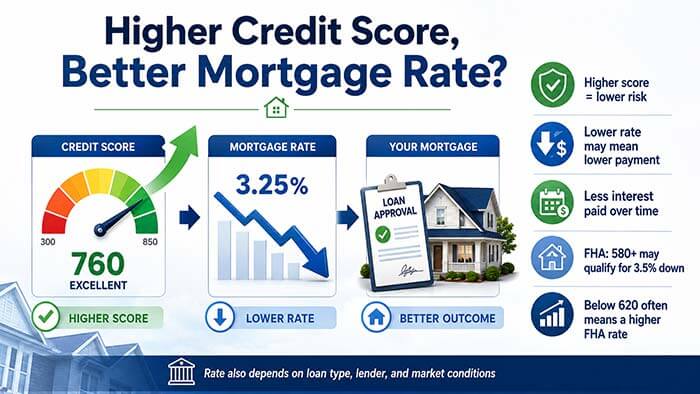
You may become eligible for a lower mortgage rate when your credit score increases. Lenders use credit scores to assess risk, with higher scores indicating lower risk. A higher credit score can result in decreased mortgage interest rates, lowered monthly payments, and reduced interest paid throughout the loan. Lenders typically offer borrowers with higher credit scores lower mortgage interest rates.
It’s essential to note that the exact impact of a credit score increase on your mortgage rate can differ based on other factors such as market conditions, loan type, and lender policies.
In the case of FHA loans, the minimum credit score required to get a 3.5% down payment FHA loan is 580. However, those with credit scores under 620 will definitely get a higher interest rate on FHA loans.
Can You Use Higher Credit Score Changes During Mortgage Process?
For example, let’s take a case scenario: 580 credit score, their interest rate might be at 5.5. If their credit score is between 600 and 619 credit score, their interest rate may be at 4.75%. For borrowers with credit scores of 620 or higher, their credit scores may be at 4.25%. If the increase of credit changes during the mortgage process. The team at Gustan Cho Associates can use the higher credit scores and cancel out the initial credit scores for pricing and locking mortgage rates.
Changes in Credit Report During Mortgage Process With New Collections Reporting
Some folks have gone through credit repair before applying for a mortgage. Many derogatory credit items, such as collections, late payments, and charge-offs, can be removed, and nobody will know. There are times when derogatory credit items re-appear on a consumer’s credit report during the mortgage process.
Suppose a derogatory credit item appears before a clear to close is issued during soft credit pull by the mortgage underwriter. In that case, it can affect the mortgage process.
Suppose the derogatory item on the credit report is a charge-off or collection account with zero balance or an unpaid balance of $1,000 and under. There is no need to worry. This is because the above are exempt. If the collection account is a medical collection account with an unsatisfied balance, no worries. Changes in credit report during mortgage process on credit card balances may affect debt-to-income ratios. Large fluctuations in credit card balances or maxing out your credit cards can hurt your credit score. Maintain a low credit utilization ratio during the mortgage application process.
Credit Monitoring for Changes in Credit Report During Mortgage Process
It’s a good practice to monitor changes in credit report during mortgage process. Many lenders will also recheck your credit just before closing to ensure there have been no significant negative changes. Different lenders have varying credit score requirements for mortgage approval. Be aware of the minimum credit score required by your chosen lender, and work on improving your credit if necessary.
If you anticipate any changes in your financial situation during the mortgage application process, such as a job change or receiving a large sum of money, it’s essential to communicate these developments with your lender,
In summary, it’s crucial to maintain good financial habits and avoid making significant changes to your credit profile during the mortgage application process. Any adverse changes to your credit report could impact your eligibility for a mortgage or the terms of your loan. Always stay in close communication with your lender and address any concerns or questions they may have regarding your credit report.
What To Do if Your Credit Changed
- Do not wait for the underwriter to discover any changes.
- Notify your loan officer immediately about any changes.
- Include the creditor’s name, account type, account balance, monthly payment, and the date of the change.
- Your loan officer can determine whether a specific change impacts your debt-to-income ratio, loan program, pricing, or automated underwriting results.
- If applicable, the lender has options available to them, including documenting that no account was opened, verifying the correct payment, correcting incorrect information, paying the obligation in accordance with the guidelines, and restructuring the loan.
- If you inform your mortgage team promptly, they can usually resolve the issue before closing.
How To Protect Your Credit Until the Mortgage Is Funded
Do not pay off large debts to qualify for your loan without first consulting your loan officer. The balance may not update immediately, and your lender may require a new credit report to confirm payment.
What Should You Do if the Credit Report Has a Mistake?
If You Discover an Error While the Mortgage Application is in Process:
- Alert the loan officer before filing your dispute.
- Be as specific as possible regarding the account and the inaccurate information.
- Collect any and all relevant evidence to support your dispute, including: treatment documents, payment histories, identity-theft affidavits, or letters from creditors.
- The lender will provide guidance regarding the dispute and supporting documentation.
- Avoid initiating unnecessary disputes, as they can complicate the underwriting process.
- Notify the lender promptly if an account does not belong to you.
- The lender will need to examine the inaccurate information and will likely confirm it with the credit reporting agency.
Case Scenario of Credit Scores Changes During Mortgage Process
Let’s take a case scenario on borrower’s middle credit score at the time he signed a mortgage application was a 580 but increased to 640. Borrowers can get a better lower rate due to an increase in credit scores. During the mortgage application process, the applicant’s credit scores jumped to 640 from 580.
With the 640 the borrower can qualify for a 4.25% interest rate versus a 5.5% on a 580. The lender can give a better rate if the increase of credit score during the mortgage process.
The borrower will not be stuck with the 5.5% interest rate but rather get the lower interest rate. On the flip side, if the borrower had a 640 redit score when first applied but credit scores dropped to 580, the 640-credit score will be used for pricing. If you are approved for a mortgage, it will likely result in a new credit account being opened. Opening a new credit account can affect your credit score, especially if you have recently opened other credit accounts.
FAQ: Impact of Credit Score Changes During Mortgage Process
What Factors Influence Credit Score Changes During the Mortgage Process?
Your credit score can fluctuate during the mortgage application process due to various factors. These include payment history, credit utilization, credit mix, inquiries, and new accounts.
How Common Are Credit Score Changes During the Mortgage Process?
Credit score changes during the mortgage process are not uncommon. They can happen due to changes in your financial situation, such as new credit inquiries or changes in credit card balances.
How Do Lenders Calculate the Qualifying Credit Score for a Mortgage?
Lenders typically use the middle credit score from your tri-merger credit report when qualifying you for a mortgage. This score is good for 120 days and is used throughout the mortgage application process.
What Happens if My Credit Score Changes During the Mortgage Process?
If your credit score changes during the mortgage process, the lender will still use the qualifying credit score that was pulled at the time of application. However, if your credit score improves, you may become eligible for a lower mortgage rate.
How Long Are Credit Scores Good for Before They Need to be Pulled Again?
Credit scores are generally good for 120 days before they expire and a new credit report needs to be pulled. This timeframe allows lenders to assess your creditworthiness during the mortgage application process.
How Does My Credit Score Affect Getting a Mortgage?
Your credit score significantly impacts your ability to get a mortgage and the terms you’re offered. A higher credit score can lead to lower interest rates, more loan options, and reduced down payment requirements.
Can Lenders Use Higher Credit Score Changes During the Mortgage Process for Pricing?
Yes, lenders like Gustan Cho Associates can use higher credit scores that occur during the mortgage process for pricing and locking in mortgage rates. This can result in better rates for borrowers with improved credit scores.
What Should I Avoid During the Mortgage Application Process to Maintain My Credit Score?
To maintain your credit score during the mortgage application process, avoid making large purchases, opening new credit accounts, missing payments, or maxing out credit cards. Engaging in these behaviors can adversely affect your credit score and ability to obtain a mortgage.
- Related> The do’s and not to do’s during the mortgage loan process
- Related> How many times do mortgage companies check credit
- Related> What happens if credit scores drop during the mortgage approval process
- Related> Things to avoid during the mortgage application process
See How a Credit Score Change Can Affect Your Rate
Even a small score drop may change your interest rate, mortgage insurance, monthly payment, or loan options. Get an updated pricing review before you lock your loan.
This Guide About the Impact of Credit Score Changes During Mortgage Process Was Updated in June 29, 2026.