FHA Appraisal Guidelines and Property Checklist for Home Buyers and Sellers
In this guide, we’ll explain everything you need to know about FHA appraisal guidelines and what your home needs to check off the list for 2026 FHA loans. We will provide an in-depth overview of the the scope of the inspection by the appraiser in order to get a passing grade on the FHA appraisal. This guide covers the most recent edition of HUD’s FHA handbook, which emphasizes minimum standards for FHA appraisals. The primary property requirements stipulate that homes must be safe, sound, and secure.
For 2024 and 2025, HUD implemented minor updates to appraisal guidance, including revised rules for borrower-initiated value reconsideration and the removal of outdated appraisal procedures.
We’ll also examine how these FHA appraisal guidelines compare to regular loan appraisals and point out what’s different. This is made to make things clearer for those buying homes, selling them, and real estate agents, showing them what a home needs to get the thumbs up from an FHA appraisal. In the following paragraphs, we will cover FHA appraisal guidelines and property checklist.
FHA Guidelines and Checklist for Appraisal for Sellers and Homebuyers
FHA loans facilitate homeownership for many individuals, particularly first-time buyers and those with lower credit scores. However, the FHA appraisal process can be complex. Buyers and sellers frequently seek clarity on appraisal criteria and potential repair requirements before closing.
Understanding FHA appraisal guidelines is essential, as these appraisals assess more than the property’s market value. They also determine whether the property meets FHA’s minimum standards.
According to HUD, FHA-insured homes must be safe, sound, and secure. This standard directs appraisers and lenders in evaluating the property’s condition, safety, structure, and necessary repairs. Because of these standards, home buyers need to look for more than just a home that looks good and fits their budget. Sellers should know that cosmetic fixes alone are not enough if there are bigger issues, such as safety hazards, roof or utility problems, drainage issues, or peeling paint.
FHA Minimum Property Requirements: Safe, Sound, and Secure
This guide explains FHA appraisal guidelines, what appraisers check, common concerns, and how to get a property ready for appraisal. FHA appraisal guidelines are the rules for evaluating a home that will be bought with an FHA loan. The appraisal has two main goals:
- To estimate the home’s market value.
- To check if the property meets the FHA’s minimum standards.
For this reason, FHA appraisals assess more than the property’s value. Appraisers evaluate not only the market value but also whether the home presents any obvious problems or hazards that could affect its safety, livability, or insurability. This task will be broken down further.
FHA Appraisal Value, Repairs, and Reinspection Explained
As a result, for certain FHA transactions, repairs identified during the appraisal must be completed before closing. In some cases, these repairs require subsequent verification. Such repairs may influence the property’s market value and affect its insurability, marketability, or livability. According to HUD’s appraisal reporting guide, when an appraisal is conducted subject to repairs, the appraiser must assign a condition rating based on outstanding repairs and make appropriate adjustments, while also documenting deficiencies and condition-related items.
Why Only Some Value And Condition Appraisals Are Accepted
FHA appraisals look to protect themselves from any insurable contingencies. Although a home may have sufficient market value, it may pose problems due to safety, structural, environmental, utility, or access issues. FHA appraisal regulations protect risks from both the borrower and the insurance program. Additionally, HUD revised appraisal guidelines for 2026, removing some older guidelines but leaving lenders responsible for determining the necessary repairs for the home to qualify for an FHA loan.
The Difference Between FHA Appraisals and Home Inspections
There is a common misconception in mortgage lending that FHA appraisals and home inspections are equivalent; however, they serve distinct purposes. The CFPB clarifies that home inspections and appraisals serve different purposes and generally benefit buyers. The appraisal answers the question of how much the home is worth for lending purposes. The inspection addresses the buyer’s questions about the home’s condition and the risks associated with repairs.
Appraisal vs Inspection: The Difference Every Buyer Should Know
Lenders mandate an FHA appraisal for FHA loans. The appraisal evaluates the property’s value and visible issues in accordance with FHA regulations. In contrast, a home inspection provides a comprehensive assessment of the property’s condition for the buyer. An FHA appraisal does not identify all hidden defects or future repair needs. Understanding the distinction between inspectors and appraisers is essential for buyers and helps build trust in the transaction process. Appraisers do not substitute for professional home inspectors. Buyers are advised to obtain an independent home inspection, regardless of the likelihood of passing the FHA appraisal. This recommendation aligns with CFPB consumer guidance.
Why FHA Appraisals Matter

Latest guidelines and checklists for FHA appraisals and what home buyers and sellers need to know about property requirements, repairs, red flags, value issues, and how to prepare for an FHA appraisal.
The Federal Housing Administration, or FHA, needs to be sure a home meets these basic standards before they agree to insure it. Preparing for an FHA appraisal by familiarizing yourself with the guidelines can make a difference. It helps you know what inspectors are looking for and can save you time and money when buying a home. This way, you can fix potential issues before the inspection and avoid last-minute headaches.
FHA Minimum Property Requirements: Safe, Sound, and Secure
The basis of FHA appraisal guidelines is the understanding that the property must comply with the FHA minimum property requirements. HUD’s glossary defines those requirements as the general standards that FHA-insured homes must meet: they must be safe, sound, and secure.
What Does The FHA of Safe, Sound, And Secure Mean?
Practically, that means the appraiser and lender are checking for:
- Health and safety risk factors.
- Structural issues affecting the home’s soundness.
- Habitable/security access issues.
- Defective and repairable systems and pre-closing repair hazards.
Properties are not required to be new or flawless to qualify for FHA financing. There are no stipulations regarding cosmetic upgrades or high-end finishes. However, the property must be safe for occupancy and free from significant visible hazards that could compromise its structure or safety. Buyers, sellers, listing agents, and loan officers should identify and address potential issues before the appraisal.
Checklist For Exteriors Of Homes For FHA Appraisals
An appraiser reviews items such as site drainage, foundation condition, any hazards, and roof condition. Common exterior issues that cause delays include roof issues, window damage, missing handrails, poor drainage, trip hazards, and deteriorated paint on older homes that may contain lead paint. HUD’s 2025 appraisal update states that if a property is contaminated with meth, it is ineligible until there is clearance to inhabit the property.
FHA Appraisals Checklist For Homes: Interior And Mechanical Systems
Most appraisers say that health and safety issues often involve the inside of the home and whether major systems work properly. Utilities must be on during the appraisal so systems can be checked. Problems with HVAC, plumbing, and electrical systems, unsafe floors, broken fixtures, and significant deferred maintenance are common concerns.
FHA Checklist For Health And Safety Concerns
Health and safety concerns are usually the primary source of FHA-related repair requirements. This may include: broken glass, mold-like conditions, major water intrusion, environmental hazards, exposed wiring, missing safety components, and many more. These issues may make a property unsafe or unmarketable in its current condition. Some clear hazards matter much more than minor cosmetic issues. FHA guidelines focus on whether the home can be insured. Things like worn carpets indicate whether the house is still safe, sound, and secure.
Pairing For The FHA Appraisal
Sellers may minimize unexpected issues by utilizing the appraiser’s visit. What sellers can fix before the appraiser arrives Prior to listing, address issues such as peeling paint, broken windows, missing handrails, trip hazards, loose floorboards, exposed wiring, plumbing leaks, and roof leaks. Address any safety or utility concerns identified in the FHA appraisal checklist and ensure the property is accessible. Completing minor repairs in advance is typically more efficient and cost-effective than last-minute remediation. Buyers should not have to negotiate or agree to repair terms.
Frequent FHA Appraisal Repairs That Can Delay Closing
Consider checking the property against the FHA prior guidelines before making an offer. The closing process may take longer if repairs are needed, and the buyer’s inclusion. FHA appraisal guidelines are significant because they determine a property’s eligibility for FHA financing, influence the timeline of the transaction, and establish whether repairs are required before closing. Ultimately, the central requirement is that the home must be safe, sound, and secure.
Buyers are advised to maintain realistic expectations and obtain an independent home inspection. Sellers should address any visible deficiencies or safety concerns prior to the appraisal.
Both parties should recognize that FHA appraisals assess not only the sale price but also the property’s condition and compliance with FHA requirements. Gustan Cho Associates develops FHA appraisal content to inform buyers and address their specific needs. This strategy fosters trust, aligns with user search intent, and enhances visibility in both Google and AI-driven search results.
FHA Appraisal Repairs That Could Push Closing Out Further
Common Certain repair issues frequently arise in FHA transactions. Sellers who proactively address these concerns can often prevent delays in the closing process. Repair obligations before closing FHA-related appraisals commonly require repairs such as handrails, roof issues, broken windows, and electrical risks, plumbing leaks, heater malfunctions, unsafe access, and site conditions that create standing water or drainage issues. With regard to these repairs.
Thinking about buying a home with an FHA loan?
Make sure your property meets FHA appraisal standards! Get started today with a free quote—apply now and see if you qualify!Appraisal And Required Repairs
FHA appraisal guidelines support appraisals conducted under the condition that the loan may go through and close only after the repairs have been completed and the work documented.
The peeling of paint on old buildings may raise concerns about lead paint. Peeling paint on older homes can raise concerns about lead paint.
Roof problems are not just cosmetic—structural issues can affect the home’s safety, value, and long-term livability. test that, when an appraisal is completed subject to repairs, the appraiser’s condition rating and corresponding adjustments should consider the property to be repaired, even though that may not be the case. This means the buyer and seller may need to agree on repair costs, set a timeline for finishing the repairs, and decide if a new inspection or updated paperwork is needed before the lender can approve the closing.
What Happens If a Home Does Not Meet FHA Appraisal Guidelines?
If a home doesn’t meet FHA appraisal guidelines, the deal isn’t necessarily over, but it can take a long time to move forward again. The biggest problems are when the home isn’t eligible as-is, the appraised value is lower than the purchase price, or repairs are needed before closing.
FHA Appraisal Value, Repairs, and Re-Inspections
If the appraiser identifies repair issues, the lender determines what repairs are needed to make the property eligible for FHA financing. According to HUD’s 2025 update, the mortgagee must determine what repairs are needed for the property to qualify for FHA-insured financing.
HUD instituted borrower-initiated reconsideration of value requirements, which FHA case numbers assigned on or after September 2, 2024, must contain.
To qualify for a HUD loan, the buyer must be financially able to move. If the appraised value is low, the buyer may have to renegotiate the sales price, bring in more money if permitted and appropriate, challenge the mistake to the lender’s review, or walk if the contract allows.
What Buyers Can Do When the Appraisal is Low
A low appraisal is not the end of the deal. Buyers may review the appraisal for factual errors, consider discussing a possible reconsideration with the lender, renegotiate with the seller, or reconsider whether the purchase still makes sense. Under the CFPB’s rules, consumers are entitled to receive copies of appraisals and written valuations for first-lien mortgages.
FHA Guidelines For Appraisals: If There Is Peeling Paint, Utilities, Roof, And Safety Hazards
Some issues with properties are common, and a section on common problems is warranted.
Peeling Paint
Chipped or peeling paint can be a big issue, especially in older homes. Besides looking bad, it can pose safety issues that must be addressed before closing.
Mechanical Systems And Utilities
For the appraisal to finish, the home’s main systems—HVAC, electrical, and plumbing—must be operational and easily accessible. If the utilities are off, the appraisal can’t proceed, and you’ll need to turn them back on before the process can continue.
Water Intrusion And Roof Conditions
Active leaks, bad roofs, and major water damage are serious structural safety concerns for the FHA. A failing roof is more than just a cosmetic issue.
Environmental Concerns
Safety hazards, broken glass, missing handrails, unsafe stairs, exposed wires, property contamination, and trip hazards can all lead to work order requirements. Meth contamination is considered an environmental hazard, and the property will remain ineligible until it is safe for habitation.
What Does the Appraiser Look For During an FHA Appraisal?
When someone comes to check out a house for an FHA loan, they used to have a lot of strict rules to follow, more so than usual loans. But lately, these rules aren’t as tough. Even though there are still many boxes to tick during these checks, the main goal is to ensure the house is safe and livable.
Basic Minimum FHA Appraisal Guidelines
FHA appraisal guidelines are just rules to check if a house is in good shape, safe to live in, and has no big problems. When someone looks at a house for FHA, they look for three things:
- Safety: The house needs to be safe. So, things like broken windows, hanging wires, or flaking paint need to be fixed before you can get the loan.
- Security: The house has to be secure, meaning it shouldn’t be easy for someone to break in, and it can’t have parts that are about to fall apart and be a danger to people living there.
- Soundness: The house also needs to be solid. The foundation has no big issues, the roof can’t cave in, or anything else that could make it unsafe to live in.
Health and Safety Standards
When you’re taking a loan for a house, the FHA has rules to ensure your home is safe. Here’s what they look for:
- Mold or Asbestos: Your house can’t have mold, asbestos, or other bad stuff that can make you sick.
- Working Electricity and Pipes: All your lights, outlets, and plumbing have to work properly without any dangers.
- Heating and Cooling Must Work: Your heater and air conditioner must work right to keep you comfortable.
If the person checking your house finds any problems, you’ll have to fix them before the loan can go through.
Detailed FHA Appraisal Checklist
Here’s a simpler version of what FHA appraisers check when they visit a house. This list can help you get ready for when an appraiser comes. It’s all about making sure your place meets FHA appraisal guidelines.
Exterior Inspection
- Base: The bottom part of your house shouldn’t have big cracks, wet spots, or anything that weakens its strength.
- Roof: Your roof must be good for at least three more years. There should be no missing pieces or leaks.
- Walls Outside: These should be solid without big cracks, holes, or serious damage.
- Windows and Doors: Every window and door must work right, with no broken glass or messed-up frames.
- Ground Slope: Your yard should slope so water runs away from the house, not towards it.
Interior Inspection
- Basement and Under the House: These spots should be dry and clean, and you should be able to access them easily for checks and fixes.
- Roof Space: The area under the roof needs to be aired out well and free from dangerous stuff like open wires.
- Electric Stuff: The wiring and electric parts should be safe, nothing bare or broken.
- Water Pipes: The pipes and water system should work right, with no drips or damage from water.
- Heat and Cool: The system that makes your house warm or cool has to be working well.
Based on FHA appraisal guidelines, this list covers what to look out for to ensure your house is in good shape for an FHA loan.
Pedestrian and Vehicle Access
Every house needs a way for people to walk or drive up to it from a regular road or a private path. If the house is in a place owned by a group, like a homeowners association, they have to take care of the roads. Or, there might be a deal with the neighbors to look after it.
Separation from Adjoining Buildings
The FHA appraisal guidelines require a separate wall from top to bottom between your house and the next one. If it’s the outside wall, there should be enough room to make any repairs without trouble.
Proper Drainage
Your house must be set up so rainwater flows away and doesn’t pool around the foundation. This stops the base of your house from getting damaged and keeps mold from growing.
No Structural Damage
Your house can’t have any signs of poor construction or parts that are breaking down. This means no termite damage, water damage, or parts that haven’t been looked after. The roof is especially important – it should be in good shape, have no missing tiles, and not leak, with at least three years left in it.
Living Quarters and Functional Spaces
According to FHA appraisal guidelines, your house should have enough room for living comfortably. This means separate areas for sleeping, a full kitchen for cooking, and a place to hang out with family. The bathroom should work well, and all the systems, like wiring, pipes, and heating/cooling, need to be running smoothly.
Sanitary Facilities and HVAC
According to FHA appraisal guidelines, your house needs to have:
- A working system for getting rid of sewage
- A heating and air system that works well and can control temperature
- Hot water whenever you need it
- Clean, safe water to drink
- Everything that keeps the house running, like water, electricity, gas, and the sewage system, shouldn’t be mixed with those of any other house.
Free of Moisture and Mold
Following FHA appraisal guidelines, it’s important that:
- You can easily check on any crawl spaces under the house, which shouldn’t be filled with trash.
- Your home should be fine with dampness or mold growing anywhere.
Is your home FHA-ready? Don’t let appraisal issues delay your loan approval!
Apply now for a free consultation and ensure your home meets FHA appraisal standards before you buyTransferring FHA Appraisals
One cool benefit of following FHA appraisal guidelines is that you can transfer your home’s FHA appraisal if you decide to switch lenders. This can be super handy if you need to change who is giving you your loan partway through the process. It’s like being able to take your progress with you, so you don’t have to start all over again.
Unfortunately, it doesn’t work the other way around. If you initially had a regular or conventional home appraisal, you can only convert it to something other than the FHA standards. If you switch to an FHA loan from a conventional loan, you’ll need a new appraisal under the FHA guidelines.
So, if you’re working with an FHA loan, it’s good to know that your appraisal can travel with you to a different lender if necessary. Remember, this flexibility is a unique perk to FHA loans, making them more adaptable in case your circumstances change.
Key Differences Between FHA and Conventional Appraisals
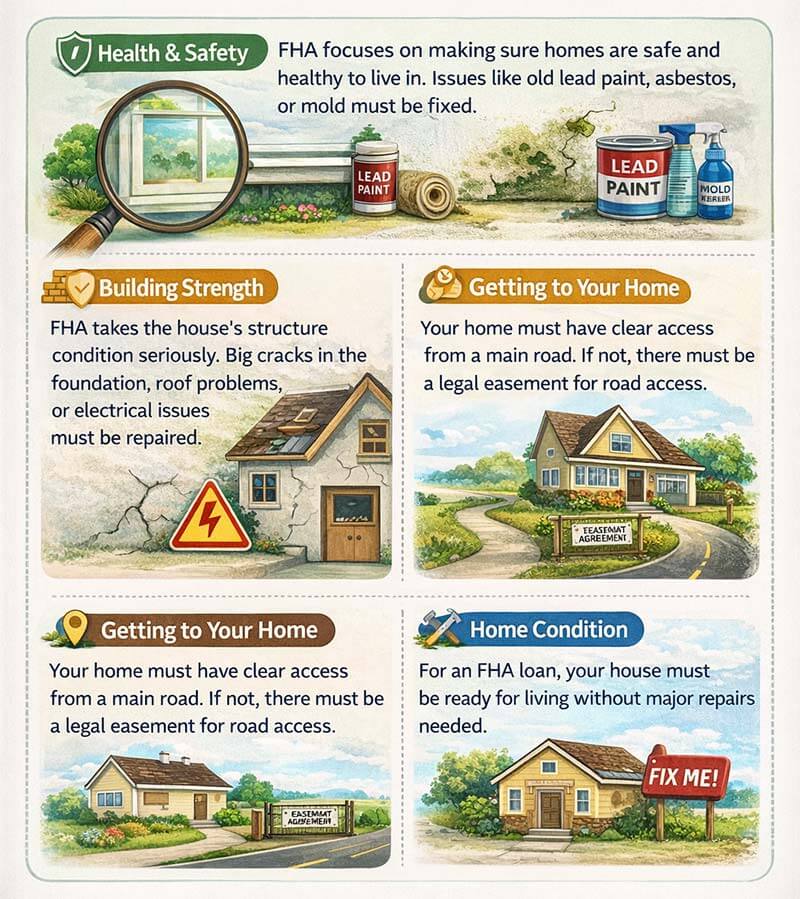 When comparing FHA appraisals to regular ones, there are a few big differences you should know about, especially when it comes to FHA appraisal guidelines:
- Health & Safety: FHA focuses on ensuring homes are safe and healthy to live in. They check for things like old lead paint, asbestos, or mold. These issues need to be fixed before you get the loan.
- Building Strength: FHA takes the condition of the house’s structure very seriously. If there are big cracks in the foundation, problems with the roof, or electrical issues, they must be fixed to pass an FHA appraisal.
- Getting to Your Home: According to FHA rules, your home must have a clear way to get to it from a main road. If not, there must be a legal agreement (easement) that lets you access the road.
- Home Condition: Your house needs to be ready to live in for an FHA loan. It shouldn’t need major repairs. Conventional loans might not be as strict about this.
These points highlight what makes FHA appraisals different. They focus on safety, structure, access, and the overall condition of the home.
Preparing for an FHA Appraisal
Getting your house ready for an FHA appraisal is important if you want your loan process to go smoothly. I’ve got some simple advice to help you prepare:
- Fix Any Safety Dangers: Make sure your home is safe. This means fixing any broken windows, sorting out any exposed wires, and dealing with mold or asbestos if they’re a problem.
- Look at the Structure: Check that the base of your house, the roof, and the walls are all okay. Fix any cracks, leaks, or other damage before the appraisal.
- Check Your Systems: Make sure your electrical system, plumbing, and heating and cooling work right. Repair any leaks or electrical issues.
- Clean up: Make sure areas like crawl spaces, basements, and attics are tidy and easy to access for the inspection.
- Handle Water the Right Way: Ensure the ground slopes away from your house so water doesn’t pool around it. Also, sort out any issues with how water drains to prevent damage.
Remembering these FHA appraisal guidelines helps make your home appraisal much smoother.
Addressing Common FHA Appraisal Issues and Finding Solutions
Understanding common FHA appraisal issues can help you address them before the inspection. Here are some common problems and solutions:
- Peeling Paint: This is a common issue, especially in older homes. Make sure to scrape and repaint any areas with peeling paint.
- Broken Windows: Replace any broken or cracked windows before the appraisal.
- Exposed Wiring: Fix any exposed wiring to ensure it is safe and up to code.
- Leaky Roof: Repair any leaks in the roof and replace missing shingles to ensure it meets FHA standards.
- Mold and Moisture: Address moisture issues and remove mold from the property. This may involve fixing leaks, improving ventilation, and using mold removal products.
FHA Appraisal Guidelines For Different Property Types
FHA appraisal guidelines differ depending on the type of place you’re looking to buy. Here’s a quick rundown of various homes:
- Single-Family Homes: These are the normal homes most people buy with FHA loans. The regular FHA appraisal guidelines we talked about apply here.
- Multi-Family Homes: If you’re looking at a place with 2-4 separate living spaces, each one needs to follow the FHA rules. That means every unit should have its own area to live, cook, and bathe.
- Condos and Townhomes: If you want to buy one of these, make sure the whole building is approved by the FHA. The individual unit has to meet the FHA’s standards, and the building should be in good standing with the FHA.
FHA Appraisal Re-Inspection
When an FHA appraisal first happens, it might find some problems that need fixing. Here’s what to do next according to FHA appraisal guidelines:
- Fix Things Up: Address all the problems the appraiser found. This could mean fixing broken things, eliminating dangers, or just making your place better.
- Schedule a Re-Inspection: After everything’s fixed, get in touch with the appraiser to come check things out again.
- The Second Check: The appraiser will check to see if you’ve sorted out all the issues. If so, they’ll update the report, and your loan process can continue.
Final Thoughts on FHA Appraisal Guidelines
Understanding FHA appraisal guidelines is very important for anyone buying or selling a home with an FHA loan. By knowing what to expect and preparing accordingly, you can help ensure a smooth and successful appraisal process.
If you have any questions or need assistance with FHA appraisals, feel free to contact a loan officer. They can provide guidance and support to help you navigate the appraisal process and secure your FHA loan.
For more information and to apply for an FHA loan, visit our website or contact us today at 800-900-8569. You can email us at alex@gustancho.com.
FAQs: FHA Appraisal Guidelines and Property Checklists
What Are FHA Appraisal Guidelines?
FHA appraisal guidelines are rules the Federal Housing Administration sets to ensure that a home is safe, secure, and structurally sound before they insure a loan. These guidelines help protect both the buyer and the lender.
Why Are FHA Appraisal Guidelines Important?
FHA appraisal guidelines are important because they make sure the home you want to buy meets certain standards for safety and livability. This ensures the property is a good investment and safe for you.
What Does An Appraiser Check During An FHA Appraisal?
An appraiser will inspect the property for safety hazards, structural issues, and general livability. This includes examining the foundation, roof, windows, electrical systems, plumbing, and more to ensure they meet FHA appraisal guidelines.
How Are FHA Appraisal Guidelines Different From Conventional Loan Appraisals?
FHA appraisal guidelines are generally more stringent, focusing on health and safety issues, structural integrity, and access. Conventional appraisals might be more relaxed on these points.
What Happens If A Home Doesn’t Meet FHA Appraisal Guidelines?
If a home doesn’t meet FHA appraisal guidelines, the buyer can often make the necessary repairs and schedule a re-inspection. The loan can only proceed once the home meets all the required standards.
Can An FHA Appraisal Be Transferred To Another Lender?
Yes, an FHA appraisal can be transferred to another lender. This is a benefit of FHA loans, making it easier if you need to switch lenders during the process, as long as the appraisal meets the FHA guidelines.
Do FHA Appraisal Guidelines Require The Home To Be Mold-Free And Asbestos-Free?
According to FHA appraisal guidelines, the home must be free of hazardous materials like mold and asbestos. These issues must be addressed before the loan can be approved.
What Should I Do To Prepare My Home For An FHA Appraisal?
To prepare your home, fix any safety hazards, ensure all systems (electrical, plumbing, HVAC) are working properly, repair structural issues, and make sure the home is generally clean and accessible for the appraiser.
How Long Does An FHA Appraisal Last?
An FHA appraisal is generally valid for 120 days. If the loan process is delayed, you may need to get an updated appraisal to ensure it still meets FHA appraisal guidelines.
What Types Of Properties Are Eligible For FHA Appraisals?
Single-family homes, multi-family homes (2-4 units), condos, and townhomes can all be eligible for FHA appraisals, provided they meet FHA appraisal guidelines. Each property type must meet specific standards set by the FHA.
If you have any questions about FHA Appraisal Guidelines, please contact us at 800-900-8569. Text us for a faster response. Or email us at alex@gustancho.com. The team at Gustan Cho Associates is available 7 days a week, on evenings, weekends, and holidays. This guide about FHA Appraisal Guidelines and Property Checklists was updated on March 27, 2026.