How Property Taxes Can Determine Buying Power When Buying a Home
When people are looking to buy a home, they usually pay close attention to the sale price and their monthly mortgage payments. But there’s something else that can really mess with your budget: property taxes. More buyers are discovering that property taxes can determine buying power just as much as their income, credit score, or down payment.
High property taxes can eat into your monthly budget, lower your qualifying loan amount, and even change where you can afford to live.
At Gustan Cho Associates, we specialize in helping borrowers understand how property taxes affect mortgage approval and showing them smart ways to maximize affordability — even if other lenders have said no. In the following paragraphs, we will cover how property taxes can determine buying power on homes.
What Are Property Taxes and Why Do They Matter?

How Property Taxes Can Determine Buying Power When Buying a Home
When searching for a home, most buyers focus on the price tag, interest rates, and down payment. Yet, property tax assessments can quietly shape your mortgage approval behind the scenes. Understanding how property taxes influence your buying power is crucial. Higher property taxes can shrink your monthly budget and limit your options, while lower taxes can stretch your dollars further and open up more possibilities.
In today’s fast-moving market, property taxes can be the hidden factor that makes or breaks a mortgage approval. They are often the reason two homes with the same price tag come with wildly different monthly payments.
Smart buyers, realtors, and lenders know to check property taxes early. Overlooking them could mean missing out on your dream home or facing an unexpected rejection. At Gustan Cho Associates, we break down every part of your mortgage payment, making sure you know exactly how property taxes fit into your budget. By understanding this key piece, you can set realistic pre-approval goals and plan for the long haul. Knowing how property taxes affect your buying power puts you in control of your decisions.
Property Taxes and Mortgage Pre-Approval
One of the first steps in purchasing a home is applying for a mortgage. A pre-approval demonstrates confidence and helps buyers to make a competitive offer and determine a realistic price range. However, a pre-approval is based on assumptions. If your pre-approval is based on low property tax estimates, your real buying power might be less than you think. Once the actual taxes are known, buyers near their budget limit can be caught off guard. Work with mortgage advisors who understand how property taxes affect your options and can walk you through different scenarios.
Importance of Property Taxes when Purchasing a Home
Your property taxes are critical when determining your monthly payment. Lenders also consider mortgage insurance, homeowner’s association dues, and homeowners’ insurance when reviewing a mortgage application. Typically, these monthly payments are evaluated by your mortgage lender. If property taxes are high, so will your monthly.
When property taxes are high, your monthly payment climbs right along with them. This can push your debt-to-income ratio higher, shrinking the size of the mortgage you qualify for and narrowing your choices.
In some cases, steep property taxes can put your dream home just out of reach.rs. Many look at principal and interest payments and think they fit their budget, but don’t realize property taxes can add hundreds of dollars. This can be the deciding factor in getting a mortgage and in whether a home is affordable or a financial burden.
Property Taxes and Buying Power
Property taxes limit what buyers can truly afford. Lenders look at your total monthly payment, not just the loan itself. The higher the taxes, the less room you have for your mortgage—meaning more of your payment goes to taxes instead of building equity. qualifies for a payment based on income and debts. One home may have low property taxes, giving the buyer more flexibility for interest payments.
If another home has higher property taxes, a larger share of the payment goes to taxes before principal and interest. This means the buyer may need to target a lower purchase price.
This is why you might qualify for a home in one county but not in the next. Local tax rates and assessments can swing your buying power more than you expect. Many buyers are surprised to learn it’s property taxes—not just interest rates—that limit what they can afford.
Purchasing a Home in Areas with High Property Taxes
High property tax areas can make affordability a moving target. You might need to rethink your price range, increase your down payment, or consider a different neighborhood. Sometimes, a less expensive home brings more peace of mind than a pricier one with steep taxes. erty taxes may offer strong buying features, such as schools, communities, or amenities. However, buyers should evaluate the impact of taxes relative to the property’s value. The impact of taxes on the monthly payment and long-term affordability must be considered.
Breaking Down the Full Mortgage Payment
Every homebuyer should get familiar with PITI: principal, interest, taxes, and insurance. These are the real costs to weigh when shopping for a home. For many, property taxes are the biggest expense after the mortgage itself.
Property Taxes Are a Significant Cost
Online mortgage calculators that skip taxes and insurance can lead you astray. They often show only principal and interest, leaving out the hefty cost of property taxes. This oversight causes many buyers to underestimate their true monthly payment.Approval estimates should include property tax estimates as accurately as possible.
Property Taxes Are the Biggest Expenses Most Buyers Forget
In some areas, property taxes barely make a dent, while in others, they can add hundreds or even thousands to your monthly bill. Buyers who are stretching their budget need to pay close attention—property taxes can make or break affordability.
Homebuyers almost always expect the property tax to be the same amount from home to home. Homebuyers often expect property taxes to be the same within neighborhoods, which is often incorrect.
Property taxes can differ dramatically, even for homes in the same neighborhood. Lenders assess various financial factors, including your income, debt, credit profile, assets, and expected housing costs, including property taxes. Increased property taxes make lenders more conservative in their estimates of buying power.
Impact of Taxes on DTI
Debt-to-income ratio (DTI) is one of the critical factors determining a mortgage loan. DTI evaluates monthly debt payments and compares them to gross monthly income. DTI includes your expected mortgage payment, including property taxes. When property taxes go up, so does your mortgage payment—and your debt-to-income ratio. This can make it harder to qualify for a loan, even if you check every other box.
While interest rates set your maximum loan size, property taxes can quietly chip away at that limit by eating into your monthly budget.
Picture two homes with identical price tags, but one comes with a steeper property tax bill. That home is actually less affordable, despite the same sale price. Buyers may need to adjust by picking a cheaper home, increasing their down payment, or looking in a different tax area.
Strategies For Maintaining Buying Power Despite High Property Taxes
In high-tax areas, focus on what you can comfortably pay each month—not just the sticker price. Get a mortgage pre-approval that includes taxes, and compare similar homes in different neighborhoods to find the best fit for your budget.
Boosting your down payment can make homes more affordable and reduce your loan size. Paying off debts before applying for a mortgage improves your debt-to-income ratio, giving you more room for housing costs.
Some buyers may also benefit from special loan programs tailored to their needs. Think about property taxes from the very start—not as an afterthought. Buyers who plan for taxes early make smarter, more confident choices.
The Importance of Looking Beyond Interest Rates When Shopping for Mortgages
Interest rates usually grab the spotlight, but property taxes can have an even bigger impact on your monthly payment. If you focus only on rates, you might miss a key piece of the affordability puzzle.
In some cases, buyers can suffer more because a lower interest rate means higher taxes. Sometimes, a lower interest rate is paired with higher property taxes, leading to bigger monthly payments than a higher rate with lower taxes.
To truly understand what you can afford, look at the whole picture: taxes, interest rates, and total payments. Whether you’re downsizing, moving counties, or upgrading, property taxes will shape your budget. time and avoid surprises. This lets you better structure payments and a mortgage to fit your budget.
See How Property Taxes Affect Your Home Buying Power
Learn how taxes impact your budget and the homes you can afford.Why Two Identical Houses Could Have A Completely Different Price Range
Few things frustrate buyers more than finding two identical homes with the same price, only to discover their monthly payments are worlds apart because of property taxes.
A house claimed by one school district could yield a completely different property tax number than another house claimed by another school district a few miles away.
A recently assessed house will have far more tax obligations than an older house that has a stagnant assessment. There can be more taxes on newly built houses than on houses that have not been built, because they were assessed when they were only vacant land. When weighing property taxes and assessed value, don’t get stuck on the listing price alone. Sometimes, a pricier home with lower taxes is actually easier on your wallet than a cheaper home saddled with high taxes.
How Affordability Impacts Property Taxes and First-Time Home Buyers
First-time buyers often overlook property taxes, focusing instead on the excitement of homeownership. With so many new expenses—utilities, repairs, insurance—it’s easy to miss just how much property taxes can add up. That oversight can come with a hefty price.
Many new buyers forget to factor in property taxes when tallying up homeownership costs. This can make a house seem more affordable than it really is.
When the tax bill finally arrives, it can cause payment shock or even derail a loan approval during underwriting. By getting accurate property tax estimates upfront, first-time buyers can build a solid financial plan and avoid stretching themselves too thin.
Monthly Payment and Buying Power
Most buyers focus on the home. Many buyers zero in on the sale price, overlooking the real monthly payment. True affordability is about more than just the sticker price. Because home values and property taxes vary, what you can actually afford changes from house to house. Various states, counties, and municipalities set different annual property tax rates. Every state, county, and city sets its own property tax rates, and each collects taxes in its own way. Sometimes, just crossing a street or a county line can dramatically change your buying power—or, in rare cases, leave it unchanged. Property taxes can change this. When deciding where to buy, it helps to check the surrounding homes and the neighborhood’s tax rates.
How Lenders Use Property Taxes in Mortgage Approval
Mortgage lenders don’t just look at your loan principal and interest. They include:
- Principal and interest (your loan payment).
- Property taxes.
- Homeowners insurance.
- HOA dues (if applicable).
This total is called PITI (Principal, Interest, Taxes, Insurance). If your property taxes are high, your total monthly housing cost will be higher, which can push your DTI above loan limits and reduce the loan size you qualify for. Consider two homes, both priced at $300,000. Home A has annual property taxes of $2,500, while Home B carries a much heavier tax burden at $7,500 per year. Despite their identical purchase prices, the buyer of Home B ends up paying an additional $417 each month in property taxes. This increased cost can significantly impact their purchasing power, potentially reducing it by $50,000 or more, as lenders are required to maintain a certain debt-to-income (DTI) ratio. This is why property taxes can determine buying power more than most new buyers realize.
Why Property Taxes Vary So Much by Location
Property tax rates vary widely — not just state to state, but even block to block. Two nearly identical homes can have drastically different tax bills.
- In some Illinois suburbs, a modest $50,000 home carries a $5,000 yearly tax bill — that’s 10% of the home’s value!
- In Texas, average property tax rates can run above 1.6% of a home’s value.
- In states like Hawaii, Alabama, or Colorado, rates can be as low as 0.3% or less.
This is why property taxes can determine buying power and influence where buyers choose to live. Smart buyers compare tax rates across towns before making a decision.
How High Property Taxes Reduce Affordability
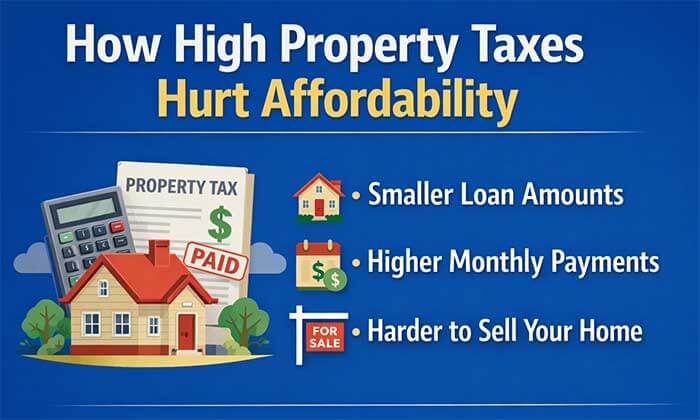 Think of property taxes as a second mortgage. Even if you own your home free and clear, you must still pay taxes every year. For borrowers with tight budgets, high taxes can:
- You might end up with a smaller loan than you thought you’d qualify for.
- Reduce your monthly budget for other expenses.
- Make it harder to sell later, since buyers factor taxes into affordability.
- Increase long-term costs of owning the home by tens of thousands.
That’s why homebuyers must consider taxes from the start. At Gustan Cho Associates, we run the numbers for you, showing how property taxes can determine buying power in your area.
Property Taxes and New Construction Homes
Property taxes on new construction homes can be tricky. Sometimes, the initial tax estimate is based solely on the land, making it appear lower than it will be once the home is finished. This can impact your mortgage approval and lead to higher payments down the road. If you’re buying new construction, make sure the property tax estimate reflects the finished home—not just the lot. Unexpected tax hikes can strain your budget later. Lenders may rely on proprietary tax information, estimated assessments, or other documents during the loan process, but buyers should be proactive.
Lenders might use their own tax estimates or documents during the loan process, but buyers should take charge. A low initial estimate does not guarantee low taxes in the future.
They collect a monthly installment to cover property taxes and mortgage payments, so the payment can increase or even be due annually on the payment due date. Escrow can make tax payments easier to manage, but your monthly payment will still increase if property taxes rise. For buyers, tax assessments affect not just the mortgage amount, but also your long-term payment stability and overall tax burden.
Exemptions and Programs That Lower Property Taxes
An estimated property tax assessment can affect overall affordability, as property taxes vary and may increase due to various factors. When weighing affordability, look ahead. While future tax changes are unpredictable, checking the local history of tax hikes and assessments can help you make smarter, more informed decisions. If you’re buying a new build, be careful.
The good news? You don’t always have to accept high property taxes as a given. Many programs can reduce your bill and boost your buying power:
- Homestead exemptions for owner-occupied homes.
- Senior freezes for homeowners over age 65.
- Disabled veteran exemptions — in some states, 100% disabled veterans pay no property taxes.
- Agricultural or conservation exemptions in rural areas.
These programs vary by state and county, but can make a huge difference. Lowering your property taxes means more room in your budget — and more buying power when applying for a mortgage. Many counties underestimate property taxes in the first year or two. Assessors often raise taxes once the subdivision is complete to reflect the finished community. This surprise hike can shock homeowners who budgeted based on lower initial estimates. Always plan and ask your lender how reassessments may affect your DTI and long-term affordability.
Real-Life Case Study: How Property Taxes Changed Loan Approval
Two buyers with an annual income of $85,000, identical credit scores, and the same down payment are looking to purchase homes. Buyer 1 opts for a $350,000 property with $2,500 in annual taxes. With their debt-to-income (DTI) ratio comfortably within acceptable limits, they find it easy to qualify for a mortgage on this home.
On the other hand, Buyer 2 also selects a $350,000 home, but this property comes with considerably higher annual taxes of $10,000.
As a result, Buyer 2’s DTI exceeds the lender’s thresholds, which leads to a lower loan approval amount of only $300,000. This scenario illustrates how significant differences in property taxes can impact the mortgage qualifications of buyers, even when their financial profiles appear similar. Even though both buyers chose homes at the same price, the second buyer lost $50,000 of buying power because of property taxes. This example shows why property taxes can determine buying power more than home price alone.
How to Research Property Taxes Before Buying
Too many first-time buyers overlook taxes until the last minute. To protect your budget:
- Check county assessor websites for current tax rates.
- Compare neighborhoods — even one mile away, can save thousands per year.
- Ask about reassessments — especially on new builds.
- Talk to your lender early — at Gustan Cho Associates, we run scenarios with different tax rates so you know exactly how much home you can afford.
Property Taxes and the Housing Market
Property taxes are going up in a lot of states because of inflation and budget issues. States like New Jersey, Illinois, and Connecticut are still at the top for high taxes. Meanwhile, southern states like Florida, Alabama, and Tennessee are hanging onto their lower tax rates. If you’re thinking about moving. Choosing the right state or county could save or cost you hundreds of dollars each month. That’s why property taxes are playing a bigger role in your buying power than ever.
How Gustan Cho Associates Can Help
At Gustan Cho Associates, we understand that property taxes aren’t just numbers on paper. They’re a key part of your budget and mortgage approval. Here’s how we help:
- We calculate how different tax rates affect your buying power.
- We connect you with loan programs with no lender overlays, making approval easier.
- We guide you through exemptions and strategies to reduce long-term costs.
- We’re available 7 days a week, evenings, weekends, and holidays to answer your questions.
If you’ve been turned down elsewhere, don’t give up. Contact us at 800-900-8569 or email gcho@gustancho.com. Our team can show you how to maximize your buying power, even with today’s property tax challenges.
Final Thoughts on Property Taxes and Home Affordability
Affording a home is about more than just the price or interest rate. Your full monthly payment—including property taxes—determines what you can really afford. Taxes shape your debt-to-income ratio, mortgage approval, and long-term costs. Buyers who factor in property taxes are more likely to find the right home, stick to their budget, and avoid nasty payment surprises. Always review property taxes before making an offer—it’s a smart move for any buyer. At Gustan Cho Associates, we help you see the whole mortgage picture—how taxes, insurance, and housing costs shape your loan options and affordability. A smart mortgage strategy starts with real numbers, and property taxes are a key part of that formula.
Conclusion: Don’t Let Property Taxes Surprise You
When planning your home purchase, remember that the price tag is only part of the story. Property taxes can determine your buying power just as much as your income, debt, or down payment.
By researching taxes early, comparing neighborhoods, and working with a knowledgeable lender like Gustan Cho Associates, you can avoid surprises, protect your budget, and buy the home you truly want.
Borrowers who need a five-star national mortgage company licensed in 48 states with no overlays and who are experts on how property taxes can determine buying power, please contact us at 800-900-8569, text us for a faster response, or email us at alex@gustancho.com. The team at Gustan Cho Associates is available 7 days a week, on evenings, weekends, and holidays.
Frequently Asked Questions About How Property Taxes Can Determine Buying Power:
How Do Property Taxes Affect My Mortgage Approval?
Property taxes can determine buying power because lenders count them in your monthly housing costs. Higher taxes mean higher monthly payments, which can lower the loan amount you qualify for.
Why Do Property Taxes Change From One Town To Another?
Every county and city has its own tax rates, which is why two houses that cost the same can end up with really different tax bills. Since property taxes can affect how much you can afford, moving just a short distance can save you a ton of money.
Can Property Taxes Make Me Lose a House I Wanted to Buy?
Yes. If taxes are too high, they can push your debt-to-income ratio over the limit. That’s why property taxes can determine buying power and even stop some buyers from qualifying.
How Do Property Taxes Affect Home Buying Power?
Property taxes affect home buying power by increasing the total monthly mortgage payment. The higher the taxes, the less room a borrower may have for principal and interest, which can reduce the maximum loan amount they qualify for.
Can High Property Taxes Lower Mortgage Approval Amounts?
Yes, high property taxes can lower mortgage approval amounts because lenders include taxes in the monthly housing payment when calculating debt-to-income ratios and affordability.
Why Can Two Homes With The Same Price Have Different Monthly Payments?
Two homes with the same price can have different monthly payments because property taxes, homeowners’ insurance, mortgage insurance, and HOA dues may vary. Property taxes are often one of the biggest reasons for the difference.
Do Mortgage Lenders Include Property Taxes In Pre-Approval?
Yes, mortgage lenders typically include property taxes in mortgage pre-approval calculations. Accurate tax estimates are important because they affect the borrower’s total housing payment and buying power.
Can Property Taxes Increase After Buying A Home?
Yes, property taxes can increase after buying a home due to reassessments, rising home values, local tax changes, or newly completed construction. Higher taxes can raise the monthly escrow payment.
How Can Buyers Protect Their Buying Power When Property Taxes Are High?
Buyers can protect their buying power by focusing on total monthly payment, getting accurate tax estimates, comparing homes in different tax areas, reducing other debts, and working with an experienced mortgage professional.
How Can I Determine the Property Taxes Before Buying a Home?
Check the county assessor’s website or ask your lender to include them in your loan estimate. Knowing them early helps because property taxes can determine buying power.
Do New Construction Homes have Lower Property Taxes at First?
Yes, sometimes, but once the subdivision is complete, the county reassesses. When that happens, taxes often go up. Remember that property taxes can determine buying power both now and in the future.
How Much Can High Property Taxes Lower My Buying Power?
It depends on your income, but even a $300 a month tax difference can cut your buying power by $40,000–$50,000. That’s why property taxes can determine buying power in a big way.
Who Can Help Me Understand How Property Taxes Affect My Loan?
Mortgage experts like Gustan Cho Associates can review your situation, explain how property taxes can determine buying power, and help you find the right loan program.
This Guide About How Property Taxes Can Determine Buying Power On Homes Was Updated on August 5, 2026.