
This guide covers changes in credit report during mortgage process. Credit scores and debt-to-income ratios determine whether borrowers qualify for a home loan and the type of loan program borrowers qualify for. Lenders do not only go by credit scores. Mortgage underwriters will also review the credit report and the credit history.
Late payments in the past 12 months are taken very seriously/ Multiple late payments in the past 12 months can disqualify borrowers/ One or two late payments on a credit report in the last 12 months may be acceptable
Need a good letter of explanation with the circumstances on why the borrower had one or two late payments in the past 12 months. Late mortgage payments in the past 12 months are definitely a problem. Most lenders will not allow any recent late payments on mortgage payments. There are a few lenders that will allow a one-time 30-day late payment in the past 12 months. In the following paragraphs, we will cover changes in credit report during mortgage process.
The Importance of Changes in Credit Reports During the Mortgage Process

Credit scores can vary by scoring model, credit bureau, and timing. The score from a credit-monitoring service may differ from the one your mortgage lender uses. As a result, you may have several different credit scores.
New credit card balances or late payments may be reported. New or paid accounts may appear, and old accounts may be removed. Any of these changes can affect your credit score.
During the mortgage application process, your credit report is a critical component that lenders use your credit payment history and credit scores to assess your mortgage loan qualifications. It’s important to understand how changes in your credit report can impact your mortgage application. Here are some key points to consider:
Reason Lenders Continuously Validate Borrower Credit
Whether it Helps or Hurts Depends on What Changed and How it Affects Factors Such As:
- Automated underwriting results
- Mortgage insurance and rates
- Interest rates
- Required down payments
- Debt-to-income ratios
Program Eligibility and Lender Requirements
Changes to Credit that Impact Mortgages
Your Lender Looks Into:
- Your debt repayment history
- Your monthly payment schedule
- Your debt-to-income ratio
- Your eligibility for loan programs
- Your possible mortgage and loan-level pricing
- Your financial situation before closing
When Can Borrowers Request Credit Reports
The initial credit report may not be the last one used. Depending on your lender, loan program, report age, or findings during underwriting, your lender may order a credit refresh, supplemental report, or a new credit report.
Changes In Credit Report During Mortgage Process with Credit
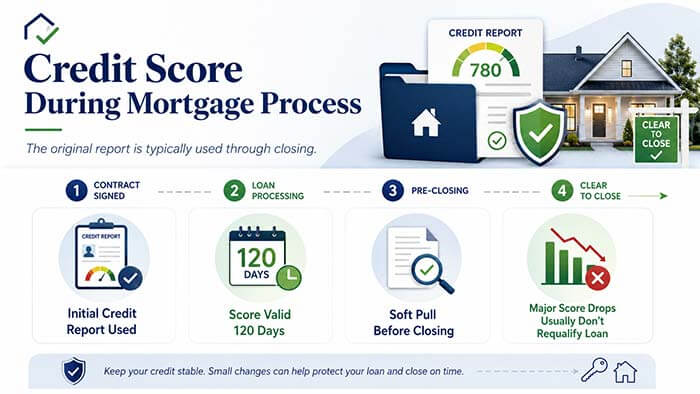
Once buyers enter into a real estate purchase contract and sign loan packages and disclosures, the loan process begins. Credit reports pulled by loan originators will be used throughout the mortgage process. Credit score changes In credit report during mortgage process does not affect borrowers.
The credit score on that credit report will be used to qualify for a loan program. Credit score will be used throughout the whole mortgage approval process until the loan closes.
However, the mortgage underwriter will do a soft credit pull before issuing a clear-to-close. If credit scores drop dramatically, it does not matter. This is because the credit score used will be from the credit report that was initially submitted with the signed mortgage application, which is good for 120 days.
Effect on Credit Score
- When you shop for mortgage rates, multiple lenders may check your credit within a short period.
- If these inquiries occur within a 14 to 45-day window (depending on the scoring model), they typically count as one inquiry and have minimal impact on your credit score.
- However, this rule doesn’t apply if you apply for a mortgage and an auto loan at the same time.
Opening Credit Accounts
Financing a Vehicle Before Closing
Rising Credit Card Balances
Rising Credit Card Balances May Cause:
- Higher minimum payments
- A higher debt-to-income ratio
- Higher credit utilization
- A lower credit score
- Mortgage insurance or loan pricing may also be negatively affected.
- Avoid using credit cards until your mortgage is finalized.
- Do not use credit cards to purchase appliances, furniture, or other items for your new home before closing.
- The loan process is not complete until you sign the closing documents and the lender authorizes the release of funds.
Missed Payments
- A new late payment during the mortgage process is one of the most serious factors that can harm your credit.
- Lenders closely review late payments when analyzing how each account is currently reported.
- A payment newly reported as late can change automated underwriting results or cause the lender to reevaluate its decision that the borrower is an acceptable risk.
- The history of mortgage and rent payments will be examined in particular, as it will show how the borrower has managed their housing payments.
- Set up reminders or use automatic payments and regularly check your accounts to ensure all payments are made on time.
- The debt may be necessary to calculate the borrower’s debt-to-income ratio unless mortgage guidelines permit its exclusion and the required payment history is provided.
- Do not co-sign for loans, credit cards, vehicles, apartments, or any other obligations while your mortgage application is in process.
Becoming a Joint Account Holder
- Becoming a Joint Account Holder is different than being an Authorized User.
- Generally, the Joint Account Holder shares the responsibility for the account.
- A joint account can affect your credit, monthly payments, and mortgage eligibility.
- Consult your loan officer before being added to any account.
Credit Inquiries Changes in Credit Report During Mortgage Process
Credit Inquiries: Lenders will pull a tri-merger credit report, and the lender will pull a tri-merger credit report. This is a hard inquiry, which can lower your credit scores. However, multiple mortgage-related inquiries within a short period (typically 45 days) are usually treated as hard pull on your credit report. Review your credit report for errors and accuracies on credit reporting agencies. It’s crucial to address any discrepancies before applying for a mortgage to ensure your credit report reflects accurate information.
New Collections, Judgments, or Liens
A collection, judgment, tax lien, or any derogatory item that appears on your credit during underwriting will be considered:
- The type of debt
- The balance
- The loan program
- Whether the debt is contested
- Is there a payment agreement?
- Does the item create a legal obligation?
- What are the lender’s underwriting guidelines?
- Do not assume all medical collections will be disregarded.
- Each lender and mortgage program addresses these situations differently, and legal obligations may be treated separately from collections.
- Your lender may request account statements, proof of payment, a payment agreement, or an explanation letter.
- Do not initiate new credit repair efforts after applying for a mortgage.
- Ensure your loan officer and underwriter approve your plan before proceeding.
Mortgage Guidelines on Credit Disputes
Negative credit information can only be removed if the information reported is inaccurate, incomplete, duplicated, or information that does not pertain to the consumer.
What Happens When a Lender Sees a Credit Change?
- The severity of a credit change will dictate how the lender responds.
- The mortgage processor or underwriter could demand:
- An explanation letter for the inquiry or account
- Verification of no new credit
- A current account statement
- Proof of the monthly payment
- An updated payoff statement
- Identity-theft claim documentation
- Evidence that the wrong information was corrected
- An updated credit history or credit supplement
- The underwriter could also adjust the debt-to-income ratio to determine if the borrower still satisfies the loan criteria.
A significant change may force the lender to:
New Credit Accounts Changes in Credit Report During Mortgage Process
Opening new credit tradelines or taking on new debts while in the middle of the mortgage process can negatively affect your credit score and raise concerns with the lender. Lenders want to see stable financial behavior during this time. Missing payments on existing credit accounts will affect your credit score and may lead to your mortgage application being denied or delayed. Make sure to pay all your bills on time during the mortgage process.
Co-signing or Becoming a Joint Account Holder
Co-signing for someone else’s loan or becoming a joint account holder on someone else’s credit account can affect your credit profile. Any changes to your credit status, whether positive or negative, can influence the lender’s decision. Lenders evaluate your debt-to-income ratio (DTI) to determine your ability to repay your mortgage. Reducing your overall debt or increasing your income can positively impact your DTI, making you a more attractive borrower.
What Type of Changes on Credit Report During Mortgage Process Are Acceptable
If there are changes on credit report, during mortgage process that will be considered. For those with higher debt-to-income ratios, increases in credit card balances may affect their DTI. They may be asked to pay down their credit card balances. Have the mortgage processor do a credit supplement so it reflects on the credit report.
Borrowers can have a good credit score to qualify for a mortgage, but special emphasis will be placed on the last 12 months.
If a borrower purchases a new high-ticket item, such as an automobile or furniture during the mortgage process, it will affect DTI. New monthly debt obligations will be discovered when the underwriter does a soft credit pull. The monthly obligation will be taken into account for debt-to-income ratio qualification.
Credit Report During Mortgage Process With Credit
Apply Online And Get recommendations From Loan Experts
Changes in Credit Report During Mortgage Process With New Collections Reporting
Some folks have gone through credit repair before applying for a mortgage. Many derogatory credit items, such as collections, late payments, and charge-offs, can be removed, and nobody will know. There are times when derogatory credit items re-appear on a consumer’s credit report during the mortgage process.
Suppose a derogatory credit item appears before a clear to close is issued during soft credit pull by the mortgage underwriter. In that case, it can affect the mortgage process.
Suppose the derogatory item on the credit report is a charge-off or collection account with zero balance or an unpaid balance of $1,000 and under. There is no need to worry. This is because the above are exempt. If the collection account is a medical collection account with an unsatisfied balance, no worries. Changes in credit report during mortgage process on credit card balances may affect debt-to-income ratios. Large fluctuations in credit card balances or maxing out your credit cards can hurt your credit score. Maintain a low credit utilization ratio during the mortgage application process.
Credit Monitoring for Changes in Credit Report During Mortgage Process
It’s a good practice to monitor changes in credit report during mortgage process. Many lenders will also recheck your credit just before closing to ensure there have been no significant negative changes. Different lenders have varying credit score requirements for mortgage approval. Be aware of the minimum credit score required by your chosen lender, and work on improving your credit if necessary.
If you anticipate any changes in your financial situation during the mortgage application process, such as a job change or receiving a large sum of money, it’s essential to communicate these developments with your lender,
In summary, it’s crucial to maintain good financial habits and avoid making significant changes to your credit profile during the mortgage application process. Any adverse changes to your credit report could impact your eligibility for a mortgage or the terms of your loan. Always stay in close communication with your lender and address any concerns or questions they may have regarding your credit report.
What To Do if Your Credit Changed
- Do not wait for the underwriter to discover any changes.
- Notify your loan officer immediately about any changes.
- Include the creditor’s name, account type, account balance, monthly payment, and the date of the change.
- Your loan officer can determine whether a specific change impacts your debt-to-income ratio, loan program, pricing, or automated underwriting results.
- If applicable, the lender has options available to them, including documenting that no account was opened, verifying the correct payment, correcting incorrect information, paying the obligation in accordance with the guidelines, and restructuring the loan.
- If you inform your mortgage team promptly, they can usually resolve the issue before closing.
How To Protect Your Credit Until the Mortgage Is Funded
Do not pay off large debts to qualify for your loan without first consulting your loan officer. The balance may not update immediately, and your lender may require a new credit report to confirm payment.
What Should You Do if the Credit Report Has a Mistake?
If You Discover an Error While the Mortgage Application is in Process:
- Alert the loan officer before filing your dispute.
- Be as specific as possible regarding the account and the inaccurate information.
- Collect any and all relevant evidence to support your dispute, including: treatment documents, payment histories, identity-theft affidavits, or letters from creditors.
- The lender will provide guidance regarding the dispute and supporting documentation.
- Avoid initiating unnecessary disputes, as they can complicate the underwriting process.
- Notify the lender promptly if an account does not belong to you.
- The lender will need to examine the inaccurate information and will likely confirm it with the credit reporting agency.
What to Expect with Credit Report Changes After Clear-To-Close
- Avoid taking on new debts or altering any requirements set by the lender.
- Your loan remains subject to verification of all financial activity and may require further documentation.
- Do not change your financial situation between clear-to-close and loan funding.
- Avoid planning major purchases immediately after signing your purchase agreement.
- Funding rules may vary by state and transaction.
Differences in Mortgage Guidelines and Lender Requirements
- The Automated Underwriting System may accept a condition that is not accepted by another system.
- Lenders may establish requirements that go beyond agency guidelines.
- For this reason, online advice cannot substitute for a careful review of your mortgage credit report, loan program, debt-to-income ratio, and the automated underwriting system.
- For borrowers who are creditworthy, have low DTI ratios, and have significant cash reserves, the impact of a minor change may be negligible.
- For borrowers already at the loan program limit, the impact may be greater.
An Experienced Loan Officer’s Perspective
A new monthly payment may make you ineligible due to your debt-to-income ratio, even if you meet the minimum credit score requirement.
Bad Credit Changes in Credit Report During Mortgage Process
Medical collections are exempt. If late payments are under 12 months old, borrowers will have issues getting approve/eligible per Automated Underwriting System approval. The mortgage loan originator will have several options to handle this situation and will work with borrowers. Borrowers can still get a clear-to-close with changes in credit report during mortgage process.
The mortgage process and clear-to-close can be delayed until this issue is resolved. A judgment re-appearing can be a problem. We may have to negotiate a settlement amount with the judgment creditor.
Judgment can be paid at closing with underwriter approval. If you have any questions about the content of this guide or changes in credit report during mortgage process, please get in touch with us at Gustan Cho Associates at 262-716-8151. Text us for a faster response. Or email us at alex@gustancho.com. The team at Gustan Cho Associates is available seven days a week, evenings, weekends, and holidays.
Frequently Asked Questions About Changes in Credit Report During Mortgage Process:
What Does a Credit Report Check Involve During the Mortgage Process?
Lenders look at your credit scores and history to decide if you can get a home loan. They check for things like late payments, especially any in the last year.
Can a Few Late Payments Affect My Chance of Getting a Mortgage?
Yes, recent late payments, especially on a mortgage, can be a problem. A couple might be okay if you explain why they happened.
What Happens if My Credit Score Changes After I Apply for a Mortgage?
Don’t worry—the score your lender first checks is what they’ll use throughout the whole process, even if your score drops later.
Do Credit Inquiries Affect My Mortgage Approval?
A credit check by your lender can drop your score a bit, but several checks for a mortgage in a short time count as just one.
Should I Open New Credit Accounts During the Mortgage Process?
No, getting new credit or more debt can hurt your loan approval chances because it might lower your credit score and mess up your debt-to-income ratio.
What if I Co-Sign a Loan During My Mortgage Application?
Co-signing could change your credit and affect your mortgage approval since it might increase your debt-to-income ratio.
Are There Any Types of Credit Report Changes that are Okay During the Mortgage Process?
Small changes might be okay but avoid big purchases or taking on new debt that could raise your debt-to-income ratio.
What Should I Do if a New Collection Appears on My Credit Report During the Mortgage Process?
It might not be a big deal if it’s a medical collection or a small charge-off. But bigger new debts could be a problem.
How Can I Ensure that My Credit Report is Good During the Mortgage Process?
Keep paying your bills on time, avoid taking on new debts, and check your credit report for mistakes that need fixing.
What if I Need to Make a Big Financial Change During My Mortgage Application?
Talk to your lender right away if you have a big change, like a new job or unexpected money, so they can help you figure out what to do.
Will a Credit-Limit Reduction Impact Your Mortgage Approval if Nothing Was Purchased
Yes. Your credit report may be negatively affected if the percentage of available credit decreases while the balance remains the same. The loan officer should be contacted if the credit limit is reduced significantly.
Does Paying Off a Collection Account During Underwriting Boost My Credit Score?
Not likely. Settling a collection account typically does not result in a score boost. It is actually a function of when the creditor reports the payment, how the scoring model views the collection, and other components of the credit profile. Do not pay a collection account during the process or for the purpose of a score boost without guidance from the mortgage team.
Can a Credit Freeze Delay the Closing of a Mortgage?
Yes, it can. A credit freeze limits the creditor’s ability to view your credit file. Should the lender require the borrower to have an updated report or conduct another credit check, the borrower will need to temporarily lift the freeze. Although a credit freeze can protect against identity theft, the borrower will need to thaw credit on a schedule coordinated with the lender.
Can Buy Now, Pay Later Programs Impact Mortgage Application?
Yes, these can directly impact the application if the Buy Now, Pay Later purchase financing appears on your credit report, bank statements, loan application, or other documents the lender may review. If the lender treats Buy Now, Pay Later financing as equivalent to a loan and the payment is consistent, the lender may require that the payment be included in your monthly obligations.
Does A Business Credit Card Impact A Personal Mortgage Application?
If the borrower is personally liable for the business credit card, the card is reported to the borrower’s personal credit, or the card is personally paid via the business account, then the card can affect the application. If the borrower is self-employed and business credit cards affect the credit assessment, the lender will require business credit card statements and other documents to assess how the cards will be managed.
Can Correcting a Student-Loan Payment Help Before Closing?
Yes, if the payment or account status is being reported incorrectly. The lender may ask for the most recent statement, a creditor’s letter, or an updated credit report. The correction has to be documented and approved by the underwriter to be considered for qualification.
Does a Credit Monitoring Alert Mean My Mortgage Will Be Delayed?
Not really. An alert only notifies the borrower that there is possibly new information. The event that caused the alert will determine if there will be any impact on the mortgage. Check the alert, confirm the change, and notify the loan officer if it’s a new inquiry, a new account, a new balance, a late payment, or derogatory information.
About the Author
Gustan Cho, NMLS 873293, is the Managing Director of Gustan Cho Associates and an expert mortgage loan originator and real estate investor. He is well-versed in helping borrowers understand complex mortgage guidelines, address credit challenges, navigate manual underwriting, and determine which loan products to use after significant credit events.
This Guide About “Changes in Credit Report During Mortgage Process” Was Updated on July 13, 2026
Take First Step Toward Making Your Dream A Reality
Apply Online And Get recommendations From Loan Experts