
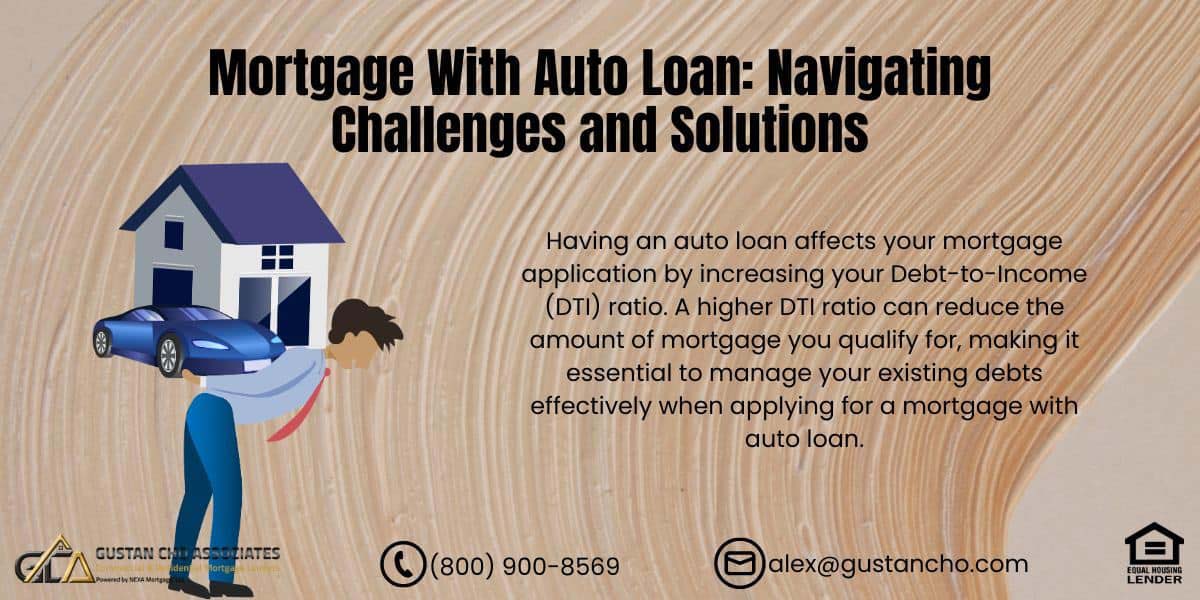
An auto loan can affect your mortgage approval because lenders count the monthly car payment in your debt-to-income ratio. A higher car payment can reduce how much house you qualify for, even if your credit score and income are strong.
Getting qualified and approved for a mortgage with auto loan can be a challenge for borrowers with higher debt-to-income ratios. An auto loan can present a considerable challenge when seeking approval for a mortgage.
How does an auto loan affect mortgage approval? Learn how car payments, leases, co-signed loans, and payoffs influence mortgage qualification and DTI.
Given that the average monthly payment for an auto loan hover around $500, this amount mirrors what might be paid monthly on a $100,000 mortgage loan balance. This challenge escalates for individuals juggling multiple auto loans. This article explores how a car loan affects your ability to get a home loan and offers ways to overcome these obstacles.
The Detrimental Effects of Auto Loans on Mortgage Consideration

Owning an auto loan can be a double-edged sword: it’s beneficial for establishing a credit history. Still, it can adversely impact your debt-to-income (DTI) ratio, a key metric for lenders in the mortgage decision process. Having a car loan can make it harder to get a mortgage because you’ll have more monthly bills, which could reduce how much you can borrow.
Understanding How Auto Loans Impact Mortgage Eligibility
As you look to purchase a home, recognizing the potential roadblocks a mortgage with an auto loan can pose is crucial. While essential for most people’s daily routines, cars come with hefty price tags. Many consumers finance their vehicle purchases, whether opting for new or pre-owned options. With the cost of reliable pre-owned vehicles ranging between $20,000 to $30,000, monthly payments often surpass the $400 mark. These considerable payments can directly influence your ability to secure a mortgage with an auto loan, reducing how much you can afford to spend on a future home.
Mortgage with Auto Loan | Key Considerations
Handling both can seem tricky when you’re looking to buy a home but already have a car loan. Yet, it’s totally doable with the right strategy. It’s all about understanding how your car loan affects your mortgage chances. Here are the basics you should know:
Debt-to-Income Ratio (DTI)
One key thing mortgage lender look at is your Debt-to-Income (DTI) ratio. This figure indicates the proportion of your monthly earnings allocated to debt repayment. To determine your DTI, divide your monthly debt payments by your monthly income. For example, if you pay $500 for your car loan each month and make $5,000, your car loan makes up 10% of your DTI. You can get a mortgage with a car loan. Many people have a car loan and still get approved for a mortgage.
A lender will consider the monthly auto loan payment a part of your debt-to-income ratio, unless the auto loan can be excluded based on program guidelines.
Mortgage approval with an auto loan often depends on keeping your DTI manageable. DTI limits vary by loan program, automated underwriting findings, credit profile, reserves, and lender overlays. Some borrowers may qualify with higher DTI ratios when the full file has strong compensating factors. If your DTI is high, you might not qualify for a big mortgage. So, managing your debt well is key to getting your home loan approved while having a car loan.
Impact on Buying Power
Having a car loan can lower your mortgage eligibility. A $500 car loan payment can make a big difference, reducing your house affordability by a lot based on your overall financial picture.
Having a car loan can make buying a house more difficult if the car payment is high relative to your income. It can also lower your mortgage approval amount or push your DTI above program thresholds.
It’s smart to figure out how much house you can afford while still paying off your car. This helps you focus on homes within your approved price range. Remembering your mortgage with an auto loan situation is important while planning to buy a house.
When to Apply for a Mortgage
Applying for a mortgage at the right time is important if you have a car loan. If you’re considering buying a home, it might not be the best time to upgrade your car. A new, pricier car loan could hurt your mortgage application by raising your DTI. Check your finances, including your car loan, before applying for a mortgage.
Avoid taking on new debt until after your mortgage closes. Keeping things stable financially can help you successfully complete the mortgage process.
Remember, having a mortgage with an auto loan is something many people manage successfully. With proper planning and knowledge of your finances, you can achieve it too.
Mortgage With Auto Loan: Problems and Solutions
It’s actually pretty common to apply for a mortgage while you’re still paying off a car, truck, lease, or even a co-signed vehicle loan. For many people, these payments are just part of life. The main issue is how your monthly car payments affect your debt-to-income ratio, or DTI.
Paying off a car loan can help your DTI, but it can also compromise your down payment, closing costs, and reserve cash. A mortgage loan originator should be able to help you decide which is better.
When you apply for a mortgage, lenders look closely at your income, credit, and all your monthly debts. Car payments count as regular debt, so they lower the amount you can borrow. For example, Fannie Mae and Freddie Mac say lenders must include auto loans in your monthly debts if you have more than 10 payments left.
Restrictions on Auto Loans Put on Mortgage Approval
A car loan can make it tougher to get a mortgage because the monthly payment adds to your total debts. Lenders also consider your future mortgage payments, property taxes, insurance, HOA fees, and other debts, such as credit cards, student loans, and child support.
A new car purchase can affect your DTI, credit score, and approval status. A home buyer should avoid financial commitments until the home purchase is complete.
For example, if you make $6,000 a month and pay $750 for your car loan, that single payment takes up 12.5% of your income before your mortgage or other bills are even considered. This percentage can be the difference between approval and denial.
Your debt-to-income (DTI) ratio tells lenders how much of your income goes toward paying debts. If your DTI is high, lenders see you as a riskier borrower.
A lower DTI helps show you can handle a new mortgage payment. The Desktop Underwriter allows a DTI of 50% for Fannie Mae, whereas manually underwritten conventional loans have lower DTI limits. (Fannie Mae Selling Guide) All loans, including FHA, VA, USDA, conventional, jumbo, and non-QM, consider DTI, and they handle DTI and the associated loan risk in different ways.
Auto Loans that have 10 Payments or Less
There’s a rule for mortgages and auto loans with 10 or fewer payments left. In most conventional loans, if you have 10 or fewer payments remaining, that loan usually isn’t counted as long-term debt, as long as your loan file and underwriter agree. Fannie Mae says lenders should still consider the debt if it could affect your ability to repay. Even if you’re almost done paying off your car, a high balance can still hurt your mortgage chances, especially if you don’t have much cash saved.
How Auto Leases & Loans Differ
Auto leases are usually treated more strictly than loans. Even if your lease has less than 10 months left, some lenders still count that payment because leases are seen as ongoing debts. Many people simply get a new lease when the old one ends.
An auto lease is generally considered a liability, and auto leasing, even if the lease is about to expire, is treated as a monthly recurring debt.
If you have a luxury car, work truck, or business vehicle, remember that your lease payment might still count in your DTI, even if you’re nearly finished with the lease.
The Impact of Co-Signed Auto Loans on Mortgage Access
Co-signed car loans can make it harder to get a mortgage if the debt appears on your credit report. Even if someone else is making the payments, it could still count against you unless you can prove they’ve been paying for the required time. Many mortgage programs allow you to exclude a debt if someone else has been making the payments on time for the required period. You’ll need proof, and the payments must come from the other person’s account, not yours.
Will Paying Off an Auto Loan Improve Your Chances of Getting a Mortgage?
Paying off an auto loan can improve your credit. Paying off your car loan can help you get a mortgage if your DTI is too high. But be careful—paying off the loan might leave you short on cash for your down payment, closing costs, or savings. Sometimes it’s better to keep your cash and pick a loan program with easier DTI rules. A good mortgage officer will help you weigh both options.?
It’s usually smarter to wait and buy a car after you’ve bought your house. A new car loan can lower your credit score, raise your DTI, reduce how much mortgage you qualify for, and make things tougher for underwriters.
If you get a new car loan while applying for a mortgage, underwriters might add new conditions that make closing on your home harder, even if you were already approved. Lenders often do a soft credit check before closing, and a new car loan can turn your mortgage approval into a denial.
Best Solutions If Your Car Loan Is Hurting Your Mortgage Loan Approval
If your car payment is pushing your DTI too high, don’t worry. You could pay off or refinance the loan, add a qualified co-borrower, explore FHA, VA, or non-QM loans, or consider buying a less expensive home. Another option is to wait until your auto loan has fewer than 10 payments left, depending on your lender’s rules. Always talk to a professional before making a decision.
Auto Loans & Available Mortgage Programs
FHA loans can help borrowers with higher DTI, lower credit scores, or smaller down payments. VA loans are flexible for veterans, active-duty service members, and eligible surviving spouses. Conventional loans work well for people with strong credit and steady income. USDA loans offer no-down-payment options for eligible buyers in rural and suburban areas. Non-QM loans can help people who don’t meet traditional guidelines. They’re especially useful for self-employed people, bank statement borrowers, real estate investors, or anyone with complicated credit or income.
Negative Auto Loan Behavior
The biggest mistake is buying a car before a house, because it adds a big financial burden. Don’t think co-signing a loan will affect your credit just because someone else pays. Also, paying off your car loan can backfire if you don’t have enough left for closing costs. To avoid last-minute surprises at closing, always talk to a mortgage officer before making big financial decisions.
Refinancing Your Auto Loan
Opting to refinance your auto loan could be a strategic move to enhance your DTI ratio and, as a result, increase your eligibility for a mortgage with an auto loan. You can significantly reduce your monthly payments by negotiating a lower interest rate or extending the duration of your auto loan.
This decrease directly impacts your DTI ratio, subsequently making you a more appealing candidate for securing a mortgage with an auto loan.
Many lenders are presenting competitive refinancing options for auto loans. Investigating these alternatives might help you lock in better terms. However, be aware that refinancing costs, like fees or extending your loan term, could cancel the benefits.
Improving Your Credit Score
Your credit score plays a substantial role when applying for a mortgage with an auto loan. A higher credit score can mitigate the adverse effects of a higher DTI ratio, allowing lenders to approve your mortgage application more readily or offer more favorable terms.
To elevate your credit score, ensure timely payments on all your debt obligations, including your auto loan, and work on minimizing your outstanding credit card balances.
Checking your credit report regularly and correcting mistakes can help improve your score. This makes getting a mortgage or auto loan easier and can lead to better interest rates and loan conditions.
Budgeting and Financial Planning
Sound budgeting and financial planning are key when juggling an auto loan and a mortgage. Drafting a thorough budget that includes all your monthly expenses, including your auto loan payments, helps you determine an affordable mortgage payment. Engaging with a financial advisor to craft a comprehensive financial plan can be beneficial. This plan should outline methods for managing your current debts, strategizing for a down payment, and preparing for potential homeownership-related expenditures. Adopting a forward-thinking approach toward your financial health ensures that managing an auto loan and a mortgage is within your grasp.
Exploring Mortgage Options
Certain mortgage products might be more suited to your financial scenario when you have an existing auto loan. For example, FHA loans, backed by the government, often offer more lenient DTI ratios than conventional loans, making them an attractive option for those looking to manage a mortgage with an auto loan.
Exploring various mortgage options is a smart strategy to find a loan that complements your financial standing.
Conversing with multiple lenders about your unique situation can provide insights into the various mortgage products available to you. By comparing these options, you can pick a mortgage that fits with your car loan payments and your financial plans.
Want to Buy a Home While Paying Off Your Auto Loan? We’ve Got You Covered!
Reach out now to find out how we can help you navigate both loans and get approved for a mortgage.Communicating with Lenders
When aiming for a mortgage with an auto loan, maintaining open lines of communication with your mortgage lender is essential. Being upfront about your financial situation lets the lender offer the most appropriate advice and solutions.
They may propose ways to enhance your DTI ratio or introduce specific mortgage products designed to accommodate your level of debt.
Before applying for a mortgage, compile all relevant financial documentation, including details about your auto loan. This level of transparency can expedite the mortgage approval process, minimizing any potential setbacks.
Managing Multiple Debts
Effectively handling multiple debts is critical to avoiding financial distress. First, focus on settling high-interest debts, and then explore debt consolidation if it’s financially advantageous. Consolidation can streamline your payments and reduce the total interest you pay overtime. Keeping up with your debt payments is vital for sustaining a healthy credit score and a favorable DTI ratio, which are crucial factors when applying for a mortgage with an auto loan. Adopting a disciplined debt management strategy facilitates a smoother qualification process for obtaining a mortgage alongside an auto loan.
Preparing for Homeownership
Before buying a home, it’s important to remember that there’s more to it than just getting a mortgage. It would help if you also accounted for extra costs like property taxes, insurance, and upkeep. Plus, If you have an auto loan while applying for a mortgage, make sure your budget can handle both payments comfortably. It’s smart to have an emergency fund ready for any unexpected expenses. This way, you’ll feel more secure and manage your money better.
Utilizing Financial Tools
Use financial tools and calculators to understand your finances better, especially when buying a home with a car loan. Mortgage calculators can estimate your monthly payments and factor in your auto loan, and budgeting apps can monitor your spending to keep you aligned with your financial goals. These tools offer crucial insights for informed decision-making in managing a mortgage with an auto loan.
Seeking Professional Advice
If you’re unsure how to manage your auto loan and mortgage, consider seeking professional advice. Financial advisors, mortgage brokers, and credit counselors can provide customized advice tailored to your financial circumstances. They can help you develop a strategy to optimize your finances and improve your chances of mortgage approval.
Working with professionals can also give you access to resources and tools you may need to be made aware of, enhancing your ability to manage your financial obligations effectively.
Making informed decisions can lead to better management of both types of loans, ultimately enhancing your overall financial health and home-buying capacity.
Strategies to Manage Auto Loans and Mortgages
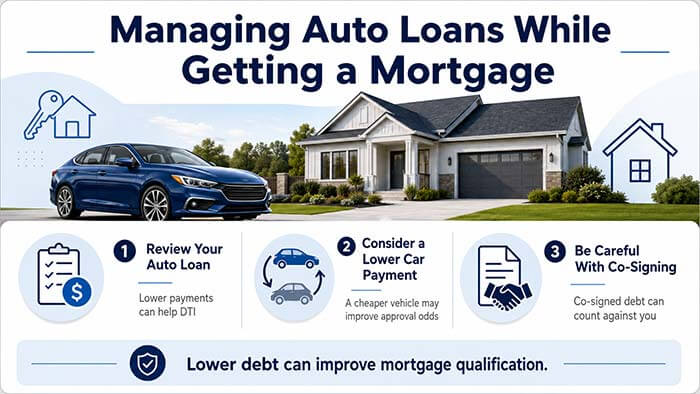 Managing an auto loan while applying for a mortgage requires careful planning and strategic decision-making. To successfully handle both, understanding the impact of an auto loan on mortgage qualifications is essential. Here are some effective strategies:
Assess Your Current Auto Loan:
- Before initiating the mortgage application process, examine your auto loan closely.
- High monthly payments can adversely affect your debt-to-income (DTI) ratio, a crucial factor in mortgage approvals.
- Strategically paying down your auto loan balance can lower your monthly obligations, improving your DTI ratio.
Consider Trade-In Options:
- If you’re contemplating trading in your current vehicle, proceed with a well-thought-out plan.
- Opting for a trade-in to downgrade to a more affordable car can reduce monthly payments, enhance your DTI ratio and possibly increase the amount you qualify for on a mortgage with auto loan.
Be Wary of Co-Signing:
- Co-signing another person’s auto loan can be a significant factor when applying for a mortgage.
- Since lenders include co-signed loans in your DTI ratio calculations,
- it could restrict the mortgage amount you’re eligible for.
- Consider the implications before agreeing to co-sign, especially when beginning to secure a mortgage with an auto loan.
Mortgage With Auto Loan: Practical Examples
In managing a mortgage with an auto loan, consider the following example: Assume you’re currently paying $500 monthly towards your auto loan. This payment is factored into your DTI ratio, affecting the total mortgage amount you qualify for. By reducing this payment to $300, either through refinancing or trading in your vehicle for a more economical option, you can improve your DTI ratio. This adjustment makes managing both loans more feasible and increases your eligibility for a higher mortgage loan.
Reflect on how auto loans influence home-buying power. Compared to home loans, the shorter amortization period of auto loans means higher monthly payments.
For instance, a $20,000 auto loan over five years demands more from your monthly budget than a home loan spread over 30 years. These higher payments can significantly impact your DTI ratio, limiting how much you can borrow for a mortgage with an auto loan. To successfully manage a mortgage with auto loan, it’s important to plan carefully and follow the strategies mentioned earlier.
Trading in Your Vehicle During the Mortgage Process
Trading in a vehicle may lower your monthly payment and improve DTI, but do not do this without speaking with your loan officer first. A new auto loan can trigger a new credit inquiry, change your credit score, add new debt, and require the lender to re-underwrite the file. Here’s how:
Reduce Monthly Payments:
- Swapping your current car for one with cheaper monthly payments can help lower your DTI ratio, which is important if you’re applying for a mortgage and you already have a car loan.
- For example, trading a $500 monthly payment for a $300 payment significantly impacts your mortgage qualification.
Extended Loan Terms:
- Opting for a longer loan term on a new vehicle can reduce monthly payments, further improving your DTI ratio.
- While this strategy may result in paying more interest over the loan’s life, it can be a key factor in helping you qualify for a mortgage in the short term.
Navigating Mortgage Qualification with an Auto Loan: Essential Tips
Getting a mortgage with auto loan might seem challenging, but you can manage it by taking the right steps. Here are some actionable strategies to consider:
Enhance Your Credit Score:
- Improving your credit rating is crucial, especially when aiming for a mortgage with an auto loan.
- A better credit score can make your debt-to-income ratio less of a problem.
- Commit to making all your debt payments on time to elevate your score.
Boost Your Down Payment:
- Increasing the size of your down payment can significantly benefit your mortgage application.
- It reduces your required loan amount and positively affects your DTI ratio, a critical factor when you have an auto loan.
Opt for Debt Consolidation:
- Managing multiple debts can be overwhelming.
- By consolidating your debts, including your auto loan, into a single loan with a lower interest rate and monthly payment, you can significantly improve your DTI ratio, making you more appealing to mortgage lenders.
Smart Budgeting:
- Establish a budget prioritizing debt reduction and saving for a down payment.
- Effective financial management is essential for improving your eligibility for a mortgage, especially when contending with an auto loan.
Conclusion
Qualifying for a mortgage when you have an auto loan might seem steep, but it’s entirely achievable. By understanding the implications of your auto loan on your DTI ratio and adopting strategic financial management practices, you stand a better chance of mortgage approval.
It’s important to assess your auto loan situation, consider options such as trading in, and tread carefully with co-signing decisions. Always aim to present the best possible financial picture to potential lenders.
By diligently managing your auto loan and other debts, you move closer to securing a mortgage and making your homeownership dreams a reality. Remember the uniqueness of each financial situation and the value of professional advice tailored to your specific needs.
Final Thoughts on Mortgage with Auto Loan
FAQs: Mortgage with Auto Loan: Navigating Challenges and Solutions
How Does Having an Auto Loan Affect My Mortgage Application?
Having an auto loan affects your mortgage application by increasing your Debt-to-Income (DTI) ratio. Lenders consider your monthly auto loan payments as part of your total monthly debt obligations. A higher DTI ratio can reduce the amount of mortgage you qualify for, making it essential to manage your existing debts effectively when applying for a mortgage with auto loan.
Can Refinancing My Auto Loan Help Me Qualify for a Better Mortgage?
Refinancing your car loan can help you qualify for a better mortgage by reducing your monthly car payments and lowering your debt-to-income ratio. It’s important to explore refinancing options when applying for a mortgage with an existing car loan.
Should I Delay Trading in My Vehicle if I’m in the Process of Getting a Mortgage?
Delaying the trade-in of your vehicle is advisable if you’re in the process of getting a mortgage. Acquiring a new auto loan with higher monthly payments can negatively impact your DTI ratio and your mortgage application. Keeping your financial profile stable during the mortgage approval process is crucial for securing a mortgage with auto loan.
How Can I Increase My Chances of Mortgage Approval with an Existing Auto Loan?
To increase your chances of mortgage approval with an auto loan, aim to keep your DTI low, improve your credit score, consider refinancing your auto loan, explore different mortgage options, and maintain open communication with your lender about your financial situation.
How Does My Credit Score Impact My Mortgage Application When I Have an Auto Loan?
Your credit score significantly impacts your mortgage application, especially when you have an auto loan. A higher credit score can help balance out the negative impact of a higher DTI ratio. This makes it more likely for lenders to approve your application or offer better terms. Improving your credit score by making timely payments and reducing debt is essential when seeking a mortgage or auto loan.
What Should I Consider When Budgeting for a Mortgage with an Auto Loan?
When budgeting for a mortgage with auto loan, consider all your monthly expenses, including your auto loan payment, property taxes, insurance, and maintenance costs. Make a detailed budget to figure out how much you can spend on a mortgage while also comfortably managing your auto loan and other financial commitments. Building an emergency fund is also advisable to cover unexpected expenses.
This FAQ aims to address common concerns and provide useful information for those looking to get a mortgage with auto loan. Understanding these important factors will help you navigate the process more effectively and reach your home ownership goals. If you have any questions about mortgage with auto loan or you need to qualify for loans with a lender with no overlays, please contact us at 800-900-8569. Text us for a faster response. Or email us at alex@gustancho.com. The team at Gustan Cho Associates is available 7 days a week, on evenings, weekends, and holidays.
This Guide About Mortgage with Auto Loan: Navigating Challenges and Solutions Was Updated in May 31, 2026.