
A home appraisal can affect how much you can sell your home for, how much a buyer can borrow, or how much equity you can access when refinancing. If the appraised value comes in lower than expected, it can delay the loan, force a price renegotiation, reduce refinance options, or require the buyer to bring more money to closing.
The good news is that homeowners can prepare before the appraiser arrives. To get the maximum appraised value, clean and declutter the home, complete small repairs, improve curb appeal, document upgrades, understand recent comparable sales, and review the appraisal report carefully if the value comes in low.
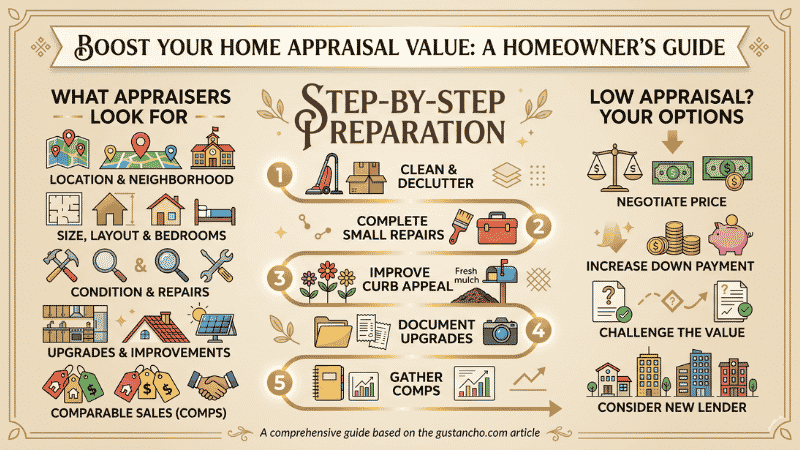
A home appraiser does not value your house based on emotion, what you want it to be worth, or how much you spent on improvements. The appraiser reviews the property’s condition, size, layout, location, upgrades, and recent comparable sales in the area. The better prepared you are, the easier it is to show the home’s true market value. This guide explains how to appraise your house to get maximum value, what appraisers look for, how to prepare your home before appraisal day, what documents to provide, and what to do if the appraisal comes in lower than expected.
What Does A Home Appraiser Look For?
A home appraiser checks out a bunch of things to figure out how much a property is worth. This includes assessing the property’s condition, its location, size and layout, any improvements made, and recent sales of similar homes in the area. This process goes beyond assessing the home’s visual appeal; the appraiser aims to determine the property’s true value based on its characteristics and recent sales of similar homes in the area. Knowing how to appraise your house effectively can help you prepare for the appointment and prevent any surprises when the report is finalized.
Location And Neighborhood
Location is one of the biggest factors in a home appraisal. Appraisers look at the neighborhood, school district, nearby amenities, traffic patterns, and overall market demand in the area. A home in a highly desirable neighborhood may appraise higher than a similar home in a less active market. However, the value still needs to be supported by recent comparable sales. Appraisers do not assign value based only on opinion. They look at what buyers are actually paying for similar homes in that location.
Size, Layout, And Bedroom Count
The appraiser will review the home’s square footage, lot size, bedroom count, bathroom count, layout, garage space, basement, attic, and finished living areas. A home with more usable living space may appraise higher than a smaller home if the market supports it. Layout also matters. A functional floor plan, enough bedrooms and bathrooms, good room flow, and usable living areas can help support value. Finished basements, home offices, bonus rooms, and additional living spaces may also help, depending on local market demand and appraisal guidelines.
Condition And Repairs
The condition of the home plays a major role in the appraisal. Appraisers look at the roof, foundation, walls, flooring, windows, plumbing, electrical systems, heating and cooling systems, appliances, exterior condition, and overall maintenance. Keeping your home clean and in good shape helps the appraiser see how great the property actually is. Obvious repair issues, water damage, broken fixtures, peeling paint, damaged flooring, or safety concerns may hurt the appraisal or create loan-related conditions, especially with FHA, VA, or USDA loans.
Recent Comparable Sales
Comparable sales, commonly known as comps, are crucial when learning how to appraise your house. Appraisers take a look at your home and figure out its value by checking out similar houses that have sold nearby recently. The more alike the homes are in terms of size, condition, location, age, layout, and features, the more effective the comparable sale will be. For instance, a recently sold home in the same neighborhood that has similar square footage, number of bedrooms, lot size, and upgrades is likely to serve as a strong comp. Conversely, a smaller home, an outdated property, a distressed sale, or one located in a different market area may not provide as much value in the appraisal process.
Upgrades And Improvements
Recent upgrades and improvements can support a higher appraised value when they are completed, permanent, and supported by the local market. Appraisers may consider updates such as a new roof, HVAC replacement, remodeled kitchen, remodeled bathroom, new flooring, new windows, updated electrical systems, updated plumbing, a finished basement, a deck, a patio, or major landscaping. However, homeowners should remember that improvements do not always add value dollar-for-dollar. A $30,000 kitchen remodel does not automatically increase the appraisal by $30,000. The appraiser looks at whether buyers in the local market are paying more for homes with similar improvements.
Market Conditions
Market conditions play a significant role in how to appraise your house. When home prices are increasing, recent comparable sales can indicate a higher value. Conversely, if prices are stable or decreasing, the appraised value might fall short of what the seller or homeowner anticipated. Appraisers take into account factors such as supply and demand, recent sales trends, the number of days homes spend on the market, buyer activity, and local price fluctuations. That’s why timing is crucial; a home’s appraised value can fluctuate as the local market evolves.
What Happens If The Home Appraisal Comes In Low?
A low home appraisal indicates that the appraiser believes the property’s value is less than your purchase price, the amount you’re looking to refinance, or the expected market value. This situation can cause some trouble because mortgage lenders usually figure out the loan amount based on the lower of the two options: the appraised value or the purchase price. Understanding how to appraise your house can help you avoid this scenario. For example, if a buyer agrees to purchase a home for $400,000 but the appraisal comes in at $380,000, the lender will usually use $380,000 to calculate the loan amount. That $20,000 difference is called an appraisal gap. When an appraisal comes in lower than expected, the buyer, seller, and lender may need to discuss the next steps. The buyer might have to contribute additional funds at closing, the seller might have to reduce the asking price, or both parties might renegotiate the contract terms. In certain situations, the buyer or lender may inquire about how to appraise your house again if there are inaccuracies in the appraisal report or if more favorable comparable sales were overlooked. A low appraisal does not always mean the deal is dead. However, it does mean the home’s value needs to be reviewed carefully before moving forward.
How To Prepare Before The Appraiser Visits
The best way to avoid appraisal problems is to prepare before the appraiser comes to the property. A clean, well-maintained home makes it easier for the appraiser to see the property’s true condition and value.
Before the appraisal appointment, homeowners should clean and declutter the house, fix small repairs, improve curb appeal, and gather proof of recent upgrades. This may include receipts, permits, contractor invoices, before-and-after photos, and a written list of improvements.
You should also review recent comparable sales in your neighborhood. When considering how to appraise your house, it’s important to understand that appraisers often depend on recent sales of similar homes in the area. If you have comparable sales that are strong and support your home’s value, please share those details with the appraiser or your real estate agent. The aim is not to pressure the appraiser, but rather to ensure they have accurate, complete, and useful information about your property before finalizing their report.
How Comparable Sales Affect Your Home Appraisal
 When learning how to appraise your house, understanding comparable sales, often referred to as “comps,” is crucial. Appraisers determine your property’s value by comparing it to recently sold homes in the area. The more alike these homes are in terms of size, condition, location, age, layout, and features, the more reliable the comparable sale will be. For instance, if your home has four bedrooms, three bathrooms, a finished basement, and recent upgrades, the most effective comps would be nearby properties with similar attributes that sold within the past few months. Comparisons with significantly smaller homes, older properties in poor condition, or houses in different neighborhoods may not be valid.
What Makes A Good Comparable Sale?
A strong comparable sale should be as similar to your home as possible. Appraisers usually look for homes that have sold recently and are located in the same neighborhood or market area. Good comps often have similar:
- Property type
- Square footage
- Lot size
- Age of the home
- Bedroom and bathroom count
- Condition and upgrades
- Garage, basement, or finished living space
- School district or neighborhood location
- Sale date
The more similar the comp, the more useful it is in supporting your home’s appraised value.
Where Homeowners Can Find Comparable Sales
Homeowners no longer need to rely only on visiting the county office in person. There are several ways to research recent home sales before an appraisal. To understand how to appraise your house effectively, you can start by reviewing public property records on your county website, checking recent sales on real estate platforms like Zillow, Redfin, or Realtor.com, or consulting a real estate agent for comparable sales data from the MLS. If you’re already under contract, reviewing the comparable sales included in the appraisal report once it’s completed can also provide valuable insights. A real estate agent can be helpful since MLS data often includes details that public websites do not clearly explain, such as seller concessions, property condition, days on market, or any unusual aspects of the sale.
Why Bad Comparable Sales Can Lower Your Appraisal
Not all comparable sales hold the same weight when determining value. A weak comparable can negatively impact your property’s appraisal if it doesn’t closely match your home. For instance, a distressed sale, an outdated home, a smaller property, or one situated near a busy road may not accurately reflect your home’s worth. Additionally, sales from a long time ago may be less reliable due to changing market conditions. Understanding how to appraise your house involves recognizing that if the appraiser relies on comps that don’t align well with your home, the final appraisal could be lower than anticipated. That’s why it’s beneficial to familiarize yourself with recent sales in your area before the appraisal.
How To Share Comparable Sales With The Appraiser
If you find strong comparable sales, organize them before the appraisal appointment. Keep the list short, simple, and relevant. Include the property address, sale price, sale date, square footage, bedroom and bathroom count, and a brief note explaining why the property is similar to yours. When considering how to appraise your house, it’s important not to pressure the appraiser or dispute the value they provide. Instead, share relevant information that could assist them in conducting their assessment. The objective is to ensure the appraiser has accurate details about your home and the surrounding market. Comparable sales play a significant role in influencing the final appraised value. When the right comps match your home’s condition, features, and location, the appraisal report can more accurately reflect your home’s true market value.
Repair What You Can Before The Home Appraisal
Simple repairs can greatly influence how your home is perceived during the appraisal process. Although the appraiser isn’t assessing your housekeeping, noticeable maintenance issues can give the impression that the property has been neglected. To understand how to appraise your house effectively, take a walk through your home as a potential buyer would, and identify any obvious problems that can be easily addressed. Start with simple repairs. Fix leaking faucets, running toilets, loose doorknobs, broken cabinet handles, missing outlet covers, damaged light fixtures, cracked switch plates, and squeaky doors. These may seem minor, but they can create the impression that the home has not been well-maintained.
Next, look for visible damage. Repair broken windows, touch up chipped paint, patch small drywall holes, clean stained carpet, replace damaged flooring if needed, and address any water stains or signs of leaks. If the HVAC system has not been serviced recently, consider having it inspected or cleaned before the appraisal.
Addressing safety issues prior to the appraiser’s arrival is crucial when considering how to appraise your house. Ensure that handrails are secure, steps are safe, smoke detectors are operational, and that there are no exposed wires or obvious hazards. This is particularly important for government-backed loans such as FHA, VA, and USDA loans, as these homes must meet minimum property standards. The focus should not be on spending a fortune on unnecessary upgrades but rather on addressing simple issues that may make the home appear worn, unsafe, or poorly maintained. A clean, functional, and well-maintained home will provide the appraiser with a clearer understanding of the property’s true value.
How To Get Your Home Ready For The Appraisal
Getting your home ready before the appraiser arrives can help the property make a stronger impression. An appraiser focuses on value, condition, features, and comparable sales, but a clean, well-maintained home makes it easier to assess the property’s true condition. The goal is not to make the home look perfect. The goal is to remove distractions, fix obvious issues, and show that the property has been cared for.
Clean And Declutter Every Room
Start by cleaning and decluttering the main living areas, bedrooms, bathrooms, kitchen, basement, garage, and closets. A messy home does not automatically lower the appraisal, but clutter can make rooms feel smaller and make it harder for the appraiser to inspect the property. Put away personal items, clear countertops, organize storage areas, and make sure the appraiser can easily walk through each room. Clean floors, windows, sinks, appliances, and bathrooms before the appointment. If there are stains on walls, carpet, or flooring, clean them or touch them up when possible. A clean home helps the appraiser focus on the home’s layout, condition, and features instead of distractions.
Improve Curb Appeal Before Appraisal Day
The exterior of your home forms the initial impression, which is essential when learning how to appraise your house. Before appraisal day, take time to mow the lawn, trim the bushes, remove any clutter from the yard, clean the walkways, and ensure the front entrance is tidy. Enhancing your home’s appearance with fresh mulch, clean windows, trimmed shrubs, and a newly painted front door can significantly improve its appeal. Don’t overlook the backyard, garage, driveway, deck, patio, and exterior walls, as appraisers consider the overall condition of the property, including its outside. A neglected yard, peeling paint, broken fencing, or damaged exterior features can give the impression that the home is not well cared for.
Fix Small Repairs That Make The Home Look Neglected
Small repairs can make a big difference in how the home is viewed. Fix leaking faucets, running toilets, broken windows, loose doorknobs, missing outlet covers, damaged light fixtures, chipped paint, cracked tiles, damaged flooring, and squeaky doors. Also, check for safety issues. Secure loose handrails, replace missing smoke detector batteries, repair exposed wiring, and make sure stairs and walkways are safe. For FHA, VA, and USDA loans, property condition and safety issues may matter even more because these loan programs have minimum property standards. When considering how to appraise your house, there’s no need to overspend on extensive renovations ahead of time. Instead, concentrate on straightforward repairs that ensure your home appears clean, safe, functional, and well-maintained.
Make The Home Easy For The Appraiser To Inspect
Before the appraiser arrives, make sure all areas of the property are accessible. Unlock gates, open interior doors, clear access to the attic, basement, crawl space, garage, utility room, electrical panel, water heater, HVAC system, and any finished living areas.
If you have made improvements, prepare a simple list for the appraiser. Include upgrades such as a new roof, HVAC replacement, kitchen remodel, bathroom remodel, new flooring, windows, plumbing, electrical work, finished basement, or major landscaping. Keep receipts, permits, warranties, contractor invoices, and before-and-after photos together in one folder.
Making the inspection process smooth and straightforward can greatly assist the appraiser in grasping the overall condition and value of your home. Knowing how to appraise your house effectively means that a well-prepared homeowner can minimize overlooked details and contribute to a more robust appraisal report.
Make Home Improvements And Keep Documents To Prove Them
Home improvements can significantly contribute to a higher appraised value, particularly when they enhance the property’s condition, functionality, safety, or market appeal. However, it’s important to understand that not every upgrade translates to an equivalent increase in value. When considering how to appraise your house, remember that appraisers focus on market-supported value rather than simply the amount spent by the homeowner. For example, a $30,000 kitchen remodel does not automatically increase the appraisal by $30,000. The appraiser will look at how similar upgraded homes are selling in the local market. If buyers in your area are paying more for updated kitchens, bathrooms, roofs, windows, HVAC systems, or finished basements, those improvements may help support a stronger value. Before the appraisal, make a simple list of completed upgrades and repairs. Include the date completed, the cost, the contractor name if applicable, and a short description of the work. Helpful improvements may include a new roof, updated HVAC system, remodeled kitchen, remodeled bathroom, new flooring, new windows, updated electrical, updated plumbing, finished basement, deck, patio, or major landscaping.
Keep documents that prove the work was completed. This may include receipts, paid invoices, permits, warranties, contractor agreements, before-and-after photos, and inspection records. Put these documents in one folder so they are easy to share with the appraiser.
Only completed and permanent improvements usually matter most in an appraisal. Unfinished projects, temporary upgrades, personal décor, or expensive custom features may not add as much value as expected. The goal is to show the appraiser what has been improved, when it was completed, and how it may support the home’s market value.
How To Work With The Appraiser Without Overstepping
Homeowners can be helpful during the appraisal, but they should not try to pressure, argue with, or improperly influence the appraiser. The appraiser’s job is to provide an independent opinion of value based on the property, recent comparable sales, market conditions, and appraisal guidelines. When the appraiser arrives, be polite, professional, and prepared. If allowed, provide a simple folder with helpful information about the home. This may include a list of recent improvements, receipts, permits, warranties, contractor invoices, before-and-after photos, and any major repairs or upgrades completed on the property. Feel free to share similar home sales if they make sense. The best ones to reference are homes that recently sold nearby and are similar in size, condition, age, layout, features, and location to yours. Keep the list short and factual. The goal is to provide useful information, not to tell the appraiser what the value should be. After you provide the information, give the appraiser space to inspect the home. Make sure all rooms, garages, basements, attics, utility areas, and exterior spaces are easily accessible. Answer questions if asked, but avoid following the appraiser around or trying to oversell the property. A respectful, well-prepared approach is essential to understanding how to appraise your house effectively. By providing accurate documentation, ensuring the property is easy to inspect, and allowing the appraiser to create an independent report, you can help them grasp the home’s condition and improvements without overstepping boundaries.
Maximize Your Home’s Appraisal—Before You Sell or Refi
Simple improvements can boost your appraised value. Find out what works best.Related Reading: Top Renovations That Add the Most Value to Your Home
What To Do After The Appraisal Report Comes Back
Once the appraisal report is received, it’s important to review it thoroughly before proceeding. The report should outline the appraiser’s value opinion, the comparable sales analyzed, the property specifics examined, and any adjustments made for factors such as condition, size, upgrades, or location. When considering how to appraise your house, remember not to focus solely on the final value. A low appraisal might stem from missing information, inaccurate property details, insufficient comparable sales, or upgrades that weren’t fully accounted for.
Review The Square Footage
Start by checking the square footage listed in the appraisal report. If the appraiser used the wrong living area, the value could be affected. Make sure the finished living space, additions, basement areas, and other usable areas are listed correctly in accordance with appraisal guidelines. Not all space is counted the same way. For example, finished basement space may not be treated the same as above-grade living space. However, the report should still accurately describe the property.
Check The Bedroom And Bathroom Count
Next, review the bedroom and bathroom count. A missing bedroom, bathroom, finished room, garage space, or basement feature can affect the appraisal. Make sure the report correctly lists the home’s layout, room count, garage, basement, deck, porch, patio, and any finished areas. If something important was missed, bring it to the lender’s attention.
Review The Comparable Sales
Comparable sales are a major part of the appraisal. Review the homes the appraiser used to support the value. Look at the sale dates, location, square footage, condition, lot size, upgrades, bedroom count, bathroom count, and property type. If the appraiser used homes that are much smaller, older, outdated, distressed, or located in a different market area, the value may not fully reflect your home. Better comparable sales support a reconsideration of value.
Confirm Upgrades Were Included
Check whether your recent upgrades and improvements were mentioned in the report. This may include a new roof, HVAC system, kitchen remodel, bathroom remodel, new windows, flooring, electrical updates, plumbing updates, a finished basement, a deck, a patio, or major landscaping. If the report does not mention important completed improvements, gather proof. Receipts, permits, invoices, warranties, photos, and contractor records can help document the work.
Look For Factual Mistakes
Factual errors can hurt the final value. Review the report for mistakes such as the wrong property condition, incorrect square footage, missing rooms, inaccurate lot size, wrong property type, missed upgrades, or incorrect comparable sale details. A difference of opinion is not always enough to change an appraisal. However, factual errors supported by documents may strengthen a case.
Ask The Lender About A Reconsideration Of Value
If you believe the appraisal is inaccurate, ask the lender about a value reconsideration. A reconsideration of value is a formal request to have the appraisal reviewed based on new information, factual corrections, or better comparable sales. The request should be organized and professional. Include specific errors, supporting documents, and stronger comparable sales when available. The appraiser may change the value, keep it the same, or explain why the original value still holds.
Decide Your Next Step
If a low appraisal occurs, your options will vary based on the type of transaction. In a home purchase, the buyer and seller might renegotiate the sale price, the buyer could contribute additional cash to cover the appraisal difference, or they may challenge the appraisal if there’s robust evidence supporting a higher value.
For refinancing, consider reducing the loan amount, bringing cash to the closing table, requesting a value reconsideration, waiting to reapply later, or exploring options with another lender. It’s essential to carefully review the report before taking action.
A low appraisal doesn’t necessarily terminate the deal; instead, it’s crucial to understand the figures, check for any mistakes, and determine the best course of action. Knowing how to appraise your house can also provide valuable insights for these situations.
What To Do After A Low Home Appraisal
A low home appraisal can lead to stress, but it doesn’t necessarily mean the loan or sale has collapsed. Understanding how to appraise your house is essential, as your options will vary depending on whether you’re purchasing a new home, selling your property, or refinancing your current mortgage. A low appraisal holds significance because lenders typically determine the loan amount based on whichever is lower: the purchase price or the appraised value. When the appraisal falls short of the contract price or the anticipated refinance value, adjustments may be needed to proceed with the loan.
Options For Home Buyers After A Low Appraisal
When purchasing a home, if the appraisal value is lower than the agreed-upon purchase price, the lender typically bases your loan amount on the appraised value. This situation can create an appraisal gap between the contract price and the appraisal value, raising questions about how to appraise your house effectively. As a buyer, you may have several options:
- You may ask the seller to reduce the price to accurately represent the home’s true worth. This is often the cleanest solution because it keeps the loan amount and purchase price aligned.
- You can renegotiate with the seller and meet somewhere in the middle. For example, the seller may lower the price slightly, and you may agree to bring extra cash to closing.
- You can pay the appraisal gap out of pocket if you have enough verified funds and still meet lender guidelines. This means you bring extra money to cover the difference between the appraised value and the contract price.
- You can challenge the appraisal through the lender if there are factual errors, missing upgrades, or stronger comparable sales that were not considered.
- You may also be able to cancel the contract if your purchase agreement includes an appraisal contingency or another allowed exit. Always review the contract with your real estate agent or attorney before making that decision.
Options For Home Sellers After A Low Appraisal
If you are selling a home, a low appraisal can affect the buyer’s mortgage approval. Even if the buyer loves the property, the lender may not approve the loan based on the higher contract price unless the appraisal issue is resolved. As a seller, you may choose to lower the sale price to the appraised value. This can help keep the deal moving if the buyer is otherwise qualified.
You may also renegotiate with the buyer. The buyer may agree to bring more cash, you may agree to reduce the price, or both sides may split the difference.
If you believe the appraisal is wrong, you can work with the buyer, real estate agents, and lender to request a reconsideration of the value. Stronger comparable sales, proof of upgrades, or factual corrections may help support the request. You can also decide not to lower the price and look for another buyer. However, if the next buyer uses financing, another appraisal may still be required. If the market does not support the price, the same issue could happen again.
Options For Homeowners Refinancing After A Low Appraisal
If you are refinancing, a low appraisal can reduce the amount of equity the lender recognizes in your home. This may affect your loan-to-value ratio, cash-out refinance amount, mortgage insurance, or refinance approval. One option is to lower the new loan amount. If you were trying to take cash out, you may need to reduce the cash-out amount to fit the appraised value. Another option is to bring cash to closing if you need to lower the loan-to-value ratio. This may help the refinance move forward, but it depends on your goals and whether the numbers still make sense. You can ask the lender to reconsider the value if the appraisal contains errors, missed improvements, or weak comparable sales. Provide documents such as receipts, permits, invoices, photos, and, when available, comparable sales.
Consider exploring a different lender when thinking about how to appraise your house. A new lender could order a fresh appraisal, although there’s no assurance that the value will be any higher. This could be worthwhile if there were evident problems with the initial appraisal or if the lender has more stringent requirements.
Alternatively, waiting and reapplying later could be a viable option. If home values in your area are on the rise or if you plan to make additional improvements, waiting may enhance your chances of obtaining a more favorable appraisal down the line.
How To Decide The Best Option After A Low Appraisal
The best next step depends on the numbers, the loan program, the contract terms, and the strength of the appraisal report. Before reacting, review the report carefully. Check the square footage, bedroom and bathroom count, property condition, comparable sales, upgrades, and any factual mistakes. If the report is accurate, the best solution may be to renegotiate, reduce the loan amount, or adjust expectations. If the report has errors, a reconsideration of value may be worth pursuing. A low appraisal is frustrating, but it is not always final. With the right documents, comparable sales that are more comparable, and a clear plan, buyers, sellers, and refinancing homeowners may still have options to move forward.
Final Thoughts On How To Appraise Your House For Maximum Value
Learning how to appraise your house to get maximum value starts with preparation. A home appraisal is based on the property’s condition, location, size, upgrades, comparable sales, and current market conditions. While you cannot control every part of the appraisal, you can control how prepared your home is before the appraiser arrives.
Start early by cleaning and decluttering the home, improving curb appeal, fixing small repairs, and making every room easy to inspect. Document completed upgrades with receipts, permits, invoices, warranties, and before-and-after photos. These records can help the appraiser understand what has been improved and when the work was completed.
Comparable sales also matter. Appraisers compare your home to similar homes that recently sold nearby. Understanding local comps can help you spot weak comparisons, review the appraisal report more carefully, and support a reconsideration of value if the appraisal comes in lower than expected. If you find yourself with a low appraisal, don’t panic. Start by thoroughly reviewing the report, line by line. Look for any factual errors, ensure that any upgrades you made are reflected, and discuss your options with your lender. Depending on the circumstances, you might be able to renegotiate the terms, put in additional cash at closing, request a reconsideration of value, modify the loan amount, or explore other lenders when it makes sense. This process is essential for understanding how to appraise your house effectively.
A strong appraisal starts before appraisal day. The more organized, accurate, and prepared you are, the better chance you have of helping the appraiser see the home’s true market value.
For mortgage questions about appraisals, refinancing, purchase loans, or low appraisal options, you can work with a lender who understands appraisal guidelines and how they affect loan approval.
FAQs About How To Appraise Your House To Get Maximum Value
How Do I Get The Highest Appraisal On My House?
To get the highest possible appraisal on your house, prepare before the appraiser arrives. Clean and declutter every room, improve curb appeal, fix small repairs, document recent upgrades, and make the home easy to inspect. Appraisers look at condition, size, layout, location, improvements, market conditions, and recent comparable sales. Strong preparation helps the appraiser see the home’s true market value.
What Do Appraisers Look For When Valuing A Home?
Home appraisers look at the property’s location, square footage, lot size, bedroom and bathroom count, layout, condition, upgrades, age, and recent comparable sales. They also review market conditions and how similar homes in the area have recently sold. Comparable sales are among the most important factors because they support the final appraised value.
What Hurts A Home Appraisal The Most?
A home appraisal can be hurt by poor property condition, needed repairs, water damage, broken fixtures, outdated features, safety issues, weak comparable sales, or a listing price that is not supported by the local market. Missing documentation for upgrades can also hurt the appraisal, as the appraiser may not fully know which improvements were completed.
Do Home Improvements Always Increase Appraised Value?
No. Home improvements do not always increase appraised value dollar-for-dollar. A $30,000 kitchen remodel does not automatically raise the appraisal by $30,000. Appraisers look at market-supported value, which means they review whether buyers in the local area are paying more for homes with similar improvements. Completed and permanent upgrades usually matter more than personal décor or unfinished projects.
Can I give comparable sales to the appraiser?
Yes, you may provide comparable sales to the appraiser, but do so respectfully and without pressuring them. Look for recently sold homes nearby that are similar in size, condition, age, layout, features, and location. Keep the information short, factual, and organized. The goal is to help the appraiser review accurate data, not to tell them what the value should be.
What Should I Do If My Home Appraisal Comes In Low?
If your home appraisal comes in low, review the report carefully before reacting. Check the square footage, bedroom and bathroom count, property condition, upgrades, and comparable sales. If there are factual errors or stronger comps available, ask the lender about a reconsideration of value. In a purchase, the buyer and seller may renegotiate, the buyer may pay the appraisal gap, or the contract may be canceled if allowed. In a refinance, the homeowner may lower the loan amount, bring cash to closing, try another lender, or wait and reapply later.
This article about “How To Appraise Your House to Get The Maximum Value” was updated on May 6th, 2026.