The home loan process can often be stressful that some borrowers often think about changing lenders after locking rates. Locking in a mortgage rate is a critical step for any homebuyer. Once your rate is locked, you’re often left wondering if you’ve made the right choice. But what happens if you find a better rate or your experience with your lender isn’t going as smoothly as planned? Dale Elenteny, a senior mortgage originator at Gustan Cho Associates and an associate contributing editor of GCA Forums says the following about changing lenders after locking rates as follows:
Borrowers may switch lenders after locking a rate; however, they should consider timing, costs, appraisal transfers, and closing deadlines. The following sections outline key considerations for this process.
Can you switch lenders after locking rates? The short answer is yes, but there are important things you need to know before making the change. In this guide, we’ll walk you through everything you need to consider when changing lenders after locking rates. In the following paragraphs we will cover changing lenders after locking rates.
Changing Lenders After Locking Rates During the Mortgage Process
Borrowers may change lenders after locking a rate; however, caution is advised. A Loan Estimate, mortgage application, or rate lock does not obligate a borrower to a specific lender. According to the CFPB, commitment occurs only upon signing the final closing documents.
Switching lenders may require restarting the process, potentially causing delays or jeopardizing the closing. A mortgage rate lock keeps your interest rate from going up while your loan is being processed.
The CFPB explains that a rate lock means your rate will stay the same from the time of the offer to closing, as long as you close on time and your application details do not change. The primary consideration is not only the ability to change lenders after locking a rate, but also whether switching will result in financial savings, resolve existing issues, or introduce additional risks.
What a Mortgage Rate Lock Means
A mortgage rate lock is an agreement between the borrower and the lender to maintain a specified interest rate for a predetermined period. Lock periods typically range from 15 to 60 days, depending on the lender, loan type, property, and anticipated closing timeline. A rate lock does not mean your loan is fully approved. You still need to go through underwriting, meet loan conditions, clear any title issues, prove your income and assets, and meet all the lender’s final requirements before closing. Your locked rate usually depends on your original loan terms remaining unchanged. If your credit score, loan amount, down payment, property value, occupancy, loan type, or closing date changes, your final terms may change as well.
Can You Switch Mortgage Lenders After Locking a Rate?
In most cases, borrowers may switch mortgage lenders after locking a rate; however, the new lender must initiate a separate approval process. This process includes reviewing credit, income, assets, property, title, appraisal, and overall loan eligibility. The rate lock from your old lender usually does not transfer to a new lender. Rate locks are tied to the lender who gave them. If you change lenders, you will likely need a new rate lock with the new company. Switching lenders is generally less complex early in the mortgage process. The process becomes more complicated if the closing date is imminent, the appraisal has been completed, or there are strict deadlines in the purchase contract.
Why Borrowers Consider Changing Lenders After a Rate Lock.
Borrowers may consider changing lenders after locking a rate if a more favorable interest rate or lower closing costs are available, or if the current lender demonstrates poor responsiveness, limited assistance, or introduces additional requirements. Some borrowers switch lenders because the current lender has overlays. A lender overlay is an additional requirement beyond the minimum agency or investor guidelines. For example, a borrower may meet FHA, VA, USDA, or conventional guidelines, but the lender may still deny the loan due to its own internal rules. Seeking a new lender may also be warranted if the current lender cannot meet the closing timeline, delays underwriting, mishandles documentation, or provides unclear communication.
When Changing Lenders May Make Sense
Changing lenders after locking a rate may be advisable if the advantages are substantial and there is sufficient time to close without jeopardizing the transaction.
Better Interest Rate or Lower Closing Costs
While a lower interest rate may be beneficial, it is important to evaluate all loan terms. In some cases, a lower rate may result in higher points, increased fees, or additional costs. Borrowers should compare the Loan Estimate from the current lender with the Loan Estimate from the new lender.
The most important items to review include the interest rate, APR, discount points, lender fees, monthly payment, cash to close, and whether the rate is locked.
Ineffective communication can complicate the mortgage process. If the loan officer or processor fails to respond, provide clear explanations, or establish a timeline, borrower confidence in the lender may diminish. A mortgage approval requires coordination between the borrower, lender, real estate agents, title company, appraiser, insurance agent, and seller. If communication breaks down, a closing can be delayed.
Loan Denial, Overlays, or Last-Minute Conditions
Some borrowers find out late in the process that the lender cannot approve the loan. This may occur due to credit overlays, debt-to-income ratio limits, manual underwriting restrictions, late payment rules, employment issues, or reserve requirements. In these cases, switching lenders may be the best option if another lender has the right loan program and can close within the required timeline.
Appraisal, Underwriting, or Closing Delays
Delays may jeopardize the purchase contract. If the lender cannot complete underwriting, satisfy conditions, or prepare for closing within the required timeframe, obtaining a second opinion is recommended. Request that the new lender review the file promptly before proceeding with a switch.
Need a Second Opinion Before Your Closing Is at Risk?
If your lender locked your rate but now says your loan may not close, Gustan Cho Associates can review your situation and help determine whether another mortgage option may be available. Call Gustan Cho Associates or visit www.gustancho.com to request a mortgage second opinion.
Why Change Lenders After Locking Rates?
Better Rates Found Elsewhere:
If you locked in a rate but later discover another lender offering significantly lower rates, it’s natural to reconsider your decision.
Unresponsive Loan Officers:
- If your lender takes a long time to reply to your phone calls, text messages, or emails, it can cause avoidable anxiety.
- Timely communication is essential when buying a home, and poor service is a common reason for switching lenders.
Unexpected Loan Denials:
- Sometimes, borrowers get last-minute mortgage denials because their loan officer didn’t properly assess their qualifications from the beginning.
Excessive Loan Conditions:
- Lenders often issue conditions on a mortgage approval that borrowers must meet before closing.
- You might consider switching lenders if your lender keeps asking for more documentation or adds new conditions.
Thinking About Changing Lenders After Locking Your Rate? Let’s Make Sure It’s the Right Move!
Contact us today to discuss how switching lenders could affect your loan and explore your options.Is It Possible to Switch Lenders After Locking a Rate?
Yes, you can change lenders after locking rates, but there are a few things to consider:
You’ll Have to Start the Mortgage Process Over:
- When you change lenders, you must submit a new application, go through a new approval process, and provide all your documentation again.
Rate Lock Policies Differ by Lender:
- Some lenders may charge a fee for breaking a rate lock, while others may not.
- Always check the terms and conditions of your rate lock agreement.
Time is Critical:
- If you’re already far along in the process, switching lenders could delay your closing, which can be a dealbreaker for some homebuyers.
Tips for Preventing a Change in Lenders After Rate Lock
It’s always better to do your homework before locking in a rate to avoid the hassle of switching lenders.
Here Are a Few Tips to Help You Make a More Informed Decision from the Start:
Shop Around for Rates:
- Get quotes from several lenders before locking in a rate.
- Rates can vary widely, especially if you have a high credit score.
- Don’t just go with the first lender.
Talk to Multiple Loan Officers:
- Ask potential lenders about their process, timelines, and fees.
- A knowledgeable and responsive loan officer can make the mortgage process much smoother.
Improve Your Credit Score:
- If you’re on the fence about locking your rate, consider boosting your credit score before locking.
- Small improvements like paying down credit card balances can make a big difference in the rates you qualify for.
Can I Lock Rates with Multiple Lenders?
- First off, even though you can technically lock in rates with a bunch of different lenders at the same time, it’s not the smartest move. Here’s why:
It Can Mess with Your Credit Score.
- Every time you lock in a rate, that lender checks your credit.
- When many of them do this simultaneously, your score can drop because of all those hard checks.
It Gets Confusing, Fast.
- When you’ve got a bunch of different offers, and you need to pick one, keeping everything straight in your head becomes a headache.
It Can Cost You More Than You Think
Some lenders might charge you fees for locking in a rate, so if you’re doing this with several lenders, those fees can add up and hit your wallet hard. So, what about changing lenders after locking rates? Considering the points above, it’s clear that hopping from one lender to another after locking in rates might not be the best idea.
A new lender may not be able to match the current locked rate. Mortgage pricing fluctuates frequently and varies by lender, loan program, credit score, down payment, occupancy, property type, and market conditions. A written Loan Estimate should always be requested rather than relying on a verbal quote.
Not only could it hurt your credit and lead to confusion, but those extra fees can make your loan more expensive than you planned. The smart play? Take your time to shop around and compare what different lenders offer before you decide to lock in a rate with any of them. This way, you’re making an informed decision without risking your credit score, wallet, or peace of mind.
Risks of Switching Mortgage Lenders After Locking Rates
Changing lenders may benefit certain borrowers; however, it can create complications if undertaken late in the process or without a clear strategy. The new lender must issue disclosures, review documentation, complete underwriting, verify the property, and fulfill compliance requirements. This may include a new credit report, updated pay stubs, updated bank statements, new verification of employment, new title work review, and a new underwriting decision.
Possible Closing Delays
Switching lenders near the closing date may delay the transaction. The new lender requires sufficient time to process the application, complete underwriting, satisfy conditions, prepare closing documents, and coordinate with the title company. The CFPB warns that switching lenders may require starting over and could delay or endanger the closing.
Appraisal Transfer Issues
An appraisal may not always transfer easily from one lender to another. The new lender must decide whether to accept the appraisal and whether it meets the loan program requirements. For conventional loans, Fannie Mae states that when a lender uses an appraisal ordered by another lender, the new lender must make the required representations and warranties regarding that appraisal.
Credit Report, Disclosures, and Updated Documentation
The new lender may require updated documents, even if you have already provided them to the previous lender. Be prepared to resubmit income, asset, credit, insurance, and identification documents. The new lender also needs to issue its own Loan Estimate and required disclosures.
Rate Lock Fees or Extension Costs
Some lenders may charge a fee for a rate lock or an extension of a rate lock. The Federal Reserve has explained that lenders may charge for locking the rate and points, and some lock fees may not be refundable if the borrower withdraws, is denied, or does not close. Prior to switching lenders, determine whether a lock fee was paid and if it is refundable.
How to Compare the Current Lender With a New Lender
Lenders should not be selected based solely on verbal quotes. Written Loan Estimates should be compared to accurately evaluate terms.
Review the Loan Estimate Carefully
The Loan Estimate includes the loan amount, interest rate, monthly payment, estimated taxes and insurance, closing costs, and cash to close. Compare the current lender’s Loan Estimate with the new lender’s side-by-side. The lowest rate isn’t always the best option if it comes with higher points or closing costs. Review both the interest rate and APR. The interest rate affects your monthly payment, while the APR reflects the total cost of credit, including fees. Review discount points carefully. A lower rate may require paying points at closing.
Before Changing Lenders, Inquire About the New Lender’s Underwriting Timeline and Their Experience with the Specific Loan Type
This is especially important for FHA manual underwriting, VA manual underwriting, non-QM loans, bank statement loans, DSCR loans, jumbo loans, one-time close construction loans, and borrowers with recent credit events. Confirm that the new lender can meet your contract closing date before switching. If the new lender cannot meet the deadline, you may need to request an extension from the seller. Involve your real estate agent early to help manage deadlines and facilitate communication with the seller.
Appraisal Transfer Rules When Changing Lenders
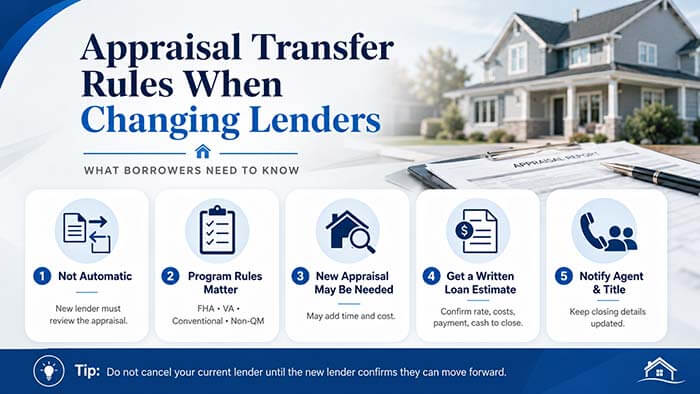 Appraisal transfer can be a major issue when changing lenders after locking rates.
Why Appraisals Do Not Always Transfer Automatically
An appraisal is ordered through the lender’s appraisal process. A new lender must determine whether the appraisal can be used, whether it complies with loan program rules, and whether the appraiser and report meet investor requirements. Even if an appraisal transfer is allowed, the new lender may need additional time to review it.
FHA, VA, Conventional, and Non-QM Appraisal Concerns
Different loan programs may handle appraisals differently. FHA and VA loans have specific case numbers and appraisal rules. In some cases, conventional loans may allow an appraisal from another lender, but the new lender remains responsible for the file. Non-QM lenders may have their own investor rules. Some may accept an appraisal transfer, while others may require a new appraisal.
When a New Appraisal May Be Needed
A new appraisal may be required if the previous appraisal cannot be transferred, the new lender does not accept it, the property type needs further review, or the original appraisal has been canceled. Ask about appraisal requirements before switching lenders, as a new appraisal can increase both time and cost. A comprehensive plan should be developed before changing lenders. Do not cancel with the current lender until you receive confirmation that the new lender can provide assistance.
Get a Written Loan Estimate From the New Lender
Obtain a written Loan Estimate from the new lender, as a verbal quote is insufficient. The Loan Estimate should indicate whether the rate is locked, the closing costs, the monthly payment, and the estimated cash to close.
Notify the Real Estate Agent and Title Company
Notify the real estate agent and title company if a lender switch is planned. The purchase contract, closing date, title work, insurance binder, and closing documents may require updates.
Ask About Lock Expiration and Closing Timeline
Borrowers should be aware of the expiration date of the current rate lock and whether an extension is available. Inquire with the new lender regarding the timeline for clearing the file to close. Maintain organized and readily accessible mortgage documents to expedite the process.
Essential documents include pay stubs, W-2s, tax returns, bank statements, retirement accounts, divorce bankruptcy papers, gift letters, identification, purchase contract, homeowners’ insurance, and appraisal details.
Keep your documents organized and readily available to expedite the process. Essential documents include pay stubs, W-2s, tax returns, bank statements, retirement account statements, divorce or bankruptcy papers, gift letters, photo identification, purchase contract, homeowners’ insurance, and appraisal details.
Changing Lenders After Locking Rates With Gustan Cho Associates
Gustan Cho Associates works with borrowers who may need a second opinion during the mortgage process. Some borrowers come to GCA after another lender adds overlays, delays the file, or says the loan cannot close. GCA can review your mortgage scenario and assess credit, income, assets, debt-to-income ratio, loan program, property type, and closing timeline. The goal is to determine whether a workable path forward exists.
Help for Borrowers Facing Lender Overlays
Some borrowers meet agency guidelines but are denied because of lender overlays. This can happen with FHA, VA, USDA, conventional, jumbo, and non-QM mortgage files. Borrowers with lower credit scores, higher debt-to-income ratios, recent bankruptcy, foreclosure, late payments, collections, or manual underwriting needs may benefit from working with a lender experienced in complex mortgage files.
Second Opinions Before the Loan Falls Apart
Obtaining a second opinion can clarify whether the issue is related to agency guidelines or lender overlays, and whether switching lenders is advisable. As the closing date approaches, changing lenders becomes increasingly challenging and may result in delays.
The Process of Changing Lenders After Locking Rates
If You’ve Decided to Switch Lenders, follow These Steps to Make the Transition as Smooth as Possible:
Review Your Rate Lock Agreement:
- Look for any fees or penalties for switching lenders after locking rates.
- Most lenders don’t charge switching fees, but it’s better to be safe than sorry.
Contact Your Current Lender:
- Let them know you’re considering switching.
- In some cases, they may be willing to lower your rate or offer better terms to keep your business.
Start the Process with the New Lender:
- You’ll need to fill out a new mortgage application, provide documentation, and go through underwriting again.
- Be prepared to submit all your financial information and documents, even if you have already done this with your previous lender.
Check for Appraisal Transfer:
- FHA and VA appraisals can transfer to a new lender, saving you from paying for another appraisal.
- However, conventional loans require a new appraisal when switching lenders.
- Ask the new lender if they’ll cover this cost.
Stay on Top of Deadlines:
- Know how switching lenders impact your closing date.
- To avoid delays, communicate with all parties—your real estate agent, new lender, and title company.
Ready to Change Lenders After Locking Your Rate? We Can Guide You Through the Process!
Contact us today to discuss how we can make the process as smooth as possible.Does Switching Lenders After Locking Rates Cost Money?
In most cases, switching lenders won’t cost you anything except time. The exception is the home appraisal fee. If you’ve already paid for an appraisal, here’s what you need to know:
FHA, USDA, and VA Loans:
- FHA, USDA, and VA home appraisals can be transferred to a new lender without requiring you to pay for another appraisal.
Conventional Loans:
- You’ll need to get a new appraisal, and the cost is typically around $500-$600.
- Some new lenders might offer to cover this fee to earn your business.
What Happens If Mortgage Rates Drop After I Lock?
If you’ve already picked a mortgage rate and then noticed that the rates have gone down, you might be wondering, “What now?” Well, once you lock in a rate, it usually stays put, even if rates go down later. But if you see a big drop in rates after you’ve locked yours, there are a couple of things you can try:
Chat with Your Lender
Sometimes, your lender might have a special deal where they let you snag a lower rate if the rates drop quickly. This isn’t something every lender does, so it’s worth asking about. This is known as a “float-down” option.
Thinking About Changing Lenders After Locking Rates?
If your lender won’t budge and you find a much better deal with someone else, switching might be worth it. Sure, it sounds like a hassle, but if it saves you a good chunk of money, it could be the way to go.
How Market Conditions Impact Rate Lock Decisions
Mortgage rates are constantly changing, sometimes even by the hour. Locking your rate at the appropriate time can help you save thousands over your loan duration. However, the mortgage market can be volatile, and predicting future rate movements is tricky.
Here Are a Few Things to Consider:
Rising Interest Rates:
- If rates are trending upward, locking your rate sooner rather than later could save you money.
Falling Interest Rates:
- If rates drop, you may want to wait a bit before locking.
- However, waiting too long could backfire if rates start climbing again.
The Mortgage Application Process When Changing Lenders
Switching Lenders Means You’ll Need to Restart the Mortgage Application Process. Here’s What That Looks Like:
Submit a New Loan Application:
- Just like the first time, you’ll need to fill out a mortgage application with the new lender.
Submit Documentation:
- Provide financial documents like tax returns, pay stubs, bank statements, and other required paperwork to the new lender.
Undergo Credit Check:
- The new lender will pull your credit report again.
- Keep in mind that multiple credit inquiries within a short period typically only count as one inquiry, so this shouldn’t have a big impact on your score.
Get a New Loan Estimate:
- The new lender will provide a Loan Estimate detailing your new loan terms, including your new interest rate, fees, and closing costs.
The Mortgage Application Process When Changing Lenders
- Switching lenders means you’ll need to restart the mortgage application process. Here’s what that looks like:
Submit a New Loan Application:
- Just like the first time, you’ll need to fill out a mortgage application with the new lender.
Submit Documentation:
Provide financial documents like tax returns, pay stubs, bank statements, and other required paperwork to the new lender.
Undergo Credit Check:
- The new lender will pull your credit report again.
- Keep in mind that multiple credit inquiries within a short period typically only count as one inquiry, so this shouldn’t have a big impact on your score.
Get a New Loan Estimate:
- The new lender will provide a Loan Estimate detailing your new loan terms, including your new interest rate, fees, and closing costs.
What If I Need to Change Lenders Close to Closing?
Changing lenders late in the mortgage process can lead to closing delays. If you’re close to closing, here’s what to consider:
Communicate With Your New Lender:
- Ask them about their timeline and how quickly they can close your loan.
- At Gustan Cho Associates, we pride ourselves on fast closings—even when borrowers switch lenders late.
Keep Your Seller and Agent in the Loop:
- If you’re buying a home, make sure your real estate agent and the home seller know about the change in lenders.
- In some cases, they may need to extend the closing date.
Be Prepared for Extra Paperwork:
- You’ll likely need to sign new disclosures and submit additional documents.
- Stay on top of these requirements to avoid further delays.
Pros and Cons of Changing Lenders After Locking Rates
Changing lenders after locking rates has its advantages and disadvantages. Let’s take a closer look:
Pros of Changing Lenders After Locking Rates
Better Interest Rates:
- Switching lenders could save you thousands in interest over the life of your loan if the new lender offers a significantly lower rate.
Improved Customer Service:
- If your current lender is unresponsive or difficult to work with, switching could reduce stress and streamline the process.
Access to Better Loan Products:
- Some lenders offer specialized loan products or more favorable terms for borrowers with unique circumstances, like lower credit scores or high debt-to-income ratios.
Will Switching Lenders Hurt My Credit Score?
Switching lenders may necessitate an additional mortgage credit check. Multiple mortgage inquiries within a short period are generally treated differently from other credit checks; however, unnecessary inquiries should be avoided. The primary concern is continued qualification and the ability to close on time.
Changing Lenders After the Appraisal Was Completed
It is possible to change lenders after the appraisal is completed; however, the appraisal may not always transfer. The new lender must determine whether it can be accepted under the applicable loan program and investor rules. If not, a new appraisal may be required. Money, I already paid certain fees that may be refundable, while others may not. Credit report, appraisal, and rate lock fees depend on the lender’s policies and the services already rendered. Request a written explanation from the current lender regarding any fees paid and potential refunds. Get a refund.
Should I Switch Lenders for a Lower Interest Rate?
A lower interest rate may be advantageous; however, all loan terms should be compared. Consider closing costs, discount points, lender fees, APR, cash to close, and the closing timeline. A lower rate is not always preferable if it results in higher upfront costs or jeopardizes the transaction.
Changing lenders after locking a rate may be advantageous in certain situations. This approach may be beneficial if the current lender imposes overlays, demonstrates poor communication, charges high costs, or is unable to close the loan.
However, switching lenders involves certain risks. The mortgage process may need to be restarted, updated documentation provided, appraisal transfer issues resolved, and potential closing delays managed. Written Loan Estimates should be compared, the new lender’s timeline verified, appraisal options reviewed, and all associated costs fully understood before making a decision.
Cons of Changing Lenders After Locking Rates
Locking a mortgage rate does not obligate a borrower to remain with that lender. Commitment typically occurs only upon signing the final closing documents. Exiting a rate lock may result in delays, additional paperwork, and potential costs; therefore, decisions should be carefully reviewed.
Time and Paperwork:
- You’ll need to start the mortgage process from scratch, which means gathering and submitting all your financial documents again.
Closing Delays:
- Switching lenders could delay your closing, especially if you’re far along in the process.
Appraisal Costs:
- If you’re switching from one lender to another and you’ve already paid for a conventional loan appraisal, you’ll need to pay for another one.
- This can add $500-$600 to your costs.
Is Changing Lenders After Locking Rates the Right Choice?
Deciding to switch lenders comes down to what’s most important to you: saving money, getting better service, or ensuring a smoother mortgage process. If you’re unhappy with your current lender or if you’ve found significantly better rates elsewhere, it might be worth the effort to switch. However, if you’re close to closing or you’ve already invested time and money in the process, it might make more sense to stick with your current lender.
Final Thoughts: Take Control of Your Mortgage Journey
Changing lenders after locking rates is possible and can even save you money in the long run. But before you make the switch, weigh the pros and cons carefully. Take the time to shop around, understand your rate lock agreement, and communicate with both your current and new lenders to avoid surprises.
If you’re considering switching lenders, the team at Gustan Cho Associates is here to help. We specialize in working with borrowers who are unhappy with their current lenders and want to start fresh.
Contact us today at 800-900-8569 or alex@gustancho.com for a consultation and find out how we can help you secure the best possible mortgage rate and terms for your situation. Let’s make your dream of owning a home a reality!
Frequently Asked Questions About Changing Lenders After Locking Rates:
Can I Switch Lenders After Locking Rates?
Changing lenders after locking rates is permissible. However, understanding the process and identifying any possible fees is crucial.
What are the Primary Factors that Lead to Changing Lenders After Locking in Interest Rates?
Many borrowers consider switching lenders if they find a better rate, face poor communication from their current lender, or encounter unexpected loan denials.
Will Changing Lenders After Locking Rates Cost Me Money?
In most cases, switching lenders won’t cost you extra money, but you might need to pay for a new appraisal if you’re dealing with a conventional loan.
How Does Switching Lenders Affect My Closing Timeline?
Changing lenders can delay your closing date, especially if you’re far along in the mortgage process. It’s essential to communicate with both lenders to manage expectations.
What Should I do Before Deciding to Switch Lenders?
Before changing lenders after locking rates, review your rate lock agreement, contact your current lender, and shop for better offers.
Can I Lock Rates With Multiple Lenders?
Yes, it is possible from a technical standpoint, but it is not advisable. This action has the potential to negatively impact your credit score and lead to uncertainty when selecting a lender.
What Happens to My Locked Rate if I Change Lenders?
When you switch lenders, you’ll likely have to accept a new rate based on the current market conditions, which could be higher or lower than your previous rate.
How Can I Avoid Changing Lenders After Locking Rates?
To prevent switching lenders, shop around before locking in your rate, and communicate openly with your loan officer about your needs and concerns.
Do FHA and VA Appraisals Transfer to a New Lender?
Yes, if you’re using an FHA or VA loan, your appraisal can typically transfer to the new lender, saving you from paying for another one.
Is Changing Lenders After Locking Rates a Smart Move?
If it helps you save money or enhances your experience, it might be a wise choice. However, be sure to carefully consider the advantages and disadvantages before moving forward.
This Guide About “Changing Lenders After Locking Rates During Mortgage Process” Was Updated on May 30, 20256