Short Sale vs Foreclosure: Key Differences for Future Mortgage Approval If you are struggling to make your mortgage payments, you may be wondering whether a short sale or foreclosure is the better option. Both can affect your credit, your finances, and how soon you can qualify for another home loan. However, they are not the same, and the long-term impact can be very different.
In simple terms, a short sale happens when your lender agrees to let you sell your home for less than the amount you still owe on the mortgage. A foreclosure is when the bank reclaims your home after you’ve missed payments and then sells it off through legal steps. While both are serious housing events, a short sale is often less damaging to future mortgage qualification than a foreclosure.
For many borrowers, the biggest question is how long they need to wait before they can buy another home. The answer depends on the type of loan you want in the future, whether the housing event was a short sale, deed-in-lieu, or foreclosure, and whether there were documented extenuating circumstances.
This guide breaks down the differences between a short sale versus foreclosure, how each impacts your credit and your ability to get a mortgage, and the waiting times for FHA, VA, USDA, and conventional loans.
What is a Short Sale?

What is a Foreclosure?
A foreclosure is a legal process in which the lender seizes and sells a property after the homeowner defaults on mortgage payments. This typically happens when the borrower cannot make payments and the lender exhausts all options to resolve the delinquency. Due to their long-lasting financial repercussions, foreclosures have a more severe impact on credit scores compared to short sales and can significantly delay eligibility for new mortgages.
Key Differences Between Short Sale Versus Foreclosure
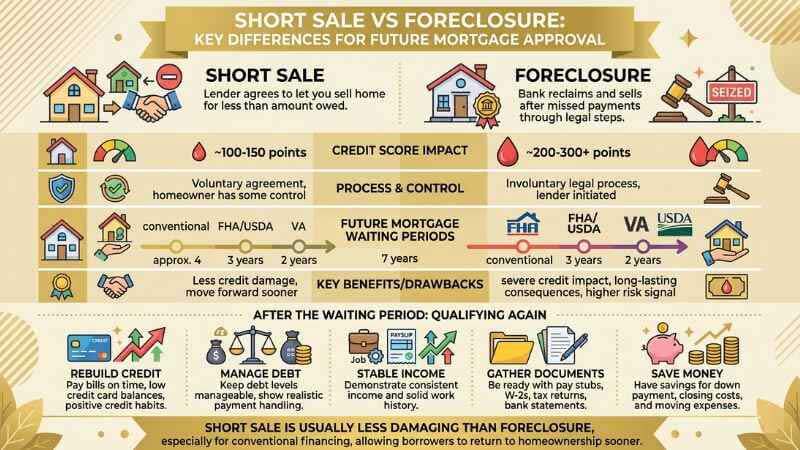
While short sales and foreclosures stem from financial hardship, they differ in process, impact, and long-term consequences. A short sale is a voluntary agreement between the homeowner and lender, allowing the homeowner some control over the sale process. It typically results in less credit damage (a drop of about 100–150 points) and shorter waiting periods for new loans. In contrast, a foreclosure is involuntary, initiated by the lender, and can cause a credit score drop of 200–300 points or more. Foreclosures also remain on credit reports for seven years, signaling higher risk to future lenders. Additionally, short sales may involve a deficiency balance (the difference between the sale price and the mortgage owed), which could require further negotiation. In contrast, foreclosures often resolve the debt but with greater legal and financial consequences.
Impact on Qualifying for a New Mortgage
A short sale or foreclosure on your financial record complicates qualifying for a new mortgage, whether government-backed or conventional. Lenders view these events as indicators of past financial distress, leading to stricter eligibility requirements, including waiting periods, credit score thresholds, and documentation. Below, we outline the guidelines for FHA, VA, USDA, and conventional loans following a short sale or foreclosure.
Mortgage Waiting Periods After a Short Sale or Foreclosure
The waiting period after a short sale versus foreclosure depends on the type of mortgage you want next. In general, government-backed loans are more flexible than conventional loans. However, each program still has rules borrowers must meet before they can qualify again.
The most important thing for homeowners to know is this: a short sale is usually treated more favorably than a foreclosure, especially with conventional financing. Even after the waiting period has passed, lenders will still look at your credit, income, job history, and payment habits to make sure you are ready for a new mortgage.
Instead of getting lost in mortgage jargon, it helps to break this down one loan program at a time.
FHA Loans After a Short Sale or Foreclosure
FHA Loans are often among the more forgiving options for borrowers who have experienced a housing event. In many cases, the waiting period after a short sale is three years. The waiting period after a foreclosure is also generally three years. Some borrowers may qualify sooner if they have documented extenuating circumstances, such as a serious illness, the death of a wage earner, or another major event outside their control. Even then, they still need to show they have re-established good credit and a stable income.
VA Loans After a Short Sale or Foreclosure
VA loans can also be more flexible than conventional loans. In many cases, the waiting period after a short sale, deed-in-lieu, or foreclosure is two years. For borrowers who previously used a VA loan, there may be an additional step to restore VA entitlement before using the benefit again. That sounds technical, but in simple terms, it means checking how much of the VA loan benefit is still available for a future purchase.
USDA Loans After a Short Sale or Foreclosure
USDA loans generally require a three-year waiting period after a short sale or foreclosure. Because USDA loans are designed for eligible rural and suburban homebuyers, borrowers must also meet household income and property eligibility requirements, in addition to standard credit and employment requirements. This means USDA can still be a good option after a housing event, but borrowers need to make sure both the home and their income fit USDA guidelines.
Conventional Loans After a Short Sale or Foreclosure
Conventional loans usually have the toughest waiting periods after a major housing event. Typically, after a short sale, you’ll need to wait around 4 years before you can borrow money again. If you’ve gone through a foreclosure, it’s usually a 7-year wait. This is one of the biggest reasons a short sale may be less damaging than a foreclosure for someone who hopes to buy again with conventional financing. While there are exceptions in some hardship cases, conventional lending is usually less flexible than FHA, VA, or USDA after a credit event.
What Lenders Look at After the Waiting Period
Even after the necessary waiting period for a short sale versus foreclosure has elapsed, borrowers are still required to qualify for the new mortgage. This typically involves demonstrating improved credit scores, consistent income, manageable debt levels, and a solid payment history following the housing event. In essence, the waiting period is just one part of the overall process. Lenders are looking for evidence that the financial difficulties are behind you and that you are now in a stronger position to manage a new home loan.
What You Need to Qualify Again After a Short Sale Versus Foreclosure
 Waiting out the required time is only part of the process. After a short sale or foreclosure, lenders also want to see that your finances have improved and that you are ready for a new mortgage. The positive aspect is that many borrowers can regain eligibility once they restore their credit, manage their debt effectively, and demonstrate consistent income. In the context of short sale versus foreclosure, the objective is to show that the financial difficulties are behind you and that you are capable of managing a new housing payment.
Rebuilding Credit After a Housing Event
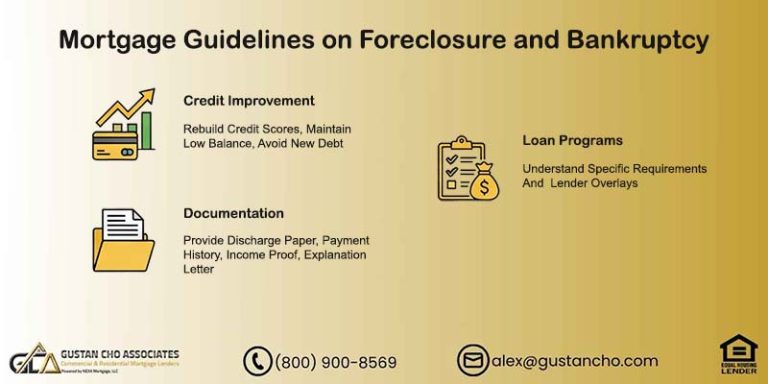
A short sale or foreclosure can lower your credit scores, but the damage does not last forever. Over time, many borrowers improve their scores by paying their bills on time, keeping credit card balances low, and avoiding new late payments. Lenders do not expect perfection, but they do want to see that you have re-established responsible credit habits since the housing event.
Keeping Debt at a Manageable Level
Lenders want to know how much of your monthly income is tied up in debt. It helps them figure out if you can realistically handle a new mortgage payment. If you’ve got a bunch of credit card debt, car loans, or personal loans weighing you down, paying some of that off can really help improve your chances of getting approved.
Showing Stable Income and Employment
Most mortgage lenders want to see that your income is steady and reliable. In many cases, that means a solid work history and enough income to comfortably handle the new mortgage payment along with your other monthly bills. The more stable your job and income look, the stronger your application will usually be.
Being Ready With Basic Documents
When you apply for a mortgage after a short sale or foreclosure, expect the lender to request standard documentation, such as pay stubs, W-2s, bank statements, and tax returns. If your hardship was caused by a major event like a job loss, medical issue, or divorce, you may also be asked to explain what happened and show that the issue has been resolved.
Saving for the Down Payment and Closing Costs
Some loan programs allow low down payment options, and some may even allow no down payment for eligible borrowers. Even so, it helps to have money saved for upfront costs, reserves, and moving expenses. Having savings can make you look more prepared and financially stable to a lender.
Challenges and Considerations
Qualifying for a mortgage after a short sale versus foreclosure can be challenging due to credit damage and lender scrutiny. Short sales are generally viewed as less severe, offering shorter waiting periods and less credit impact, but they may involve negotiating deficiency balances. Involuntary foreclosure signals higher risk, leading to longer waiting periods and stricter requirements. Borrowers should work with experienced lenders familiar with post-distress financing and consider consulting a financial advisor to rebuild credit and savings. Additionally, regional variations in lending practices, as seen in states like New York with competitive rates, may influence eligibility and terms.
Tips for Rebuilding Financial Health
To improve chances of qualifying for a new mortgage:
- Monitor and Improve Credit: Pay all bills on time, reduce credit card balances, and avoid new debt.
- Save for a Down Payment: A larger down payment can offset credit issues and shorten waiting periods for conventional loans.
- Work with a Mortgage Professional: Seek lenders experienced in post-short-sale or foreclosure financing to navigate complex guidelines.
- Document Extenuating Circumstances: Gather evidence to support a reduced waiting period if applicable.
- Stay Informed: Mortgage guidelines evolve, so check with lenders for the latest requirements.
Navigating mortgage eligibility after a short sale or foreclosure requires understanding the guidelines for government-backed and conventional loans. Short sales generally allow shorter waiting periods (2–4 years) than foreclosures (2–7 years), with government-backed loans like FHA, VA, and USDA offering more leniency than conventional loans. Rebuilding credit, maintaining a stable income, and meeting documentation requirements are critical to securing a new mortgage. By proactively improving financial health and working with knowledgeable lenders, borrowers can return to homeownership despite past financial challenges.
Conventional Loan Waiting Period After Short Sale Versus Foreclosure
Homeowners who had a short sale used to be able to qualify for conventional loans two years after the date of the short sale with a 20% down payment. However, this is no longer the case. New waiting period requirements were implemented. Homebuyers can qualify for conventional loans four years after a short sale and/or deed instead of foreclosure with 5% down payment.
Government Loan Waiting Periods After Short Sale or Foreclosure
Government-backed loans usually have more flexible guidelines than conventional loans after a major housing event. That is good news for borrowers who had a short sale, deed-in-lieu of foreclosure, or foreclosure and want to buy a home again. In simple terms, FHA, VA, and USDA loans often treat these housing events similarly when it comes to the basic waiting period. That means the required time to qualify again is often determined more by the loan program than by whether the event was a short sale, deed-in-lieu, or foreclosure.
For many borrowers, this is an important difference between government-backed loans and conventional loans. Conventional financing often draws a bigger distinction between a short sale and a foreclosure, especially when it comes to how long you need to wait before buying again.
In general, FHA and USDA loans typically require a three-year waiting period after a short sale, deed-in-lieu, or foreclosure. VA loans are often more flexible, with a typical two-year waiting period after these types of housing events. Even after the waiting period ends, borrowers must still meet qualifications based on their current income, credit, employment, and overall financial stability. This means that simply reaching the end of the waiting period doesn’t guarantee approval; it only signifies that you might be eligible to apply. This consideration is particularly important when evaluating options such as short sale versus foreclosure, as both scenarios can impact financial eligibility.
Short Sale or Foreclosure? Know the Difference
We’ll help you understand the pros, cons, and credit impact of each option before you decide.Downfalls Of Foreclosures
Purchasing a home after a foreclosure requires a longer waiting period to qualify for a new mortgage under Fannie Mae/Freddie Mac Guidelines than after a short sale and/or deed instead of foreclosure. The normal waiting period to qualify for a conventional mortgage loan for a primary residence is 7 years after the recorded date of a standard foreclosure. Waiting Period to qualify for conventional loans after a short sale and/or recorded date of deed instead of foreclosure is 4 years.
Will Credit Scores Suffer After Short Sale Versus Foreclosure?
Credit scores will drop significantly after bankruptcy, foreclosure, short sale, and/or deed instead of foreclosure. However, the sudden credit score drop is temporary, and credit scores will eventually return. Positive credit is the best way to boost and re-establish credit after a short sale, bankruptcy, deed in lieu, and/or foreclosure. Secured Credit Cards are the best, easiest, and fastest way of re-establishing credit after bankruptcy, foreclosure, or short sale. Eventually, bankruptcy, foreclosure, deeds instead of foreclosure, and short sale ages will have little to no impact on credit scores.
How a Short Sale Versus Foreclosure Shows Up on Your Credit Report
A short sale or foreclosure can hurt your credit, but the impact is usually not permanent. These events may stay on your credit report for several years, and they can make it harder to qualify for new credit or a mortgage during that time.
In general, foreclosures, short sales, and other major negative events can remain on your credit report for up to seven years. A Chapter 7 bankruptcy may remain longer. Even though these items stay on your report for a long time, their effect on your credit score usually becomes less severe as time passes.
What matters most is what you do after the housing event. Paying your bills on time, keeping credit card balances low, and avoiding new late payments can help rebuild your credit over time. Lenders want to see that the financial hardship is behind you and that you have developed stronger credit habits since then. The key takeaway is that a short sale or foreclosure does not mean you can never buy a home again. You may need time to rebuild your credit profile and show lenders that you are financially ready for another mortgage.
How Long Does It Take to Rebuild Credit After a Short Sale Versus Foreclosure
A short sale or foreclosure can lower your credit score, but the effect does not stay the same forever. Over time, the impact usually lessens, especially if you build positive credit habits after the housing event.
Most people boost their credit by paying on time, keeping their credit card balances low, avoiding new late payments, and being careful with new credit. Some people recover faster than others, but credit rebuilding is different for every borrower, and there is no single timeline that works for everyone.
The key point is that a short sale or foreclosure does not damage your credit forever. With time and responsible credit use, many borrowers can strengthen their credit profiles and qualify for a mortgage again.
Short Sale Versus Foreclosure: The Better Option Depends on Your Goals
A short sale and a foreclosure can both make it harder to qualify for a mortgage in the future, but lenders view them differently. In many cases, a short sale causes less damage than a foreclosure, especially for borrowers who hope to buy again with conventional financing.
The most important differences are usually the waiting period, the impact on your credit, and the level of control you have during the process. A short sale may offer a better path for homeowners who want to reduce long-term damage and move forward sooner. At the same time, a foreclosure often brings more serious credit and mortgage consequences.
Every situation is different. The right option depends on your loan type, your financial hardship, your long-term housing plans, and whether you may qualify for another mortgage in the future. Understanding the difference between short sale versus foreclosure can help you make a more informed decision and avoid surprises later. If you are trying to understand how a short sale, deed-in-lieu, or foreclosure could affect your future mortgage options, speaking with a knowledgeable mortgage professional can help you understand the waiting periods and loan programs that may be available when you are ready to buy again.
Frequently Asked Questions About Short Sale Versus Foreclosure:
What is the Main Difference Between a Short Sale and a Foreclosure?
A short sale is when a homeowner sells their place for less than what they owe on the mortgage, but they need the lender’s okay to do it. A foreclosure happens when the lender takes back the home after missed payments and sells it through a legal process. In most cases, a short sale gives the homeowner more control and is seen as less damaging than a foreclosure.
Does a Short Sale Hurt Your Credit Less Than a Foreclosure?
In many cases, yes. A short sale usually hurts your credit less than a foreclosure, especially if the short sale is completed with fewer late mortgage payments. A foreclosure often causes greater credit damage because it usually follows a longer period of missed payments, as well as the foreclosure itself.
How Long Do You Have to Wait to Buy a House After a Short Sale Versus Foreclosure?
The waiting period depends on the new loan program. Conventional loans typically require about 4 years after a short sale and 7 years after a foreclosure. In comparison, FHA and USDA often require 3 years, and VA is typically around 2 years. Exact timing can vary based on the loan type and whether documented extenuating circumstances apply.
Is a Short Sale Better Than a Foreclosure if You Want to Buy Again Later?
For many borrowers, yes. A short sale is often the better option if the goal is to reduce long-term damage and qualify for a mortgage again sooner. This is especially true with conventional financing, where the waiting period after a foreclosure is usually much longer than after a short sale.
Can You Still Owe Money After a Short Sale Versus Foreclosure?
Sometimes, yes. In some cases, the lender may try to collect the difference between what was owed and what the home sold for. Whether that happens depends on state law, the type of loan, and the agreement made with the lender. That is why homeowners should review the terms carefully before completing a short sale or going through foreclosure.
Can You Do a Short Sale Without Being in Foreclosure First?
In many cases, yes. A short sale is a voluntary process, so it may happen before a foreclosure is completed. Some homeowners pursue a short sale when they are facing hardship and want to avoid the bigger credit and mortgage impact that can come with foreclosure.
This article about “Short Sale Versus Foreclosure Mortgage Guidelines” was updated on April 13th, 2026.