Online mortgage shopping changed mortgage lending by giving borrowers more control over how they compare lenders, rates, fees, and loan programs. Instead of visiting several banks or waiting for callbacks, homebuyers and homeowners can now request quotes, upload documents, review loan options, and start the preapproval process online.
That convenience can save time, but borrowers still need to shop carefully. The lowest advertised mortgage rate is not always the best deal. Some banks might give you a lower interest rate, but they could make up for it with higher fees, points, or closing costs.
Others may advertise attractive rates that only apply to borrowers with excellent credit, large down payments, or very specific loan terms.
The best way to use online mortgage shopping is to compare the full mortgage offer, not just the interest rate. Borrowers should review the Loan Estimate, APR, lender fees, discount points, monthly payment, cash needed to close, loan program, and service quality before choosing a lender.
Online mortgage shopping works best when it combines speed, transparency, and real mortgage guidance. Whether you are buying your first home, refinancing, comparing FHA, VA, USDA, conventional, jumbo, or non-QM loans, the goal is not just to find the cheapest-looking offer. The goal is to find the mortgage that fits your credit, income, down payment, property, and long-term financial goals.
Why Online Mortgage Shopping Helps Borrowers Compare Lenders Faster
Online mortgage shopping helps borrowers compare lenders faster because they are no longer limited to one local bank, one loan officer, or one nearby mortgage office. Borrowers can request quotes, review loan programs, compare estimated payments, and ask questions from multiple lenders without having to restart the entire process each time.
This matters because mortgage offers can look similar on the surface but be very different once you review the full details. One lender may advertise a lower interest rate but charge higher discount points or lender fees. Another lender may offer a slightly higher rate but lower closing costs. Borrowers should compare the full Loan Estimate, including the interest rate, APR, lender fees, discount points, mortgage insurance, monthly payment, and total cash needed to close.
Online mortgage shopping also makes it easier to compare loan programs. A borrower may qualify for conventional financing, but an FHA loan, VA loan, USDA loan, jumbo loan, or non-QM loan may be a better fit depending on credit score, down payment, income type, debt-to-income ratio, property location, or recent credit history.
Another important factor is lender overlays. Agency guidelines may allow a borrower to qualify, but some lenders add extra rules on top of FHA, VA, USDA, Fannie Mae, or Freddie Mac guidelines. These extra rules are called lender overlays. Shopping online gives borrowers a better chance of finding a lender who understands their loan scenario, rather than being denied by the first lender they contact.
The main benefit is speed with better access. Borrowers can compare more lenders, ask better questions, and identify the mortgage option that fits their financial situation before committing to one company.
How To Shop for a Mortgage Online Safely
Online mortgage shopping can save time, but borrowers should be careful before sharing personal or financial information. A mortgage application includes sensitive documents such as pay stubs, tax returns, bank statements, W-2s, Social Security numbers, and identification. Before uploading anything, borrowers should confirm they are working with a legitimate licensed lender or mortgage broker.
The first step is to check NMLS licensing. Borrowers can look up the company and loan officer through the NMLS Consumer Access website to confirm the legal business name, license status, and states where the lender or mortgage broker is approved to operate.
This is important because a company may use a trade name, DBA, or online brand that differs from its legal name.
Borrowers should also confirm the lender or broker’s contact information. A legitimate mortgage company should have clear phone numbers, email addresses, business information, and licensing disclosures. A professional website alone is not enough. Borrowers should verify who they are dealing with before submitting a full loan application.
Secure document upload is another major safety step. Borrowers should use a protected borrower portal whenever possible, rather than sending sensitive documents via unprotected email or text messages. Financial documents should be handled through secure systems that protect the borrower’s private information.
Borrowers should not rely only on advertised rates. Some online mortgage rates may assume excellent credit, a large down payment, discount points, or a specific loan amount. The only way to compare offers more accurately is to review the Loan Estimate. The Loan Estimate shows the interest rate, APR, projected payment, lender fees, discount points, closing costs, and cash needed to close.
Watch out for pressure tactics—they’re definitely a red flag. If a lender is rushing you to make decisions, won’t break down the fees for you, dodges giving a written Loan Estimate, or claims you’ll get approved without checking your credit, income, assets, and debts, it’s time to be cautious. No lender can guarantee final mortgage approval without a complete file review and underwriting approval.
Borrowers should also compare third-party reviews and customer experiences. Reviews can help identify patterns in communication, closing timelines, service quality, and transparency. A lender with a low advertised rate may not be the best choice if borrowers consistently report poor follow-up, surprise fees, or closing delays.
Online mortgage shopping is safest when borrowers verify licensing, protect their documents, compare full Loan Estimates, and choose a lender that communicates clearly. Convenience matters, but trust, transparency, and proper underwriting matter more.
How Online Mortgage Shopping Makes the Mortgage Process Easier
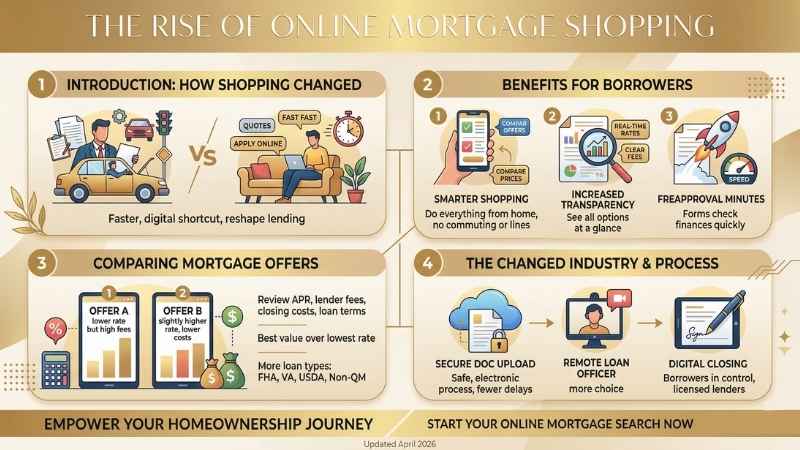
Online mortgage shopping makes the mortgage process easier because borrowers can compare lenders, review loan options, and start the preapproval process without visiting multiple offices. Instead of scheduling in-person appointments with several banks or mortgage companies, borrowers can request quotes, compare loan programs, and ask questions from home.
One major benefit is secure document upload. Borrowers can often upload pay stubs, W-2s, tax returns, bank statements, identification, and other required documents through a secure online portal. This helps reduce delays, missing paperwork, and the back-and-forth that often slows down the mortgage process.
Electronic disclosures also speed up the process. Borrowers can review and sign many mortgage disclosures online, rather than waiting for paper documents. This helps lenders move the file forward more quickly and gives borrowers easier access to important loan information.
Online mortgage shopping also improves communication. Borrowers can speak with a loan officer by phone, email, video call, text, or through a borrower portal. This makes it easier to ask questions, provide updated documents, and track the loan process without meeting in person at every step.
However, online convenience does not replace underwriting. A fast online application or preapproval is only the beginning. The lender still needs to review credit, income, assets, debt-to-income ratio, property type, appraisal, title, and loan program guidelines before the loan can close. Online mortgage shopping can speed up the process and make it more convenient, but final approval still depends on a complete, properly underwritten mortgage file.
Comparing Pricing and Rates Through Online Mortgage Shopping
Comparing pricing and rates is one of the biggest benefits of online mortgage shopping. Borrowers can check out offers from different lenders without having to visit a bunch of offices or keep having the same chat over and over. However, the lowest advertised interest rate is not always the best mortgage deal.
When shopping for a mortgage online, borrowers should compare the full loan offer, not just the rate. A lender may advertise a low interest rate but charge higher discount points, origination fees, processing fees, underwriting fees, or other closing costs. Another lender may offer a slightly higher rate but lower upfront costs, which may be the better option depending on how long the borrower plans to keep the loan.
The Loan Estimate is one of the most important documents to review when comparing mortgage offers. It shows the interest rate, APR, estimated monthly payment, lender fees, discount points, mortgage insurance, estimated taxes and insurance, and total cash needed to close. Comparing Loan Estimates side by side gives borrowers a clearer picture of the true cost of each mortgage offer.
Borrowers should also review the loan program type. A conventional loan, FHA loan, VA loan, USDA loan, jumbo loan, or non-QM loan can have different credit score requirements, down payment rules, mortgage insurance costs, debt-to-income limits, and underwriting guidelines. The best loan is not always the one with the lowest rate. It is the one that fits the borrower’s credit, income, down payment, property, and long-term goals.
The rate lock period is another important detail. A quoted rate may only be available for a certain number of days. If the closing takes longer than expected, the borrower may need a lock extension, which could add cost. Borrowers should ask how long the rate is locked, whether discount points are included, and what happens if the loan does not close before the lock expires.
Borrowers should also ask whether the loan has a prepayment penalty. Most standard residential mortgage loans do not have prepayment penalties, but some non-QM or specialty loan programs may include one. This matters if the borrower plans to refinance, sell the home, or pay off the loan early.
Online mortgage shopping works best when borrowers compare the full picture: interest rate, APR, discount points, lender fees, mortgage insurance, taxes, insurance, cash to close, loan type, rate lock terms, and service quality. The goal is not just to find the lowest-looking rate. The goal is to find the mortgage offer that provides the best overall value.
The Future of Mortgage Lending Is Here
Skip the hassle—get transparency, speed, and savings online.How Online Mortgage Shopping Changed the Mortgage Process for Borrowers
Online mortgage shopping changed the mortgage process by giving borrowers faster access to lenders, loan programs, and pricing information. In the past, many borrowers started with the bank they already used or the mortgage office closest to home. Today, borrowers can compare multiple lenders online and review different mortgage options before deciding where to apply.
One of the biggest changes is faster preapproval. Many lenders now allow borrowers to complete an online application, upload documents, and receive an initial preapproval faster than the old paper-based process. This helps homebuyers understand their budget sooner and builds their confidence before shopping for a home.
Online mortgage shopping also gives borrowers more lender choices. A borrower is no longer limited to one local bank or one nearby loan officer. They can compare conventional, FHA, VA, USDA, jumbo, and non-QM loan options from different lenders. This is especially helpful for borrowers with lower credit scores, higher debt-to-income ratios, self-employment income, recent credit events, or unique property situations.
The process is also more transparent when borrowers know what to compare. Online tools make it easier to review estimated rates, payments, closing costs, and loan terms. However, borrowers need to be careful because advertised rates can be misleading. A low rate may include discount points, assume excellent credit, require a larger down payment, or leave out important costs.
Document collection has become easier as well. Borrowers can often upload pay stubs, W-2s, tax returns, bank statements, identification, and other documents through a secure portal. This can reduce delays and help the loan officer, processor, and underwriter review the file more efficiently.
The main takeaway is that online mortgage shopping gives borrowers more speed, access, and control, but it also creates more responsibility. Borrowers should carefully compare fees, review the full Loan Estimate, ask whether discount points are included, and choose a lender that explains the terms clearly rather than relying solely on the lowest advertised rate.
Online Mortgage Shopping Still Requires Human Guidance
Online mortgage shopping speeds up the process and makes it more convenient, but it does not replace the value of an experienced loan officer. A borrower can complete an application online, upload documents, and receive a quote. However, the loan still needs to be reviewed based on credit, income, assets, debt-to-income ratio, property type, and underwriting guidelines.
This is especially important for borrowers with more complex mortgage files. Homebuyers with bad credit, high debt-to-income ratios, self-employment income, 1099 income, recent bankruptcy, foreclosure, late payments, collections, judgments, or non-QM loan needs may not fit into a simple online quote. These borrowers often need a loan officer who understands FHA, VA, USDA, conventional, jumbo, and non-QM guidelines.
Human guidance also matters when lender overlays are involved. A borrower may meet agency guidelines, but a lender may still deny the loan due to additional internal rules. A knowledgeable loan officer can review the full file, explain the issue, and help determine whether another loan program or lender may be a better fit.
Online tools help compare rates, fees, and loan programs, but borrowers should not rely only on automated pricing or quick preapproval messages. The best online mortgage shopping experience combines digital convenience with real mortgage guidance, clear communication, and a complete review of the borrower’s financial situation.
Why First-Time Homebuyers Should Shop Online
First-time homebuyers should shop online because it makes it easier to compare lenders, loan programs, payments, and closing costs before choosing a mortgage company.
Online mortgage shopping can help first-time buyers:
Compare FHA and Conventional Loans
FHA loans may help buyers with lower credit scores, smaller down payments, or higher debt-to-income ratios. Conventional loans may work better for buyers with stronger credit or lower mortgage insurance options.
Find Down Payment Assistance
Some buyers may qualify for state, county, city, employer, or nonprofit down payment assistance programs. These programs can help with the down payment, closing costs, or both.
Get Preapproved Before House Hunting
A mortgage preapproval helps buyers know their price range, estimated payment, loan type, and cash needed to close before making an offer.
Understand Cash To Close
The down payment is not the only cost. Buyers may also need money for closing costs, prepaid taxes, homeowners’ insurance, escrow setup, appraisal fees, and inspections.
Compare Loan Estimates
First-time buyers should not compare only interest rates. A Loan Estimate shows the interest rate, APR, monthly payment, mortgage insurance, lender fees, closing costs, and total cash needed to close.
The goal of online mortgage shopping is not just to find the lowest advertised rate. The goal is to find the right lender, the right loan program, and the best overall mortgage fit.
Downsides of Online Shopping for Mortgages
Online mortgage shopping is convenient, but borrowers should understand the risks before choosing a lender.
Advertised Rates May Not Fit Your Scenario
Some low-advertised rates assume excellent credit, a large down payment, a low debt-to-income ratio, and a clean financial profile. Your actual rate may be different after the lender reviews your full file.
Some Quotes Include Discount Points
A lender may show a lower rate because discount points are included. Points lower the rate but increase upfront closing costs. Always ask if the quoted rate includes points.
Online Calculators May Leave Out Key Costs
Some mortgage calculators do not include property taxes, homeowners’ insurance, HOA dues, mortgage insurance, or prepaid costs. This can make the monthly payment look lower than it really is.
Self-Employed Borrowers Need Careful Income Review
Self-employed borrowers, 1099 workers, and business owners may get inaccurate quotes if income is entered incorrectly. Lenders often need tax returns, profit-and-loss statements, bank statements, or other documents to calculate qualifying income.
Borrowers With Credit Issues Need More Guidance
Borrowers with late payments, collections, bankruptcy, foreclosure, judgments, or high debt-to-income ratios may need more than a quick online quote. These files often require a loan officer who understands FHA, VA, USDA, conventional, and non-QM guidelines.
Online mortgage shopping works best when borrowers compare full Loan Estimates, ask about fees and points, and choose a lender that reviews the complete file before making promises.
What Online Mortgage Shopping Cannot Replace?
Online mortgage shopping can speed up the mortgage process, but it cannot replace a full underwriting review. A quick quote, online application, or automated approval is only the starting point.
Income Still Needs To Be Verified
Lenders must review income documents such as pay stubs, W-2s, tax returns, 1099s, bank statements, and profit-and-loss statements. This is especially important for self-employed borrowers and borrowers with variable income.
Credit and Debt Still Matter
Online tools may give an estimate, but the lender still needs to review credit history, monthly debts, credit scores, payment history, and debt-to-income ratio.
The Property Still Must Be Approved
The home must meet loan program guidelines. The lender may need an appraisal, title review, homeowners’ insurance, flood certification, HOA documents, or property condition review.
Loan Conditions Still Need To Be Cleared
Even after preapproval, borrowers may need to provide updated bank statements, letters of explanation, proof of funds, insurance documents, or other underwriting conditions before closing.
Human Guidance Still Matters
Automated tools can improve speed and convenience, but complex files often require an experienced loan officer. Borrowers with bad credit, high debt-to-income ratios, self-employment income, bankruptcy, foreclosure, or non-QM loan needs should work with someone who understands the full mortgage guidelines.
Online mortgage shopping is a helpful tool, but final approval still depends on a complete loan file, underwriting review, property approval, and cleared closing conditions.
Final Thoughts on Online Mortgage Shopping
Online mortgage shopping can help borrowers compare lenders faster, but it should not be rushed. The best mortgage offer is not always the one with the lowest advertised rate.
Borrowers should compare full Loan Estimates, including the interest rate, APR, lender fees, discount points, monthly payment, and cash needed to close. They should also choose a lender that explains fees clearly and understands the loan program they need.
Before moving forward, protect your personal documents, confirm the lender’s licensing, and ask questions about anything unclear. Online mortgage shopping works best when it helps you make a smarter mortgage decision, not a faster mistake.
Frequently Asked Questions About Online Mortgage Shopping:
Is It Better To Apply For A Mortgage Online Or In Person?
Applying online can be quicker and easier, but what’s best really depends on the borrower’s situation. Simple files may work well online, while borrowers with bad credit, self-employment income, high debt-to-income ratios, or recent credit events may need more one-on-one guidance from an experienced loan officer.
How Many Mortgage Quotes Should I Get Before Choosing A Lender?
Borrowers should compare at least three to five mortgage quotes before choosing a lender. Comparing multiple offers can help borrowers review rates, fees, APR, closing costs, and loan terms more clearly. Freddie Mac also recommends getting quotes from multiple lender types, including banks, credit unions, mortgage brokers, and non-bank lenders.
What Is The Best Way To Compare Online Mortgage Lenders?
The best way to compare online mortgage lenders is to request Loan Estimates for the same loan amount, loan type, and loan term. The CFPB says a Loan Estimate shows important mortgage details and helps borrowers compare offers from different lenders.
Can Online Mortgage Rates Change After I Apply?
Yes. Online mortgage rates can change unless the rate is locked. Rates may also change after the lender reviews credit, income, down payment, loan amount, property type, discount points, and loan program. Borrowers should ask how long the rate lock lasts and whether the quoted rate includes points.
Are Online Mortgage Lenders Safe?
Online mortgage lenders can be safe, but borrowers should verify the lender first. Check NMLS licensing, confirm the company’s legal name, read third-party reviews, and use a secure portal when uploading documents. Be cautious of lenders that pressure you, avoid written disclosures, or promise approval without reviewing your file.
Does Getting Multiple Mortgage Quotes Hurt Your Credit?
Multiple mortgage credit checks made within a limited shopping window are usually treated as one inquiry for scoring purposes. This allows borrowers to compare lenders without being penalized for every separate mortgage inquiry. Bankrate notes that this timeframe can range from 14 to 45 days, depending on the scoring model used.
This article about “Online Mortgage Shopping Changed Mortgage Lending” was updated on May 28th, 2026.