
Buying when most people pause — late fall through winter — can mean less competition, more negotiating power, and sometimes faster closings. However, winter also presents real risks, including weather delays, limited inventory, and hidden exterior issues.
Buying house during off season can be a smart move because there are fewer buyers, sellers may negotiate more, and inspectors/contractors are often easier to schedule. The trade-off is lower inventory and possible weather delays — so you need a strong pre-approval and a winter-focused inspection checklist.
Best Time to Buy in Winter if:
- You want less competition and calmer bidding
- You’re flexible on home style/location
- You can move quickly when the right listing pops up
Be Careful if:
- You must buy in one small neighborhood only
- You can’t handle repair surprises
- Your closing timeline can’t absorb weather delays
Why Buying House During Off Season Can Work in Your Favor

Fewer Buyers = More Negotiating Room
In a slower market, where there are fewer buyers actively making offers, sellers may be more willing to negotiate on various terms of the sale. Buyers have an excellent opportunity to secure better deals. This could mean lower prices for homes, reduced closing costs, or help with specific repairs that are needed. With less competition, you may find it easier to ask for concessions that would typically be disregarded in a hotter market.
As a result, buyers can leverage this situation to create a more favorable overall agreement. This added flexibility can make the home-buying experience less stressful and more financially beneficial.
Sellers are Often More Motivated.
Winter sellers frequently find themselves in a position where they must sell due to specific circumstances, such as job relocation, changes in family situations, or financial considerations. This motivation can lead to quicker decision-making on their part and more open-mindedness towards negotiations. Because they may be facing pressing personal deadlines, these sellers are often eager to close the deal swiftly.
This environment facilitates negotiations more easily because both sides are more likely to find a compromise that works for everyone. As a result, buyers can take advantage of sellers’ urgency, leading to better deal terms that might not be available during busier times.
Easier Scheduling for Inspections and Movers
During the winter months, there tends to be less demand for services like home inspections, moving, and cleaning, allowing for easier scheduling. Inspectors, contractors, movers, and cleaning services often have more availability, which can reduce potential delays in the home-buying process. This access enables buyers to secure appointments more quickly, thereby avoiding the frustration of long waits often associated with peak seasons.
With greater flexibility in scheduling, buyers can streamline their transition into their new home, reducing the overall stress that typically accompanies a move. Ultimately, this ease of coordination can lead to a quicker and more efficient closing process.
Shop when competition is low and leverage is high
Fewer bidders mean better prices, more concessions, and calmer timelines.
The Real Downsides of Buying House During Off Season
Inventory is Smaller (and the Best Homes Still Go Fast)
Fix: widen your search area, turn on instant alerts, and be ready to tour within 24–48 hours.
Weather Can Slow Down Showings, Appraisals, and Repairs
Fix: build “weather buffer” into your contract:
- longer inspection window
- flexible closing date range
- plan B for re-inspections and final walk-through
Curb Appeal is Muted — so Focus on Systems
Snow can hide grading, cracks, landscaping issues, and some roof/exterior problems. In winter, your job is to evaluate what matters most: HVAC, insulation, windows, attic moisture, drainage, and roof performance.
Tips for Buying House During Off Season
Winter weather can be unpredictable, so be flexible with your schedule and ready to adapt to changes in plans. Given the potential for weather-related issues, make sure to conduct thorough inspections of the property, paying attention to factors like insulation, heating, and potential weather-related damages.
Use buying house during off season to your advantage when negotiating the price. Sellers may be more willing to make concessions during the winter months. Hire a real estate agent and other professionals experienced in winter transactions.
They can provide valuable insights and help navigate any unique challenges. Remember that local market conditions can vary, so it’s essential to research and understand the specifics of the real estate market in the area where you’re looking to buy.
Off-Season Home Inspection Checklist (Winter-Focused)
- Heating & HVAC: Warm-up time, recent service records, age of furnace/boiler, filter condition, duct sealing.
- Insulation & Air Sealing: Attic R-value, visible gaps, drafts near outlets/windows, door sweeps.
- Roof & Attic: Shingle wear, flashing, ventilation, signs of ice dams, moisture stains, and active leaks.
- Windows & Doors: Condensation, drafts, failed seals, operation in cold temps.
- Plumbing: Pipe insulation in unheated spaces, winterization of exterior spigots, and water heater age.
- Electrical Load: Panel capacity, space for future upgrades, GFCI/AFCI protection.
- Drainage: Grading, downspout extensions, sump pump, and backup.
- Appliances & Fireplace: Function tests, pilot lights, chimney/liner condition, CO alarms.
- Radon (cold-weather states): Consider a radon test; levels can vary seasonally.
- Request recent utility bills: Winter heating costs can shock buyers.
- Ask about ice dams + past mitigation: Attic insulation/ventilation history matters.
Mortgage Rates With Buying House During Off Season
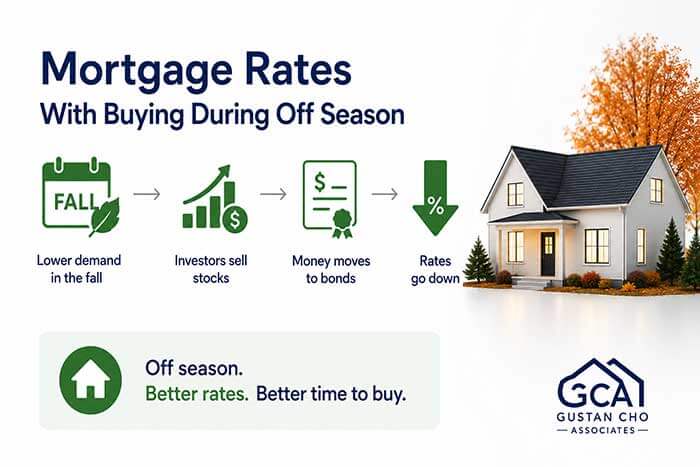
Rates drop for many reasons in the fall. One of the reasons is the demand for the rates have dropped due to the busy period being over. Second is the fiscal year is over in October in the business world. Investors tend to sell their stock either to mark the profits for the year. Or mark the losses to deduct on their tax returns. In the past when the stock market falls rates get better because investors take their money out of stocks and put it into bonds. When investors buy bonds that drives interest rates down.
Step-by-step Plan to Buy Confidently During Off Season
Buyers are tired or done tying to buy is because a lot of purchases are made by families with children: They want to close by the beginning of the school year. This is so the kids can start school at the beginning of the school year versus in the middle of the school year. Or they have been so discouraged by losing out on the bidding wars during the busy spring and summer housing markets.
So now that the buyers are tired or done the seller’s market will now turn into a buyers market. So sellers will sell for less than asking. So for these 3 reasons it may be a perfect time for you to buy your dream home at a reasonable price. So go shopping.
Step 1 — Get Fully Pre-Approved (Not Just Pre-Qualified)
A strong pre-approval helps you move quickly and negotiate more effectively.
Step 2 — Set Alerts and Tour in Daylight
Winter daylight is short. Try to schedule showings earlier so you can see exterior details.
Step 3 — Make a “Smart Offer” that Wins Without Overpaying
Use this winter strategy:
- Start with a price backed by comps and days-on-market
- Ask for seller credits toward closing costs (or rate buydown)
- Keep your inspection strong, but don’t make it messy
Simple line you can use:
“We’re flexible on closing, but we’d like a credit toward closing costs based on inspection findings and winter conditions.”
Step 4 — Use Inspections to Negotiate the Right Way
Focus on “big-ticket” items:
- HVAC, roof/attic moisture, plumbing, electrical, drainage
- Avoid nit-picking cosmetic fixes.
Step 5 — Plan Your Closing Around Winter Reality
- Add buffer days for snow/ice
- Confirm utilities stay on for inspection/appraisal
- Schedule the final walk-through close to closing day
About The Author of Buying House During Off Season
Alexander Thomas Carlucci who goes by as Alex Carlucci is the author of this blog on Buying House During Off Season. Alex Carlucci is a senior vice president of Gustan Cho Associates Mortgage Group at Coast2Coast Mortgage, LLC. Gustan Cho Associates has a national reputation of being able to close loans other lenders cannot due to its no lender overlays business model. Here is an excerpt by Alex Carlucci:
A little about me. I have been a loan officer for 21 years. I started in 1997. I have seen everything. I am raising an orphan child who just lost his mother to cancer. His father left his mother before she was born. I have a heart. When you deal with me I fight for you loan as if it were my own. I care and will always give impeccable service.
I answer my phone all the time. I know almost everything there is to know in this business. It is impossible to know everything due to the complexity and constant changing of rules, but I try my best to stay on top of this crazy business that I call my career.
So if your credit is bad, you’ve been in a bankruptcy or even a foreclosure I am the person to call. When other loan officers tell you they cant help you don’t be discourage. Reach out to Gustan Cho and Associates and I promise you will have a great experience. Just look at Gustan Cho’s Zillow Reviews. That is an insane amount of 5 star reviews. Need I say more. I hope to hear from you soon.
Frequently Asked Questions About Buying House During Off Season:
Is it Cheaper Buying House During Off Season?
Sometimes, yes. With fewer buyers shopping, sellers may be more open to price reductions, closing cost credits, or repair concessions—but it still depends on your local market and the specific home.
Do Homes Stay on the Market Longer in Winter?
Often they do. Longer “days on market” can give you leverage to negotiate price, request credits, or ask the seller to handle repairs—especially if the home has been listed since fall.
Are Mortgage Rates Lower in Winter?
Not consistently. Rates move mainly due to inflation data, bond markets, and Fed expectations—so winter doesn’t automatically mean lower rates. That said, some lenders and sellers may offer incentives (like a temporary buydown) to attract off-season buyers.
Can You do a Home Inspection in Winter?
Yes—and it can be a huge advantage. Winter can reveal issues that are harder to spot in warm weather, like uneven heating, drafty windows, ice dam risk, roof leaks, and insulation problems.
What are the Advantages of Buying House During Off Season?
The big ones: less competition, more negotiating power, potentially faster timelines, and a better chance to evaluate how the home performs in real cold-weather conditions.
Should I Wait Until Spring to Buy a House?
Only if spring better matches your life timeline (school year, job move, savings plan) or if you need more inventory choices. If you’re ready now, winter buyers can sometimes get better terms because the market is calmer.
Are There Fewer Houses for Sale in Winter?
Usually, yes. Inventory tends to drop in winter, especially around the holidays—so you may have fewer homes to choose from even if you get better negotiating power.
Is Winter a Bad Time to Buy a House Because of Weather Delays?
Not “bad,” but you do need a plan. Snow/ice can delay showings, appraisals, repairs, and moving. The solution is to build time buffers into your contract and schedule inspections well in advance.
Can You Negotiate More When Buying a House in Winter?
Often, yes—because fewer buyers are competing and sellers who list in winter can be more motivated. Negotiation typically involves seller credits, repairs, rate buydown assistance, or flexible closing dates.
Is Moving in Winter Harder (and is it Cheaper)?
It can be harder due to weather and shorter daylight—but service providers (inspectors, movers, contractors) may have better availability, and sometimes pricing is more flexible because it’s not peak season. Planning ahead makes the difference.
This article about “Buying House During Off Season: A Smart Guide” was updated on January 7th, 2026.
Budget right for winter taxes and utilities
Estimate PITI plus seasonal costs so payments stay comfortable.