Many buyers want to buy a house with cash and refinance later because a cash offer can be stronger than an offer with mortgage financing. In a tough housing market, sellers usually prefer cash buyers because the closing process goes more quickly, there are fewer conditions to worry about, and there’s less chance the mortgage deal will fall through before closing.
Buying with cash can help a buyer win the home, but it does not always solve the long-term financing question. After closing, some buyers want to refinance to pull cash back out, repay family or private money used for the purchase, fund home improvements, or create a regular monthly mortgage payment instead of leaving all their money tied up in the property.
This strategy can work, but it needs careful planning. Refinance rules after a cash purchase depend on the loan program, the source of funds, the property type, occupancy, appraised value, title seasoning, and lender guidelines. Some buyers may qualify for delayed financing, while others may need to wait before doing a cash-out refinance. Before paying cash for a home with the plan to refinance later, it is important to understand the rules up front. A cash offer may help you get the keys, but the refinance determines how and when you can access your money again.
Can You Buy A House With Cash And Refinance Later?
Yes, you can buy a house with cash and refinance later, but the refinance should be planned before you close on the home. Many buyers use cash to strengthen their offers, avoid financing delays, and compete in a multiple-offer housing market. After closing, they may want to refinance to recover some of their cash, repay borrowed funds, or set up a long-term mortgage. However, buying with cash does not always mean you can refinance immediately. Mortgage lenders have rules on title seasoning, source of funds, appraised value, occupancy type, loan-to-value limits, and the refinance being requested. The rules can change based on the type of loan you’re going for, whether it’s a conventional loan, an FHA loan, a VA loan, a Non-QM loan, or something else.
Yes, But The Refinance Must Be Planned Before Closing
The biggest mistake buyers make is assuming they can pay cash now and figure out the refinance later. That can create problems. If your goal is to buy a house with cash and refinance later, you should speak with a mortgage lender before closing. The lender can review your credit, income, assets, debt-to-income ratio, occupancy type, and source of funds. They can also explain whether you may qualify for delayed financing, a standard cash-out refinance, or another refinance option after closing.
A Cash Purchase Does Not Always Mean Immediate Cash-Out
A cash buyer may own the home free and clear after closing, but lenders must still follow refinance guidelines. Some loan programs require a waiting period before allowing cash-out refinancing. This waiting period is often called a seasoning requirement. For example, some conventional loans may allow eligible buyers to refinance sooner through delayed financing. Other programs may require the borrower to wait several months before taking cash out. FHA cash-out refinance rules may differ from conventional loan rules, and Non-QM lenders may have their own requirements.
The Source Of Funds Matters
When you buy a house with cash and refinance later, the lender will usually want to know where the purchase funds came from. This may include bank statements, wire confirmations, gift documentation, business account records, private loan agreements, or proof that the funds were seasoned before closing. This is especially important if the cash came from family, friends, a private lender, business funds, or another borrowed source. If the money cannot be properly documented, the refinance may be delayed, limited, or denied.
The Appraised Value And Purchase Price Can Affect The Refinance
After the cash purchase, the refinance lender will usually order an appraisal to confirm the home’s value. The appraised value can affect how much money you may be able to borrow. However, some refinance programs may also look at the original purchase price, especially if you are refinancing soon after closing. This means a higher appraisal does not always guarantee a larger cash-out amount right away. The final loan amount depends on the loan program, loan-to-value limits, purchase documentation, seasoning rules, and lender guidelines.
Bottom Line
Buying a house with cash and refinancing later can be a smart strategy for buyers who want to make a stronger offer and recover part of their money after closing. However, it is not something to do blindly. The safest move is to confirm the refinance plan before the cash purchase is complete, especially if you are using borrowed funds or need the money back quickly.
How Soon Can You Refinance After Buying A House With Cash?
How soon you can refinance after buying a house with cash depends on the loan program, the refinance, the source of funds used for the purchase, and the lender’s guidelines. Some buyers may be able to refinance shortly after closing through a conventional delayed financing option. Others may need to wait several months before they can do a standard cash-out refinance. It’s important to evaluate the refinance plan before finalizing a cash purchase. While a buyer may successfully buy a house with cash and refinance later, this doesn’t guarantee that they can access cash immediately. Lenders must still verify various factors, including the borrower’s credit, income, assets, debt-to-income ratio, occupancy status, appraised value, title history, and source of funds.
Conventional Delayed Financing May Allow A Faster Refinance
Some conventional loan programs may allow eligible buyers to buy a house with cash and refinance later, utilizing a process known as delayed financing. This option enables buyers to recover some of the cash spent on the home purchase without waiting for the standard seasoning period required for cash-out refinancing. However, delayed financing isn’t guaranteed. Buyers typically must provide documentation showing the cash used for the purchase, demonstrate the legitimacy of the transaction, and adhere to conventional loan guidelines. Additionally, the amount available for refinancing may be subject to limitations based on the original purchase price, appraised value, closing costs, and loan-to-value ratios.
Standard Cash-Out Refinance May Require A Waiting Period
If a buyer does not qualify for delayed financing, the refinance might be classified as a standard cash-out refinance. In this case, borrowers often need to wait before they can access their equity. This waiting period, commonly referred to as title seasoning, requires the borrower to own the property for a specified period before the lender permits a cash-out refinance. The exact seasoning requirements vary by loan program and lender overlays. Therefore, if you choose to buy a house with cash and refinance later, be aware of these potential waiting periods that could apply.
FHA Cash-Out Refinance Rules May Take Longer
FHA cash-out refinance rules are different from conventional delayed financing rules. Buyers who plan to use FHA financing after paying cash should not assume they can refinance immediately after closing. FHA may require a longer waiting period before cash-out refinancing is allowed. FHA borrowers also need to meet credit, income, occupancy, payment history, appraisal, and debt-to-income requirements. If the buyer needs their cash back quickly, an FHA refinance may not be the best short-term option.
Non-QM Refinance Timing Can Vary By Lender
Non-QM loans may offer more flexible refinance options after a cash purchase, especially for borrowers who do not meet traditional conventional or FHA guidelines. However, Non-QM lenders set their own rules for seasoning, loan-to-value limits, cash-out limits, credit scores, income documentation, and property type. Because Non-QM rules vary widely, buyers should confirm the refinance timeline before using cash or borrowed funds to close on the home.
Source Of Funds Can Affect Refinance Timing
The source of funds used to purchase a home can significantly influence the timing of a refinance. When a buyer chooses to buy a house with cash and refinance later using their own seasoned funds, the process tends to be more straightforward. However, if the buyer relied on money from family, friends, a business account, private money, or hard money, the lender often demands additional documentation. In such cases, the lender may request bank statements, wire records, gift letters, loan agreements, settlement statements, or payoff information. A lack of clear documentation regarding the source of funds could result in delays or even denial of the refinance application.
Bottom Line On Refinance Timing
When you buy a house with cash and refinance later, it can enhance a buyer’s competitiveness, facilitate a quicker closing, and help avoid financing delays. However, it’s crucial to confirm the refinance timeline before closing. Some buyers may be eligible for delayed financing shortly after their cash purchase, while others may have to wait before pursuing a cash-out refinance. To ensure the best approach, it’s advisable to discuss the refinance plan with a mortgage professional before making a cash offer.
What Is Delayed Financing After A Cash Purchase?
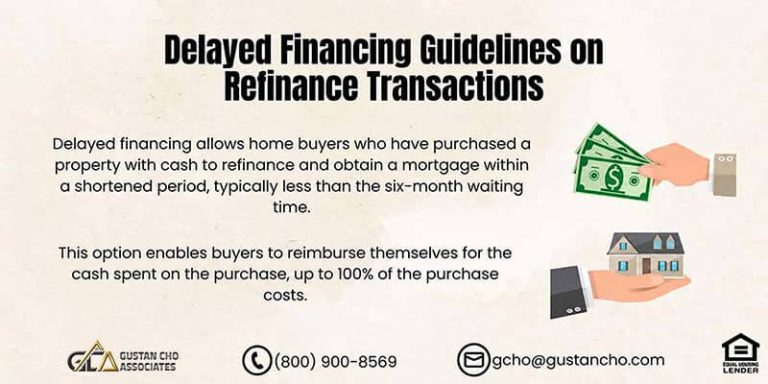
 Delayed financing is a conventional mortgage option that may allow a buyer to buy a house with cash and refinance later without waiting as long as a standard cash-out refinance. This can be helpful for buyers who use cash to make a stronger offer, close quickly, and then want to recover part of the money they used to buy the home. In simple terms, delayed financing allows an eligible buyer to obtain a mortgage on a home after paying cash for it. Instead of waiting for the normal cash-out seasoning period, the buyer may be able to refinance sooner if they meet the lender’s requirements.
Why Delayed Financing Matters
Delayed financing matters because many buyers do not want all their money tied up in the home in the long term. A cash offer may help them win the property. However, they may still want a mortgage after closing to restore liquidity, pay back funds used for the purchase, or free up cash for reserves, repairs, investments, or other financial needs. This is especially important in competitive markets where sellers may prefer cash offers over financed offers. Delayed financing can give some buyers the ability to compete like a cash buyer while still setting up mortgage financing after the purchase.
Delayed Financing Is Not Automatic
Not every cash buyer will qualify for delayed financing. Lenders usually need to verify that the cash purchase was properly documented and that the borrower qualifies for the new mortgage. The lender may review the purchase contract, settlement statement, proof of funds, bank statements, wire confirmations, title history, appraisal, occupancy type, credit, income, assets, and debt-to-income ratio. If the buyer used borrowed funds, private money, business funds, or gift funds, the lender may require additional documentation.
Source Of Funds Is Critical
The source of funds is one of the most important parts of delayed financing. The lender needs to understand where the cash came from and whether any borrowed money must be paid off with the refinance.
For example, if the buyer used funds from a personal bank account, the lender may request bank statements showing the funds were available before closing. If the buyer used a private loan, family loan, business account, or other borrowed funds, the lender may need proof of the loan terms, transfer history, and payoff requirements.
A weak or unclear paper trail can create problems. Buyers planning to use delayed financing should avoid undocumented cash deposits, unclear transfers, or informal loan arrangements that cannot be verified.
The Refinance Amount May Be Limited
Delayed financing does not always allow the buyer to borrow any amount they want. The loan amount may be limited by the purchase price, appraised value, closing costs, payoff of documented borrowed funds, loan-to-value limits, and lender guidelines. This means a higher appraisal after closing does not automatically mean the borrower can take out more cash immediately. The lender will assess the amount you are eligible to borrow according to the program criteria and the documentation from your initial cash purchase.
Delayed Financing Versus Standard Cash-Out Refinance
Delayed financing is different from a standard cash-out refinance. A standard cash-out refinance may require the borrower to own the property for a specified period before accessing equity. Delayed financing may allow eligible buyers to refinance sooner after a cash purchase, but only when the file meets specific documentation and program requirements. For buyers who want to buy a house with cash and refinance later, this difference is important. Delayed financing may be the faster option, but it must be planned before closing.
When Delayed Financing May Not Work
Delayed financing may not work if the buyer cannot document the cash used for the purchase, cannot qualify for the new mortgage, uses funds that do not meet lender rules, or buys the property in a transaction that raises underwriting concerns. It may also be a problem if the buyer needs more cash back than the loan program allows, if the property value comes in lower than expected, or if the lender has overlays that are stricter than standard conventional guidelines.
Bottom Line On Delayed Financing
Delayed financing can be a powerful tool for buyers who want to buy a house with cash and refinance later. It may help buyers compete with a cash offer while still giving them a path to recover part of their money after closing. However, delayed financing depends heavily on documentation, source of funds, loan program rules, appraised value, and lender approval. Before making a cash offer with the plan to refinance later, buyers should speak with a mortgage professional who understands the guidelines for delayed financing. A strong plan before closing can help avoid delays, surprises, or refinance denial after the home has already been purchased.
Why Sellers Prefer Cash Offers When Buyers Pay Cash
Cash offers are attractive to many home sellers because they can reduce delays, lower uncertainty, and make the closing process easier. When a buyer does not need mortgage approval, the seller does not have to worry as much about financing problems, appraisal issues, or lender conditions delaying the sale.
Cash Offers Can Close Faster
A financed buyer usually needs loan approval, underwriting, appraisal review, title review, and lender clearance before closing. A cash buyer can often close faster because there is no mortgage lender controlling the timeline. This is often appealing for sellers who have already picked up another place, need to move, or just want to wrap things up smoothly.
Cash Offers Have Fewer Financing Risks
With a mortgage offer, the deal can fall apart if the buyer is denied financing, the appraisal comes in low, or the lender asks for conditions the buyer cannot meet. A cash offer skips the financing contingency, which makes the seller feel more at ease that the deal will actually go through.
Cash Buyers May Avoid Appraisal Problems
A lender usually requires an appraisal before approving a mortgage. If the house ends up appraising for less than what you’re buying it for, you might have to work out a new deal, chip in more cash, or possibly back out of the contract. A cash buyer may still choose to get an appraisal, but the sale is not dependent on a lender’s appraisal approval.
Cash Buyers May Offer Fewer Contingencies
Some cash buyers waive or shorten certain contingencies to make the offer stronger. However, buyers should be careful. A home inspection, title review, and, where applicable, attorney review can still protect the buyer from costly problems. Paying cash does not mean buyers should skip due diligence.
Sellers May Accept A Lower Price For Certainty
Some sellers may accept a slightly lower cash offer over a higher financed offer because the cash offer feels more certain. The value to the seller is not always just the purchase price. Speed, certainty, fewer delays, and fewer moving parts can make a cash offer more appealing.
Hard Money Loans And Buying A House With Cash
One strategy to consider is to buy a house with cash and refinance later. This approach allows you to secure the property outright initially and then explore refinancing options at a later date for better financial flexibility. Hard money loans are often the go-to for things like investment properties, flip projects, rentals, or quick real estate deals. They typically come with higher interest rates and fees, shorter repayment periods, and stricter terms compared to regular mortgage loans. For investors, that’s just part of the game. But if you’re looking to buy a home for yourself, the risks can be a lot bigger.
Owner-occupied homes are subject to stricter consumer lending rules than investment properties. If the buyer plans to live in the home, the financing may need to meet additional federal, state, and lender requirements. That is why buyers should not assume that every hard money or private money loan can be used for a primary residence.
Another issue is the refinance plan. If you use hard money or borrowed funds to buy a house with cash, the new lender may ask for a clear paper trail showing the source of the funds, how they were transferred, and whether the debt must be paid off through the refinance. The lender may also review the repayment terms, lien position, title seasoning, and whether the loan was properly documented. Before using hard money to buy a house with cash and refinance later, speak with a mortgage professional first. The key question is not only whether you can close the cash purchase, but also whether you can close it. The bigger questions are whether you can qualify for a refinance afterward, how soon you can refinance, and whether the refinance will provide enough money to pay off the short-term loan.
Refinancing With FHA Loans After Buying Home Cash
HUD, the parent of FHA, requires a six month waiting period after the closing of a home loan for borrowers to qualify for a rate and term FHA loan. The waiting period extends to a 12 month waiting period for a cash-out FHA Refinance Loan
Borrowers who borrow money from outside sources need to be careful in buying home cash with borrowed money and promising the investor they will pay them back right away
If the home buyer only qualifies for an FHA Loan and need to do a cash-out refinance after buying home cash, they need to wait 12 months.
Fannie Mae And Freddie Mac Guidelines On Cash-Out Refinancing After Buying Home Cash
Fannie Mae and Freddie Mac Guidelines on Cash-Out Refinancing on conventional loans require a six month waiting period after the original home purchase. Both cash-out and rate and term refinancing guidelines on conventional loans are six months from the original home purchase date. Home buyers who intend in refinancing after buying home cash need to wait six months.
Non-QM Refinance Options After A Cash Purchase
Non-QM loans can be a good choice for buyers who want to buy a house with cash and refinance later, but do not meet the requirements of traditional conventional, FHA, VA, or USDA loans. These loans are particularly helpful for borrowers who have alternative sources of income, recent credit challenges, higher debt-to-income ratios, or own a property type that falls outside standard agency guidelines.
After a cash purchase, some Non-QM lenders may offer more flexible refinance options than traditional loan programs. However, the rules can be different depending on the lender. Seasoning requirements, loan-to-value limits, cash-out limits, credit score requirements, income documentation, and property type rules can vary.
Non-QM loans often have higher rates and costs than traditional mortgages, so they should be compared carefully. They can be a helpful backup option when a buyer wants to buy a house with cash and refinance later, but cannot qualify under standard mortgage guidelines. Before relying on a Non-QM refinance, buyers should confirm the program details before closing on the cash purchase. The lender should review the source of funds, occupancy type, appraised value, credit profile, income documentation, and the timeframe for completing the refinance.
Pay Cash for Your Home Now, Refinance Later for Lower Payments
Explore the benefits of buying your home in cash and refinancing to save in the future.
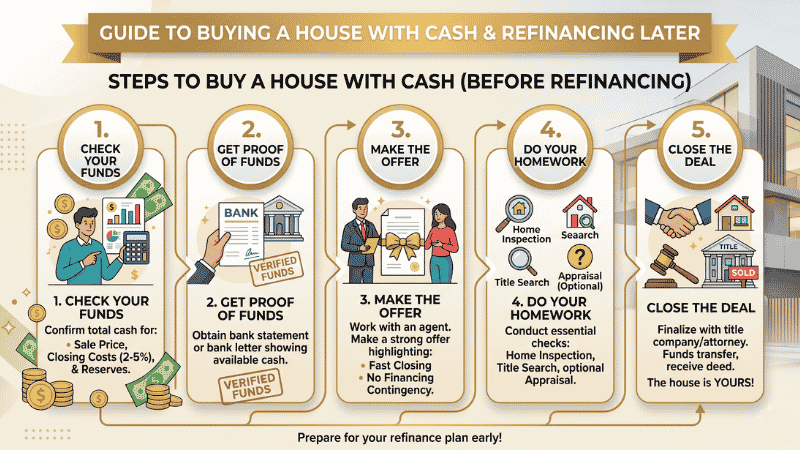
How to Buy a Home with Cash
Buying a house with cash can speed up the process and save you interest costs. Just follow these steps to make it go smoothly:
Step 1: Check Your Funds
First, confirm you have enough cash on hand. Look at:
- The sale price of the home.
- Closing costs usually run 2 to 5 percent of the sale price.
- Extra money for surprises, repairs, or any future refinancing.
Step 2: Get Proof of Funds
Sellers want to know you can pay cash, so you must show proof. You can get a recent bank statement or ask your bank for a letter stating your available cash.
Step 3: Make the Offer
Work with a real estate agent to write a strong cash offer. Explain why cash is better for the seller, like how you can close faster without waiting for loan approvals or dealing with extra inspections.
Step 4: Do Your Homework
Pay cash, but still do the smart checks:
- Home Inspection: Ensure the house is sound and doesn’t have hidden problems.
- Title Search: Check for liens or any ownership disputes.
- Appraisal (Optional): You don’t have to, but an appraisal can ensure you pay a fair price.
Step 5: Close the Deal
Get with a title company or real estate attorney to seal the deal. Once the money moves, you’ll get the deed, and BAM—the house is officially yours.
Steps to Refinance
- Shop for Lenders: Don’t settle for the first offer you see.
- Get quotes from several lenders, then see who gives you the best rates and lowest fees.
- Get an Appraisal: The lender will order an appraisal to confirm the home’s current value.
- Apply for the Loan: Gather your paperwork and send your income docs, bank statements, and credit history.
- Close the Loan: At closing, you’ll pay fees ranging from 2 to 6% of the loan amount.
- After that, you’ll get the cash you planned to take out.
Key Considerations Before You Buy a House with Cash and Refinance Later
This cash-first-to-refinance approach has pluses, but think through a couple of key points:
Opportunity Cost
Putting a big chunk of cash into your home means money can’t work for you in places like the stock market or a rental property. Run the numbers to see what you might miss out on.
Refinancing Costs
Remember that refinancing isn’t free. You’ll face closing costs, an appraisal charge, and lender fees. Add it all up to make sure it’s worth your while.
Interest Rate Risks
Refinancing might boost your monthly payments if rates climb after you buy the house in cash. Keep an eye on market trends, or consider locking in a rate sooner rather than later.
Market Fluctuations
If your home’s value falls after you buy it, you might not get the loan amount you hoped for when it’s time to refinance. Study the local market trends to help you spot this risk early.
Tax Implications
Talk to a tax advisor to learn how paying cash for the home and refinancing later could affect your tax situation, from deductions to possible capital gains.
Tips for Success
To get the most out of paying cash and refinancing later, try these strategies:
- Team Up with Experts: Work with a good real estate agent, a financial advisor, and a mortgage broker who know the local market.
- Know the Market: Keep track of local real estate trends to decide the best time to buy and when to refinance.
- Keep Your Credit Strong: A high credit score can help you snag better refinancing deals when the time comes.
- Plan for Cash Reserves: Make sure you have enough savings leftover for emergencies and refinancing fees.
- Stay Updated: Watch interest rates and the economy to time your refinance for the best outcome.
Final Thoughts On Buying A House With Cash And Refinancing Later
Buying a house with cash and refinancing later can be a smart strategy when it is planned correctly. A cash offer may help you compete in a hot housing market, avoid financing delays, and make your offer more attractive to the seller. After closing, refinancing may help you recover some of your cash, repay documented borrowed funds, or set up a long-term mortgage.
However, this strategy should not be rushed. Buying with cash does not automatically mean you can refinance immediately after closing. Loan program rules, delayed financing guidelines, title seasoning, source of funds, appraised value, occupancy type, credit, income, debt-to-income ratio, and lender overlays can all affect your approval.
Before you buy a house with cash and refinance later, speak with a mortgage professional who understands conventional delayed financing, FHA cash-out refinance rules, Non-QM refinance options, and source-of-funds documentation. The best time to build the refinance plan is before the cash purchase closes, not after. A cash purchase can help you win the home, but the refinance plan determines how smoothly you can access your money again. With the right guidance, clean documentation, and realistic expectations, buying with cash and refinancing later can be a useful way to combine the strength of a cash offer with the flexibility of mortgage financing.
FAQs About Buying A House With Cash And Refinancing Later
Can I Buy A House With Cash And Refinance Later?
Yes. You can buy a house with cash and refinance later, but the refinance must be planned carefully. Lenders will review your credit, income, assets, appraised value, occupancy type, source of funds, and loan program rules before approving the new mortgage. Buying with cash can help you win the home, but it does not guarantee that you can pull cash back out immediately after closing.
How Soon Can I Refinance After Buying A House With Cash?
The timing depends on the loan program and refinance type. Some conventional borrowers may qualify for delayed financing shortly after a cash purchase. At the same time, a standard cash-out refinance may require a seasoning period. FHA, Non-QM, and other loan programs may have different waiting periods and lender requirements. Fannie Mae’s Selling Guide includes a delayed financing exception under its cash-out refinance rules.
What Is Delayed Financing After A Cash Purchase?
Delayed financing is a conventional refinance option that may allow eligible buyers to get a mortgage after buying a home with cash. It can help buyers recover part of the money used for the cash purchase without waiting as long as a standard cash-out refinance. Delayed financing still requires proper documentation, lender approval, and proof of the source of the purchase funds.
Can I Use Borrowed Money To Buy A House With Cash And Refinance Later?
You may be able to use borrowed money, private funds, family funds, or business funds, but the paper trail matters. The refinance lender may request bank statements, wire records, loan agreements, gift documentation, or proof that the borrowed funds must be paid off through the refinance. If the source of funds is unclear, the refinance can be delayed, limited, or denied.
Is Buying A House With Cash Better Than Getting A Mortgage?
It depends on your financial situation. Buying with cash can strengthen your offer, help you close faster, and reduce financing issues during the purchase. However, it can also tie up a large amount of money in the home. A mortgage may help you preserve cash for reserves, repairs, investments, or emergencies. The best option depends on your cash reserves, refinance plan, credit profile, income, and long-term goals.
What Are The Risks When You Buy A House With Cash And Refinance Later?
The biggest risks are not qualifying for the refinance, having unclear source-of-funds documentation, facing higher interest rates, paying refinance closing costs, or receiving an appraisal that is lower than expected. Buyers can also run into seasoning rules or lender overlays. Before buying with cash, confirm whether delayed financing, conventional refinance, FHA refinance, or Non-QM refinance options are realistic for your situation.
This article about “Buy A House With Cash And Refinance Later: What To Know” was updated on April 27th, 2026.