Quick Answer: Why Rent When You Can Own a Home?
If you’re paying rent on time every month, you may be closer to homeownership than you think. Buying can turn a monthly payment into equity, stability, and long-term wealth—often with low down payment options and down payment assistance. Your best path depends on your income, debts, credit, and local housing costs.
What You’ll Learn
- The fundamental difference between renting and buying—and when each makes sense
- How mortgage payments build equity (instead of disappearing like rent)
- The actual costs of homeownership: taxes, insurance, maintenance, and repairs
- How much money do you really need upfront (including low- and no-down programs)
- How down payment assistance (DPA) works, who qualifies, and standard rules
- FHA, VA, USDA, conventional, and Non-QM options that can help renters buy
- How to compare rent vs. a full mortgage payment (PITI) the right way
- A step-by-step roadmap to go from renter to homeowner in 2026
Why Rent When You Can Own a Home: Renting vs. Buying Explained

When you pay rent, your money disappears every month. It goes directly into your landlord’s pocket. You don’t build equity or create stability, and when your lease ends, you have nothing to show for years of payments.
But when you own a home:
- Every payment builds equity.
- Your mortgage balance goes down over time.
- Home values in most markets have steadily increased since 2012—giving you a chance to grow your wealth.
- You gain stability with fixed housing costs instead of rising rent increases.
In short, why rent when you can own a home if your monthly mortgage payment is the same or even less than rent?
The True Costs of Owning a Home
Of course, homeownership comes with responsibilities. As Sonny Walton, a licensed realtor and loan officer at Gustan Cho Associates, often reminds our clients:
Homeowners face unexpected repairs like replacing HVAC systems, fixing plumbing, or updating electrical. Moving isn’t as simple as breaking a lease. Selling a home takes planning.
But here’s the key: the benefits still outweigh the negatives. Renters throw away money every month, while homeowners build wealth, even while covering repairs.
And with programs like home warranty plans, low-cost insurance, and tax credits, even the risks of homeownership can be managed.
How Much Money Do You Really Need to Buy a House?
A common myth renters believe is that you need a massive down payment to buy a home. In reality:
- FHA loans only require 3.5% down.
- VA loans can offer 0% down for eligible borrowers with a COE, subject to underwriting and property requirements.
- USDA loans may offer 0% down, but eligibility depends on the property’s location and the household’s income limits.
- Down payment assistance for renters can cover some—or even all—of your upfront costs.
If you can afford the first month’s rent, last month’s rent, and a security deposit to rent a place, you’ve already shown that you can save up the cash needed to buy.
At Gustan Cho Associates, we work with over 300 wholesale lenders and can structure deals in which lender credits or seller concessions cover your closing costs.
So if you’re asking why rent when you can own a home, the answer may be that you’re already financially ready.
Turn Rent Into a Mortgage Payment
Use DPA to unlock the door to your first home — no big savings required.
Why Rent When You Can Own a Home With Down Payment Assistance
One of the biggest obstacles for first-time buyers is saving for a down payment. Luckily, 2026 has brought even more down payment assistance (DPA) programs to help.
What Is Down Payment Assistance?
Down payment assistance can come as:
- Grants (money you don’t pay back)
- Forgivable loans (forgiven after a certain period if you live in the home)
- Low-interest second mortgages
- Tax credits that reduce what you owe to the IRS
Who Qualifies for Down Payment Assistance?
Requirements vary, but most programs look at:
- Income limits (often based on your county or city)
- Credit scores (many allow scores as low as 580)
- Property type and location (some require you to buy in certain neighborhoods)
- Homebuyer education courses (a short online class to prepare you for ownership)
With the right program, you can go from renting to owning with little or no money out of pocket.
The 2026 Housing Market: Why Rent When You Can Own a Home Now
Housing experts are clear: rent costs are rising faster than mortgage payments. According to national reports, average rent increases in 2024 were between 6% and 9% in many major cities. Meanwhile, mortgage rates in 2026 have shown signs of stabilizing and even dipping slightly.
That means the window for renters to lock in fixed housing costs through homeownership is wide open. Every month you delay, you may be paying more in rent while missing out on building equity.
Loan Options That Make Owning Easier Than Renting
At Gustan Cho Associates, we offer every loan program available—and unlike most lenders, we have no lender overlays. That means we approve loans that many banks and credit unions turn away.
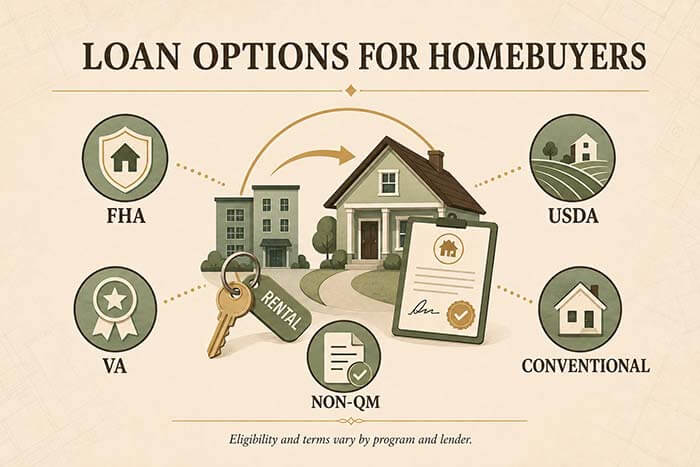
Here are options for renters ready to buy:
- FHA loans – FHA often allows 3.5% down with a 580+ credit score. In comparison, 500–579 may be possible with 10% down—subject to AUS findings, manual underwriting guidelines (when applicable), and lender requirements.
- VA loans – no money down, no mortgage insurance, for eligible veterans.
- USDA loans – no money down for homes in qualifying rural/suburban areas.
- Conventional loans – 3% down for first-time buyers with strong credit.
- Non-QM loans – perfect for self-employed borrowers, people with recent credit events, or unique income situations.
If you’ve been told “no” by another lender, our team specializes in turning that into a “yes.”
Why Rent When You Can Own a Home: Using Tax Credits and Housing Vouchers
Did you know there may be ways to reduce your monthly housing costs even more?
- Tax credits: Tax credits lower your yearly tax bill, which may free up cash flow for savings, closing costs, or ongoing homeownership expenses.
- Housing vouchers: In some areas, certain Public Housing Authorities (PHAs) offer a homeownership voucher option that may allow eligible participants to apply assistance toward mortgage costs rather than rent. Availability and rules vary by location—your local PHA determines eligibility and program details.
Our loan officers—including Alex Carlucci, Dale Elenteny, and John Strange at Gustan Cho Associates—can help you explore what assistance programs may be available in your area and how they can fit into an affordable path to homeownership.
Steps to Go From Renting to Owning in 2026
If you’re still wondering why rent when you can own a home, here’s the simple step-by-step process to get started:
- Check your credit score (don’t worry if it’s not perfect—we can help improve it).
- Get pre-approved with Gustan Cho Associates (free, no-obligation consultation).
- Explore loan options (FHA, VA, USDA, conventional, or non-QM).
- Look into down payment assistance available in your state.
- Look for homes that fit your budget.
- Close on your loan—often in as little as 30 days.
Example Scenario: From Renter to Homeowner With Down Payment Assistance
Example scenario: A renter in a major metro area was paying market rent for a two-bedroom apartment and assumed homeownership was out of reach due to limited savings. After a quick review, the borrower qualified for an FHA option and was matched with a local down payment assistance program. With seller concessions and/or lender credits where permitted, upfront costs were reduced, and the borrower moved from renting to owning within a typical purchase timeline.
“Example shown for education purposes. Program availability, costs, and timelines vary by location and borrower qualifications.”
Why Rent When You Can Own a Home: Partner With Gustan Cho Associates
The biggest mistake renters make is assuming homeownership is out of reach. At Gustan Cho Associates, 80% of our clients were denied by other lenders before we helped them close.
We work with:
- First-time buyers with low credit scores
- Borrowers who need down payment help
- Self-employed buyers using bank statements or profit-and-loss loans
- Veterans and families looking for zero-down options
You don’t have to keep paying rent and building someone else’s wealth. It’s time to ask yourself again: why rent when you can own a home?
Conclusion: Take the Next Step Toward Homeownership
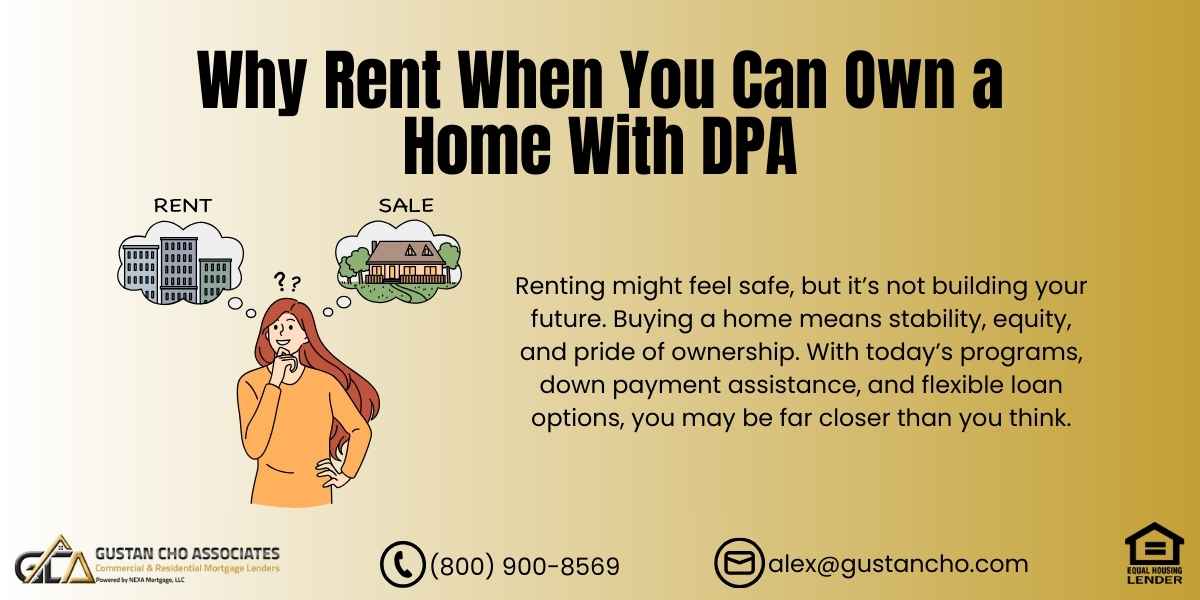
Renting might feel safe, but it’s not building your future. Buying a home means stability, equity, and pride of ownership. With today’s programs, down payment assistance, and flexible loan options, you may be far closer than you think.
At Gustan Cho Associates, we’ll guide you through every step—from pre-approval to closing—so you can stop renting and start owning. Borrowers who need a five-star national mortgage company licensed in 48 states with no overlays and who are experts on renting versus buying, please contact us at 800-900-8569, text us for a faster response, or email us at alex@gustancho.com. The team at Gustan Cho Associates is available 7 days a week, on evenings, weekends, and holidays.
Frequently Asked Questions About Why Rent When You Can Own a Home:
Is it Better to Rent or Buy a Home in 2026?
It depends on your timeline and monthly budget. Buying can build equity and stabilize housing costs, but it comes with upfront costs (down payment/closing costs) and ongoing responsibilities (repairs, taxes, insurance). If you plan to stay put for several years and your payment fits comfortably, buying may make sense; if you need flexibility, renting may be better.
Is it Cheaper to Buy Than Rent Right Now?
Sometimes—but not always. A mortgage payment can be close to rent in many markets, but the true comparison should include PITI (principal, interest, taxes, and insurance), HOA fees, and mortgage insurance (if applicable). The best way to know is to compare a payment estimate with your current rent, using local tax and insurance assumptions.
How Much Do I Need for a Down Payment to Buy a House?
Many programs require far less than people think. FHA is often 3.5% down at 580+, and conventional can be as low as 3% down for qualified first-time buyers. VA and USDA may offer 0% down for eligible borrowers. You’ll also want to plan for closing costs unless covered by seller concessions or lender credits (where permitted).
What Credit Score Do I Need to Buy a House?
It depends on the loan type and underwriting results. FHA commonly works best for lower scores: 3.5% down is often available at 580+. In comparison, 500–579 may be possible with 10% down (subject to AUS/manual underwriting and lender requirements). Conventional loans usually prefer stronger credit, but there are first-time buyer options for qualified borrowers.
What is Down Payment Assistance (DPA), and How Do I Qualify?
DPA programs help cover down payment and sometimes closing costs through grants, forgivable loans, deferred-payment second mortgages, or low-interest seconds. Eligibility often depends on income limits, location, purchase price caps, occupancy rules, and completing a homebuyer education course. Availability and regulations vary by state/county, and funding can be limited.
What are the Hidden Costs of Buying a Home?
Beyond the mortgage, homeowners should budget for property taxes, homeowners’ insurance, maintenance/repairs, utilities, and possible HOA dues. A good rule of thumb is to keep a reserve for unexpected repairs. When comparing rent vs. buy, include these costs so the decision is based on the full picture—not just the base mortgage payment.
This article about “Why Rent When You Can Own a Home With DPA” was updated on February 6th, 2026..
Keep Your Cash, Own Your Home
Stop paying your landlord’s mortgage — use DPA and invest in your own future.