When you are buying a home, shopping for insurance is just as important as shopping for your mortgage. The homeowners’ policy you choose protects your biggest investment and helps determine your final monthly payment. Your lender cannot clear your loan to close until they receive your homeowners’ insurance declaration page, so you cannot afford to treat shopping for insurance as a last-minute chore.
Done right, shopping for insurance can save you hundreds of dollars per year and tens of thousands over the time you own your home. Done wrong, you can end up overpaying for weak coverage that leaves you exposed when you need it most. This guide focuses on shopping for insurance specifically during the mortgage process, so you know exactly what to expect.
Key Takeaways: Shopping for Insurance
- Begin comparing homeowners insurance soon after your offer is accepted.
- Aim for three to five quotes so you can compare real options.
- Focus on coverage quality, deductibles, and exclusions, not just the premium.
- Confirm that the policy start date aligns with your closing date.
- Get the declaration page to your lender early to avoid delays.
- Reducing insurance costs can lower the monthly escrow portion of your payment.
Looking for Lower Insurance Premiums? We Can Help You Find the Best Deals!
Contact us today to start shopping and get personalized insurance quotes.
Online Comparison Tools
Homeowners Insurance During the Mortgage Process: What Buyers Need to Know

When you buy a home, homeowners’ insurance is not something to leave until the last minute. Your lender will usually need proof of coverage before issuing final loan approval and a clear-to-close. That means the timing of your policy can directly affect whether your closing stays on schedule.
Most buyers should start getting homeowners’ insurance quotes soon after their purchase contract is accepted. This gives you enough time to compare coverage, ask questions, choose a policy, and send the insurance declaration page to your lender before closing. Waiting too long can create unnecessary stress, limit your options, and, in some cases, delay your closing.
Homeowners insurance also affects your monthly housing payment. In most cases, your annual premium is included in your escrow account and paid as part of your monthly mortgage payment along with principal, interest, and property taxes. A more competitive premium can help lower your monthly payment, but price should never come at the expense of proper coverage.
The goal is not just to find the cheapest policy. It is to choose coverage that meets lender requirements, properly protects the home, and fits your budget. In this guide, you will learn when to shop, what your lender needs from the insurance company, when to send the declaration page, and how to avoid insurance-related closing delays.
Why Homeowners Insurance Matters When You Are Buying a Home
Homeowners insurance protects both you and the lender. It helps cover the home’s structure after covered damage, may protect your personal belongings, and can provide liability coverage if someone is injured on the property. Lenders want to make sure you have homeowners’ insurance in place before closing on the mortgage, since your home is used as collateral.
This is why insurance is part of the mortgage process, not a separate task to handle later. Your lender may need the declaration page, the premium amount, the effective date, and confirmation that the mortgage company is listed correctly on the policy. If any of that is missing or delayed, your loan file may not be cleared to close on time.
For homebuyers, the practical takeaway is simple: shop early, compare more than just price, and make sure your insurance paperwork gets to the lender well before closing day.
When to Start Shopping for Insurance During the Mortgage Process
Many buyers wait until the last week before closing to look at homeowners’ insurance. That often leads to stress, last-minute scrambling, and higher premiums. A better approach is to start shopping for insurance as soon as your purchase contract is accepted and you have basic information about the property.
Starting early allows you to:
- Get several quotes instead of settling for the first one.
- Ask questions about coverage, deductibles, and exclusions.
- Coordinate the policy effective date with your closing date.
- Give your loan officer the declaration page well before the clear-to-close.
Think of shopping for insurance the same way you think of rate-shopping your mortgage: it is a key financial decision, not a box to check.
Step-by-Step Guide to Homeowners Shopping for Insurance
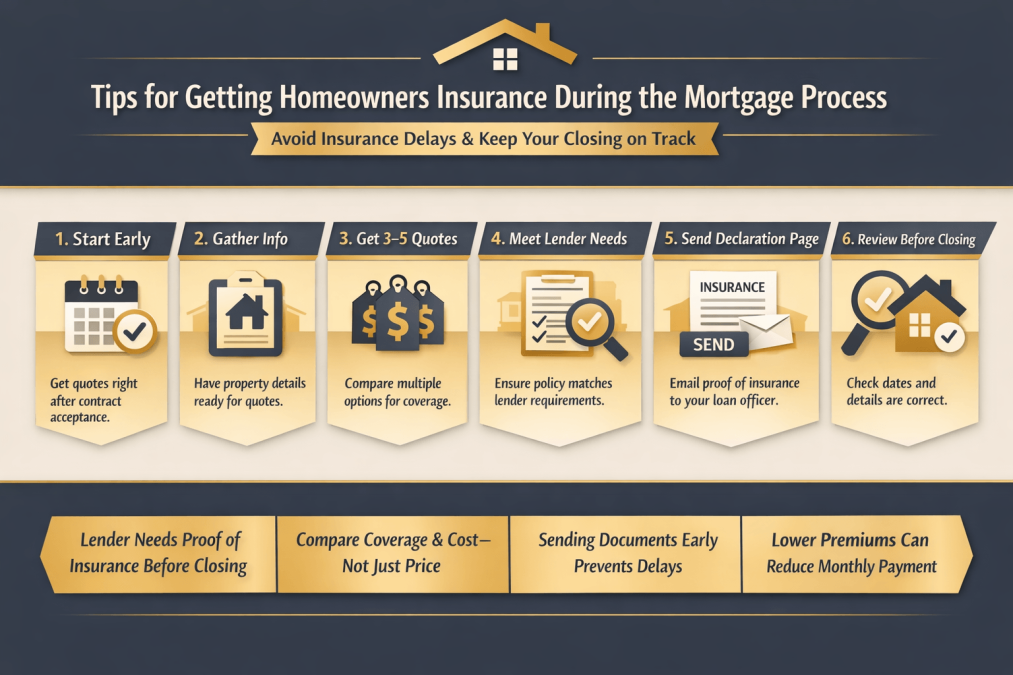
The steps below guide you through the process of shopping for insurance for your new home, from start to finish.
1. Start Preparing for Quotes After Your Purchase Contract Is Accepted
Once your offer is accepted, start preparing to get homeowners’ insurance quotes right away. This is the best time to shop because you already know the property address, purchase details, and expected closing timeline. Starting early gives you time to compare options without putting pressure on you in the final days before closing.
Before requesting quotes, gather the basic property details insurers usually ask for. This may include the home’s address, year built, square footage, construction type, roof age, and any recent updates to the electrical, plumbing, heating, or HVAC systems. You may also need to know whether the home has safety features such as smoke detectors, deadbolts, or a monitored alarm system. Having accurate information helps you get more reliable quotes and reduces the chance of last-minute revisions.
2. Understand What Your Lender and Underwriter May Need
Homeowners insurance is part of the mortgage process because the lender needs proof that the property will be insured at closing. In most cases, your lender or underwriter will want the insurance declaration page before issuing final approval or clear-to-close.
The lender will check the policy’s start date, yearly premium, coverage amount, deductible, and mortgage clause to make sure they match the loan file. If the home is a condo, the lender may also need details about the HOA master policy. If the property is in a flood zone, you might need to get flood insurance.
Figuring out these requirements early on can save you from delays down the line. Instead of seeing insurance as its own thing, think of it as one of the last pieces you need to wrap up before closing your loan.
3. Get Multiple Quotes Without Waiting Until the Last Week
A good target is three to five quotes. The goal is not just to find the cheapest premium but to find a policy that meets lender requirements, fits your budget, and provides solid protection for the home.
You can get insurance quotes straight from companies, use online comparison sites, or team up with an independent agent who can check out different insurers for you. When you’re going through the mortgage process, it’s all about speed and getting things right. A seasoned agent who understands closing timelines can help you compare your options quickly and ensure all the paperwork reaches the lender on time.
Starting this step early is important. If you wait until the final week before closing, you may have fewer options, less time to ask questions, and more risk of delays if the lender needs corrections.
4. Compare Policies Based on Coverage, Deductibles, and Closing Readiness
When you’re checking out insurance quotes, don’t just go for the lowest price. Make sure you’re looking at the same coverage limits, deductibles, and terms so you can really compare your options. A cheaper premium might not be a good deal if the policy offers less protection or has significant exclusions.
Also, if you’re getting a mortgage, it’s important to ensure the policy can be wrapped up quickly and meets the lender’s requirements. Make sure the insurer can provide the declaration page without delay, lists the lender correctly as the mortgagee, and sets the effective date to line up with your closing date.
This is where many buyers trip up. They zero in on the price, only to run into problems when the paperwork isn’t complete, the coverage doesn’t meet the requirements, or the policy isn’t finalized in time.
5. Choose a Policy That Protects the Home and Fits Your Monthly Payment
Once you compare quotes, choose the policy that offers the best balance of coverage and cost. Since homeowners’ insurance is usually paid through escrow, the annual premium affects your total monthly housing payment along with principal, interest, and property taxes.
A lower premium can help reduce the monthly payment, but only if the policy still provides appropriate protection. This is especially important for first-time buyers trying to stay within a comfortable budget. Saving money is helpful, but underinsuring the property can become much more expensive later if there is a claim.
The best choice is usually the policy that meets lender requirements, adequately protects the property, and keeps your monthly payment manageable.
6. Send the Declaration Page to Your Lender Well Before Closing
After you choose a policy, ask your insurance agent to send the declaration page directly to your loan officer or lender as soon as possible. This is one of the most important final steps in the mortgage process.
The declaration page should usually show the insured property address, policy effective date, coverage amounts, annual premium, deductible, and lender mortgagee information. Your lender uses this document to verify that the home will be insured as required at closing.
Do not wait until the day before closing to handle this. Sending the declaration page early gives your lender time to review it, update the escrow figures, and clear any insurance-related conditions before your closing date.
7. Double-Check Insurance Details Before Clear-to-Close
Before your loan receives final clearance, confirm that the policy effective date matches the closing date, the premium matches the lender’s escrow amount, and the lender is listed correctly on the policy. If flood insurance or condo coverage is required, make sure those items have also been satisfied.
This final review can prevent last-minute surprises. Even small errors, such as the wrong effective date or an incorrect mortgagee clause, can create avoidable closing issues. A quick check with your insurance agent and loan officer can help keep everything on track.
Take First Step Toward Making Your Dream A Reality
Contact us today to compare rates and find the best insurance premium for your needs.
How Homeowners Insurance Affects Your Monthly Mortgage Payment
Homeowners insurance usually does not change your principal and interest payment, but it often affects your total monthly housing payment because the premium is commonly collected through your escrow account. In many mortgage loans, the lender divides the estimated annual homeowners’ insurance premium into monthly payments and collects it along with principal, interest, and property taxes.
If your yearly homeowners insurance is $2,400, your lender might ask you to pay about $200 a month to cover it in your escrow. But if you find a similar policy for just $1,200 a year, that monthly amount could drop to around $100. That helps bring down your overall monthly payment.
This is why comparing homeowners’ insurance quotes can matter during the mortgage process. Even when the loan amount and interest rate stay the same, a lower insurance premium can reduce the overall monthly housing expense. At the same time, the cheapest policy is not always the best choice. Buyers still need to ensure the coverage is strong enough to protect the home and meet lender requirements.
For many homebuyers, homeowners’ insurance is one of the few remaining costs they can still influence after going under contract. Smart comparison shopping can help you control your monthly payment without cutting corners on protection.
Independent Agent vs Captive Agent for Homeowners Insurance
When shopping for homeowners’ insurance during the mortgage process, you will usually work with either an independent agent or a captive agent. Understanding the differences helps you choose the option that best suits your home, schedule, and budget.
An independent agent partners with a bunch of different insurance companies and can usually snag several quotes from various places. This option often makes sense if you want to compare prices and coverage in one place, if the home is older or harder to insure, or if the property has features that may limit your options with some insurers. Independent agents can also be helpful when closing is approaching, and you want someone to shop multiple carriers quickly.
A captive agent represents just one insurance company. This may be a good fit if you already have auto or other coverage with that carrier and may qualify for a strong bundling discount. A captive agent can also make sense if you already know you prefer a specific insurer and are satisfied with its pricing, service, and claims reputation.
Neither option is always better in every situation. If your priority is comparing multiple quotes and finding flexibility, an independent agent is often the stronger choice. If your priority is keeping everything with one carrier and maximizing bundle savings, a captive agent may be the better fit.
For homebuyers, the main goal is not just choosing an agent type. It is choosing someone who understands mortgage closing timelines, can issue the declaration page quickly, and can help make sure the policy meets lender requirements before closing.
Common Mistakes Homebuyers Make While Shopping for Insurance
To get the most benefit from shopping for insurance during the mortgage process, avoid these common errors:
- Waiting until the week of closing to start calling agents
- Choosing the cheapest quote without comparing coverage
- Underinsuring the home just to lower the premium
- Forgetting to ask about discounts and bundling options
- Failing to send the declaration page to the loan officer quickly
- Assuming all homeowners’ policies are basically the same
A little extra effort while shopping for insurance can help prevent closing delays, surprise premium increases, and unpleasant claim experiences later.
Keep Insurance From Becoming a Closing Problem
If you are buying a home and want to avoid insurance-related delays, start early and stay organized. Compare quotes soon after your purchase contract is accepted, review coverage carefully, and make sure your lender receives the insurance declaration page well before closing. Preparation can help you control costs, protect the home properly, and keep your mortgage process on track.
If you need help understanding how homeowners’ insurance affects your monthly payment, escrow, or closing timeline, speak with your loan officer and a qualified insurance professional as early as possible.
Need Help Keeping Your Mortgage Process on Track?
Gustan Cho Associates helps homebuyers understand the mortgage process from application to closing. If you have questions about how homeowners’ insurance fits into your loan approval, escrow payment, or final closing steps, contact our team to learn more.
Frequently Asked Questions About Insurance for Homeowners:
When do I Need Homeowners’ Insurance When Buying a House?
You usually need homeowners’ insurance in place by closing, and the policy’s effective date typically needs to match the day you take ownership of the home. In practice, buyers should start shopping for insurance and comparing quotes shortly after the purchase contract is accepted so there is enough time to choose coverage and send proof to the lender before closing.
Can Homeowners’ Insurance Delay Closing on a Mortgage?
Yes. If your lender does not receive proof of insurance on time, or if the policy details are incomplete or incorrect, your closing can be delayed. Insurance-related issues that commonly slow closings include late paperwork, property risks that complicate underwriting, or missing information on the declarations page.
What Does My Lender Need from the Insurance Company Before Closing?
Most lenders require proof that the home will be insured at closing, typically through a homeowner’s insurance declarations page or a similar policy document. The declarations page summarizes the policy and typically includes the insured property, coverage details, premium, deductible, and other key policy information.
What is a Homeowner’s Insurance Declarations Page?
A homeowner’s insurance declarations page is the summary page of your policy. It outlines the most important details of your coverage, including who is insured, the property address, coverage amounts, deductible, premium, and policy dates. Insurance companies usually provide it when you buy the policy, and it is commonly used as proof of insurance for a mortgage lender.
How Much Homeowners’ Insurance Does a Mortgage Lender Require?
Lenders generally require enough coverage to protect their financial interest in the home, and some sources describe this as at least enough dwelling coverage to cover the unpaid loan balance. From a homeowner’s perspective, full replacement-cost coverage is often the safer target because rebuilding cost and loan amount are not always the same.
Does Homeowners’ Insurance Affect My Monthly Mortgage Payment?
Usually, yes. For many loans, the annual homeowners insurance premium is included in escrow and collected in monthly installments along with principal, interest, and property taxes. That means a higher or lower premium can change your total monthly housing payment even if your loan amount and interest rate stay the same.
This article about “Shopping For Insurance With Best Premium and Terms” was updated on March 10th, 2026.
Looking for the Best Insurance Premium? Let Us Help You Find the Best Deal!
Contact us today to compare rates and find the best insurance premium for your needs.