This guide covers renovations after purchase by homeowners. You have purchased your home, and you are done moving in. All the boxes have been unpacked, and you are settling in nicely; what is there to do now? Slowly but surely, it is time to spend more money. It isn’t on repairs. Instead, it is on that basement finishing, patio, deck, or fence. Now, I am not saying you need to find a magical bag with $30,000 in it. But if you plan it out properly, you can get some functional spaces without breaking the bank. I want to walk you through and show you my thoughts and rationale behind this.
Renovation Mortgage Loans: Integrating Purchase, Refinance, and Repair into a Single Loan
With renovation mortgage loans, homebuyers and homeowners can roll the purchase and repairs of a property into one convenient mortgage. This streamlines expenses and eliminates the hassle of juggling separate repair loans after closing.
This kind of loan helps buyers interested in homes that need care and lets current homeowners refinance and handle repairs or upgrades without using expensive personal loans.
How Renovation Mortgage Loans Work
Renovation mortgage loans are a popular choice for homes that need updates, such as new roofs, new floors, kitchen or bathroom improvements, plumbing repairs, electrical work, or a general freshening. Some programs even factor renovation costs into the home’s value after the work is done.
The most common renovation mortgage loans include FHA 203(k) loans, Fannie Mae HomeStyle Renovation loans, Freddie Mac CHOICERenovation loans, and certain VA renovation loan options for eligible veterans and active-duty service members.
HUD states that FHA 203(k) loans can insure mortgages that cover the purchase or refinance and rehabilitation of a home, with repair funds placed into escrow and released as work is completed. Gustan Cho Associates provides guidance on mortgage options, especially for borrowers who were previously denied by other lenders due to overlays, credit issues, higher debt-to-income ratios, or properties requiring repairs.
What Are Renovation Mortgage Loans?
Renovation mortgage loans fund both the purchase and the repairs needed for a home. There is no need to secure a standard mortgage before applying for a separate home improvement loan, as all funds are included in one mortgage. A renovation mortgage loan can be used to purchase or refinance a home. The loan structure depends on the borrower’s credit, property type, and occupancy, loan program, renovation scope, and the appraised post-renovation value.
Why Renovation Loans Are Different From Regular Mortgage Loans
A renovation mortgage is different from a regular home loan in important ways. Regular mortgages consider the home’s current condition and value, and major repairs can lead to denial if the home doesn’t meet basic standards. Renovation mortgages take into account contractor estimates and the home’s value after the repairs. Part of the loan pays for buying or refinancing the home, and the rest is kept in a special account and paid out as the work gets done.
Renovation Mortgage Loans For Homeowners Who Want To Refinance And Remodel
This enables buyers to purchase homes that would not qualify for standard financing due to needed renovations. Why Renovation Loans Are Different From Standard Mortgage Loans. Renovation mortgage loans are made for homes that need repairs or updates. These loans include detailed plans of the work, agreements, inspections, and schedules for releasing funds. The home may also need an appraisal based on how it will look after the repairs are finished. repairs. Because renovation loans involve both mortgage and construction reviews, it is important to work with a lender experienced in renovation financing.
Who Should Consider A Renovation Mortgage Loan
Renovation mortgage loans are a smart pick for buyers drawn to fixer-uppers, homeowners eager to refinance and remodel, or investors looking to fund renovations. In pricey markets, these loans can give you an edge—letting you snag a bargain property and transform it into your dream home over time.
Many buyers avoid fixer-uppers because they lack the money for repairs after buying. Renovation mortgage loans solve this by letting you finance both the home and the repairs in a single loan.
You can buy homes that others skip because they need work. Everything is combined into one mortgage, so you have one closing, one main payment, and a simpler loan process. That needs a new roof, updated floors, and a kitchen overhaul—normally, it might not qualify for a standard mortgage. But with a renovation mortgage loan, you can roll these repairs into your financing, as long as everyone meets the program’s requirements.
Using The Future Improved Value Of The Home
Many renovation mortgage loans are based on the home’s after-improved value—the estimated worth once your renovations are finished.
Renovation mortgage loans help buyers and homeowners finance repairs, upgrades, and home improvements with one mortgage.
This future value is important because it helps lenders decide if your loan amount is reasonable. They want to make sure your home will be worth enough after repairs to support the loan.
Why A Fixer-Upper Can Be Hard To Finance With A Regular Mortgage
Getting a regular mortgage for a fixer-upper can be tough if the home falls short of basic standards. Problems like a leaky roof, missing floors, peeling paint, broken windows, faulty plumbing or heating, unsafe wiring, or unfinished repairs can all stand in the way of approval.
A renovation mortgage loan solves these problems by including repair and renovation costs in your mortgage, making it easier to get approved.
This option shines when a home needs repairs, a homeowner wants to modernize, or a borrower would rather avoid taking out a separate second mortgage.
Refinance Your Current Mortgage And Add Repair Costs
A renovation refinance lets homeowners pay off their current mortgage and add eligible renovation costs into a new loan. It’s a helpful option for those who need major upgrades but don’t have enough cash or home equity for a traditional home equity loan.
The funds for the renovation are typically placed in escrow and released as work is completed. With a cash-out refinance, you get cash at closing based on your home’s value.
A renovation refinance, however, sets aside money specifically for your renovation work. If you have enough home value and don’t need the lender to manage repair funds, a cash-out refinance might be simpler. But if you need repairs or the higher home value helps you borrow more, a renovation mortgage loan could be better.
When A Home Equity Loan May Be A Better Option
A home equity loan or HELOC can work well for homeowners with strong home equity, good credit, and flexible spending needs. But remember, these are usually second mortgages with their own interest rates, terms, and payment rules. Renovation mortgage loans are often the better pick if you want all your renovation costs bundled into your main mortgage.
Homeowners Doing Renovation Mortgage Loans
The first thing you need to do is put together your list of priorities on what you’d like to accomplish and in what order you’d prefer them. Since my home was new construction, I knew I needed to have a fence pretty high up on that list. We have a dog, and the thought of walking him daily instead of letting him out the back door seemed like a major hassle for us. Another item that was pretty high on our list was a decent-sized patio in our backyard. It would be nice to have a space to put our patio furniture instead of having it sit in the grass. The final two items on the list would be finishing the basement and putting in a wet bar and bathroom. This project might cost a pretty penny, so I am not sure how high on the list it would be.
Priorities On Renovation Mortgage Loans
After laying all the projects out on the table, it was time to determine in what order we wanted to get these items done. I think this was a fairly easy list to put together. We wanted to get our fence done, potentially a patio—finally, the basement work if and when the money was right.
Now that we have a list, it was time to price out all these projects to see what we could afford and what would take some time. The first item we went to tackle was the fence.
We had a couple of companies come out, and the prices that we were getting quoted were $4,000 or higher. This alone would be about the entire budget we had allocated to spending on projects this year. Something would have to give, and it finally did. Our neighbor approached us about getting a fence together. She has a friend who owns his own fencing company. This would be perfect!
Getting Quotes and Permits For The Job
He came out and came up with a quote of $2,300! Plus, the cost of getting plans and permits. The contractor can start right away. However, the key to when he and his team can start depends on how fast the city can issue the permit. There is much thought here. I was sold. Let’s make this happen! I learned that we can get a permit within a matter of days. We got our fence put up in July, which was one headache solved.
Budget and Costs of Renovation Mortgage Loans
As the summer last year was winding down, we had determined not to go forward with the patio. We decided to push that off to the spring of 2019. Now, we are in the predicament of whether we want to go with look or functionality.
A simple concrete patio can cost about $2,500, whereas brick pavers will cost at least $5,000. I am a big fan of the paver patios. But I think I can save a big chunk of money if we go through with the concrete in this situation.
This decision isn’t 100%, but it sure is close. The final item on my list is the basement finishing. Quite frankly, I can see doing this project in steps to accomplish what we need to get done. There are 3 main components we need to do: framing and electrical, drywall installation, and floor installation. Our tentative budget to get this done is $8,000 or less, if possible. After this is finally done, the $5,000 bathroom could possibly be entertained, but that is a LONG way away.
Home Equity: How Much Cash Can You Borrow Against Your Home?
Your cash-out amount depends on your home value, current mortgage balance, loan type, credit, and income. Get a quick estimate of your available equity and the best way to access itFHA 203(k) Renovation Mortgage Loans
FHA 203(k) renovation mortgage loans are a favorite for buyers who need flexible credit rules and low down payments. They make it possible to buy and fix up a home, or help current owners refinance and tackle repairs. HUD’s FHA 203(k) program allows eligible borrowers to finance repairs, improvements, or upgrades into an FHA-insured mortgage. HUD also states that the Limited 203(k) permits up to $75,000 in eligible repairs, improvements, or upgrades.
FHA Limited 203(k) Loans For Smaller Repairs
The FHA Limited 203(k) loan is great for smaller, non-structural repairs—like new floors, appliances, fresh paint, minor remodels, heating and cooling repairs, gutters, windows, doors, and other allowed upgrades. This loan shines when your home needs a facelift but not major structural work.
FHA Standard 203(k) Loans For Bigger Projects
The FHA Standard 203(k) loan is designed for bigger projects—structural repairs, major rehabs, room additions, foundation fixes, or full-scale remodels. Standard 203(k) loans are more complex and often require a HUD-approved 203(k) consultant to review your renovation plans and help guide you through the process.
FHA 203(k) Loans For Borrowers With Lower Credit Scores
FHA loans are usually easier to get than conventional loans if your credit score is low or you have past credit problems. But watch out for lender overlays—extra rules that go beyond FHA’s basic requirements. Gustan Cho Associates helps borrowers who don’t meet these stricter lender rules.
Conventional Renovation Mortgage Loans
Conventional renovation mortgage loans are a solid choice for borrowers with strong credit, higher incomes, and homes that fit conventional lending standards. The two main conventional renovation programs are Fannie Mae HomeStyle Renovation and Freddie Mac CHOICERenovation.
Fannie Mae HomeStyle Renovation Loans
Fannie Mae HomeStyle Renovation loans allow borrowers to purchase or refinance a property and include funds for repairs, remodeling, renovations, or energy improvements in the mortgage. Fannie Mae describes HomeStyle Renovation as a mortgage that can include renovation funds in the loan amount for purchase or refinance transactions. HomeStyle Renovation covers a wide range of upgrades and, if you qualify, can be used for your main home, a second home, or even an investment property.
Freddie Mac CHOICERenovation Loans
Freddie Mac CHOICERenovation loans let borrowers use the loan money to pay for renovations. Freddie Mac says CHOICERenovation is a conventional loan option for borrowers who want affordable renovation financing. Freddie Mac CHOICERenovation loans covers repairs, improvements, and select upgrades. Freddie Mac points out that CHOICERenovation lets you roll renovation costs right into your mortgage.
Conventional Renovation Loans For Primary Homes, Second Homes, And Investment Properties
Some conventional renovation loans are more flexible about property types and who lives there than FHA loans, which mostly focus on homes where the owner lives. Depending on the program and lender, you may have more choices. This flexibility benefits buyers, homeowners, and investors who need renovation loans but do not want or do not qualify for FHA financing.
VA Renovation Mortgage Loans For Eligible Veterans
VA renovation mortgage loans can help eligible veterans, active-duty service members, and qualified surviving spouses buy or refinance a home and roll the cost of needed repairs into the loan. Not all lenders offer VA renovation loans because many don’t have the systems or investor support to complete these loans. Veterans should work with lenders who know VA rules and renovation loan needs.
How VA Renovation Loans Can Help Veterans Buy Or Repair A Home
VA renovation loans can allow eligible borrowers to include certain repairs or improvements in the VA mortgage. VA guidance for alteration and repair loans addresses eligible repairs, acquisition cost, as-completed value, and contingency reserves in certain cases. This option is especially helpful if a veteran finds a home that needs repairs before it can meet VA property standards.
Common VA Renovation Loan Challenges
VA renovation loans are harder to find than standard VA loans. Some lenders stick to standard VA purchase and refinance loans, while others add overlays that make approval more difficult. Common challenges include finding an approved contractor, obtaining full bids, meeting VA appraisal requirements, and ensuring repairs qualify.
Why Lender Experience Matters On VA Renovation Loans
VA renovation loans need lenders who really understand the rules. Loan officers must know both VA mortgage guidelines and renovation rules. Otherwise, you might get pre-approved for a home or repairs that don’t qualify. Gustan Cho Associates helps veterans compare available VA options and determine whether a renovation loan, standard VA loan, FHA 203(k), conventional renovation loan, or another financing option makes the most sense.
What Repairs Can Be Financed With Renovation Mortgage Loans?
The repairs you can pay for depend on your loan type. Some loans cover simple upgrades, while others allow major structural repairs. The lender reviews the scope of work to confirm improvement eligibility.
Safety, Structural, And Habitability Repairs
Renovation mortgage loans often cover repairs that affect safety, structure, or livability—such as roofs, plumbing, electrical systems, HVAC, mold, foundations, damaged floors, broken windows, or code violations. These fixes are urgent, since a regular lender may not approve the home until they’re addressed.
Kitchen, Bathroom, Flooring, Roofing, And HVAC Improvements
Many borrowers use renovation mortgage loans to finance upgrades such as new kitchens, bathrooms, floors, roofs, heating and cooling systems, appliances, siding, windows, or energy-saving improvements. These projects can boost your home’s comfort, functionality, value, and appeal to future buyers. sus Required Repairs Some renovation loans allow non-essential upgrades, but luxury features—such as swimming pools, outdoor kitchens, or high-end entertainment systems—may be off-limits under some programs. Always check with your lender before planning big-ticket improvements.
Lending Requirements on Renovation Mortgage Loans
These loans have rules for the borrower, property, and project. Lenders check credit, income, assets, debt-to-income ratio, property condition, appraisal, contractor bids, and the renovation plan.
Credit Score And Debt-To-Income Ratio Requirements
Credit score and debt-to-income ratio requirements vary by loan program. FHA renovation loans may be more flexible for lower credit scores, while conventional loans often require stronger credit and automated underwriting approval. Debt-to-income ratio matters because you’ll need to qualify for the total mortgage payment, renovation costs included.
Contractor Bids, Appraisals, And Repair Escrow
Most renovation mortgage loans require you to get bids from licensed or qualified contractors. Lenders want a detailed breakdown of repairs and costs before moving forward. The appraisal often looks at your home’s value after improvements. Once you close, renovation funds are usually placed in escrow and released in stages as work is completed and inspected.
Why The Property Must Meet Loan Program Guidelines
Even with a renovation loan, your property still has to meet the program’s rules. The lender needs to be sure your planned repairs will bring the home up to standard. Repair scope, contractor qualifications, and appraised value are all important factors. Renovation Mortgage Loans With Bad Credit Or Prior Credit. Even if you have credit challenges, you might still qualify for a renovation mortgage loan, depending on the program and lender. It’s crucial to work with someone who understands the guidelines and avoids unnecessary overlays.
Renovation Loans After Bankruptcy
If you’ve had a bankruptcy, foreclosure, deed-in-lieu, or short sale in your past, you may still have options once you’ve met the waiting period for your chosen loan program. loan program.
FHA, VA, conventional, and non-QM loans all have their own rules. The right fit depends on your timeline, credit recovery, income, assets, and what you want from your property.
Late payments can make approval for a renovation mortgage more difficult. Some lenders may deny applications due to overlays, even if the borrower qualifies under agency guidelines. Borrowers with recent credit issues should consult a loan officer before making an offer on a fixer-upper.
How Lender Overlays Can Affect Approval
Lender overlays are extra rules set by individual lenders. For instance, FHA might accept a certain credit score, but a lender might require a higher one. VA may not set a strict minimum, but many lenders add their own requirements. Sociates specializes in assisting borrowers who have been denied by other lenders due to overlays.
Renovation Mortgage Loan Process From Pre-Approval To Final Inspection
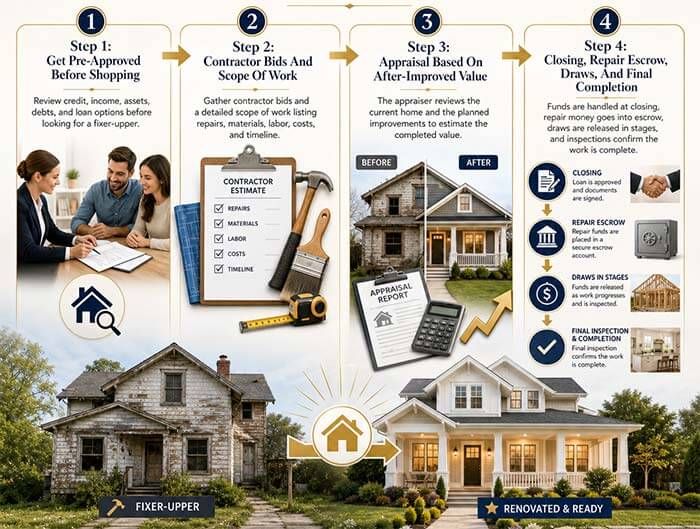 Renovation mortgage loans take more planning than a standard mortgage. Get pre-approved early and make sure you understand the process before you start house hunting.
Step One: Get Pre-Approved Before Shopping For A Fixer-Upper
Before you start looking at homes that need repairs, get pre-approved with a lender who actually offers renovation mortgage loans—not all of them do. Would include a review of credit, income, assets, debts, and loan program options. The lender should also explain which repairs are permitted.
Step Two: Get Contractor Bids And Scope Of Work
After you pick a property, you’ll need contractor bids and a detailed scope of work that lists repairs, materials, labor, costs, and the completion date. The lender requires this information before proceeding with the loan.
Three: Appraisal Based On After-Improved Value
The appraiser reviews the current property. The appraiser assesses the home’s current condition and your planned improvements, and the appraisal may reflect what your home will be worth after the work is done. An amount is supported by the property’s completed value.
Step Four: Closing, Repair Escrow, Draws, And Final Completion
At closing, loan funds are distributed in accordance with the program’s rules. The seller gets paid if you’re buying, or your old mortgage is paid off if you’re refinancing. Renovation funds go into escrow. As the renovation moves forward, funds are released in stages. The lender may require inspections before each draw, and a final inspection makes sure everything’s finished.
Renovation Mortgage Loans Versus Construction Loans
Renovation and construction mortgage loans aren’t the same, so it’s important to know the differences before choosing your loan. Renovation loans are usually for existing homes that need some fixing up or improvements improvements. They’re especially common for older, distressed, or outdated homes, or properties that don’t meet standard loan requirements.
Construction Loans Are Usually For New Builds
Construction loans are for building new homes from the ground up. They usually involve buying land, signing builder contracts, managing construction draws, and navigating a separate approval process. Construction loans tend to be more complicated and often require a bigger down payment.
Which Loan Type Is Better For Your Project?
If you’re fixing up an existing home, a renovation mortgage loan is probably your best bet. If you’re building from the ground up, you’ll likely need a construction loan. A mortgage loan officer can look at your property, project, and financial profile to help you choose the best loan for your needs.
Common Mistakes To Avoid With Renovation Mortgage Loans
Renovation mortgage loans are powerful tools, but they take careful planning. Watch out for common mistakes that can slow down or derail your loan.
Choosing The Wrong Loan Program
No single renovation loan fits everyone. FHA 203(k) might be right for you, while HomeStyle Renovation could suit someone else. Veterans should check out VA options, and investors may need conventional or non-QM financing. Pick the wrong program, and you could face delays, extra costs, or even a denied loan.
Underestimating Repair Costs
Renovation costs can add up fast. Make sure to get solid contractor bids and determine whether you’ll need a contingency reserve. A low bid may look attractive at first, but it can create problems if the contractor cannot complete the work within the approved budget.
Hiring Contractors Who Do Not Understand Renovation Loan Rules
Contractors must be willing to work with lender-controlled draw schedules, inspections, paperwork, and timelines. Not every contractor wants to participate in a renovation mortgage loan process. Borrowers should choose contractors who understand renovation financing or are willing to follow lender requirements.
Keeping Up With The Jones With Renovations Mortgage Loans
No one has ever said you must keep up with your family or neighbors to complete your home and yard in a way you can afford. Also, it isn’t worth going into debt to complete these items, especially if you won’t see much return on investment down the road. Doing this in baby steps is a great way to proceed because you will have everything you want before you know it! Make smart decisions and do your research!
Cash-Out Refinance, HELOC, or Home Equity Loan—Which Is Best?
We’ll compare options based on your goals: lower payment, lump-sum cash, flexible credit line, or debt consolidation—so you choose the smartest equity strategyWaiting Too Long To Get Pre-Approved
A borrower should not wait until after finding a fixer-upper to learn whether renovation financing is available. Renovation mortgage loans require extra documentation, so early pre-approval is important. Getting pre-approved first can help the borrower shop with more confidence.
Why Choose Gustan Cho Associates For Renovation Mortgage Loans?
Renovation mortgage loans can be more complicated than standard mortgage loans. Borrowers need a lender that understands property condition issues, repair escrows, appraisals, contractor documentation, and agency guidelines. Gustan Cho Associates helps borrowers compare renovation mortgage loan options and understand which program may fit their credit, income, property, and repair needs.
No Lender Overlays On Government And Conventional Loans
Many borrowers are denied because of lender overlays, not because they fail agency guidelines. Gustan Cho Associates is known for helping borrowers who meet FHA, VA, USDA, or conventional guidelines but were turned down by another lender with stricter rules. This can be especially important with renovation mortgage loans because the property and repair plan already add complexity.
Options For Borrowers Turned Down By Other Lenders
Many Gustan Cho Associates borrowers come to us after being denied elsewhere. Some have lower credit scores, higher debt-to-income ratios, recent credit events, prior bankruptcy, prior foreclosure, or unique income situations. A denial from one lender does not always mean the borrower cannot qualify. It may mean the borrower needs a different lender, different loan program, or different underwriting approach.
Help Comparing FHA, VA, Conventional, And Non-QM Options
The best renovation mortgage loan depends on the borrower’s full situation. FHA 203(k) may be better for borrowers needing flexible credit guidelines. Conventional renovation loans may be better for borrowers with stronger credit or investment property needs. VA options may help eligible veterans. Non-QM may help borrowers who do not fit traditional agency loan rules. Gustan Cho Associates can help review the full picture and explain the most practical path forward.
Bottom Line On Renovation Mortgage Loans
Renovation mortgage loans can help buyers purchase fixer-upper homes and help homeowners refinance while financing repairs or improvements. Instead of needing cash after closing, borrowers may be able to include eligible renovation costs in one mortgage.
The most common options include FHA 203(k), Fannie Mae HomeStyle Renovation, Freddie Mac CHOICERenovation, and VA renovation loan options. Each program has different rules, benefits, and challenges.
The key is choosing the right loan program before making an offer or starting a refinance. Renovation mortgage loans require more documentation than regular mortgages, but they can be an excellent solution when the home needs repairs and the borrower wants one mortgage payment. For borrowers who were told they do not qualify because of credit, debt-to-income ratio, lender overlays, or property condition, Gustan Cho Associates can help review available options.
FAQs About Renovation Mortgage Loans
Can I Use Renovation Mortgage Loans To Buy A Fixer-Upper?
Yes. Renovation mortgage loans are commonly used to buy fixer-upper homes. The loan can include the purchase price and approved repair costs, depending on the loan program, property condition, appraisal, and borrower qualifications.
What Is The Difference Between An FHA 203(k) Loan And A Conventional Renovation Loan?
An FHA 203(k) loan is an FHA renovation mortgage that may offer more flexible credit guidelines. Conventional renovation loans, such as Fannie Mae HomeStyle Renovation and Freddie Mac CHOICERenovation, may be better for borrowers with stronger credit or certain property types. The best option depends on the borrower and property.
Do Renovation Mortgage Loans Require A Contractor?
Most renovation mortgage loans require a contractor, detailed bids, and a scope of work. Lenders usually want to confirm that the repairs are properly documented and that funds are released as work is completed.
Can I Do The Renovation Work Myself?
Some programs may allow limited borrower-completed work in certain cases, but most lenders prefer or require licensed contractors. Renovation mortgage loans involve lender-controlled funds, inspections, and completion requirements, so do-it-yourself work is often restricted.
Are Renovation Mortgage Loans Harder To Qualify For?
Renovation mortgage loans can require more paperwork than regular mortgages because the lender must review The borrower, property, contractor, repair plan, and appraisal. However, borrowers can still qualify if they meet the loan program guidelines and work with an experienced renovation lender.
Can I Get A Renovation Mortgage Loan With Bad Credit?
It may be possible, especially with FHA renovation financing, depending on the credit score, credit history, income, debt-to-income ratio, and overall file. Lender overlays can make approval harder, so working with a lender experienced in no-overlay lending can help.
Can Renovation Mortgage Loans Be Used For Investment Properties?
Some conventional renovation mortgage loans may allow investment properties, depending on the program and lender. FHA renovation loans are mainly for owner-occupied primary residences. Investors should review conventional and non-QM renovation financing options.
What Repairs Are Allowed With Renovation Mortgage Loans?
Eligible repairs may include roofing, flooring, plumbing, electrical, HVAC, kitchens, bathrooms, windows, doors, safety repairs, structural repairs, and energy improvements. The allowed repairs depend on the specific loan program.
Is A Renovation Mortgage Loan Better Than A Home Equity Loan?
A renovation mortgage loan may be better when buying a fixer-upper or refinancing and including repairs in the main mortgage. A home equity loan may be better for homeowners who already have enough equity and want a separate second mortgage. The best choice depends on equity, credit, project size, and loan goals.