
Buying a home can feel overwhelming, especially if you are not sure what happens first, how much money you need, or how long the process takes. The good news is that the steps in buying a house are easier to manage when you understand them in the right order.
In this guide, you will learn how to prepare financially, get pre-approved, work with the right professionals, make an offer, complete inspections, go through underwriting, and close on your new home with confidence. Buying your first home or moving into a new one can be a lot to handle. But if you know the steps involved, you can skip some of the hassles, keep the stress to a minimum, and make better choices along the way.
Key Takeaways
- Buying a home is exciting, but it needs planning.
- The main steps in buying a house include: getting pre-approved, hiring an agent, house hunting, making an offer, inspections, mortgage approval, and closing.
- Being prepared financially and emotionally reduces stress and increases your chances of a smooth closing.
- Gustan Cho Associates specializes in helping buyers get approved—even if other lenders have denied them.
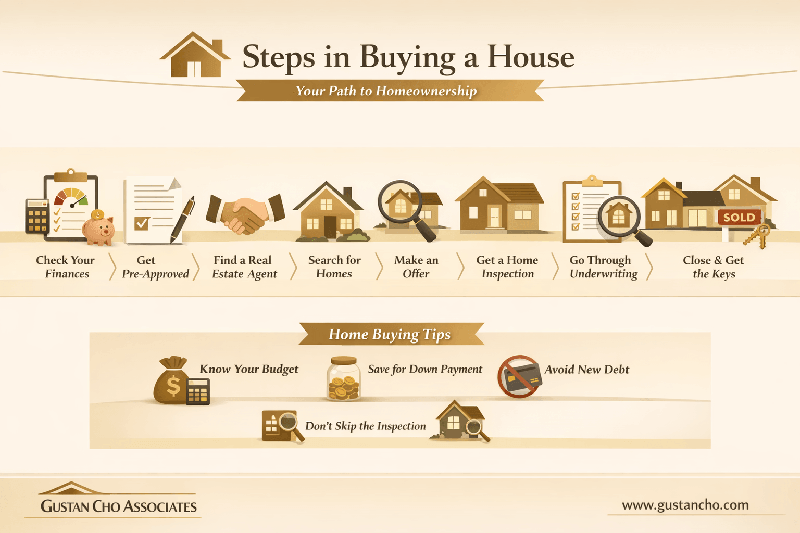
Step 1: Decide If You’re Ready to Buy a House

Before diving into the steps in buying a house, ask yourself if you are ready for the responsibility of homeownership. Home ownership comes with stability and wealth-building opportunities, but it also includes financial and maintenance obligations.
Questions to consider:
- Am I ready to live in one place for the next 3–5 years?
- Can I handle repairs and maintenance without relying on a landlord?
- Do I have money saved for down payment, closing costs, and reserves?
- Can I comfortably afford the monthly mortgage, taxes, and insurance?
Homeownership is rewarding, but it requires commitment.
Step 2: Review Your Finances Before You Start House Hunting
Before you look at homes, make sure your finances are in a good position for mortgage approval. Focus on the five basics:
- your credit score
- your monthly debt
- your job and income stability
- your savings for down payment and closing costs
- the loan program that best fits your situation
This step does not need to be perfect, but it should give you a realistic idea of what you can afford and what issues you may need to fix before applying.
Quick Readiness Checklist:
- Check your credit and dispute errors
- Avoid new debt before applying
- Gather recent pay stubs, W-2s, and bank statements
- Set aside funds for the down payment and closing costs
- Ask a lender which loan options fit your profile
Then link out to more specific articles for:
- Minimum credit scores
- DTI guidelines
- FHA vs Conventional
- How much money do you need to buy a house
Step 3: Get Pre-Approved for a Mortgage
Getting pre-approved is one of the important steps in buying a house. It shows sellers you’re really interested in buying and helps you get a grip on your budget.
Documents needed for pre-approval:
- Pay stubs (last 30 days)
- W2s and tax returns (last 2 years)
- Bank statements (last 60 days)
- ID and Social Security card
- Proof of additional income (child support, pensions, bonuses, etc.)
Why it matters: A solid pre-approval prevents last-minute loan denials and ensures you’re shopping within your price range.
Step 4: Hire the Right Real Estate Agent
A good real estate agent can help you understand local market conditions, find homes that fit your budget, negotiate effectively, and avoid common mistakes during the contract process. Before choosing an agent, interview at least two or three and ask about their experience in your target area, communication style, and how they help buyers compete in today’s market.
It is also smart to ask how buyer-agent compensation works in your area and what agreement, if any, you will be asked to sign. If an agent pressures you, is hard to reach, or does not seem to understand your goals, keep looking. The right agent should make the process clearer and less stressful.
Step 5: Start House Hunting
Now comes the exciting part—searching for your dream home!
Tips for this step in buying a house:
- Use MLS listings, Zillow, and open houses to compare options.
- Visit homes in person—pictures online can be misleading.
- Consider location, schools, commute, and neighborhood safety.
- Don’t rush—compare multiple homes before making a decision.
Step 6: Make Your Offer and Sign a Contract
Making an offer is one of the most strategic steps in buying a house.
Best practices:
- Don’t “lowball” too much—it may get rejected outright.
- Ask for seller concessions to help cover closing costs.
- Include contingencies: appraisal, home inspection, and financing.
- In attorney states, have your lawyer review the purchase contract.
Once accepted, your signed purchase agreement is sent to your lender for moving forward.
Step 7: Schedule a Home Inspection and Secure Homeowners Insurance
A home inspection can help you uncover issues with the property before closing, such as roof damage, plumbing problems, electrical concerns, HVAC issues, or structural red flags. While lenders may not require an inspection, many buyers treat it as one of the most important steps in buying a house because it can prevent expensive surprises after move-in.
Keep in mind that a standard inspection does not cover everything. Depending on the property, you may need separate evaluations for pests, radon, sewer lines, mold, or other specialized concerns. If the inspection reveals major issues, you may be able to ask the seller for repairs, request a credit, renegotiate the price, or cancel the contract if your inspection contingency allows it.
You should also shop for homeowners’ insurance early. Insurance problems can delay closing, especially if the home has an older roof, a prior claims history, or property conditions the insurer considers high risk. Your lender needs proof of insurance before you can close on your home. It’s best to start shopping for quotes and get your insurance in place as soon as you have a contract.
Step 8: Go Through Mortgage Underwriting
Underwriting is the stage where the lender takes a final, detailed look at your finances, documents, and the property before issuing full approval. This is one of the most important steps in buying a house because even strong borrowers can face delays if paperwork is incomplete or new issues show up during the review.
During underwriting, the lender may issue a conditional approval. That means the loan is moving forward, but you still need to provide a few additional items before closing. Common conditions include updated pay stubs, recent bank statements, letters explaining large deposits or credit inquiries, proof that certain debts were paid, or final documentation for gift funds.
The property also matters during this stage. If the appraisal comes back lower than the asking price, the buyer and seller might have to work out a new deal, dispute the valuation, or the buyer might need to come up with extra cash. Some homes may also require repairs before the loan can close, depending on the loan program and the condition of the property.
To keep underwriting on track, avoid making major financial changes before closing. Do not open new credit accounts, finance furniture, buy a car, change jobs without talking to your lender, or move large amounts of money between accounts without documentation. Many loans can move through underwriting in a matter of days, but timelines vary depending on the appraisal, the lender’s workload, and how quickly requested documents are submitted.
Step 9: Closing Day – Get the Keys to Your Home
Closing is the final and most rewarding of the steps in buying a house.
- The lender wires the money over to the title company.
- You sign the final documents.
- The seller gets paid, and you get your keys!
Congratulations! You’re officially a homeowner.
Example: How a First-Time Buyer Could Move Through the Process
If you are a first-time buyer with a steady job, some savings, and credit in the high 500s, you can still buy a home by following some important steps in buying a home. First, check your credit score, confirm your income, and find a loan program that works for you. An FHA loan could be a good choice if you need a smaller down payment and more flexible rules.
After getting pre-approved for a loan, the next step is to create a budget that makes sense and work with a real estate agent to look for homes you can afford. If you don’t have enough cash for closing costs, ask the seller to help cover some of those costs. Once your offer is accepted, it’s important to stay in touch during the loan process to avoid any delays.
The key takeaway is that buying a home isn’t just about having great credit or a big down payment. It involves understanding the steps in buying a home, picking a budget that fits, and staying organized from pre-approval to closing.
Final Thoughts on the Steps in Buying a House
Buying a home can feel complicated at first, but the process becomes much easier when you take it one step at a time. Start by reviewing your finances, get pre-approved before house hunting, work with the right professionals, and stay organized from contract to closing. The better prepared you are, the smoother the process usually becomes.
If you want help understanding your mortgage options before you begin, talk with a licensed mortgage professional and ask for a full pre-approval based on your income, assets, and credit.
Editorial Note: This guide was created to help homebuyers understand the basic steps in buying a house and preparing for mortgage approval. Guidelines can vary by loan program, lender, and borrower profile, so always confirm current requirements with a licensed mortgage professional.
Frequently Asked Questions About the Steps in Buying a House:
How Much House Can I Really Afford Before I Start Shopping?
- Before you start touring homes, estimate a monthly payment that feels comfortable based on your income, debts, savings, property taxes, homeowners’ insurance, and maintenance costs. A lender can set a maximum approval amount, but your actual budget should leave room for everyday expenses and emergencies.
How Much Money Should I Save Before Buying a House?
- Most buyers need savings for the down payment, closing costs, and earnest money, as well as moving expenses and cash reserves after closing. The exact amount depends on the loan program, home price, and whether you negotiate seller concessions to reduce out-of-pocket costs.
Should I Get Pre-Approved Before Looking at Homes?
- Yes. A mortgage pre-approval helps you understand your price range, shows sellers you are a serious buyer, and can make your offer more competitive. It also helps you catch income, credit, or documentation issues before you go under contract.
How Long Does it Take to Buy a House from Start to Finish?
- The timeline varies, but many buyers spend several weeks preparing financially and house hunting before they go under contract. Once an offer is accepted, closing usually takes around 30 to 45 days. The timeline may change depending on factors such as the appraisal, underwriting, and inspection discussions, as well as the speed at which all parties compile the required documents.
What Closing Costs Should I Expect When Buying a House?
- Closing costs usually include lender fees, title charges, prepaid taxes, homeowners’ insurance, escrow setup, and other transaction-related expenses. These costs are separate from the down payment, so buyers should budget for both early in the process.
Do I Need a Home Inspection if the Lender Does Not Require One?
- In most cases, yes. A home inspection can reveal repair issues, safety concerns, or major defects before closing. Even if the lender does not require it, the inspection gives you a chance to request repairs, negotiate credits, or decide whether to move forward.
This article about “Steps In Buying A House And Getting Qualified For Mortgage” was updated on March 17th, 2026.
Start with a real pre-approval, not just a pre-qual
Get income, assets, and credit reviewed so your offer is taken seriously