Preparing for a Mortgage in Illinois: Step-by-Step Guide for Homebuyers
Buying a home is one of the biggest financial decisions you’ll ever make — and preparing for a mortgage in Illinois can be the key to having an easy closing instead of a super stressful one. At Gustan Cho Associates, we specialize in helping Illinois borrowers navigate the entire mortgage process with confidence.
Understanding the Illinois mortgage process can help you save time, money, and frustration, whether you’re a first-time homebuyer or purchasing your next property.
In this guide, we’ll explain everything you need to know about preparing for a mortgage in Illinois, including unique state-specific details, what documents to gather, and how to work with your loan officer for a fast, stress-free closing.
Key Takeaways: Preparing for a Mortgage in Illinois
- Illinois is not a community property state, so a non-borrowing spouse’s debts and credit are excluded.
- Real estate attorneys handle closings instead of title companies — a major difference from most states.
- Property taxes are paid in arrears, giving buyers valuable tax-credit funds at closing.
- A solid pre-approval with verified income, assets, and credit is the foundation of a smooth process.
- Organization and documentation are crucial — missing pages or slow responses can delay underwriting.
- Gustan Cho Associates offers no-overlay loans and 21-day Fast-Track TBD approvals, helping Illinois buyers close faster and easier.
Why Preparing for a Mortgage in Illinois Is Different
The mortgage process in Illinois has some unique steps compared to other states:
1. Illinois Is Not A Community Property State.
Your spouse’s credit or debit isn’t considered unless they are on the loan. In states like Texas or California, both spouses’ debts count — but not in Illinois.
2. Real Estate Attorneys Are Required.
In Illinois, it is common for both buyers and sellers to have real estate attorneys manage the closing process rather than relying on the title company. This ensures your contract and title work are reviewed by a legal professional.
3. Property Taxes Are Paid in Arrears.
Illinois homeowners pay property taxes for the previous year at closing. Homebuyers can often use property tax prorations from the seller toward their down payment or closing costs — a major advantage unique to Illinois.
Step 1: Get Prequalified Before House Hunting
 The first step in preparing for a mortgage in Illinois is to get prequalified or pre-approved by a lender. The pre-approval stage is one of the most important parts of preparing for a mortgage in Illinois. A strong pre-approval can help you set a realistic budget, avoid surprises during underwriting, and make a more confident offer when you find the right home.
Before you start house hunting, your lender should review your income, assets, credit history, and estimated cash to close so you know where you stand.
Unfortunately, over 80% of our clients come to us after being denied or delayed by another lender because they weren’t properly qualified upfront. Many banks issue “pre-approvals” without thoroughly verifying income, credit, or assets.
A Solid Pre-Approval Should Include:
- Full review of income and assets
- Tri-merge credit report
- AUS (Automated Underwriting System) findings
- Debt-to-income ratio calculations
- Verification of funds for the down payment and closing
Pro Tip: When preparing for a mortgage in Illinois, consider more than just the interest rate. Ask whether the lender has fully reviewed your income, assets, credit, and underwriting findings before you make an offer on a home. A thorough pre-approval can help you avoid delays, budget more accurately, and move through the mortgage process with fewer surprises.
Step 2: Organize Your Documents Early
Being organized is key to preparing for a mortgage in Illinois. You’ll receive a document request list once your loan officer reviews your credit and AUS results. The faster you provide these items, the faster your file moves.
Here’s a Checklist to Help you Get Mortgage-Ready:
Mortgage Readiness Checklist (Illinois)
- 2 years of W-2s and federal tax returns
- 30 days of most recent pay stubs
- 60 days of bank statements
- Driver’s license and Social Security card
- Divorce decree (if applicable)
- Bankruptcy or foreclosure paperwork (if applicable)
- Child support or alimony documentation
- Letter of explanation for any credit issues or gaps in employment
Tip: Always include all pages of documents — even the blank ones. Missing pages cause delays and underwriting conditions.
Step 3: Understand the Illinois Mortgage Process
Once you submit your documents, your loan file usually moves to a mortgage processor. The mortgage processor gets the borrower’s documents and paperwork ready for the underwriter. The processor combs through every document required for the underwriter and makes sure it is complete, has no missing pages, and is legible.
The processor reviews your income, assets, credit documents, and application details to make sure the file is complete before it goes to underwriting.
After that, the underwriter reviews the file against program guidelines and may issue conditions that must be satisfied before final approval. When preparing for a mortgage in Illinois, common delays often come from missing document pages, large bank deposits that need explanation, expired pay stubs, changes in employment, or updated asset statements requested before closing. The more complete and current your paperwork is at the start, the smoother the underwriting process usually becomes.
Step 4: Write Letters of Explanation (LOEs)
Sometimes preparing for a mortgage in Illinois includes writing a Letter of Explanation, also known as an LOE. This is a brief written statement that clarifies a specific item in your file, such as a temporary job gap, a recent large bank deposit, a name discrepancy on documents, or a past credit issue that has already been resolved.
If your lender asks for an LOE, keep it brief, factual, and specific. Explain what happened, include the relevant dates, and note whether the issue has been resolved.
The goal is to give the underwriter a clear context so your file can move forward more smoothly. In many cases, a simple and well-written explanation can help avoid delays during underwriting.
Step 5: Mortgage Underwriting and Conditional Approval
After the processor submits your file, an underwriter reviews it for accuracy and compliance with FHA, VA, USDA, or conventional guidelines. If everything checks out, you’ll receive a conditional loan approval — meaning the underwriter needs a few final items before issuing your Clear to Close (CTC).
Common Conditions Include:
- Updated pay stubs or bank statements
- Verification of employment (VOE)
- Appraisal updates or contract extensions
- Proof of funds to close
Once these are cleared, your lender will issue the Clear to Close — the final green light before signing.
Step 6: Cash to Close and Property Tax Prorations in Illinois
One important part of preparing for a mortgage in Illinois is understanding how property tax prorations may affect your final closing figures. Because Illinois property taxes are typically paid in arrears, the seller may give the buyer a tax proration credit at closing for the portion of the taxes owed under the contract terms.
In some cases, that credit can reduce the total amount of money the buyer needs to bring to closing. However, buyers should not assume that tax prorations replace all minimum down payment or minimum borrower contribution requirements.
The exact impact depends on the loan program, the purchase contract, the closing disclosure, and how credits are applied in the transaction. For that reason, it is important to review your final cash-to-close figures carefully with your lender and closing attorney.
Example: What First-Time Buyers in Illinois Can Learn from a Real Scenario
A first-time homebuyer in Naperville was approved for an FHA loan after taking a few key steps to prepare before going under contract. The buyer had recently resolved older credit issues and had limited savings, so the key was making sure the file was fully reviewed early, the documentation was complete, and the estimated cash to close was understood before moving forward. This example shows why preparing for a mortgage in Illinois is about more than getting a quick pre-approval. Buyers should review their credit, verify funds, respond promptly to document requests, and understand how Illinois-specific closing items, such as attorney review and property tax prorations, may affect the transaction. When those details are handled early, the process is usually smoother and more predictable.
Step 7: Final Walkthrough, Closing, and Attorney Coordination
In Illinois, your real estate attorney will review your final loan documents and closing disclosure (CD). Attorneys handle the title and deed transfer, ensuring your closing is legally sound. Before closing:
- Review your final loan terms
- Confirm cash-to-close amount
- Schedule your final walkthrough
- Verify property condition matches the purchase agreement
Once everything checks out, you’ll attend closing with your attorney, sign the documents, and receive your keys!
What Illinois Homebuyers Should Focus On Before Applying
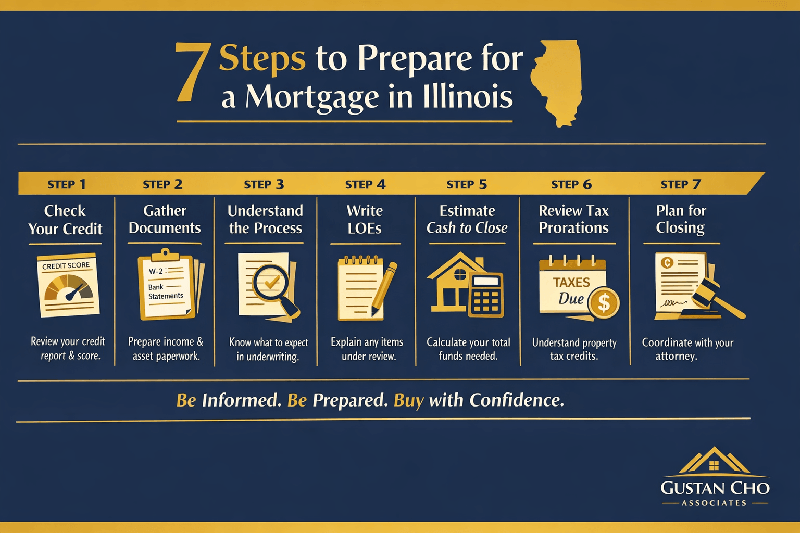
Preparing for a mortgage in Illinois usually goes more smoothly when buyers focus on a few basics early: review your credit, gather income and asset documents, estimate your cash to close, and understand Illinois-specific closing practices such as attorney involvement and property tax prorations. Taking these steps before you go under contract can reduce delays, make underwriting easier, and help you move toward closing with fewer surprises.
Final Thoughts on Preparing for a Mortgage in Illinois
Preparing for a mortgage in Illinois is easier when you understand the steps beforehand. Start by reviewing your credit, gathering your income and asset documents, estimating your cash to close, and learning how Illinois closings work, including attorney involvement and property tax prorations. Taking care of these details early can help reduce delays and make the process more manageable from pre-approval through closing. If you are getting ready to buy a home, it also helps to compare loan options, ask questions about closing costs, and make sure your paperwork is complete before you go under contract.
Frequently Asked Questions About Preparing for a Mortgage in Illinois:
-
How Far in Advance Should I Start Preparing for a Mortgage in Illinois?
Most buyers should start preparing for a mortgage in Illinois at least 3 to 6 months before applying. This gives you a chance to check your credit, save up for your down payment and closing costs, gather all the necessary documents, and address any issues that might delay approval.
-
What Documents Do I Need When Preparing for a Mortgage in Illinois?
In most cases, lenders will ask for recent pay stubs, W-2s or tax returns, bank statements, government-issued ID, and explanations for any unusual items in your file, such as large deposits or employment gaps. Having these documents ready early can make the mortgage process smoother.
-
Do I Need a Real Estate Attorney When Buying a Home in Illinois?
In Illinois, buyers and sellers commonly use real estate attorneys to review the contract, explain contingencies, review title and closing figures, and attend the closing. That is one of the main ways Illinois closings differ from many other states.
-
How Do Property Tax Prorations Work in Illinois?
Illinois property taxes are generally paid in arrears, so the seller usually gives the buyer a credit at closing for the seller’s share of unpaid property taxes. That credit may reduce the buyer’s total cash needed at closing, but buyers should review the final numbers carefully because prorations do not automatically replace all minimum down payment or borrower contribution requirements.
-
What Can Delay Mortgage Approval in Illinois?
Common delays include missing document pages, outdated pay stubs or bank statements, unexplained deposits, employment changes, and incomplete responses to underwriting conditions. Preparing for a mortgage in Illinois usually goes more smoothly when your paperwork is complete and up to date before you go under contract.
-
Is a Mortgage Pre-Approval the Same as Final Approval?
No. A pre-approval is an early review of your finances. At the same time, final approval usually comes after the property is under contract, the appraisal is completed, and underwriting signs off on any remaining conditions. That is why preparing for a mortgage in Illinois should include both financial readiness and document readiness before you start making offers.
This article about “Preparing for a Mortgage in Illinois: What You Must Know” was updated on June 24, 2026.