Buying a home in Indiana appeals to many families, first-time buyers, retirees, and remote workers because the state offers affordable housing, manageable property taxes, and a lower overall cost of living than many other parts of the country. For buyers who want more space, stable communities, and a budget that goes further, Indiana has become an attractive place to put down roots.
From growing suburbs to quiet small towns and established cities, Indiana offers a wide range of housing options for different budgets and lifestyles. Buyers can often find more home for their money while still gaining access to strong local economies, family-friendly neighborhoods, parks, schools, and everyday conveniences.
An Indiana home purchase can make sense for buyers who want long-term affordability without giving up quality of life. Whether you are moving within the state, relocating from another area, or buying your first home, understanding Indiana’s housing market, ownership costs, and financing options is an important first step. In this guide, we will cover why Indiana stands out for homebuyers, what makes the state affordable, which areas are worth considering, and what to know before starting the homebuying process.
What Makes Indiana Affordable for Home Buyers?
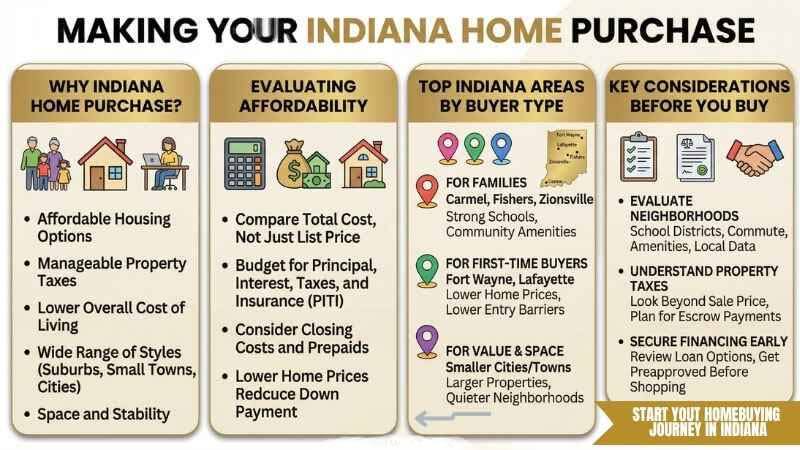
One reason many buyers consider an Indiana home purchase is that affordability often goes beyond the listing price. In many parts of Indiana, buyers can find homes that cost less than comparable properties in larger metro areas or higher-cost neighboring states. That can make it easier to enter the market, buy more space, or keep monthly housing costs at a more comfortable level. Affordability also comes from the broader cost of ownership. When buying a home in Indiana, borrowers should consider the full monthly picture, including principal and interest, property taxes, homeowners’ insurance, mortgage insurance (if applicable), utilities, and maintenance. In many Indiana communities, these costs can be more manageable than in higher-tax or higher-cost housing markets, which may help buyers qualify more comfortably and maintain better long-term budget flexibility. For first-time home buyers, this part can be super important. A lower home price may reduce the down payment required, and lower ongoing costs may make it easier to stay within debt-to-income guidelines. Buyers who are relocating from more expensive areas may also find that Indiana offers more options at entry-level, move-up, and family-home price points. That said, affordability can vary widely depending on location. Home prices, property taxes, commute patterns, school districts, and neighborhood amenities can differ from one city or suburb to another. That is why buyers should compare not just home prices, but the overall cost of living and ownership in the specific Indiana area they are considering. A smart Indiana home purchase is not just about finding the cheapest house. It is about finding a home and location that match your income, monthly payment comfort level, and long-term goals.
Affordable Housing Makes Indiana Home Purchase More Practical
One reason many buyers consider an Indiana home purchase is that home prices in many parts of the state can be more manageable than in higher-cost markets. Still, affordability depends on more than the listing price alone.
Buyers should compare areas carefully because prices, property taxes, insurance costs, and neighborhood demand can vary from one Indiana city or suburb to another. A lower-priced home may still have higher monthly costs due to taxes, fees, or location.
It is also important to budget for more than the down payment. Buyers should plan for closing costs, prepaid items, and the full monthly housing payment, including principal, interest, taxes, and insurance. For first-time and out-of-state buyers, Indiana can offer more flexibility, but the smartest approach is to consider the total cost of ownership, not just the purchase price.
How Property Taxes Affect Indiana Home Purchase Costs
Property taxes are an important part of the total cost of an Indiana home purchase. Even when a home has an affordable purchase price, taxes still affect the monthly payment and long-term budget. For numerous buyers, property taxes are typically part of the monthly mortgage payment via an escrow account. That means the lender collects a portion of the estimated annual tax bill each month along with principal, interest, and homeowners’ insurance. When comparing homes, buyers should look at the full monthly payment, not just the loan amount. This is why two homes with similar prices can have different total housing costs. A home with lower property taxes may be easier to afford each month than a similar home in an area with higher taxes or added local costs. A smart Indiana home purchase means looking beyond the sale price and understanding how taxes factor into the full payment and the ongoing costs of homeownership.
Best Indiana Areas by Buyer Type
The best place to buy a home in Indiana depends on your budget, lifestyle, and long-term goals. Some areas are better suited to families who want top-rated schools and suburban amenities. In contrast, others may suit first-time buyers, commuters, retirees, or buyers looking for more space at a lower cost.
- For families seeking strong schools and established suburbs: areas such as Carmel, Fishers, and Zionsville are often popular for their community feel, local amenities, and school reputations.
- For first-time buyers or those seeking more affordable options: cities such as Fort Wayne, Lafayette, and many smaller Indiana communities may offer lower home prices and fewer barriers to entry.
- For buyers who want suburban living near Indianapolis: places surrounding the metro area can offer a balance of convenience, neighborhood appeal, and access to jobs, shopping, and recreation.
- For buyers drawn to a college-town setting: Bloomington and West Lafayette may appeal to those who want a more active local atmosphere, university influence, and a mix of housing options.
- For buyers focused on value and space: smaller cities and towns across Indiana may provide larger properties, quieter neighborhoods, and a lower overall cost of ownership.
A smart Indiana home purchase starts with choosing an area that fits not just your price range, but also your daily needs, commute, lifestyle, and future plans.
How to Evaluate Indiana Neighborhoods Before You Buy
Choosing the right area is an important part of any Indiana home purchase. Instead of relying on broad claims about safety or livability, buyers should look at practical factors that affect day-to-day life and long-term satisfaction.
Start by reviewing school districts, commute times, access to shopping and healthcare, parks, and other local amenities that matter to your household. Buyers should also compare property taxes, neighborhood upkeep, traffic patterns, and how close the area is to work, family, or major highways.
It can also help to review publicly available neighborhood data, visit the area at different times of day, and think about how the location fits your lifestyle now and in the future. A home may look appealing on paper, but the surrounding area plays a major role in overall comfort, convenience, and value. A smart Indiana home purchase is not just about finding the right house. It is also about choosing a neighborhood that supports your budget, routine, and long-term goals.
Top Indiana Cities to Check Out for Your New Home
 Indiana offers a range of cities and suburbs that can fit different types of home buyers. The right location depends on your budget, commute, lifestyle, and what you want from day-to-day living. Carmel often appeals to buyers who want an established suburban setting with strong schools, parks, and a polished community feel. It may be a better fit for move-up buyers or families willing to pay more for location and amenities. Fishers is popular with families and suburban buyers who want newer housing, community amenities, and access to the Indianapolis area. It can be appealing to buyers who want a balance between neighborhood feel and convenience. Fort Wayne may be a strong option for first-time buyers and households looking for more affordability. It often appeals to buyers who want more house for the money without giving up access to jobs, schools, and everyday services. Bloomington can be a good fit for buyers who like a college-town atmosphere, local culture, and a more active community environment. It may appeal to professionals, university-connected households, and buyers who value lifestyle as much as price. Lafayette and West Lafayette may work well for buyers who want access to education, employment, and a stable local economy. These areas can appeal to a mix of first-time buyers, families, and buyers who want a community shaped by Purdue and related industries. Zionsville may suit buyers looking for a more upscale suburban feel, a charming local identity, and access to highly regarded schools. It can be a strong choice for families and buyers focused on long-term neighborhood appeal. A smart Indiana home purchase starts with choosing a city or suburb that fits your goals, not just your price range. The best area for one buyer may not be the best fit for another, which is why it helps to compare affordability, commute, lifestyle, and long-term comfort before making a decision.
Secure Your Dream Family Home in Indiana
Ranked best for families—get expert tips on financing, neighborhoods, and school districts.What to Consider Before Buying a Home in Indiana
Before starting an Indiana home purchase, buyers should look beyond the listing price and think about the full cost of ownership. That includes the monthly mortgage payment, property taxes, homeowners’ insurance, possible homeowners’ association dues, maintenance, and closing costs.
It is also important to compare locations carefully. Some Indiana cities and suburbs may offer stronger school districts, shorter commutes, more space, or different price points depending on your goals. The right area for one buyer may not be the best fit for another.
Financing is another major part of the decision. Buyers should understand their budget, review loan options, and get preapproved before shopping seriously. This can make it easier to narrow the search and move quickly when the right home becomes available. A smart Indiana home purchase is not just about finding an affordable house. It is about choosing a home, location, and monthly payment that fit your long-term needs.
Final Thoughts About Indiana Home Purchase
An Indiana home purchase can make sense for buyers who want a more manageable path to homeownership, but the smartest decision is to look beyond the list price alone. Buyers should compare total monthly housing costs, understand how property taxes and escrow affect affordability, and choose a location that fits their budget, lifestyle, and long-term goals. Whether you are a first-time buyer, relocating from another state, or simply exploring your options, careful planning matters. Reviewing financing choices early and getting clear on your budget can make the homebuying process more straightforward. If you’re looking to figure out mortgage options for an Indiana home purchase, Gustan Cho Associates can help you find financing solutions that work for you.
Your Indiana Home Purchase FAQs Answered
Is Indiana A Good Place To Buy A Home?
Indiana can appeal to buyers who want a lower overall cost of ownership, more manageable home prices in many markets, and access to first-time buyer assistance programs. Buyers should still compare local home prices, property taxes, insurance, and commute needs by city or suburb before deciding.
How Much Are Closing Costs When Buying A Home In Indiana?
Closing costs vary by transaction, but one widely cited estimate puts average buyer closing costs in Indiana at about 0.9% of the home’s sale price, not including every possible prepaid item or loan-specific charge. Actual expenses can fluctuate significantly depending on the loan program selected, lender fees, title fees, escrow setup, and any upfront taxes and insurance.
Are There First-Time Home Buyer Programs In Indiana?
Yes. Indiana Housing and Community Development Authority programs include First Step, Step Down, and Next Home. Depending on the program, qualified buyers may be eligible for down payment assistance, and some programs are geared toward first-time buyers or buyers purchasing in targeted areas.
How Much Down Payment Do I Need To Buy A Home In Indiana?
The amount depends on the loan type and your financial profile. Some Indiana assistance programs can help with down payments, closing costs, and prepaid items, reducing the cash needed at closing for qualified buyers. Buyers should review both the minimum loan-program requirement and the total funds needed to close.
Can I Buy A Home In Indiana As An Out-Of-State Buyer?
Yes. Out-of-state buyers can purchase in Indiana, but they should prepare early by getting preapproved, clearly documenting income, and comparing local markets before making offers. That is especially important for remote workers or buyers relocating for a new job.
What Indiana Cities Are Good For First-Time Home Buyers Or Families?
The right city depends on budget, commute, and lifestyle goals. Areas such as Carmel, Fishers, and Zionsville are often associated with suburban-family appeal. At the same time, cities like Fort Wayne and Lafayette may offer more affordable price points for buyers focused on affordability. Buyers should compare neighborhoods based on total housing costs, amenities, and daily convenience, rather than relying on a single statewide answer.
This article about “Indiana Home Purchase Ranked Best Place To Live for Families” was updated on March 30th, 2026.