

Home Title Insurance Policy Guidelines By Lenders: What Borrowers Need To Know
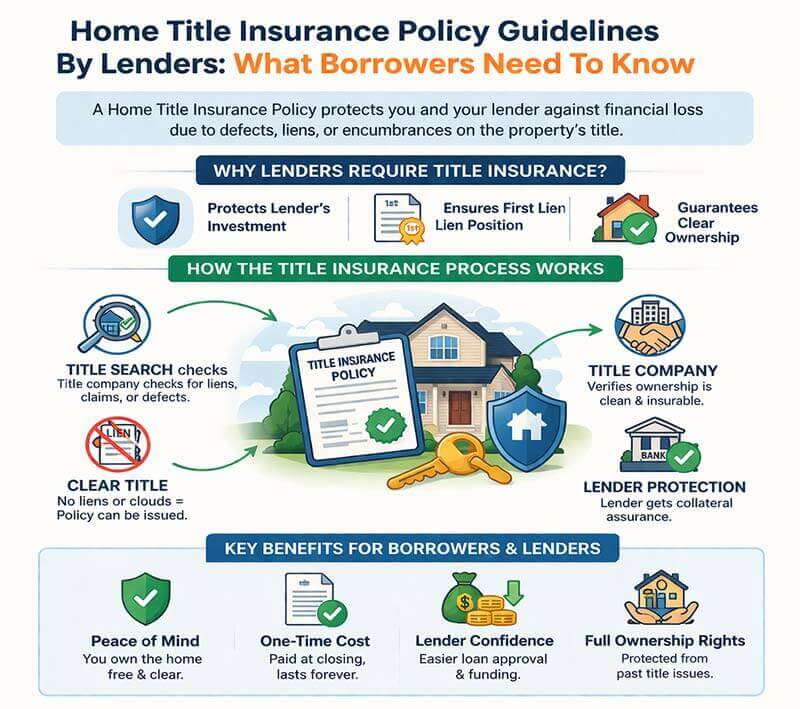
This guide covers home title insurance policy guidelines by lenders. A home title insurance policy is a contract of indemnity between the insured and the insurance company relating to the title to the land described in the policy. A Home Title Insurance Policy protects the insured against loss or damage because of defects, liens, or encumbrances.
When you buy a home, you want to ensure that you have clear and undisputed ownership of the property, and a title insurance policy helps provide that assurance. Here are the key aspects of a home title insurance policy:
The title company’s job is to ensure that the property title is clean. The title company ensures the title to the property has no liens or clouds in the title insurance. The home title insurance policy will be issued once the title is clear and clean of any liens or defects. Lenders can rest assured that the property they are using for collateral has a clear title. Lenders expect they are in the first position.
Home Title Insurance Policy Explained
The title insurance policy is issued after a complete search and examination of the public records. Title insurance will be issued after it shows the following review. Condition of the record title, including any money obligations outstanding against the property, easements, and other matters that may affect the rights of ownership, possession, and use of the property, has been cleared.
If the title has defects and liens that do not appear on public records and the title company misses it and issues a clean title insurance policy, the title company is liable for the lien or the defect in the title.
The mortgage lender, as well as the homeowner, has nothing to worry about. This is because this is what the title company’s role is. To ensure that The Property Has a Clean And Clear Title. This article will discuss and cover Home Title Insurance Policy Guidelines By Lenders.
Home Title Insurance Policy Guidelines By Lenders: What Borrowers Need To Know
A home title insurance policy is a must-have for closing on a mortgage, yet its purpose often remains a mystery to borrowers. This guide unpacks what home title insurance really is, why lenders insist on it, and how it shapes your home purchase or refinance journey. By understanding lender title insurance, you can steer clear of last-minute surprises at closing and shield yourself from expensive title problems.
Home Title Insurance Policy: Lender Guidelines And What It Means For Homebuyers
Lenders may deny a mortgage for reasons beyond credit, income, assets, or appraisal. They also assess property-related issues, such as marketable title and proper lien position after closing. Mortgages cannot close if legal issues exist that could allow another lien on the property, including ownership disputes, outstanding liens, unpaid taxes, or recording errors. Lender’s title insurance is typically required to address these risks, while owner’s title insurance, though optional, protects the buyer’s equity rather than the lender’s interest.
Understanding Home Title Insurance Policy Rules Required By Lenders
While some borrowers see home title insurance as just another line item on the bill, it is actually a key player in the mortgage process. Title insurance makes sure all legal loose ends are tied up before you get the keys, which can make or break your loan approval. In this guide, you will discover what the policy covers, what to expect as a borrower, and the most common title hiccups that can stall or stop your closing.
Home Title Insurance—Protect Your Ownership From Day One
Title issues can show up years later—liens, recording errors, undisclosed heirs, boundary disputes, and past claims. Learn what lender vs owner title insurance covers and what to ask before closing
What Is A Home Title Insurance Policy?
A home title insurance policy protects you from problems with who owns the home. In real estate, a title means who legally owns the property and what rights come with it. Before you finish getting a mortgage, a title company or real estate lawyer checks public records to see if there are any problems with the seller’s ownership, their right to sell, or anything else that could get in the way of the sale.
What Is A Home Title Insurance Policy?
Title issues differ from property damage concerns. Homeowners insurance covers future losses, such as fire, storms, or theft. Title insurance addresses past legal or financial claims, including unpaid taxes, contractor liens, recording errors, boundary disputes, ownership claims, or prior transfer defects. The CFPB states that a lender’s title policy protects the lender against title issues, while an owner’s title insurance protects the owner from claims by others with prior interests in the property.
Title Insurance Policy: When Does The Title Search Process Start
Once the home buyer has entered into a purchase real estate contract and the mortgage approval process is in full motion, the lender will start the title search process by requesting a clear title from the sellers’ team.
- The title is normally ordered through a title company
- The title company will start the process by searching public records pertaining to the subject property
- The title company can see if there are any problems or liens with the property’s title
- When the title company runs into problems with the property’s title, it is the title company’s job to clear any current and/or potential problems that might arise with the title
- A lender will not approve and clear to close if there are problems or potential problems with a home’s title.
The most critical components of title insurance requirements for home loans, including lenders’ title insurance, owner’s title insurance, title defects, closing requirements, and how title insurance influences the mortgage process, are discussed.
Home Title Insurance Policy Protection
Title insurance protects the “record” title, ensuring it is a good subject only to the exceptions expressly set out in the policy. Title insurance also insures against certain matters that do not appear on the record, such as the following:
- forgery
- identity of parties
- the incompetence of former owners
- the interest of missing heirs
- status of individuals not having the “right” to sell property
The insured title is protected at the date of the policy and not expressly accepted from its coverage. All mortgage lenders will require a clear title before they issue a clear to close and close and fund the mortgage loan.
What “Clear Title” Means In Mortgage Lending
A “clear title” means the property can change hands without any hidden legal snags that could trip up your mortgage. This guarantees you get true ownership and your lender’s claim is right where it should be. Fannie Mae, for example, insists that title policies confirm that the title is clear and that the mortgage is in the proper priority position.
In short, there is no confusion over who owns the property, no hidden liens lurking above your mortgage, and no big title problems waiting to surface.
If these problems pop up, the lender could lose money if someone else steps forward with a stronger legal claim to the property.
Types of Home Title Insurance Policy
There are different types of policies. Owners™ policies are issued to real estate owners. Purchasers™ policies are issued to purchasers of real estate under contract. Mortgage policies are issued to mortgage companies. In addition, there are several other special forms of policies. There is a type of policy to meet the requirements of almost any real estate transaction.
Home Title Search
Before issuing a title insurance policy, a title company will conduct a thorough title search to uncover any existing liens, encumbrances, or defects in the property’s title. This search helps ensure the property’s title is free and clear of any issues. It provides peace of mind by protecting your financial interests in your home against unforeseen title defects.
The specifics of title insurance can vary by jurisdiction. The title insurance company you choose. Hence, it’s important to carefully review your policy and consult with a real estate attorney if you have any questions or concerns.
If, after purchasing the property, a previously undisclosed issue arises that affects your ownership rights (e.g., a hidden lien, an unresolved boundary dispute, or a fraudulent deed), your title insurance policy will provide protection. The insurance company will typically cover legal fees and any financial losses you may incur.
Title Insurance Protection Protects Lenders and Owners
All lenders require a clean title before the mortgage loan underwriter issues a clear to close. Most mortgage loan closings are closed at title companies. The title company agent conducts the closing. The title company insures that the title to the property is clear of any and all liens. Guarantees there are no clouds on title to the subject property.
What Does Title Insurance Protection Cover?
In the event, that there are liens on the title and it does not appear until after the closing of the property, then it is the title company that insures this. So the title company needs to clear up and liens to the property. Title searches are extensive. Third-party firms are contracted when reviewing titles to the properties in question. In the following paragraphs, we will cover and discuss Title Insurance Protection Required By All Lenders.
Reasons Why Lenders Ask For A Home Title Insurance Policy
Most mortgage lenders require a home title insurance policy because the home is collateral for the loan. Title defects affecting ownership or lien priority can compromise this collateral. According to the CFPB, most lenders require a lender’s title insurance policy that covers the loan amount.
Freddie Mac’s current guide states that a title insurance policy is a requirement for each mortgage delivered to Freddie Mac unless a certain exception is noted, while Fannie Mae requires either a title insurance policy or an attorney title opinion letter that satisfies its requirements.
Why A Lender Requires Protection Against Title Defects
Lenders are not just protecting the house itself. They also want to make sure their loan is legally safe. Problems with the title can make it hard for them to get their money back if you stop paying. That’s why lenders need loan paperwork done the right way.
Clearing any prior liens that will be paid off at closing. There are no undisclosed claims that could be superior to the new mortgage.
The insurer issuing the policy is authorized to do business in the state where the property is located, as stated in the agency title insurer standards.
Title Insurance of Lenders vs Title Insurance of Owners
Many borrowers assume a home title insurance policy protects both them and the lender equally, but that is not the case.
Title insurance for lenders protects the lender’s interests in the property. This is usually the outstanding loan amount or lien position. It is usually a requirement for mortgage approval.
The CFPB explains that a lender’s title insurance protects the lender, not the homeowner’s equity. Title insurance for owners protects the buyer’s personal financial investment in the ownership interest.
The CFPB explains that an owner’s title insurance policy protects the homeowner if someone later asserts a right to the property based on claims or interests that predate the buyer’s ownership.
Why Owner’s Title Insurance Is Different
Lender-required title insurance leaves the buyer exposed. If a title claim arises, the lender’s policy only protects the lender. That is why many buyers opt for owner’s title insurance, even when it is not mandatory.
Owner’s coverage is especially valuable if you are putting down a big deposit, buying a high-priced home, inheriting property, or navigating complicated ownership situations.
What Home Title Insurance Policies By Lenders Typically Include
While home title insurance guidelines vary by loan program, investor, insurer, and state law, lender requirements generally follow the same core principles. Lenders usually want a full check of the property’s history, any title problems resolved, any outstanding debts paid off, the mortgage paperwork filed correctly, and a title insurance policy from a company they approve. Fannie Mae and Freddie Mac also have their own rules about title insurance and which companies can provide it.
Title Search, Title Commitment, And Final Policy
The title process begins by checking public records for any issues. The title company then issues a preliminary report that lists who owns the property, describes it, and explains what needs to be done before you receive the final insurance policy. The final policy comes after you close on the home and the paperwork is filed.
This process lets lenders and closing teams find problems early, such as unpaid bills, missing paperwork, items that need to be fixed, issues with wills or trusts, divorce-related problems, or arguments about property lines.
Owners of Title Insurance Protection
The standard owners’ title insurance policy and standard mortgage policy are based on public records of the recording district in which the land is located. It does not insure against matters which would only be disclosed by actual inspection or survey of the property. It does not insure against certain matters not shown by the public records such as the following:
- unrecorded easements
- liens or money obligations
- unrecorded utility rights of way on public or private roads
- community driveways and other types of encumbrances
- or against the rights or claims of persons in possession of the property which are not shown by the public records
Upon application, the issuing company may specially cover matters which are disclosed by a physical inspection. And/or a survey of the property, subject to any exceptions which the inspection will determine to be proper. An additional risk premium is charged for this type of coverage. Insurance of this kind is called extended coverage.
Lender’s Policy vs. Owner’s Policy:
Lender’s Policy: If you’re taking out a mortgage, your lender will usually require you to purchase a lender’s title insurance policy to protect their interest in the property. This policy only covers the lender’s financial interests.
A home title insurance policy is a type of insurance that protects homeowners and lenders from financial losses due to issues related to the title of a property.
Owner’s Policy: While the lender’s policy protects the lender, homebuyers should purchase an owner’s title insurance policy to protect their investment. An owner’s policy covers the homeowner’s equity in the property.
Premium on Home Title Insurance Policy
One-time home title insurance policy premium typically involves a one-time premium paid at closing. The premium cost can vary based on the property’s purchase price and location but is generally a small percentage of the purchase price. Title insurance provides coverage if you or your heirs are interested in the property.
Home title insurance policy offers protection even after you’ve sold the property if a title issue from your ownership period arises later. If a title issue arises, you must file a claim with the title insurance company.
The home title insurance policy carrier will investigate the claim and provide legal defense if necessary. If the claim is valid, they will cover the associated costs and any financial losses up to the policy limit. Home title insurance policy is an essential part of the home buying process in many countries, as it helps ensure you have a clear and marketable title to your property.
Buying a Home? Verify the Title Before You Close
We’ll help you understand the title commitment, common red flags, and what to clear before you sign—so you avoid last-minute surprises at the closing table
What Title Problems Can Delay Or Kill A Mortgage Approval
Big legal or financial problems with the property can delay, pause, or even stop your mortgage from being approved. Many title problems can be fixed, but some take more time, paperwork, talks, or even going to court.
- Easements or right-of-way issues
- Boundary or survey issues
- Prior transfers that include forgery or fraud
- Ownership issues resulting from divorce, probate, or trust issues
- Liens that have been recorded but remain unreleased
Why A Lender Needs Protection Against Title Defects
The CFPB says that if unpaid contractor bills or taxes are not addressed, buyers could face legal problems. Lenders care a lot about who gets paid first if there are old debts. If these are not cleared up, it can slow down the loan process and closing. Closing can also be delayed if the seller cannot legally sell the home because of issues with wills, trusts, missing signatures, or divorce.
Therefore, lender title insurance guidelines are document-specific and closely tied to payoff, legal clearance, and closing requirements.
How Title Insurance Works During The Mortgage Process
After you sign a purchase agreement or start refinancing, a home title insurance policy gets added to your mortgage paperwork. The settlement agent or lender jumps into action, ordering title work right away to catch and fix any problems before closing day.
If no major defects are found, the file proceeds to final underwriting and closing. Any defects must be resolved before the lender approves or funds. Some title issues are resolved quickly, while others may take days or weeks. Freddie Mac has title requirements that must be met for mortgages eligible for purchase, including requirements that vary by property or loan type.
The Impact of Title Requirements on Refinance Transactions
Some people think title insurance is only for new home purchases, but this is not the case. Refinance lenders also require a title review and lender’s title policy, since a new lien is added and the old mortgage is paid off. This ensures the new lender has legal protection and priority lien status.
The policy, endorsements, settlement services, and related title fees are included. While the buyer is usually responsible for the lender’s related title charges, the seller may sometimes pay some of those charges or provide a credit to the buyer.
Loan-related fees vary by state. Borrowers should carefully review their Loan Estimate, Closing Disclosure, purchase contract, and settlement instructions. The CFPB states that consumers can shop for title insurance and closing service providers in many transactions.
Can You Shop For Home Title Insurance?
Borrowers often have the option to shop for title services rather than use the first recommended provider. The CFPB encourages consumers to compare title insurance and closing services based on price and reputation.
Low prices might look good, but things like experience, fast service, doing the job right, knowing the local area, and being approved by your lender are just as important.
Saving money is not worth it if your title company causes delays, misses issues, or fails to finish on time. Bad title work can cause trouble later, such as missed issues or incorrect paperwork that leads to future claims, problems when you sell or refinance, and delays you did not expect. That is why many lenders care as much about good title work as they do about the insurance policy itself.
Common Issues Regarding Home Title Insurance Policy Requirements
Borrowers often confuse home title insurance requirements with those for homeowners’ insurance, escrow fees, attorney costs, or closing costs. These are separate and unrelated.
Homeowners’ insurance covers future incidents that may damage the property or result in liability claims. Title insurance covers certain past defects or ownership claims.
The CFPB explains these differences. Borrowers should read their title insurance policy carefully to understand what is and is not covered, as policies have limitations. It is important to understand all coverage, claims, and policy terms. Title insurance does not cover all legal issues. Most policies only address defects specifically defined within the policy.
Title Company Questions
Borrowers should ask whether there are unresolved title defects, whether prior liens will be paid and released at closing, whether the owner’s title insurance is included, what policy exceptions will remain, and whether any risks exist due to surveys, easements, trusts, or probate. These issues will prevent the title from closing and can help determine whether the title is ready for settlement. Title insurance covers the borrower’s ownership interest and equity rather than the lender’s loan balance.
Understanding lender title insurance guidelines helps borrowers recognize the protection provided for their mortgage and prepare for closing. Title work is a make-or-break step for both homebuyers and those refinancing.
Knowing how home title insurance works helps you breeze through closing and underwriting, making smart choices before you sign anything. Take time to understand every stage of the mortgage process, especially title, insurance, underwriting, and closing. The more you know about lender requirements, the more confidently you can move forward. Lenders require title insurance to protect against surprises like ownership disputes, lien problems, or gaps in the property’s history. Most lenders, as the CFPB notes, will not approve a mortgage without it.
Frequently Asked Questions
What Does A Lender’s Title Insurance Policy Cover?
- A lender’s title insurance policy covers the lender’s interest in the property, but not the homeowner’s equity.
- It covers the lender if a legal challenge, lien issue, or title defect arises regarding the mortgage.
What Is The Difference Between A Lender’s Title Insurance And An Owner’s Title Insurance?
- A lender’s title insurance policy covers the mortgage lender, and an owner’s title insurance policy covers the homebuyer’s ownership interest and financial stake in the property.
- They have different functions and are not meant to be the same.
Can Title Issues Hold Up Closing On A Mortgage?
- Yes.
- Title problems like unpaid taxes, liens, judgments, disputes over ownership, unremoved liens, probate issues, recording errors, or boundary issues can delay some closings until the issues are resolved.
Is It Possible For Me To Shop For A Title Insurance Policy For My Home?
- In a lot of transactions, yes.
- The CFPB urges title insurance buyers to shop around and compare prices and reputations of different providers.
Is Title Insurance Required With Refinance Loans?
- Yes, title review and a lender’s title insurance policy are required with most refinance transactions, as the new lender requires legal protection and to ensure they have the appropriate lien priority with respect to the new mortgage.
Does A Policy Of Home Title Insurance Cover Claims Made Under Homeowners’ Insurance?
- No.
- A home title insurance policy is not the same as homeowners’ insurance.
- While homeowners’ insurance protects against future damage to the property and related risks, title insurance covers claims of ownership or past legal defects.
Ready to Close With Confidence?
Share your state and transaction type (purchase/refi). We’ll help you understand title requirements, closing costs, and the cleanest path to closing