


Buying a home with a septic system is not a problem by itself. The risk comes from not knowing whether the system works before closing. A septic inspection when buying a house can uncover tank damage, drainfield problems, sewage backups, leaks, or code violations before the buyer becomes responsible for the repairs.
Many homes outside city sewer areas use septic systems every day without problems. The key is making sure the system is safe, working, and properly maintained before you move forward. A standard home inspection may not fully inspect the septic tank, drain field, or underground wastewater lines, so buyers should arrange a separate septic inspection before closing.
Why Septic Inspections Matter When Buying a Home

Homebuyers take on serious risks when they skip septic inspections during a home purchase. Problems that go undetected underground can slow down the paperwork needed to finalize the sale. If the septic tank is broken or the drainage system does not work, repair costs can add up quickly. Contaminated water that leaks into the ground can pose a danger even after the sale is complete. Also, lenders may refuse to give loans if septic systems do not pass inspection.
If a septic inspection reveals issues, the buyer may negotiate with the seller to have the repairs made. Instead of asking for repairs, the buyer could ask the seller to pay for the fixes.
Another option is to lower the sale price. If the agreement allows, walking away from the deal is also possible. Lenders may require that repairs be done first. Local health authorities can enforce rules that require fixes before closing.
Being informed about what lies beneath the surface can enhance the safety of your home-buying experience. Many hidden issues, such as those revealed through a septic inspection when buying a house, may only be revealed after you’ve moved in, resulting in expensive repairs, paperwork delays, and disputes over responsibility.
What Does a Septic Inspection Check?
A septic inspection when buying a house examines parts of the system that a regular home inspection may not fully review. The goal is to find out whether the septic tank, drain field, pipes, filters, and drainage areas are functioning properly before the buyer closes on the home.
Septic Tank Condition
The inspector checks the septic tank to see if it is damaged, leaking, too full, or showing signs of age. Older tanks can crack, weaken, or allow wastewater to escape into the ground. The inspector may also look at sludge levels, access lids and baffles, and whether the tank appears to have been properly maintained.
Drain Field or Leach Field
The drain field, also called the leach field, is where wastewater leaves the tank and filters through the soil. If this area fails, the system may back up, drain slowly, or create wet spots in the yard. The inspector checks for signs that the soil is not absorbing wastewater the way it should.
Pipes, Filters, and Drainage
The inspection may also include the pipes, filters, and drainage lines that move wastewater through the system. Blocked pipes, broken lines, clogged filters, or poor drainage can cause slow drains, backups, odors, or other septic problems. These issues may not be obvious during a basic home inspection.
Signs of Sewage Backup or Standing Water
The inspector looks for warning signs such as sewage odors, soggy ground, standing water, slow drains, or wastewater surfacing near the drain field. These signs can point to a serious septic problem. If sewage is backing up or wastewater is reaching the surface, repairs may be needed before closing.
Signs of Sewage Backup or Standing Water
A septic inspection when buying a house involves assessing both above-ground indicators and issues inside the home. Signs such as sewage odors, sluggish toilets, gurgling drains, standing water, moist soil, or wastewater pooling near the drain field can all signal potential septic problems. It’s important to take these signs seriously, as they may impact health, safety, property value, and the ability to finalize a mortgage loan.
Common Septic Problems Found During a Home Inspection
Doing a septic inspection when buying a house can uncover problems that are not readily apparent during a regular home inspection. Some septic issues are minor, while others can lead to costly repairs, health concerns, or delays in closing.
Tree Root Damage
Tree roots can grow into septic lines, tanks, or drain field areas. This can cause blockages, leaks, slow drainage, or wastewater backup. Homes with large trees near the septic system should be checked carefully.
Cracked or Leaking Septic Tanks
As septic tanks age, they can develop cracks, leaks, or become weakened. When this happens, wastewater might escape into the surrounding ground, or groundwater could infiltrate the system. Such issues can lead to significant health, safety, and environmental risks. This is why a septic inspection when buying a house is crucial for identifying potential problems before making a purchase.
High Groundwater or Poor Drainage
Too much groundwater or poor soil drainage can prevent the septic system from working correctly. When the ground is too wet, wastewater may not filter properly. This can lead to backups, odors, or standing water near the drain field.
What Happens If the Septic Inspection Fails?
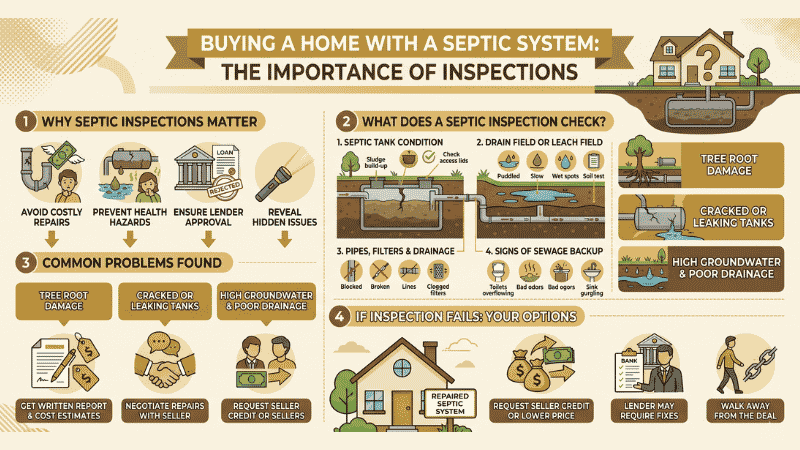
If the septic inspection fails, the buyer should not ignore the problem or rely only on a verbal promise from the seller. A failed septic inspection can mean anything from a minor repair to a major issue with the tank, drain field, or wastewater system. The first step is to ask the septic inspector for a written report that explains what failed, why it matters, and whether further testing is needed.
Once the buyer has the report, the next step is to get written repair estimates from licensed septic contractors. This helps the buyer understand the real cost before making a decision. Some problems may only require cleaning, a small repair, or a replacement part. Other issues, such as a failed drain field or damaged tank, can be much more expensive.
A failed septic inspection can also affect the mortgage closing. Depending on the loan program, lender requirements, local rules, and the condition of the property, certain septic repairs may be required before closing. If the issue creates a health or safety concern, the lender may not allow the loan to close until the problem is fixed.
The buyer may have several options after a failed septic inspection. They may ask the seller to complete the repairs before closing, request a seller credit if the lender allows it, negotiate a lower purchase price, or walk away if the purchase contract gives them that right. The best option depends on the inspection report, repair costs, loan approval, and the severity of the septic problem.
A failed septic inspection does not always mean the buyer should cancel the purchase. It does mean the buyer needs clear answers before moving forward. Knowing the cost, lender requirements, and repair timeline can help the buyer decide whether the home is still worth buying.
Buying a Home with a Septic System? Make Sure It’s in Good Condition!
Reach out now to arrange for a septic inspection and ensure the system is functioning properly before you buy.
Can Septic Problems Delay Mortgage Closing?
Yes, septic problems can delay mortgage closing. A lender wants to know the home is safe to live in before the loan closes. If issues are discovered during a septic inspection when buying a house, the lender may require repairs before granting final approval.
Small issues may not stop the closing. For example, a clogged filter or minor repair may be easy to fix. Bigger problems, such as sewage backups, leaking tanks, standing water, or a failed drain field, can pose health and safety concerns. Those problems may need to be fixed before the buyer can close on the home.
Local rules can also affect the closing. Some counties or health departments may require septic repairs before the property can be transferred to the new owner. The lender may also need proof that the work was completed by a qualified septic contractor.
Buyers should talk to their lender before agreeing to a seller credit, repair escrow, or price change. Not every loan program allows every type of repair agreement. Getting the septic report and repair estimate to the lender early can help avoid last-minute closing delays.
What Buyers Should Ask Before Removing Inspection Contingencies
Before removing inspection contingencies, buyers should make sure they understand the septic system. Once the contingency is removed, it may be harder to ask the seller for repairs, credits, or a price change later. The buyer should review the septic inspection report before making that decision.
Buyers should ask when the septic tank was last pumped, whether the seller has maintenance records, and whether any repairs have been made. T
hey should also ask whether the septic system was installed with permits and whether it complies with local regulations. If records are missing, the buyer may need more information before moving forward.
Buyers should also ask where the septic tank, drain field, and septic lines are located. This matters because the buyer may not be able to build, park heavy vehicles, plant large trees, or add outdoor improvements over those areas. Knowing where the system is located can help prevent damage after closing.
If issues are identified during the septic inspection when buying a house, buyers should obtain written repair estimates before removing the contingency. It’s also important for them to consult with their lender before accepting any seller credits, repair escrows, or price adjustments. Problems with the septic system can affect loan approval, delay closing, and determine which repairs need to be completed before the home purchase can be finalized.
Example: Septic Problems Found Before Closing
A person buying a house in the country signed a deal for a property with its own septic system. They decided to schedule a septic inspection when buying a house to ensure everything was functioning well.
During the inspection, the technician noticed water pooling near the leach bed and slow-draining systems. While the holding tank might still work, the ground absorption area showed problems that could lead to waste backup and unpleasant odors. Fixing these issues after the sale often costs more than expected.
Feeling concerned, the buyer requested a written summary from the septic inspector and obtained two cost estimates from certified professionals. One expert indicated that the drain field might need repairs. At the same time, another suggested a full replacement could be necessary, depending on further tests.
After consulting with their lender, the buyer returned to discuss terms with the seller. Due to potential health or safety risks related to the septic system, repairs may need to be completed before closing, depending on loan requirements and local regulations.
If issues arise, the buyer might still choose to walk away. They could push for repairs to be completed beforehand or negotiate a credit at closing if the lender agrees. Discussions about the price could happen, especially after reviewing repair reports.
How to Maintain a Septic System After Buying the Home
Pumping the tank when it’s due helps keep things running smoothly after you buy a house with a septic system. Years might pass between inspections, yet doing them anyway helps avoid big repair bills later on. Instead of waiting for trouble, stick to the expert’s recommendations at each checkup. Even small steps add up, especially if done consistently over time.
Every day counts when it comes to small choices. Turn off taps when not in use, since tossing non-degradable items into toilets causes trouble later. Pouring cooking oil, cleaners, or other strong substances down sinks can lead to clogs over time. Vehicles and machinery must stay clear of the leach field, as weight can damage pipes below. Tree roots from big plants can crack tanks if they grow too close.
Should You Buy a Home With a Septic System?
Homeownership with a septic system can be reliable with consistent maintenance. In rural areas without city sewers, many households successfully use these systems.
When considering a house, check the age of the septic system. Maintenance records can indicate how well it has been cared for over time, while pumping logs provide insights into regular upkeep. Inspection results may reveal any underlying issues. Even an older septic system can perform well if it’s been properly maintained.
The condition of the septic tank can reveal maintenance issues that aren’t obvious during a regular walkthrough. A clean inspection report provides clarity, showing whether the pipes are in good shape or at risk of failure. Unexpected costs can arise, so it’s important to check the system first.
Final Thoughts on Septic Inspection When Buying a House
A septic inspection when buying a house allows buyers to assess the condition of the septic tank and wastewater system before finaly making the purchase. If any issues are identified, the buyer may have the opportunity to negotiate repairs, request a seller credit, or seek a price reduction.
Purchasing a home with a septic system is manageable when the system is functioning well. The key is to have a clear understanding of what you’re acquiring before making the purchase. Conducting septic inspections during the home-buying process can protect your health, budget, and the property’s long-term value.
Frequently Asked Questions About Septic Inspection When Buying a House:
How Much Does a Septic Inspection Cost When Buying a House?
- The price of a septic inspection can vary depending on where you live, the size of the tank, the type of system you have, and whether pumping is included. Some inspections are basic, while others include a more detailed review of the tank, drain field, pipes, and wastewater flow. Buyers should ask the septic company what is included before scheduling the inspection.
Who Pays for the Septic Inspection When Buying a House?
- When buying a home, most people pay for both the septic inspection and the regular home inspection. However, you can negotiate who pays for the septic inspection in the purchase contract if you want. In some cases, the seller may already have a recent septic report available. Buyers should still make sure the report is current, complete, and accepted by their lender or local authority if required.
Is a Septic Inspection Required When Buying a House?
- A septic inspection is not always required for every home purchase, but it may be required by the lender, local health department, county, or state rules. Even when it is not required, buyers should strongly consider getting one before closing. A regular home inspection may not fully check the septic system.
How Long Does a Septic Inspection Take?
- Many septic inspections can be completed in a few hours, but the timing depends on the property, access to the tank, weather, records, and whether the tank needs to be pumped. If the tank is hard to find or the access lids are buried, the inspection can take longer.
Should the Septic Tank be Pumped Before Inspection?
- The septic tank may need to be pumped if the inspector needs to see the inside of the tank, check sludge levels, or look for cracks, leaks, or damaged parts. Buyers should ask the septic company whether pumping is included in the inspection fee or charged separately.
Can a Regular Home Inspector Inspect the Septic System?
- A regular home inspector may point out visible warning signs, but many do not perform a full septic inspection. Septic systems often require a separate inspection by a qualified septic professional. Buyers should confirm who will inspect the system and which parts will be checked.
How Old is Too Old for a Septic System?
- An older septic system is not always a deal breaker if it has been well-maintained and still works properly. The bigger concern is the condition of the tank, drain field, pipes, and soil drainage. Buyers should review maintenance records, pumping history, and the septic inspection report before deciding whether the system is a major risk.
This article about “Septic Inspection When Buying a House: Avoid Costly Mistakes” was updated on June 15th, 2026.
Want to Ensure Your Septic System Is Safe? Let Us Handle the Inspection!
Reach out now to schedule a septic inspection and ensure your new home is ready for move-in.










It really helped when Michelle McCue talked about the importance of checking the septic system of a house before its purchase. Recently, my wife and I started to look for a house to buy. We found the one we absolutely love, but we want to make sure it’s in good shape before we buy it, so we’ll be sure to follow your tips. Thanks for the advice on septic tank inspection and how it’s a must for any house transaction. Like to thank the team at Gustan Cho Associates for being so diligent in educating the public in mortgages.
My cousin Steph noticed that her septic tank is already clogged, which is why she would like to have it pumped right away. Well, thank you for sharing here that a tree root can sometimes affect the tank’s condition beneath. Anyhow, I will keep in mind to tell her that she must never park a heavy car on top of the tank too. You should never have anything heavy sitting on a septic tank area. I like to thank the team at Gustan Cho Associates for the great informative blogs and videos.
You made a good point when you shared that it is important to install a septic tank properly by hiring the right company to do so. Great blog post by Gustan Cho Associates. My uncle just mentioned the other day that he is planning to move to a new house next month but it does not have a water line system. I will suggest to her getting a septic tank from a reliable supplier to be installed for his new home. Like to thank the staff at Gustan Cho Associates for such informative information.
It was really interesting when the article pointed out that it is important for people to keep an eye on septic drain fields because they don’t last forever. Would it be a good idea to have a drain field inspected at least once a year by a professional service? It seems like an inspection would be the best way to identify when a drain field needs maintenance. Carolyn Warren referred me to you in reference to purchasing a home here in Charlotte, NC. I have some credit challenges and my scores when last I checked were in the low 600’s.
One of the main issues is I have a car repossession in 2018 with a balance of $ 9000 approximately. I’ve been told to pay it off and not pay it off-not sure what to do. From the credit reports I’ve seen I cannot determine if it is a collection, charge-off or judgement.
My goal is to come up with a plan going forward and what I need to do over the next 3,6, 12 months in order to purchase a home.
Great job and rental history-at current job since 10/2018 and rental history (7 years). No debt besides car payment, Student loan-in forebearance-and credit cards which I pay off in full each month and try to keep usage below 30-35%. I have $ 22,000 in checking and savings toward a home purchase.
I had no clue that the ground level around the septic tank could change. I still want to get a septic tank though. Maybe I can get whoever installs it for me to come inspect it every once in a while. My wife and I have bad credit, around 535 FICO, and several accounts in collection/charge off. Also have a couple open judgements. However, our income has improved substantially since defaults (all around 2017-2018 due to job loss). Annual income from employment is now $95,000/year. We currently rent a single family house and the owner wants to sell, so either we buy it, or we must move out in 60 days. Can you help us get a mortgage to buy the house that we have rented for 10 years?
While buying a house, this is definitely something a lot of people would ignore. It was really great that you put this point out here are important, you don’t want to end up with a house that doesn’t have a well-maintained septic tank.
I thought it was interesting when the article mentioned that septic tanks need to be emptied at least once every three years. If the septic tank isn’t emptied, I would imagine that you could start dealing with overflowing and other issues. Overflowing seems like a bad problem to have because it could cause a lot of damage. I am not 62, has rules changed since 2019 regarding assets in the name of borrower needing to be 62?
Had 4 late payments in March 2021. Health/COVID reasons and just was not a le to pay(not due to revenue).
Paying down credit cards and will be completely paid off my Aug 30th. We did have a high ratio to limit.
Mortgage score was 543 a th My Fico (625 experian) one month of paying down $2,000 score raised to 556. Expect next month to be higher.
Is there any way to get around the late payments? Relocating for work and need to purchase a home in the next month or two.