Seeing headlines about mortgage forbearance on the rise can scare any homeowner who is already stretched thin. Maybe your insurance went up. Maybe your property taxes jumped. Maybe your hours were cut, or one unexpected bill threw off the whole month. When the mortgage payment starts feeling harder to make, it is normal to wonder if other homeowners are falling behind, too.
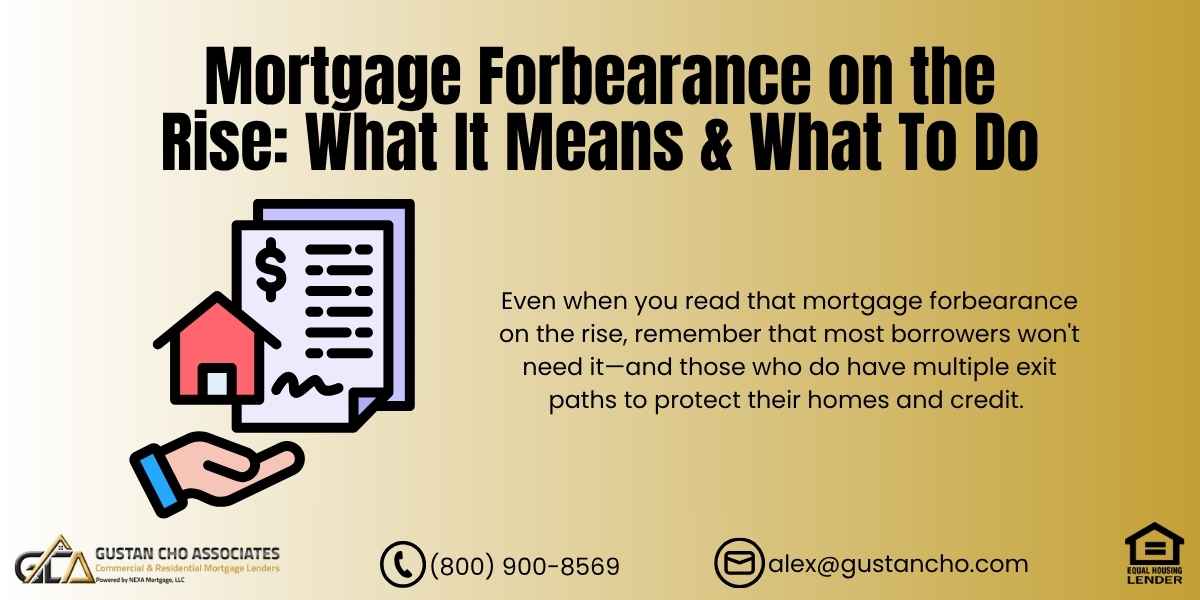
Mortgage forbearance does not mean your loan is forgiven, nor does it always mean foreclosure is imminent. It is a temporary payment relief for homeowners experiencing hardship. The goal is to give you breathing room while you figure out the next step.
Key Takeaways About Mortgage Forbearance on the Rise
- Forbearance is temporary payment relief, not loan forgiveness.
- You usually do not have to repay everything in one lump sum at the end.
- Many borrowers have more than one exit option, depending on their loan type and hardship.
- Property taxes and homeowners’ insurance may still be paid through escrow and settled later.
- The earlier you contact your servicer, the more options you may have.
Is Mortgage Forbearance Actually Increasing?

National forbearance levels remain low compared with pandemic highs. However, some areas still see temporary increases after disasters, layoffs, or rising housing costs. That means headlines about mortgage forbearance on the rise may be accurate in certain places or for certain loan types, even when the broader national picture remains stable. For most homeowners, the bigger issue is not the national percentage.
Whether it is a job loss, a higher insurance bill, a property tax increase, or another hardship is making the mortgage harder to afford right now. That is why it helps to focus less on the headline and more on the relief options available if your budget has changed.
Why More Homeowners Are Asking About Forbearance
Headlines about mortgage forbearance on the rise can sound scary, but they do not always mean the housing market is falling apart. Sometimes they reflect temporary pressure in certain areas, loan types, or homeowner groups.
Most homeowners asking about forbearance today are not in the same situation as borrowers faced during the pandemic. Many are still working. The problem is that their monthly housing costs have changed. Property taxes, homeowners’ insurance, HOA dues, utilities, and other bills have gone up in many markets.
We are seeing more homeowners surprised by escrow shortages. Their principal and interest payment may be fixed, but the total mortgage payment still increases when taxes or insurance rise. For a family already on a tight budget, a few hundred dollars more per month can create real stress.
That is why these headlines need context. Rising forbearance requests can indicate that more homeowners are under pressure, but they do not automatically mean mass foreclosures or another housing crash.
What’s Driving the Increase Right Now?
When homeowners ask about mortgage forbearance on the rise, it is usually not because they have stopped caring about their mortgage. Most are trying to buy time after something changed in their budget.
In the past year, more homeowners have asked about payment relief because their total housing payments have gone up, even though they have not refinanced or bought a new home. The mortgage itself may be fixed, but the escrow part of the payment can still change. Higher homeowners’ insurance premiums, property tax increases, and escrow shortages can turn a once-manageable payment into a problem.
We are also seeing borrowers who still have jobs but lost overtime, had hours cut, or saw business income slow down. That small drop in monthly income can be enough to create stress when groceries, utilities, car insurance, and housing costs are all higher.
Disasters are another reason for short-term increases. Storms, flooding, fires, and insurance delays can leave homeowners paying for repairs, temporary housing, deductibles, and missed work all at once. In those cases, forbearance may give the homeowner a short break while they get their household back under control.
That’s why mortgage forbearance on the rise doesn’t always indicate a singular issue. For certain homeowners, the challenge may stem from income, while for others, it could relate to taxes, insurance, escrow, or even a local disaster. The key question is whether the hardship is temporary or the mortgage payments are no longer sustainable over the long term.
What Mortgage Forbearance Really Means
Mortgage forbearance is a temporary payment relief for homeowners facing financial hardship. Depending on the situation, your loan servicer may allow you to pause payments or make reduced payments for a limited period.
Homeowners may qualify after a job loss, a reduction in income, an illness, a natural disaster, or another financial setback. The length of the forbearance depends on the loan type, the hardship, and the options available through the servicer.
One important thing to understand is that forbearance does not erase the debt. The missed payments still need to be addressed later through a repayment plan, payment deferral, partial claim, or loan modification.
If your mortgage includes escrow for property taxes and homeowners insurance, those bills may continue to be paid by the servicer during the forbearance period. Any amounts advanced on your behalf are typically settled as part of the repayment process after the forbearance ends.
Contact your servicer early to have more options.
Unsure if forbearance is right for you?
Learn who qualifies, what pauses, and how it affects your loanAre We Seeing Another Housing Crisis?
For many homeowners, the primary worry surrounding headlines about mortgage forbearance on the rise is whether the housing market is on the brink of another crisis. Currently, the data suggest we are not facing a repeat of the 2008 housing crash or the pandemic-related disruptions of 2020.
Current forbearance levels remain well below the peak levels seen during the COVID-19 pandemic. While some homeowners are experiencing financial pressure, the overall number of borrowers requesting payment relief is still relatively low compared to those historic highs.
Another major difference is home equity. Many homeowners today have built substantial equity because of years of home price appreciation and mortgage payments. Homeowners with equity often have more options if they run into financial trouble, including refinancing, selling the property, or working out a repayment solution with their servicer before foreclosure becomes a concern.
Lending standards are also much stricter than they were before the 2008 housing crisis. Today’s borrowers generally go through more extensive income, employment, asset, and credit verification before qualifying for a mortgage. That has resulted in a stronger overall mortgage market with fewer high-risk loans.
None of this means homeowners should ignore financial hardship. Mortgage forbearance on the rise can signal that some households are feeling pressure from higher housing costs, insurance premiums, property taxes, or income disruptions. However, an increase in forbearance does not automatically lead to widespread foreclosures or a housing market collapse.
The better way to view today’s forbearance activity is as an early warning sign that some homeowners are facing budget challenges, not necessarily evidence that a major housing crisis is developing.
What Happens to Missed Payments?
Missed payments during forbearance do not disappear. Forbearance provides temporary relief, but the unpaid amount must still be addressed after the relief period ends.
The good news is that most borrowers do not have to repay everything in a lump sum. Many servicers offer options that spread out the missed payments, move them to the end of the loan, or adjust the loan terms if the regular payment is no longer affordable.
What happens next depends on your loan type, your hardship, and whether your income has recovered. Some homeowners can resume their regular payments right away. Others may need a repayment plan, a payment deferral, a partial claim, or a loan modification.
With mortgage forbearance on the rise, communicating with your servicer is key. Inquire about the missed payments, whether any escrow advances were added, and explore the options available to bring your loan current without leading to further payment issues.
Your Options After Forbearance

Forbearance gives you temporary relief, but it is only the first step. When the forbearance period ends, you will need a plan for handling the missed payments. The good news is that most borrowers have more than one option. The right path depends on three things:
- whether your income has recovered
- whether the hardship was short-term or ongoing
- whether your current payment is still affordable
1. Repayment Plan
A repayment plan lets you catch up over time instead of paying everything back at once. Your servicer adds an extra amount to your regular monthly payment until the missed payments are repaid.
What it means: You resume making your normal mortgage payment, plus a set amount each month for a limited period.
Who it fits best: This option works best if your hardship is temporary and your income has returned to normal.
What it does to the monthly payment: Your monthly payment goes up for a while until the missed amount is fully repaid.
2. Payment Deferral or Partial Claim
A deferral or partial claim moves the missed amount to the end of the loan instead of requiring you to repay it right away.
What it means: You can get your mortgage back on track without having to pay a big lump sum all at once. Instead, the missed amount is settled later. Usually, when you sell your home, refinance, or finish paying off the loan.
Who it fits best: This option is often a good fit if you can afford your regular monthly payment again but cannot handle a higher catch-up payment.
What it does to the monthly payment: In many cases, your regular monthly payment stays close to what it was before, which makes this one of the most manageable exit options for many borrowers.
Important note: FHA borrowers may hear this referred to as a partial claim. Other loan types may use the term “payment deferral” or a similar term. The goal is generally the same: move the missed amount out of the way so you can move forward.
3. Loan Modification
A loan modification changes the loan terms to make the payment more affordable.
What it means: Your servicer may adjust the loan to lower the payment, such as extending the term or changing other loan terms.
Who it fits best: This option may make sense if your hardship had a longer-lasting impact and the current payment is still too high even after forbearance ends.
What it does to the monthly payment: The goal is to create a lower or more manageable monthly payment than a repayment plan requires.
Which Option Is Best?
A simple way to think about it is this:
- Repayment plan: best if the hardship was short and your income has recovered
- Deferral or partial claim: best if you need to catch up without increasing your monthly payment too much
- Loan modification: best if the payment is still unaffordable and you need a more lasting change
What to Ask Your Servicer Before Forbearance Ends
Before your forbearance expires, ask your servicer:
- Which options do I qualify for?
- Will my monthly payment go up?
- Do I need to submit documents?
- What happens to the missed payments?
- Which option is most likely to help me avoid falling behind again?
The Main Point
You usually do not have to figure this out on your own, and you usually do not have to repay everything in one lump sum. The key is to review your exit options early so you can choose the one that fits your budget and helps you stay on track.
Will Forbearance Hurt Your Credit?
Forbearance does not automatically hurt your credit just because you asked for help. The bigger risk is missing mortgage payments without an approved agreement from your servicer.
If your servicer approves a forbearance plan and you follow the terms, the account may be handled differently from a normal late payment. Still, you should never assume how it will be reported. Ask your servicer exactly what will show on your credit report during the forbearance period and after the plan ends.
Get the answer in writing. Save emails, letters, account notices, and confirmation numbers. If something is later reported incorrectly, those records can help you dispute the error.
The safest move is to contact your servicer before you fall further behind. An approved hardship plan gives you more protection than simply skipping payments and hoping to catch up later.
Can You Refinance After Forbearance?
Yes, you may be able to refinance after forbearance, but usually not while the loan is still in active forbearance. Most lenders want to see that the forbearance has ended and that you have made recent on-time payments again.
The exact rules depend on the loan program, the lender, and how the missed payments were resolved. A borrower who exits forbearance through a payment deferral may be reviewed differently from someone who is still behind or has not completed the required steps with the servicer.
Before applying for a refinance, ask your servicer when your loan will be considered current again. Also, ask whether the missed payments were deferred, repaid, placed in a partial claim, or handled through a loan modification.
If refinancing is your goal, the way you exit forbearance matters. A clean paper trail, on-time payments after the plan ends, and clear proof that the loan is no longer in active forbearance can make the refinance process much easier.
What We Are Seeing From Homeowners Today
Many homeowners asking about mortgage forbearance on the rise than borrowers did during the pandemic. Back then, widespread job losses were often the driving force behind payment problems. Today, many homeowners are still employed and earning a steady income.
What has changed is the cost of homeownership.
Homeowners are increasingly facing challenges due to rising property taxes, higher homeowners’ insurance premiums, and larger escrow payments. As a result, many are shocked to find that their monthly mortgage payment has increased, even with a fixed-rate loan. While the actual loan payment remains unchanged, the increases in taxes and insurance are driving up the overall costs.
This situation has contributed to mortgage forbearance on the rise, as borrowers seek relief from these unexpected financial burdens. We are seeing more homeowners struggle with rising property taxes, higher homeowners’ insurance premiums, and larger escrow payments. In some cases, borrowers are shocked to discover that their monthly mortgage payment has increased even though they have a fixed-rate loan. The loan payment itself did not change, but the taxes and insurance portion did.
We are also hearing from homeowners dealing with reduced overtime, slower self-employment income, increased living expenses, and unexpected financial setbacks. For many families, it is not one major event causing hardship. It is the cumulative effect of several small increases that gradually strains the household budget.
The encouraging news is that most homeowners seeking help still have options. Many have built substantial home equity over the past several years. They may qualify for repayment plans, payment deferrals, loan modifications, or other loss mitigation solutions before foreclosure becomes a concern.
The lesson we see repeatedly is that homeowners who contact their servicer early generally have more options than those who wait until they are several months behind. If your housing payment is becoming difficult to manage, it is often better to ask questions early rather than wait until the situation becomes more serious.
Final Thoughts on Mortgage Forbearance on the Rise
Headlines about mortgage forbearance on the rise can make homeowners nervous, but they do not always mean a housing crisis is coming. In many cases, they show that some homeowners are feeling pressure from higher taxes, higher insurance premiums, escrow shortages, reduced income, or unexpected expenses.
Forbearance can help if the hardship is temporary, but it is not free money, and it does not erase missed payments. The skipped amount still has to be handled later through a repayment plan, payment deferral, partial claim, or loan modification.
The best step is to act early. If your payment is becoming hard to manage, contact your servicer before you fall further behind. Ask what options are available, how your credit will be reported, what happens to escrow, and how missed payments will be handled when the plan ends.
Mortgage forbearance on the rise does not automatically mean widespread foreclosure. It does mean that homeowners should pay close attention to their budget, escrow statement, and options before the problem becomes harder to fix.
Frequently Asked Questions About Mortgage Forbearance on the Rise:
Can a Mortgage Company Deny a Forbearance Request?
Yes, a mortgage servicer may deny a forbearance request if the borrower does not meet the hardship requirements or if the loan does not qualify for a specific relief option. That is why homeowners should ask what programs are available for their loan type and request the decision in writing.
Can You Ask for Mortgage Forbearance More Than Once?
Yes, some homeowners may be able to request forbearance more than once if they face another hardship. Approval depends on the loan type, servicer rules, investor guidelines, and whether the borrower has already used prior relief options.
Can You Sell Your House While in Forbearance?
Yes, you may be able to sell your home while in forbearance. The missed payments, escrow advances, and any other amounts owed would usually need to be settled at closing from the sale proceeds.
Is Mortgage Forbearance Available on Investment Properties?
It depends on the loan type and servicer guidelines. Some relief options are mainly designed for owner-occupied homes, while other loans may have different hardship programs. Investors should contact the servicer directly before missing payments.
Can You Make Partial Payments During Forbearance?
Some servicers may allow partial payments during forbearance, but you should confirm how those payments will be applied. Never assume a partial payment will automatically protect your credit or keep the loan current unless the servicer confirms it in writing.
What Documents do You Need to Request Forbearance?
The servicer may request a hardship explanation, income documents, bank statements, insurance documents, disaster-related documents, or proof of reduced income. Requirements vary, so homeowners should ask for a complete list before submitting the request.
What Happens if Your Forbearance Request is Denied?
If your request is denied, ask the servicer why and whether another loss mitigation option is available. You may still be able to apply for a repayment plan, a loan modification, or another hardship solution, depending on your situation.
Should You Request Forbearance Before Missing a Payment?
Yes, it is usually better to contact your servicer before you miss a payment. Asking early gives you more time to review options, protect your credit, and avoid falling further behind.
This article about “Mortgage Forbearance on the Rise: What It Means & What To Do” was updated on June 22nd, 2026.