
This guide covers a home warranty and how it works for homeowners. When you are looking to buy a house, you may ask the seller to give you a home warranty. However, sometimes you need to get the home warranty on your own. A home warranty may cover the repair or replacement of specific systems and appliances that fail from normal use.
Depending on the plan, coverage can include HVAC, plumbing, electrical systems, water heaters, and appliances. Unlike homeowners’ insurance, home warranties often have exclusions, service fees, and claim limits that require review.
You need a home warranty if you inherit a house you want to keep. If you are purchasing homes for rental purposes, you need a warranty on each house. Use the tips below to avoid fatal errors when buying your first home warranty. Also, you must remember that every home and warranty will be different. This article will discuss the top mistakes to avoid when buying a home warranty.
What Is a Home Warranty?
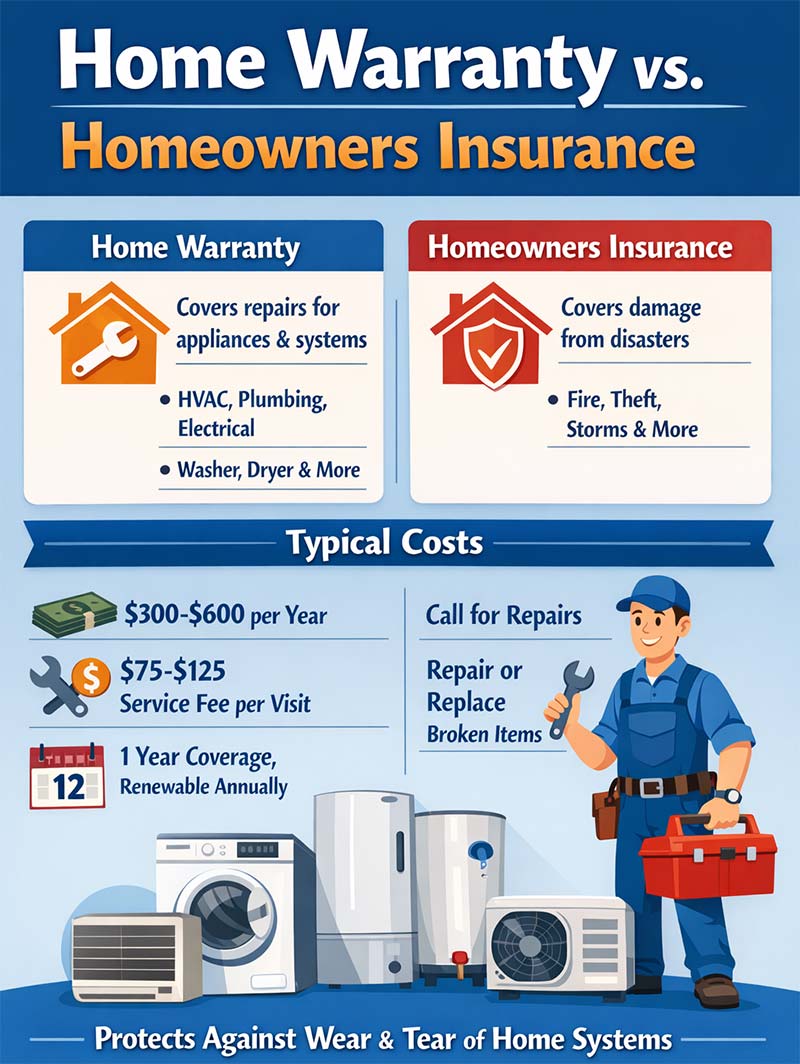
A home warranty differs from homeowners insurance, as the latter provides coverage for the structure and belongings of your home in the event of fire, theft, storms, or other unforeseen catastrophes. In contrast, a home warranty specifically addresses the regular wear and tear experienced by your appliances and systems, including but not limited to HVAC, plumbing, electrical, water heater, washer, dryer, oven, refrigerator, and other components.
A home warranty typically lasts for one year and can be renewed annually. You pay a premium upfront, which can range from $300 to $600 per year, depending on the level of coverage and the provider.
You also pay a service fee or deductible each time you request a service, varying from $75 to $125 per visit. When something breaks down or malfunctions in your home, you contact your home warranty provider, and they will send a licensed technician from their network to diagnose and fix the problem. If the item cannot be repaired, the provider will replace it with the same model or offer you a cash payout.
What Does a Home Warranty Cover for Homeowners? A Complete Guide to Systems, Appliances, and Exclusions
While a home warranty is often seen as a way to protect a home, many homeowners are unsure what it covers. Understanding home protection options is essential for prospective buyers, current homeowners, and those seeking coverage for aging systems and appliances.
Questions to Ask Before Choosing a Home Warranty
A home warranty is a service contract that can help cover the cost of repairing or replacing household systems and appliances that break down from normal use. It’s different from a manufacturer’s warranty and is not the same as homeowners’ insurance. The Federal Trade Commission notes that home warranty coverage can be limited, with varying costs and claim conditions. The FTC also says home warranties usually cover repairs or replacements for certain appliances or air conditioning systems, and only for a set period.
What Homeowners Should Review Before Buying a Home Warranty
This distinction helps homeowners budget for unexpected expenses, such as repairs to dishwashers, water heaters, or HVAC systems. However, because coverage is limited, it is important to review contract details.
What Is a Home Warranty for Homeowners?
Home warranties are contracts that provide specific coverage for household appliances and systems, and can be renewed annually. Coverage applies to items that fail due to normal wear and tear, not to damage from fires, floods, theft, storms, or other insured events.
The FTC describes warranties as service contracts, which vary by company, coverage, and exclusions. Home warranties can benefit buyers purchasing properties with older appliances and systems.
Some homeowners choose a warranty to reduce unexpected repair costs for major components. Sellers may offer a one-year home warranty with the sale, but this does not guarantee full coverage. If an air conditioning system fails due to age, a home warranty may cover the cost. In contrast, roof damage from a storm or fire damage is typically covered by homeowners’ insurance. These terms should not be used interchangeably. If the item fails, the homeowner must file a claim with the home warranty provider.
What Does a Home Warranty Cover? Get the Right Plan for Your Home
Coverage varies by provider and plan. Compare what’s typically included (HVAC, plumbing, electrical, water heater, appliances) and what’s usually excluded—so you don’t pay for surprises.What Does a Home Warranty Cover?
A home warranty usually covers systems and appliances that break due to normal wear and tear. Homeowners insurance, on the other hand, usually covers the home structure and personal belongings, as well as liability losses from fire, theft, and certain weather-related events.
Some contracts only authorize replacement if the item is deemed irreparable, and claims may be denied if the failure results from neglect or if excluded parts are involved.
The National Association of Insurance Commissioners clarifies that homeowners’ insurance covers the structure of the home, personal belongings, and personal liability, and that most mortgage lenders require homeowners’ insurance to remain active throughout the life of the mortgage. Home warranty providers cover only the systems and appliances specified in your contract.
Home Systems Covered by a Home Warranty
Home warranty plans cover a combination of the following systems:
- Heating Systems
- Central Air Conditioning Systems
- Electrical Systems
- Plumbing Systems
- Water Heaters
- Ductwork
- Garbage Disposals
Covered Home Systems Under a Home Warranty
According to the FTC, home warranties cover repairs and replacements of home components like air conditioners and appliances, but the coverage may be less than consumers anticipate. Be cautious when reviewing advertisements that mention “covered systems.” For example, one plan may include a heating system but exclude code upgrades, leaks outside the foundation, or issues caused by insufficient maintenance. Another plan may set monetary limits on HVAC repairs or replacements.
Covered Appliances Under a Home Warranty
Home warranties may cover the following appliances:
- Refrigerator
- Oven and Range
- Dishwasher
- Built-in Microwave
Coverage varies by plan and the specific appliances listed. Some plans cover only systems, others only appliances, and some include both.
Optional Add-Ons and Extra Coverage
Some home warranty companies offer add-on coverage that can be purchased to cover items excluded from a standard plan. Examples of add-on coverage include:
- Equipment for pools and spas
- Well pumps
- Septic systems
- Roof leaks
- Additional refrigerators or freezers
- Units used for guests
- Sump pumps
Optional add-ons allow you to customize coverage, but it is important to review exclusions. The Office of the Attorney General warns that many expensive or frequently used items are excluded from basic plans and require additional coverage.
What a Home Warranty Typically Omits Coverage For
 A warranty’s usefulness depends on your situation. The FTC recommends reviewing all service contracts and assessing their value. For instance, if your appliance is still under the manufacturer’s warranty, if the contract excludes common issues, or if you have sufficient savings for repairs, a home warranty may not be worthwhile.
Many homeowners do not realize that home warranties do not offer comprehensive coverage. Even if an item is listed in the policy, some repairs may be excluded.
In these cases, a warranty may offer limited value if the contract has many exclusions or if coverage limits do not significantly offset repair costs. A home warranty may benefit homeowners in only a few specific situations. For example, a home warranty may help those with several aging appliances and systems who want protection from repair costs. It can also provide coverage for buyers of older homes during the first year of ownership. Some homeowners value the predictability of fixed monthly costs, even with service fees and coverage limits.
Typical Omissions From a Home Warranty Plan
Typical omissions can include:
- Structural issues
- Problems with the foundation
- Replacement of roofs
- Chimneys
- Windows
- Walls
- Damage by flood, fire, or storm
- Cosmetic damage
- Improper workmanship
- Violation of building codes
- Neglect or insufficient maintenance
- Subordinate damage resulting from the failure of a covered item
What Does a Home Warranty Cover for Homeowners? | Home Warranty Guide
Consumer alerts note that most home warranties exclude major components such as structural defects, septic systems, and well pumps unless you purchase optional coverage. Some plans also exclude expensive repairs for roofs, windows, and chimneys.
Why Existing Conditions Are Important
A key exclusion is the condition of the property at the time coverage begins. If a system or appliance had an issue before the contract started, the company can deny the claim. Many service contracts list pre-existing conditions as a standard exclusion. As a result, warranties typically do not cover systems or appliances with pre-existing issues at the start of the contract. This limitation often leads to dissatisfaction.
Service Fees and Waiting Periods
Even if an item is covered, homeowners could still owe a service fee every time they submit a claim.
- Even if an item is covered, homeowners may be responsible for alterations that are not covered.
- Permit, disposal, hauling, or code upgrade fees
The FTC recommends comparing service contracts to identify additional benefits. A contract may not offer sufficient value if it duplicates existing coverage or has restrictive limits.
Buying a Standard Home Warranty

Does a Home Warranty Cover Everything
The home warranty that you get does not automatically fix everything. You need to read the warranty’s fine print to know how much it covers. Some warranties do not cover the replacement of appliances, water heaters, or HVAC units. The warranty might pay for repairs, but you will be forced to pay for a new unit independently. Some warranties do not pay for water damage. Other warranties do not pay for garage doors and openers. You may come across a warranty that does not pay for carpentry repair, or you might find that the warranty does not cover wiring replacements. You need to read the warranty and decide what you are most comfortable with.
Assuming Someone Can Come To Your Home Right Away
When you call the home warranty company for assistance, they will contact a partner company in the area that will send a technician. That is the company that is supposed to help you with your repairs. The partners may be unable to come to your home immediately, and you may need to wait for the partner company to call you. If you are concerned about emergencies, you must check how the company handles these emergencies. Some home warranties offer an emergency line you can call for immediate assistance. However, other companies cannot help you. If you get someone else to solve your problem, you cannot send the bill to the warranty company for compensation.
Does The Home Warranty Company Reimburse Homeowners For Repairs
The warranty company can only help you if they send one of their partner businesses to your home to help you. You are wrong if you thought you could call any repairman you want. The warranty company expects you to call them whenever you need a repair. You are paying for the home warranty and need to ensure you get as much value out of it as possible. If the warranty company allows you to get reimbursement for certain services, you need to check their coverage limits. The warranty company may only pay so much for a repair done by a company they do not work with.
Get the Home Warranty Coverage Checklist
Know what to ask before you buy: caps/limits, service call fees, pre-existing conditions, exclusions, and add-ons like pool, septic, or well coverage.How Much Does a Home Warranty Cost
The warranty you buy for your home likely has a term attached. Some warranties last ten years, while others only last a few years. Because of this, you need to know when to renew the warranty. If the warranty is not renewed, you lose your protection.
If you forget that you have lost your protection, you will need to pay out of pocket the next time you have a problem at the house. Plus, you need to change your level of coverage if you ever make any improvements to the house.
You want to have a plan that can pay to repair the modern things you have added to the home, and you should consult the warranty company about altering your plan.
Why Is It Good To Have a Home Warranty
When you get a home warranty, you must ensure that it provides coverage that works for your home. You also need to get a plan with terms you are comfortable with. You should ask the warranty company if they allow for reimbursement, and you also need to ask them how they handle emergencies. All these factors will help you decide when purchasing your warranty.
HOW TO CHOOSE THE RIGHT HOME WARRANTY
If you own a home, you know how expensive and stressful it can be to deal with unexpected repairs or replacements of your appliances and systems. That’s why many homeowners opt for a home warranty, a service contract that covers the cost of maintaining or fixing these items for a set period. But what exactly is a home warranty, how does it work, and what does it cover? And more importantly, how can you find the best home warranty plan for your situation? In this article, we’ll answer these questions and give tips on choosing the right home warranty for your needs.
What Are the Benefits of a Home Warranty?
A home warranty can offer several benefits, such as saving money by covering costly repairs or replacements of your appliances and systems. Giving you peace of mind that you won’t have to deal with unexpected breakdowns or hassles. Providing you access to qualified and vetted contractors who can handle any issue. Enhancing the value of your home and appealing to potential buyers if you decide to sell.
What Are the Drawbacks of a Home Warranty?
A home warranty can also have drawbacks, such as limitations on how much the provider will pay for each item or service. Exclusions on what items or conditions the plan covers can be frustrating. Homeowners can restrict who to use for service and when and how to request a service or file a claim. Deal with delays, disputes, or denials from the provider or the contractor.
What Are the Types of Home Warranties?
Different home warranties are available in the market, depending on what items or systems you want to cover and how much coverage you need—some common appliance plans. Appliance Plans home warranty cover only your major appliances, such as your refrigerator, dryer, washer, oven, dishwasher, microwave, and garbage disposal.
Appliance Home Warranty Plans are usually cheaper than other plans but offer less coverage. The cost of the Appliance Home Warranty plan is the least costly out of any other warranty plan.
A second type of warranty plan is a system plan: These plans cover only your major systems, such as your HVAC, plumbing, electrical, water heater, ductwork, smoke detectors, ceiling fans, and doorbells. They are usually more expensive than appliance plans but offer more coverage. Combination home warranty plans cover both your appliances and systems. They are usually the most comprehensive and costly plans but offer the most coverage.
How to Choose the Right Home Warranty for Your Needs?
Another type of home warranty plan is customized plans: These allow you to choose which items or systems you want to cover from a list of options. They are usually more flexible and tailored to your needs but may have higher premiums or service fees. Not all home warranties are created equal. Different types of plans, providers, and coverages are available. To choose the right home warranty for your needs, you should consider the following factors:
How much can you pay for the premium and the service fee? Compare different plans and providers and see what they offer for your price range.
What items do you want to cover, and how old are they? Some plans only cover basic items, while others offer more comprehensive or customized coverage. Some providers may have age limits or pre-existing condition clauses for particular objects.
Homeowners Insurance and Home Warranty
This distinction is important for homeowners evaluating coverage options. A home warranty usually covers systems and appliances that break due to normal wear and tear. Homeowners insurance, on the other hand, usually covers the home structure and personal belongings, as well as liability losses from fire, theft, and certain weather-related events.
The National Association of Insurance Commissioners clarifies that homeowners’ insurance covers the structure of the home, personal belongings, and personal liability.
Most mortgage lenders require homeowners’ insurance to remain active throughout the life of the mortgage. For example, if an air conditioning system fails due to age, a home warranty may cover the cost. In contrast, roof damage from a storm or fire damage is typically covered by homeowners’ insurance. These terms should not be used interchangeably item fails, the homeowner must file a claim with the home warranty provider.
How a Home Warranty Works After Something Breaks
When a homeowner has a claim with the home warranty company, the company will dispatch a technician or contractor to assess the issue. If the claim is approved, repair or replacement will proceed in accordance with the contract’s terms, limits, and exclusions.
Homeowners may be required to use contractors within the warranty provider’s network. Certain plans mandate prior authorization before any work is performed.
Some contracts only authorize replacement if the item is deemed irreparable, and claims may be denied if the failure results from neglect or if excluded parts are involved. This often occurs when homeowners do not read the service agreement and rely too heavily on marketing claims.
When Might A Home Warranty Be Worth It
A home warranty may benefit homeowners in only a few specific situations. For example, a home warranty may help those with several aging appliances and systems who want protection from repair costs. can also provide coverage for buyers of older homes during the first year of ownership.
Some homeowners value the predictability of fixed monthly costs, even with service fees and coverage limits. A warranty’s usefulness depends on your situation.
The FTC recommends reviewing all service contracts and assessing their value. For instance, if your appliance is still under the manufacturer’s warranty, if the contract excludes common issues, or if you have sufficient savings for repairs, a home warranty may not be worthwhile. In these cases, a warranty may offer limited value if the contract has many exclusions or if coverage limits.
Important Considerations About Home Warranty Contracts
Home warranty contracts should be reviewed as thoroughly as other major agreements.
Home Warranty Questions
Look Closely At The Following Issues:
- What is and is not covered?
- Do not rely only on the summary page, which often serves as marketing.
- Review the full service contract for details on covered systems, appliances, and exclusions.
- Is there a dollar limit on coverage? Some plans cap coverage by item, category, or contract term.
- Is there a waiting period? Some plans do not start coverage immediately.
- Are claims denied if there are pre-existing conditions? This is a common reason for claim denials.
- Are maintenance records required? Some companies require maintenance records to verify proper system upkeep.
- Who selects the contractor? Many plans require the use of in-house contractors, though some homeowners prefer the flexibility to choose their own.
- Do roof leaks, well pumps, septic systems, and swimming pools fall under coverage? These items are often excluded from standard coverage.
Is It True That Because Of A Mortgage, Home Warranties Must Be Taken Out?
Most of the time, a home warranty is not required by the mortgage. Lenders require homeowners’ insurance, not a home warranty. The NAIC explains that mortgage lenders often ask for homeowner`s insurance because they wish to ensure the home that secures their loan. Home warranties are sometimes offered during real estate transactions. Sellers may include a warranty as an incentive, or buyers may purchase one for added assurance. However, home warranties are generally not required, and homeowners’ insurance is not mandated by law.
The Benefits of Home Warranty Coverage
Where do you live, and what are your area’s common issues or risks? Depending on the local regulations, climate, or market conditions, some plans may vary by state or region. Some providers may also have limited availability or service areas in specific locations. Who are you buying the plan from, and how reputable are they?
Check their ratings, reviews, and complaints from sources like Better Business Bureau, Consumer Affairs, or Forbes Home. Also, check their customer service, claims process, contractor network, and cancellation policy.
A home warranty is a worthwhile investment for homeowners who want to protect themselves from unexpected expenses and hassles related to their appliances and systems. However, not all home warranties are the same. You need to research and compare different plans and providers before buying one. You can find the best home warranty plan for your needs by following the tips above.
Final Thoughts on Home Warranty Coverage for Homeowners
Homeowners may choose to purchase a warranty to help address breakdowns of covered systems and appliances. Typical coverage includes HVAC systems, plumbing, water heaters, and certain kitchen or laundry appliances.
A home warranty is a limited service contract, not comprehensive protection for the entire home. It is important to understand exclusions, compare service fees and limits, and recognize the difference from homeowners’ insurance.
Exclusions usually include structural issues, disaster damage, improper installation, pre-existing failures, and repairs outside routine maintenance. The value of a home warranty depends on contract details, the condition and age of home systems, and how well coverage matches the homeowner’s needs.
FAQs On Home Warranty
What Is A Home Warranty For Homeowners?
A home warranty is a service contract that covers repairs and replacements for home systems and appliances, such as HVAC, plumbing, and electrical systems. Coverage may also include water heaters, refrigerators, ovens, dishwashers, and laundry appliances, depending on the contract.
What Does A Home Warranty Cover?
Most home warranty plans cover appliances, but only those listed in the contract. Some plans are appliance-only, while others include both appliances and systems. Homeowners should review exclusions, claim limits, and service fees before relying on the policy.
Does A Home Warranty Cover Plumbing And Electrical Systems?
Most plans cover plumbing and electrical systems, but coverage is often limited to specific parts. Certain leaks, outside lines, code upgrades, and damage from lack of maintenance or pre-existing conditions may be excluded.
What Are The Home Warranty Exclusions?
A home warranty often excludes structural defects, roof replacements, windows, chimney replacements, routine maintenance, and pre-existing problems. Separate coverage is needed for optional items like septic systems, pools, and well pumps.
Is A Home Warranty The Same As Homeowners’ Insurance?
No. A home warranty is not the same as homeowners’ insurance. A home warranty covers specific systems and appliances, while homeowners’ insurance covers losses from fire, theft, liability, and damage to the home. Lenders require homeowners’ insurance, but not home warranties.
Is A Home Warranty A Requirement When Getting A Home Loan?
Mortgage lenders do not require home warranty policies. Homeowners insurance is required because the home serves as collateral for the loan. A home warranty is optional and may be provided by the buyer or seller, but it is not commonly required by lenders.