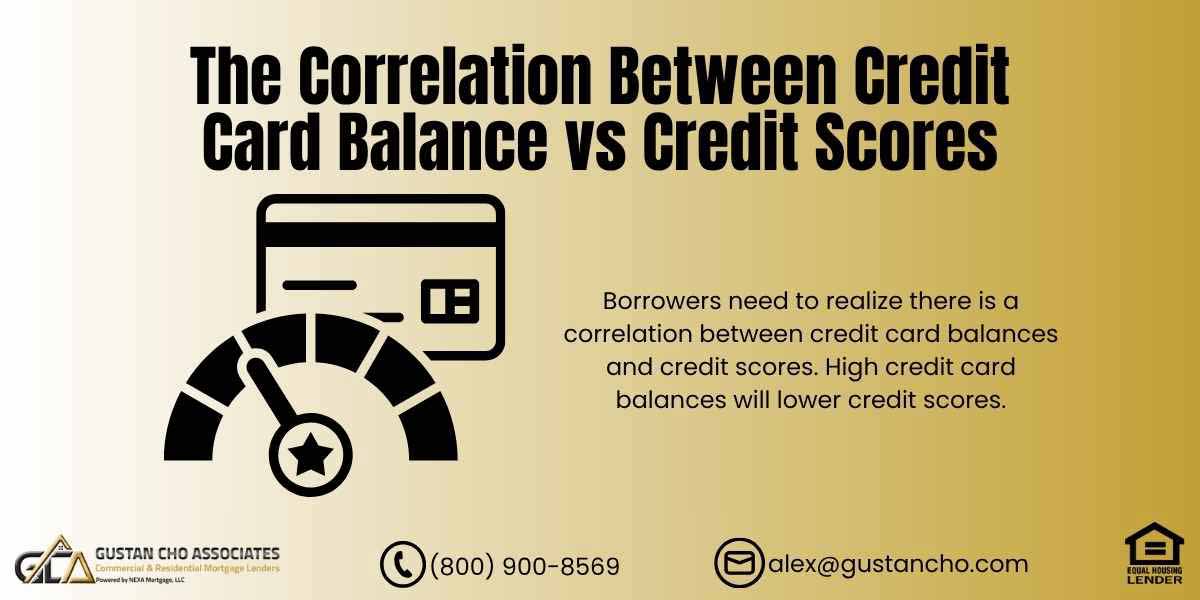
In this article, we will cover the correlation between credit card balance vs credit scores. There are mortgage guidelines on credit score requirements. The first step in qualifying for a particular mortgage loan program is to meet the minimum credit score requirements. The higher the credit scores, the lower the borrower’s mortgage rates.
It is best to maximize your credit scores before applying for a mortgage. Borrowers need to realize there is a correlation between credit card balances and credit scores. High credit card balances will lower credit scores. To quickly increase credit scores, paying down all of our credit card balances to under a 10% utilization ratio is recommended.
Key Takeaways
- Keep total and per-card utilization at 1–9% for best results.
- Make sure at least one card reports a small balance each month so you show active revolving credit.
- Pay before the statement cuts, so the reported balance is low.
- Tackle maxed-out cards first—a single high-util card can drag your score down.
- For thin files, 2–3 (secured) cards with limits ≥$500 each can add 60–100+ points over time when used right.
What “Utilization” Means (and Why it Moves Your Score Fast)
Credit card utilization pertains to the amount of your credit limit that you utilize. For example, if your limit is $2,000 and you owe $1,000, that means you’re using 50% of your credit. This matters a lot when it comes to your credit score—both the overall amount and how much you’re using on each card—because it shows how much you’re relying on credit. It’s always better to keep that number low, especially under 10%.
What Are The Minimum Credit Score Requirements To Get a Mortgage?

There are minimum credit score requirements to qualify for individual mortgage loan programs. This section will cover the minimum credit score guidelines for loan programs. HUD requires a minimum credit score of 580 FICO to qualify for 3.5% down payment home purchase loans.
Mortgage applicants can qualify for FHA loans with under 580 FICO and down to a 500 credit score. Borrowers with an under 580 credit score need to put a 10% down payment on a home purchase. Homebuyers can qualify for FHA loans with a minimum of 500 FICO. Fannie Mae and Freddie Mac require 620 credit scores to qualify for Conventional loans. Most lenders require a 620 credit score for FHA 203k Rehab Loans.
VA Credit Score Requirements on VA Loans
The VA has lenient agency mortgage guidelines on VA loans. There are no minimum credit score requirements on VA loans. The VA has no maximum debt-to-income ratio caps on VA loans as long as the borrower can get approve/eligible per the automated underwriting system.
The automated underwriting system will render an approve/eligible per AUS with a high DTI if the borrower has high residual income and timely payments in the past 12 months.
The Minimum Credit Score Requirements on VA Loans
The Department of Veterans Affairs (VA) does not have a minimum credit score requirement. But most VA Lenders prefer 580 FICO for VA Loans as part of their overlays. Jumbo Lenders require 680 FICO credit scores. Gustan Cho Associates has alternative financing for Jumbo Loans down to 500 credit scores.
Portfolio Lenders require 680 credit scores for condotel financing and non-warrantable condo loan programs. Fannie Mae 5 to 10 Financed Properties require 720 credit scores. No Doc Investment Property Loans require 660 FICO. No Doc Fix And Flip Rehab Loans require 600 credit scores.
Impact on Credit Card Balance vs Credit Scores For Mortgage
For those with low credit scores and who need to boost their credit scores to qualify for a mortgage loan, there are quick fixes on how credit card usage impacts credit scores. There is a correlation between credit card balance versus credit scores. Maxed-out credit cards will plummet credit scores.
One way to boost credit scores is to pay down your credit cards to a $10 balance. If the credit limit is $2,000 and the credit card balance is $1,900, credit scores can instantly increase by paying down the credit card balance. There is a correlation between credit card balance vs credit scores. You can maximize your credit scores to qualify for a mortgage by always leaving a small balance on a credit card.
The Ideal Targets: Overall 1–9% and Per-Card 1–9%
Shoot for 1–9% on each card and across all cards. Example: If you have $10,000 in total limits, aim to have $100–$900 total reporting at statement time.
Why “All Cards at $0” Can Backfire
$0 balances are not bad, but if every card reports $0 for months, some models see no recent revolving activity, which can cost a few points. A safer play is to let one card report a small balance (still 1–9%) and pay the rest to $0.
Statement balance vs current balance (timing matters)
Lenders and bureaus usually see your statement balance, not your day-to-day balance. If you pay before the statement closes, the reported utilization is low—often the quickest legal way to nudge scores up in one cycle.
Pro move: Find each card’s statement close date. Schedule a payment 2–3 days before that date, so 1–9% reports.
Pay before the statement cuts for faster gains.
Timing payments can drop reported balances and lift scores quickly.
Adding New Credit Will Increase Credit Scores
Consumers with no credit tradelines will normally have low credit scores. Consumers can easily get credit scores of over 700 FICO one year after bankruptcy and foreclosure if they have added new credit cards. Consumers should get three secured credit cards with at least a $500 credit limit for maximum credit score potential.
There is a correlation between credit card balance vs credit scores. Never have a zero balance because part of the credit scoring model is when credit bureaus will take the credit card balance and divide it by the credit limit. The smaller the factor, the better credit scores consumers will get. When dividing anything into zero, it yields a zero, so a $10 dollar balance on each credit card is recommended.
The Power of Credit Cards To Boost Credit Scores
Consumers with only have two credit cards should get another credit card. Consumers who filed for bankruptcy or had a prior foreclosure, have no credit, and whose credit scores are in the mid 500s should get three secured credit cards and leave $10 dollar balances in there. Credit scores should increase by 30 points per credit card.
The overall credit score should increase by 100 points by having the three secured cards over the course of time. Anything under a $500 credit limit has little effect. As consumers make timely payments on secured credit cards and as they age the cards, the consumer will develop a stronger credit profile. With timely monthly payments made by consumers, secured credit card companies will increase credit card holders’ credit limits over time without requiring an additional deposit.
Secured Credit Cards Tool To Increase Credit Scores
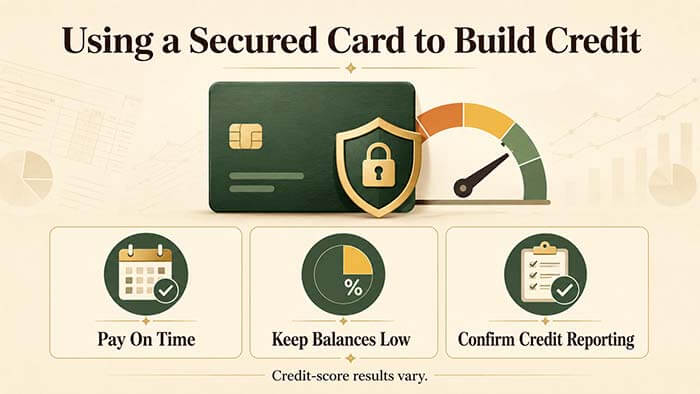
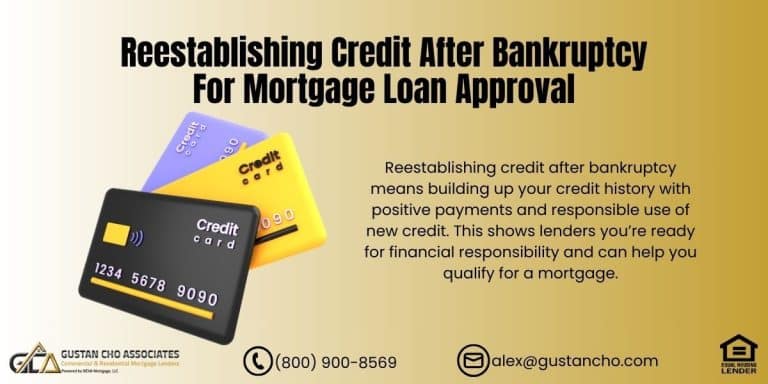
Credit cards are the best tool to re-establish and rebuild credit. Secured credit cards are the fastest way consumers can boost their credit scores. By utilizing credit cards to boost credit scores. For those who do not have any credit cards, adding one secured credit card can boost their credit scores by at least 20 to 30 points. The higher the credit limit, the better.
For maximum credit score optimization, consumers should get at least a $500 credit limit on each secured credit card. Any credit limits under $500 will have little impact. Never be late on secured credit card payments. Secured credit card companies will report payment history like unsecured credit cards on credit bureaus. Late payments on secured credit cards will plummet consumer credit scores and remain on credit reports for seven years.
Common Myths About Credit Card Balance vs Credit Scores (and Better Rules of Thumb)
- Myth: You must leave $10 on every card.
- Better: Leave 1–9% on one card; others can report $0.
- Myth: Paying after the due date is fine if it’s before the next statement.
- Reality: Any late payment crushes scores and stays for 7 years.
- Myth: Closing old cards raises scores.
- Reality: Closing can raise utilization and reduce age, often hurting scores.
Update on Correlation Between Credit Card Balance vs Credit Scores
This mortgage blog article post on the correlation between credit card balance vs credit scores was updated on December 9th, 2022. Homebuyers planning on getting pre-approved for a mortgage should make sure that they pay down their credit cards and leave a $10 dollar balance on them.
Maxed-out credit cards will plummet credit scores temporarily. Low credit scores will not just disqualify someone from qualifying for a mortgage, but low credit scores will affect mortgage interest rates borrowers will get. Low credit card balances are key to having high credit scores and qualifying for a mortgage with lower interest rates.
Borrowers who need a five-star national mortgage company licensed in 48 states with no overlays and who are experts on credit card balances vs credit scores, please contact us at 800-900-8569, text us for a faster response, or email us at alex@gustancho.com.
Frequently Asked Questions About Credit Card Balance vs Credit Scores:
What Does “Credit Card Balance vs Credit Scores” Mean?
It explains how much you owe on your cards (your balance) affects your credit score. Lower balances usually mean a better score.
What Balance Should I Keep for the Best Score?
Aim for 1–9% of your limit on each card and across all cards. That range tends to help scores the most.
Do I Need to Carry Debt to Help My Score?
No. You can pay in full each month. For the “credit card balance vs credit scores” effect, let a small amount (1–9%) show when the statement closes, then pay it off by the due date.
Why Did My Score Drop Even Though I Paid on Time?
Your statement may have reported a high balance. With “credit card balance vs credit scores,” timing matters—pay down before the statement close date, not just the due date.
Is One Maxed-Out Card Worse Than a Few Small Balances?
Yes. A single high-utilization card can pull your score down more than a few tiny balances. Pay that maxed card down first.
Should All My Cards Report $0?
Having every card at $0 can sometimes cost a few points because there’s no revolving activity. Let one card report a small balance (1–9%) and keep the rest at $0.
How Fast Can My Score Go Up After I Pay Down Cards?
Often, by the next statement cycle, once the lower balance is reported. That’s the quickest “credit card balance vs credit scores” win.
Do Credit Limit Increases Help My Score?
They can. A higher limit lowers your utilization if your spending stays the same, which supports the “credit card balance vs credit scores” goal.
How Many Cards Should I Have to Build Credit?
Most people do fine with 2–3 cards used lightly and paid on time. That gives you enough history and control over utilization.
What’s the Easiest Checklist Before a Mortgage Pull?
- Find each card’s statement close date
- Pay 1–9% before that date
- Keep one small balance reporting; others at $0
- Avoid new debt or late payments
This simple plan targets the “credit card balance vs credit scores” sweet spot.
This article about “The Correlation Between Credit Card Balance vs Credit Scores” was updated on October 23rd, 2025.
Convert installments without hurting revolving ratios.
See why personal loans don’t fix revolving utilization problems.