
This guide covers advice and tips for home buyers in qualifying and getting approved for a mortgage. Buying a home is one of the most important decisions you will make. Whether you are a first-time home buyer or looking to move, the process can seem complicated. But with the right advice and tips, you can confidently approach the homebuying journey.
Prepare for closing day with expert guidance and practical steps tailored for home buyers. These recommendations can improve your chances of mortgage approval and help you avoid common mistakes.
At Gustan Cho Associates, we hear from home buyers every day asking for advice and tips on buying a home and qualifying for a mortgage. From first-time home buyers to those looking to refinance, we’re here to help you every step of the way. In this updated guide, we’ll cover everything you need to know about qualifying for a mortgage, avoiding common pitfalls, and making smart decisions as a homebuyer.
Getting Started with the Home Buying Process

Tips and Advice For Home Buyers For Mortgage Qualification
Purchasing a new home is an exciting milestone, but the mortgage process can be complex. Many buyers start searching for homes before understanding the approval process, which can cause complications and stress. Start the mortgage process early. Maintain stable employment, reduce debts, increase savings, and improve your credit profile. Prepare for the down payment and ongoing monthly costs. Pre-approval lets lenders assess your finances from the start.
The Consumer Financial Protection Bureau recommends comparing offers from multiple lenders to secure the best terms. Well-informed buyers usually experience fewer delays and greater confidence.
Review your monthly budget before applying for a mortgage. Focus on ensuring the total payment fits your lifestyle, not just on getting approved. Include property taxes, insurance, association fees, and maintenance in your calculations to avoid unexpected costs.
How To Prepare For Getting A Mortgage
Preparing before you apply for a mortgage gives you a significant advantage. Waiting until after making an offer often increases stress. By understanding your credit, debt, savings, and loan options in advance, you can provide lenders with the required documentation more efficiently. Gather pay stubs, W-2s, tax returns, bank statements, and identification early. Staying organized makes the approval process smoother.
Before Making An Offer, Get Pre-Approved
Lenders primarily evaluate your credit history when determining eligibility. Even if you qualify for a mortgage, credit issues may affect your interest rate, required documentation, and the loan types available to you. For some applicants, approval depends on meeting minimum credit score requirements outlined by Freddie Mac. This also offers options for buyers with lower down payments (Freddie Mac Guide).
When Reviewing Your Credit, Examine It For:
- any errors
- late payments
- balances
- recent collections, charge-offs,
- accounts you forgot,
- disputed accounts, and
- accounts that will need attention during underwriting
See Your Credit Before You Apply
Improving your credit score can expand your loan options, reduce monthly payments, and enhance your financial position. Plan in advance for moving expenses, closing costs, upfront fees, and reserve funds for unforeseen circumstances. Certain programs, such as those offered by Fannie Mae, permit down payments as low as 3 percent; however, a larger initial payment may reduce your loan amount, lower your monthly obligations, and improve your standing with lenders.
Ready to Buy Your Dream Home? Let Us Help You Qualify for a Mortgage!
Contact us today to find out how we can help you get pre-approved and start your home buying journey.Step 1: Know Your Credit Score
Your credit score greatly determines your ability to qualify for a mortgage and what interest rate you’ll get. In 2026, lenders are looking for more credit stability than ever before, so it’s important to check your credit early and improve it if necessary. Lenders will check your FICO score, which ranges as follows:
- Excellent Credit: 781-850
- Good Credit: 661-780
- Fair Credit: 601-660
- Poor Credit: 501-600
- Bad Credit: Below 500
You don’t need perfect credit to buy a home, but if your score is below 600, you may need to explore options like FHA or non-QM loans that are more forgiving of lower credit scores.
Step 2: How Much Can You Afford?
Remember, it’s important to understand the difference between the amount you qualify for and the amount you can truly afford. While a lender might approve you for a large loan, you should consider your monthly expenses, lifestyle, and financial goals before deciding on your budget. To start, use a mortgage calculator to determine your monthly payment based on the home’s price, property taxes, and insurance. Don’t forget to account for other costs like utilities, maintenance, and unexpected expenses. You’ll want to feel comfortable with your payment, not stretched thin.
Advice and Tips for Home Buyers: Qualifying for a Mortgage in 2026
The home buying process can’t move forward without mortgage pre-approval. Here’s what you need to know about qualifying for a mortgage in 2026.
Step 1: Gather Your Financial Documents
Lenders will need specific documents to confirm your financial well-being. You will have to submit the following in 2026:
- Pay stubs (typically for the last 30 days)
- Bank statements (usually from the past 2-3 months)
- Tax returns (for the last 2 years)
- W-2 forms (for the last 2 years)
- Proof of assets (including savings accounts, retirement funds, etc.)
If you’re self-employed, you may need to provide additional documentation, such as business tax returns or a profit and loss statement.
Step 2: Choose the Right Lender
Selecting the right lender is essential. Different lenders offer a different range of mortgage products and have distinct eligibility criteria. For instance, traditional banks often have lender overlays—extra rules on top of standard loan guidelines. If you have a lower credit score or past financial issues like bankruptcy or foreclosure, a bank may not be the best option. At Gustan Cho Associates, we specialize in loans for buyers with credit scores under 600. We don’t have those additional overlays that can disqualify borrowers. Whether you need an FHA loan, VA loan, or non-QM loan, we can help.
Credit Advice and Tips for Home Buyers
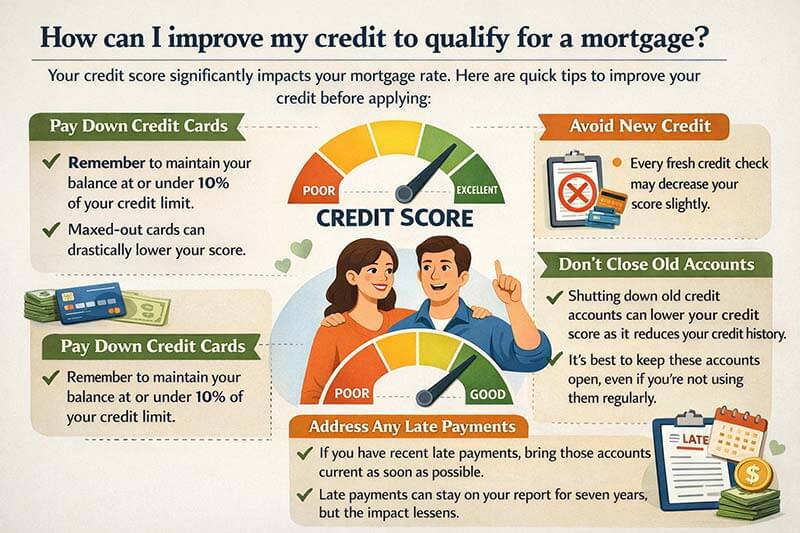 How can I improve my credit to qualify for a mortgage? Your credit score significantly impacts your mortgage rate. Here are quick tips to improve your credit before applying:
Pay Down Credit Cards:
- Remember to maintain your balance at or under 10% of your credit limit.
- Maxed-out cards can drastically lower your score.
Avoid New Credit:
- Every fresh credit check may decrease your score slightly.
- Refrain from opening new credit accounts before or during the home loan process.
Don’t Close Old Accounts:
- Shutting down old credit accounts can lower your credit score as it reduces your credit history.
- It’s best to keep these accounts open, even if you’re not using them regularly.
Address Any Late Payments:
- If you have recent late payments, bring those accounts current as soon as possible.
- Late payments can stay on your report for seven years, but the impact lessens.
How Home Buyers Can Prepare Financially For Mortgage Approval
Mortgage approval is based on a comprehensive review of your finances, not just your income. Buyers who plan proactively typically encounter more options and fewer complications. Review your banking history, as significant or irregular deposits may prompt additional inquiries. Transferring funds between personal accounts is acceptable with proper documentation, but cash deposits or borrowed funds often require further explanation.
Maintain Clear And Organized Financial Records
Retain a portion of your savings prior to applying for a mortgage. Keeping additional funds beyond the down payment strengthens your application and supports long-term financial stability after purchasing your home.
Before you start looking for a home, try to lower your monthly debt. This helps your debt-to-income ratio. Freddie Mac sets a limit on how much of your income can go toward debt and housing costs.
Lenders are cautious about applicants with many open credit accounts. Before starting your home search, reduce balances on credit cards, personal loans, and other debts that impact your monthly budget. Lenders prefer stable financial patterns without sudden changes. It is better to pay down outstanding balances rather than close several accounts at once.
Keep Your Job and Income as Steady as Possible
Maintaining a consistent income is essential during the mortgage application process. Lenders inquire about significant changes in employment, compensation, or work hours. If you are considering a transition to commission-based pay, self-employment, or a new position with a probationary period, defer these changes until after your mortgage is finalized.
While applying for a mortgage, how you use your credit matters as much as your credit history. Some buyers run into problems after preapproval, such as opening new accounts or taking on more debt.
Do not make big purchases, open new credit cards, or cosign loans. Even small new debts can affect your debt-to-income ratio and slow your loan. Credit card companies still report your balance to credit bureaus, so avoid large charges during the mortgage process.
Avoid Late Payments
Ensure all payments are made punctually throughout the mortgage process. A single late payment can create complications. Use reminders or automatic payment systems to maintain consistency. Lenders favor an unblemished payment history, and in some cases, a late payment is less detrimental than high credit utilization.
Income Tips for Home Buyers
Lenders assess not only your income level but also its consistency with their requirements. Bonuses, commissions, and self-employment income are evaluated differently, which may introduce complexity. Assemble comprehensive income documentation and be prepared to demonstrate stable earnings. Applicants without a regular salary should expect additional inquiries. Carefully review all information, as undisclosed debts or employment gaps can delay the process.
Address Irregularities
Letters of explanation are common for many cases and often include:
- gaps in employment
- Prior issues with credit
- significant deposits
- questions regarding the history of addresses
- variations in names across documents
These circumstances do not necessarily result in application denial. Providing clear, consistent documentation typically resolves such issues. While many applicants emphasize credit scores because they are readily available, the debt-to-income ratio is equally, if not more, significant. A strong credit score offers limited benefit if accompanied by substantial debt. When your debt-to-income ratio exceeds certain thresholds, you may need to:
- pay off or temporarily reduce certain debts
- make a larger down payment
- target a lower price range
- qualify an eligible co-borrower
- document additional qualifying income, if allowed
- Choose a loan program that fits your situation.
Ensure that you are not only approved for a mortgage but also able to sustain payments comfortably over the long term.
Tips for Homebuyers on Down Payment and Closing Costs
In addition to the down payment, buyers should plan for closing costs, which are often overlooked. The CFPB’s Loan Estimate and Closing Disclosure are helpful tools because they show the same information in different ways. Before closing, review these documents carefully, not just the interest rate, to find the best deal and spot risks.
Closing Funds
Your available cash to close can include:
- down payment
- lender fees
- title charges
- prepaid taxes and insurance
- escrow setup
- appraisal or other upfront costs. Allocate extra funds to maintain financial security after you move in.
Some buyers may get help with their down payment or closing costs. Fannie Mae says some loans can be used with assistance programs from housing agencies or other groups. These programs can help, but buyers need to know the rules for getting help, such as whether they have to pay it back, whether they must live in the home, and how it affects timing and paperwork.
How Do Mortgage Rates Work In 2026?
The interest rates for mortgages can greatly affect the amount you pay each month. In 2026, rates are expected to fluctuate based on inflation and economic conditions. Here’s a general idea of what you can expect based on your credit score:
- Excellent Credit (781-850): You’ll likely qualify for the lowest rates available.
- Good Credit (661-780): You may still get competitive rates, but they’ll be slightly higher than someone with excellent Credit.
- Fair Credit (601-660): You’ll see higher rates, but you can still qualify for an affordable loan, especially if you choose an FHA loan.
- Poor Credit (501-600): Your rates will be higher, and you may need to explore government-backed loans like FHA or VA loans.
- Bad Credit (Below 500): Qualifying for a traditional mortgage may be difficult, but non-QM loans or hard money loans could be an option.
What Mistakes Should I Avoid When Buying A Home?
Making several common errors can harm your ability to qualify for a mortgage or finalize the purchase of your home.
Don’t Make Major Purchases:
- Avoid buying a new car, furniture, or other big-ticket items.
- Lenders will check your credit and finances again before closing; large purchases could affect your approval.
Don’t Apply For New Credit:
- Your credit score takes a small hit each time it is checked.
- It’s best to hold off on applying for new credit accounts until after the closing.
Don’t Change Jobs:
- Lenders like stability. Even if you’re getting a higher-paying job, changing jobs during the mortgage process can raise red flags and delay your approval.
Don’t Move Money Around:
- Lenders will examine your bank statements to verify that you possess adequate funds for the down payment.
- Any atypical deposits or transfers might require clarification, potentially adding complexity to the process.
How Important Is Job Stability When Applying For A Mortgage?
Job stability is crucial when you’re applying for a mortgage. Lenders want to see that you have a steady income and will likely continue making payments. You’ll be in a strong position if you’ve been with your current employer for at least two years. If you’re self-employed or recently changed jobs, don’t worry—you can still qualify for a mortgage, but you may need to provide additional documentation to show your income is consistent.
Ready to Become a Homeowner? Let’s Make Sure You Qualify for a Mortgage!
Contact us today to get started on your path to homeownership.Tips on Shopping for Mortgages
Many buyers devote significant time to searching for homes, but overlook the importance of selecting an appropriate mortgage. Give equal consideration to loan options, as the type of mortgage can influence approval and budget. Pre-approval demonstrates seriousness to sellers, but it represents only an initial step and does not guarantee final approval. The CFPB suggests obtaining several Loan Estimates because rates, fees, and credits can vary significantly. Sometimes a loan with a higher rate can save you more money over time because of lower fees or better terms.
Widen Your Focus
Home buyers should look at:
- all lender fees
- all mortgage insurance
- all discount points
- all lender credits
- All cash is required to close.
- whether the rate is fixed or adjustable
- whether the payment is adjustable
- whether the payment is adjustable
A Lower Interest Rate May Not Be Advantageous If Accompanied By Higher Fees
Common mistakes home buyers should avoid include assuming a lower interest rate is always preferable, especially if it comes with higher fees. The application process is critical. Errors such as making significant purchases, changing employment, or transferring funds without proper documentation can jeopardize approval.
Delays in submitting required documents may result in missed closing dates, as underwriters operate on strict timelines. Pre-approval does not guarantee affordability; ensure the monthly payment aligns with your budget.
Although lenders establish debt limits, setting personal financial boundaries is prudent to prevent impulsive decisions. Maintain stable finances, avoid unexplained large deposits, and avoid major changes before closing. Continue timely bill payments and thoroughly review all mortgage documents, as they reflect your diligence. The CFPB suggests that you understand your loan terms, finalize the fees, and check whether the loan meets your expectations by analyzing your Loan Estimate and Closing Disclosure. This is a great way to avoid surprises before closing day.
Pre-Approval And Final Approval Are Not The Same
Perfect finances are not required for mortgage approval. Applicants who plan proactively, remain attentive, seek clarification, and avoid common errors typically experience the most efficient process. Gustan Cho Associates is dedicated to supporting prospective homeowners. By understanding your credit, debt, income, and mortgage options, you can approach the home-buying process with clarity and confidence.
2026 Mortgage Updates: What’s New This Year?
In 2026, there have been some changes to mortgage guidelines and requirements that home buyers need to be aware of:
Higher Loan Limits:
- With rising home prices, FHA, VA, and conventional loan limits have increased in many areas.
- This means you can qualify for a higher loan without needing a jumbo loan.
More Flexible Credit Options:
- Certain lenders, like non-QM lenders, offer more flexibility to people with lower credit scores or non-traditional sources of income, such as bank statement loans.
Green Home Incentives:
- Many states, including Illinois, offer tax incentives for buyers installing solar panels or making energy-efficient improvements.
- Check with your lender to see if you qualify for additional savings.
Final Advice and Tips for Home Buyers in 2026
It’s crucial to get pre-approval in today’s competitive market. Pre-approval indicates to sellers that you are committed and have the financial means to purchase a home. Additionally, it allows you to save time viewing properties beyond your financial capability. When you are prepared to obtain pre-approval, it is crucial to explore your options. Various lenders provide different rates and terms, so it is important to compare and find the most favorable terms.
What’s The Next Step?
If you’re ready to take the next step in your home-buying journey, contact a trusted mortgage professional. At Gustan Cho Associates, we specialize in helping buyers navigate the mortgage process and find the best loan options for their unique situation. Whether you’re a first-time home buyer or looking to refinance, we’re here to make the process as stress-free as possible.
Tips For Mortgage Buyers That Improve Approval
Buying a home in 2026 doesn’t have to be overwhelming. By following this advice and tips for home buyers, you can make informed decisions, qualify for the right mortgage, and move into the home of your dreams. From improving your credit score to avoiding common pitfalls, taking the time to prepare will set you up for success. When you’re prepared to begin your journey to homeownership, contact us today for tailored guidance and a pre-approval that brings you one step closer to your ideal home.
Frequently Asked Questions About Advice and Tips for Home Buyers:
What’s The First Step In Buying a Home?
First, understand your financial situation. Check your credit score, review your savings, and set a budget. This will give you a clear picture of how much you can afford and prepare you for the mortgage process.
How Does My Credit Score Affect My Mortgage Approval?
Your credit score is important for mortgage approval and interest rates. Higher scores mean better rates, while lower scores may limit options. Scores under 600 can still get approved, especially with programs like FHA loans.
What’s The Difference Between How Much I Qualify For And What I Can Afford?
When considering taking out a loan, concentrate on what you can actually manage based on your monthly expenditures and financial objectives. Use a mortgage calculator to approximate monthly payments and ensure they align with your budget.
What Documents Do I Need To Apply For A Mortgage?
In 2026, you’ll typically need recent pay stubs, bank statements, tax returns, and W-2 forms. You may need additional documents, like business tax returns or profit and loss statements, if you’re self-employed.
What Advice And Tips For Home Buyers Should I Follow To Improve My Credit?
To improve your credit, pay down credit card balances, avoid new credit applications, and keep old credit accounts open. Address any late payments quickly to minimize the impact on your credit score.
How Do Mortgage Rates Work In 2026?
The mortgage interest rates can vary depending on your credit score and economic conditions like inflation. A higher credit score improves your likelihood of being eligible for favorable rates. In contrast, lower scores may lead to higher rates. It’s important to note that rates may fluctuate over the year, so monitoring them regularly is wise.
What Should I Avoid Doing During the Home-Buying Process?
Avoid making large purchases (like a car or furniture), applying for new credit, changing jobs, and moving money around in your accounts. These actions can hurt your mortgage approval or delay the process.
Why Is Job Stability Important For Getting A Mortgage?
Lenders prefer that you have a consistent income and can meet your mortgage obligations. Being employed by the same company for at least two years increases your chances of being approved for a mortgage.
How Has The Mortgage Market Changed In 2026?
In 2026, loan limits have increased to keep up with rising home prices, making it easier to qualify for larger loans. There are also more flexible loan options for buyers with lower credit scores or non-traditional income sources, such as bank statement loans.
What’s the Next Step After Getting Pre-Approved for a Mortgage?
Once you’re pre-approved, you can confidently start house hunting. Pre-approval shows sellers that you’re serious and financially capable, giving you an edge in today’s competitive market. Explore multiple lenders to find the best mortgage rate and terms.
What Is The Best Advice And Tips For Home Buyers Before Applying For A Mortgage?
The best tips for home buyers are to check your credit, lower your monthly debt, save for the down payment and closing costs, keep your income steady, and get pre-approved before looking at homes. Organize your documents early and avoid opening new credit accounts before and during the mortgage process. Pay bills on time, reduce credit card balances and your debt-to-income ratio, provide clear asset documentation, maintain consistent employment, and choose a realistic price range.
Avoid Actions That Could Jeopardize Your Mortgage Approval?
Buyers should avoid opening new credit cards or making large purchases on credit. Don’t miss payments, make large undocumented cash deposits, change jobs, or increase your debt before closing.
Is It A Good Idea For Home Buyers To Compare Different Mortgage Lenders?
Yes. The CFPB suggests that borrowers should obtain and compare different Loan Estimates, as this is an effective way to compare costs, terms, and features of different mortgages.