Quick Answer: Re-establishing credit to qualify for FHA loan means building a record of responsible debt management. First, review your credit reports, fix any errors, pay bills on time, and lower high credit card balances. A secured card may help if you need to build positive credit history, but opening several accounts is not a shortcut to approval. Your next steps should fit your current credit, available savings, and homebuying timeline. A higher score alone does not guarantee FHA eligibility. If a financial setback has damaged your credit, deciding what to fix first can feel overwhelming. Start with the accounts and payment habits you have today. A useful rebuilding plan should help you manage your bills as you prepare for a mortgage, without adding unnecessary debt.
What Re-Established Credit Means for an FHA Application
Re-established credit is proof that you’re managing your finances responsibly following previous problems. That proof can be in the form of accounts you’ve previously had in good standing or a suitable new account that will report your payments.
Your credit score and your payment history are related, but they’re two very different things. A lower balance may well improve your score, whilst your credit report will still show that you’ve had recent missed payments. Mortgage lenders will consider your income, debts, savings, and other eligibility criteria.
The aim is a stronger, more sustainable financial position to underpin the home payment you’re looking to take on.
Step 1: Review Your Credit Reports and Correct Errors
Get your reports from Equifax, Experian, and TransUnion through AnnualCreditReport.com. Review each report because the information may differ. Look for accounts that do not belong to you, incorrect balances, duplicate entries, and payments marked late when your records show otherwise. If a debt was discharged in bankruptcy, check whether the reporting accurately reflects its status. For a genuine error, contact both the credit reporting company and the business that supplied the information. Explain what is wrong and provide copies of supporting records. Keep the dispute, your documents, and the investigation results. The Consumer Financial Protection Bureau outlines the process for contesting inaccuracies in reports. If you are already applying for a mortgage, tell your loan officer about unresolved disputes. Their treatment can affect the underwriting process. Correct inaccurate information rather than disputing accurate accounts to try to raise a score.
Step 2: Build a Payment Routine You Can Maintain
Pay your current bills on time. If your budget is still tight each month, opening a new account will not fix the problem.
Set up reminders or automatic payments, and make sure you have enough money in your account before a payment goes through. If your paydays and bill due dates do not match, ask your creditor if you can change the due date. If you cannot make a payment, reach out to your creditors right away.
Look over your spending before you sign up for a credit-building product. Remember to plan for occasional costs like insurance renewals or car repairs, so you do not miss a bill later. The CFPB says that making payments on time and applying only for credit you really need are key to maintaining good credit.
Step 3: Reduce High Credit Card Balances
Credit utilization is the comparison of the balances reported on your credit cards against their limits. High balances will affect your score even if you’re making only the minimum payments. For example, a $900 balance on a card with a $1k limit is 90% of the limit. A $200 balance on that same card would be 20% utilization. That’s the maths behind it; it doesn’t mean your score will go up by any particular amount. Lower utilization is generally helpful (though of course no % will guarantee approval), and you don’t need to have any interest-bearing debt in your portfolio to build credit. The CFPB makes it clear that the timing of the reporting is important, so a balance that has just been paid may not show up straight away. Choose a paydown amount that leaves you with some money left over for living expenses and for the cost of buying a home. If you use all your savings to pay down the balance, you’ll be completely unprepared for the closing costs.
Step 4: Decide Whether a New Account Would Help
If you already have accounts with positive payment history, focus on managing them well. Do not assume you need three new credit cards or a specific credit limit to rebuild your credit. If you have little usable credit history, consider an affordable product that reports payments. Compare the costs and timing before applying, particularly if you hope to buy soon.
Secured Credit Cards
A secured card usually needs a security deposit. You’ll still get a bill each month and have to make payments. The deposit isn’t used to pay your bill. Look at annual fees, interest rates, deposit amounts, and how the card reports your activity. Verify whether the issuer submits reports to all three primary credit bureaus. Use the card for a small purchase you can easily pay off, and try to pay your bill on time and in full.
Credit-Builder Loans
With a credit-builder loan, the money you borrow is held by the lender while you make regular payments. Once you finish paying, you get the funds. This can help you build a payment history, but remember to consider any fees and the new monthly payment. You do not need both products to create a credit mix. The CFPB describes these credit-building options, including how they differ from debit and prepaid cards. Planning to apply soon? Before opening an account or committing homebuying savings to a deposit, ask Gustan Cho Associates, a mortgage broker, to review your mortgage readiness. Call 800-900-8569 to discuss your next steps.
Step 5: Keep Proof of Rent and Other Regular Payments
Keep records of rent and other regular obligations (especially if you’ve got a thin traditional credit file) as these can be very useful. Bank statements, canceled cheques, payment confirmations and account statements will all help to show when the payments were actually made.
These records may be useful to the lender if they’re looking for alternative payment history documentation. The type of records required will depend on the underwriting method and your particular circumstances. You don’t necessarily have to provide the same rent verification package as every other FHA applicant.
Paying a bill doesn’t necessarily mean it’ll show up on your credit reports. Having proof of payment can still be useful in answering an underwriter’s questions. Ask your loan officer which records you should keep before you destroy any older statements.
Review Collection Accounts Before Using Your Savings
Have collection accounts reviewed before deciding how to use money saved for a home. Different obligations can require different treatment during a mortgage application. A collection, judgment, and delinquent federal debt should not be treated as interchangeable. Ask which accounts need attention for qualification and how a proposed payment would affect your available closing funds. Paying an account does not automatically remove accurate past delinquency from a credit report or guarantee a score increase. Keep written settlement terms and proof of any payments you make. Address inaccurate reporting through the dispute process.
How Long Does Re-Establishing Credit Take?
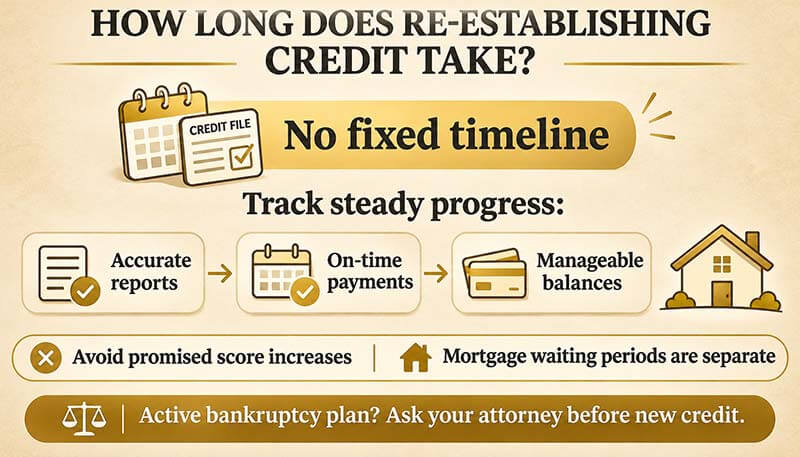
No fixed timeline applies to every borrower. A balance update or corrected error may change a report sooner than it takes to establish a longer record of on-time payments. Results depend on the information already in your file and the scoring model used. Measure progress through manageable balances, reliable payments, accurate reports, and savings you can maintain. Avoid planning a purchase around a promised increase of a certain number of points within a few months. Credit reporting, credit rebuilding, and mortgage waiting periods are separate issues. For questions beyond rebuilding your payment history, see:
- FHA mortgage requirements after bankruptcy for Chapter 7 and Chapter 13 eligibility.
- FHA guidelines on late payments after bankruptcy if new delinquencies occurred afterward.
- FHA loans with low credit scores for score ranges and down payment requirements.
If you are in an active bankruptcy plan, consult your bankruptcy attorney before taking on new credit.
Final Thoughts on Re-Establishing Credit for an FHA Loan
FAQs About Re-Establishing Credit to Qualify for an FHA Loan
Does Checking My Own Credit Lower My Score?
No. Checking your own reports or scores does not lower your scores. You can review them before deciding whether to authorize a lender’s credit check.
Can a Debit Card or Prepaid Card Build Credit?
Generally, no. You are spending money you already have rather than repaying borrowed funds. These cards are different from secured credit cards, which create a credit account and can report payment history.
Should I Close an Old Credit Card I No Longer Use?
Review the fees, available limit, and your ability to manage the account before closing it. Closing a card can lower your available credit and raise your credit utilization if you have balances on other cards. An unused account also needs monitoring for fees or unauthorized activity.
Is the Score in My Credit App the Same Score a Mortgage Lender Uses?
Not necessarily. Scores can differ due to the scoring model, credit bureau, or the date of calculation. Use an app to monitor trends, but have your loan officer explain the scores used for your application before making decisions based on a displayed number.
Do I Have to Pay a Credit Repair Company?
No. You can obtain your reports and dispute errors yourself. The Federal Trade Commission explains that credit repair companies cannot legally remove accurate, current negative information. If you need help organizing your finances, a HUD-approved housing counselor may be a useful resource.
This article about “Re-Establishing Credit to Qualify for FHA Loan” was updated on November 2nd, 2026.