Why a Home Purchase Offer Gets Rejected?
Having a home purchase offer rejected can be frustrating, especially after finding a property that feels like the right fit. In many cases, the seller does not reject an offer because the buyer did something wrong. Sellers often choose the offer that gives them the best mix of price, timing, financing strength, and certainty of closing.
A rejected offer usually comes down to a few common issues. The price may have been too low for the market. Another buyer may have offered fewer contingencies, more earnest money, or a closing timeline that better matched the seller’s needs. In competitive markets, even a solid offer can lose out if another bid feels easier or less risky.
The good news is that a rejected offer can help buyers make a stronger move next time. Understanding why sellers turn down offers can help you adjust your price, improve your terms, and present a more competitive offer on the next home.
What This Article Will Help You Understand
Purchase offer rejected by sellers? This guide explains the most common reasons why a purchase offer is rejected, what buyers can do after a seller says no, and how to strengthen a future offer without taking unnecessary risks.
Home Purchase Offer Rejected by Home Sellers
Understand why sellers reject offers, discover tips to improve future bids, and find effective strategies to secure your dream home in a tight market. Alex Carlucci says the following about home purchase offer rejected by home sellers:
Finding your dream house is exciting. You picture holidays in the living room and the kids in the backyard. You write a strong offer, then wait, and the phone call from your agent delivers the blow: the home purchase offer was rejected by the home sellers.
It stings. Why did your picture-perfect plan come undone? The good news is that each setback is a lesson wrapped in disappointment. Let’s break down the most common reasons sellers say no. We’ll list specific ways to boost your next offer and things to steer clear of so the same door doesn’t slam shut again. The goal is not just to stay in the game but to come swinging the next time you spot the home that’s a match for your dreams.
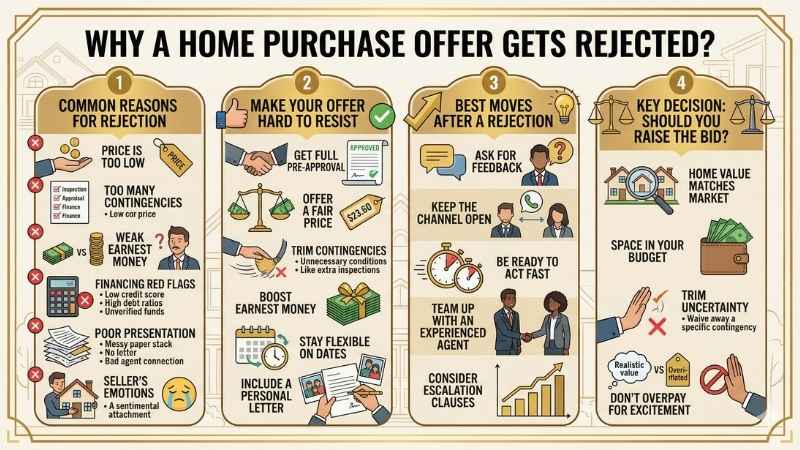
Why Sellers Say No to Home Purchase Offer by Buyers
Sellers turn down purchase offers for different reasons, and the dollar amount isn’t always the main factor. Here are the typical things that make an offer slide into the “no” pile:
- The price is too low compared to either their asking price or other offers they have.
- Some contingencies, like wanting to back out after an inspection, an appraisal clause, or tricky financing conditions, don’t sit well.
- A weak earnest money check that gives the impression the buyer isn’t fully committed.
- Financing red flags—like a shaky credit score, high debt-to-income ratio, or unverified bank funds.
- Seller’s emotions—they may have a sentimental attachment to the house or prefer the vibe of another buyer.
- The presentation looks flimsy—there is no heartfelt offer letter, proof of funds is absent, or the buyer’s agent does not communicate clearly and professionally.
Ways to Make Your Offer Hard to Resist
If the seller turned your offer down, you can bounce back with a stronger one:
- Get fully pre-approved—not just a quick pre-qual. A full pre-approval shows the seller you mean business.
- Make a fair or slightly higher price—that may mean topping the asking price in a hot market.
- Trim the contingencies—fewer “what-ifs” make your offer stand out.
- Boost the earnest money—putting down a larger deposit makes it clear you plan to follow through.
- Stay Flexible on Closing Dates—If you can adjust your timeline to meet the seller’s needs, you might seal the deal when others can’t.
- Include a Personal Letter – Sharing a little about why the home matters to you can give your offer a heart that pure numbers lack.
Best Moves to Win After a Rejected Bid
- Ask for Feedback – Have your agent check in with the seller.
- Knowing why the first offer got turned down can help you tweak the next one.
- Keep the Channel Open – Some transactions don’t stick.
- If you stay in touch, you might get a shot at the same house again.
Be Ready to Act Fast
In fast markets, extra time can mean you lose the house. Have your finances lined up, your inspection team set, and your lender on speed dial.
-
- Team up with an Experienced Agent. Someone who knows the neighborhood and the numbers can craft an offer that stands out in the pile.
- Think About Escalation Clauses—These let your offer climb in set increments if another bid pops up, so you can stay competitive without guessing.
Should You Raise the Bid After a Rejection?
Bumping your offer makes sense if:
- The home’s value matches the market, and its future appraisal looks strong.
- You have space in your budget and can still cover your other financial needs.
- You can trim uncertainty, like waiving certain inspections or appraisal contingencies.
- Still, don’t let excitement lead you to overpay.
- Check numbers with your agent and ensure the decision passes the financial smell test.
Handling the Emotional Hangover of a Rejected Offer
Feeling let down when your offer on a home is turned down is human. Try to keep this in mind:
- It happens in strong selling markets.
- It’s not a personal failure.
- Just because this one didn’t work out doesn’t mean the right house isn’t waiting for you.
- Every “no” teaches you a little about what sellers care about.
- When a seller says “no” to your offer, it can sting, but you can treat the moment like a springboard.
- Find out what the seller valued in the winning offer, tweak your bid if possible, and keep at it.
- Each bounce-back gets you closer to the offer that the seller will scoop right up.
- The perfect house is out there—and the next offer you make could be the one that locks it down.
The Biggest Reasons Sellers Reject Purchase Offers
Sellers often have their purchase offer rejected for several reasons, and the highest bid isn’t always the one they accept. In many situations, sellers seek the offer that provides the best combination of price, certainty, and convenience. A common reason a purchase offer is rejected is that the offer price is too low relative to the asking price, recent comparable sales, or other bids on the property. In a competitive market, even a reasonable offer can be turned down if another buyer is willing to pay more.
Contingencies also play a significant role. Sellers may prefer an offer with fewer obstacles, such as minimal repair requests, a shorter inspection period, or financing terms that seem less likely to delay closing. More conditions attached to an offer can lead sellers to view it as riskier, hence a purchase offer rejected.
Financing strength is another crucial factor. Buyers with a strong pre-approval, clear proof of funds, and a solid earnest money deposit often appear more reliable than those whose financing appears uncertain. Even when two offers are similar in price, the seller may lean toward the one that seems more likely to close on time. Timing can also affect the seller’s decision. A buyer who aligns with the seller’s preferred closing date or offers flexibility may have an edge over a buyer with strict timing constraints. In some cases, the presentation of the offer matters too. A clean, complete offer package prepared by an experienced real estate agent can enhance the transaction’s appeal, making it feel smoother and more dependable from the seller’s perspective, thereby reducing the risk of a purchase offer being rejected.
Reasons Why Purchase Offer Rejected
One of the most common reasons why a purchase offer is turned down or rejected is because the home buyer offers a low ball offer. The home seller gets insulted. Sellers does not even counter the purchase offer. Sellers often think that the home buyer is not a serious home buyer.
Nothing is wrong with writing a purchase offer lower than the asking price. However, coming in at a value that is 20% or more less than the purchase price can be the reason for the home seller to think that the home buyer is just low balling them.
Low ball offers are viewed negatively by sellers and seller do not take the purchase offer seriously and not even counter offer. If the home is just listed and fresh on the market, the seller may not even take an offer less than the asking price. Sellers are not regulated like realtors and mortgage bankers. So home sellers do not have to respond to any offers than the asking market listed price of their home.
Why a Strong Pre-Approval Can Help Your Offer
A strong pre-approval can make a significant difference when a seller is comparing multiple offers, especially if a purchase offer is rejected due to financing concerns. Sellers want confidence that the buyer can reach the closing table without delays or surprises. When your financing appears solid, your offer may feel less risky compared to similar offers from other buyers. In competitive markets, sellers often consider factors beyond just the price. They may prefer a buyer who has already submitted income documents, asset statements, and credit information to a lender and has undergone a careful review before making an offer. This approach demonstrates that the buyer is serious, qualified, and ready to move forward, reducing the chances of a purchase offer being rejected.
A pre-approval letter carries more weight when it is based on a thorough review of the buyer’s financial profile rather than a quick estimate. Having proof of funds for the down payment, closing costs, and earnest money deposit can really boost your offer, especially when it makes sense to include it.
The goal is not only to show your interest in the home but also to demonstrate that you are fully prepared to close, minimizing the risk of your purchase offer being rejected.
Clear Communication and Strong Representation Matter
How an offer is presented can influence the seller’s response. In a competitive market, sellers and listing agents often prefer offers that look complete, well-organized, and less likely to create delays. A buyer’s real estate agent can help by presenting the offer clearly, responding promptly to questions, and ensuring the seller understands the buyer’s financing, timeline, and overall terms. Even when the offer price is competitive, weak communication or missing documents can make an offer feel less reliable. A buyer’s purchase offer rejected doesn’t necessarily stem from needing the most aggressive offer in every situation. Instead, it emphasizes that the offer should be clear and easy to understand, supported by appropriate documentation, and presented in a professional manner that instills confidence in the seller in the transaction.
Cash Offers and No Mortgage Contingency Buyers Will Get Preference
Cash offer homebuyers or homebuyers with no mortgage contingencies will get preference over homebuyers who request a finance contingency and home inspection contingencies. Home sellers do not necessarily go with the highest purchase offer. Lisa Marie Jones, a partner at R 247 Partners, LLC, a acquisition and development company says the following about purchase offer rejected by home sellers:
The home seller needs to feel comfortable with the homebuyers. A strong pre-approval and a call to the homebuyer’s lender where the mortgage lenders makes the sellers’ realtor feel very confident goes a long way.
The sellers’ side need to be convinced that there will be no glitches with the home buyer and the buyer’s lender. Sometimes the home seller may want to speak directly with the home buyer’s mortgage loan officer.
Why FHA Financing Can Affect a Seller’s Decision
In some markets, sellers may perceive FHA offers as more complicated than conventional offers, leading to purchase offers being rejected. This perception often stems not from the buyer’s strength, but from FHA loans, which typically involve appraisal and property-condition requirements. These can necessitate repairs or additional negotiations before closing. As a result, many sellers prefer offers they believe involve fewer hurdles. However, an FHA buyer can still successfully compete against conventional offers by presenting a strong pre-approval, solid earnest money, flexible terms, and an offer price that aligns with the market. The key is not to assume that FHA financing makes an offer weak. Instead, it’s essential to understand how sellers may view the transaction and to enhance the aspects of the offer that the buyer can control to avoid the risk of having a purchase offer rejected.
Ways To Make a Future Offer More Competitive
Buyers can improve their chances of getting an offer accepted by strengthening the terms of the offer, not just the price. The right strategy depends on the market, the property, and the buyer’s financial comfort level. Instead of making every concession possible, buyers should focus on the changes that improve competitiveness without creating unnecessary risk.
Offer a Closing Timeline That Fits the Seller
Some sellers care just as much about timing as they do about price. If a seller wants to close quickly, a buyer who is prepared to move fast may have an advantage. In other cases, the seller may need extra time after closing to move out. Flexibility can make an offer more attractive when two offers are otherwise similar. This strategy makes the most sense when the buyer has already spoken with their lender and agent about a realistic closing window. It should not be used to promise a timeline that may be hard to meet.
Increase Earnest Money To Show Commitment
A larger earnest money deposit can help show that a buyer is serious about the purchase. Sellers often view a larger earnest money deposit as a sign that the buyer is committed and less likely to walk away without a valid reason. This can help in a competitive market, but buyers should understand the contract terms before increasing the deposit. Earnest money can be at risk if the buyer defaults or misses key deadlines.
Limit Contingencies Carefully
Offers with fewer contingencies may look more appealing because they give the seller more certainty. For example, a shorter inspection period or fewer repair requests make an offer easier to accept. However, buyers should be careful not to remove protections they may truly need. Waiving contingencies can increase risk, especially for first-time buyers, buyers with limited cash reserves, or buyers purchasing older homes.
Consider a Leaseback Only When It Solves a Seller Problem
In some situations, a seller may want to stay in the property for a short time after closing. Offering a temporary leaseback can make the offer more attractive if it helps the seller manage the move. This is a more advanced strategy and should be handled carefully with clear written terms. Buyers should understand the occupancy timeline, insurance considerations, and responsibilities before agreeing.
Be Cautious About Offering To Cover Repairs or Buy As-Is
Some buyers try to make their offer stronger by agreeing to purchase the home as-is or by taking responsibility for certain repairs. This can work when the buyer understands the property condition and is financially prepared for the added cost. But this approach is not right for every buyer. Taking on repairs too quickly can lead to unexpected expenses, especially if the inspection reveals larger issues than expected. Buyers should avoid making this kind of concession unless they fully understand the risk.
Focus on Stronger Terms, Not Just More Risk
The best purchase offer rejected by sellers is often not due to the number of concessions included. In many cases, the strongest offer strikes a balance between a fair price, clear financing, realistic timing, and a level of flexibility that the buyer can genuinely support.
Frequently Asked Questions on Home Purchase Offer Rejected by Home Sellers
Why was My Home Purchase Offer Rejected by the Seller?
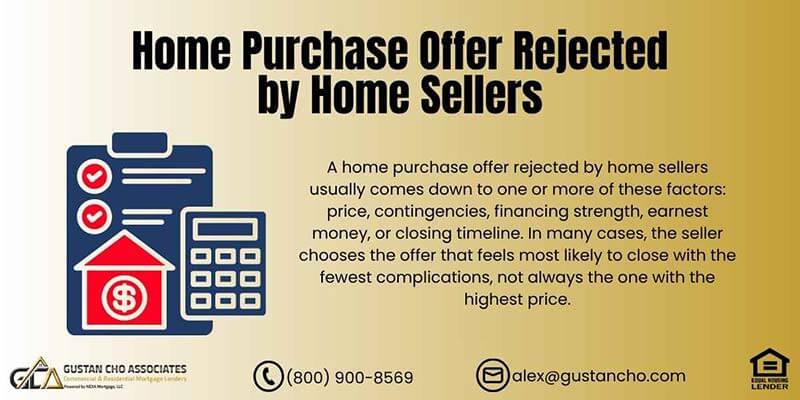
A home purchase offer rejected by home sellers usually comes down to one or more of these factors: price, contingencies, financing strength, earnest money, or closing timeline. In many cases, the seller chooses the offer that feels most likely to close with the fewest complications, not always the one with the highest price.
Can I Submit Another Offer After My First Offer is Rejected?
Yes. If the property is still available, buyers can often submit another offer after a rejection. A stronger second offer may include a better price, cleaner terms, a larger earnest money deposit, or a closing timeline that better aligns with the seller’s schedule.
Should I Raise My Offer Price After a Rejection?
Sometimes, but only if the home still fits your budget and the value supports the price. If your original bid lost because it was too low or another buyer offered better overall terms, raising the price may help. Before increasing your number, compare the home to recent market activity and make sure the revised offer still makes financial sense.
Should I Waive the Inspection to Strengthen My Offer?
Waiving the inspection can make an offer look more attractive to a seller, but it also increases buyer risk. A safer alternative may be to shorten the inspection period or limit repair requests rather than giving up the inspection entirely. This is especially important for first-time buyers or buyers purchasing older homes.
How Much Earnest Money Should I Offer to be More Competitive?
There is no single rule, because earnest money depends on local market norms and the strength of competing offers. Recent guidance for buyers commonly describes a 1% to 3% range of the purchase price as typical, with higher deposits sometimes used in more competitive markets. A stronger deposit can help if your home purchase offer rejected by home sellers, who seem weak on commitment or certainty.
Does a Rejected Offer Hurt My Chances of Buying Another Home?
No. A rejected offer does not follow you from one property to the next. It does not damage your ability to make offers on other homes. In most cases, it means you need to adjust your strategy by improving your pricing, terms, documentation, or flexibility on the next property.
This article about “Home Purchase Offer Rejected By Home Sellers” was updated on March 27th, 2026.