What happens to a mortgage after the borrower dies depends on the loan, the ownership of the home, and who inherits the property. In most cases, the mortgage remains tied to the home, and surviving family members may have options such as continuing payments, selling the property, or refinancing the loan.
Who Is Responsible for the Mortgage After the Borrower Dies?
In most cases, the mortgage does not disappear when the borrower dies. The loan remains tied to the home, and what happens next depends on who owns the property, who inherits it, and whether anyone else is already legally responsible for the loan.
If There Is a Co-Borrower
If another person signed the mortgage after the borrower dies, that person usually remains responsible for making the payments. This is common when spouses or co-buyers took out the loan together.
If Someone Inherits the Home
If an heir inherits the property, they may be able to keep the home and continue making the mortgage payments. In some cases, they may later choose to refinance the loan into their own name.
If the Borrower Was the Sole Owner
If the deceased borrower was the only person on the loan and title, the home usually becomes part of the estate. During that time, the estate or family may need to continue making payments while the property is in probate or is transferred to heirs.
Why the Outcome Can Be Different
The exact result can depend on several factors, including how the home was titled, whether there was a will or trust, the terms of the mortgage, and state inheritance laws.
Mortgage After a Borrower Dies—Know Your Next Steps
If you inherited a home or were on the loan, you may have options to keep the property, assume the loan, refinance, or sell. Get a clear, step-by-step plan based on your situation.How Different Situations Affect the Mortgage After the Borrower Dies
What happens to the mortgage depends on who was on the loan, who owns the home, and whether the family wants to keep or sell the property. The easiest way to understand the outcome is to look at the situation that matches your case.
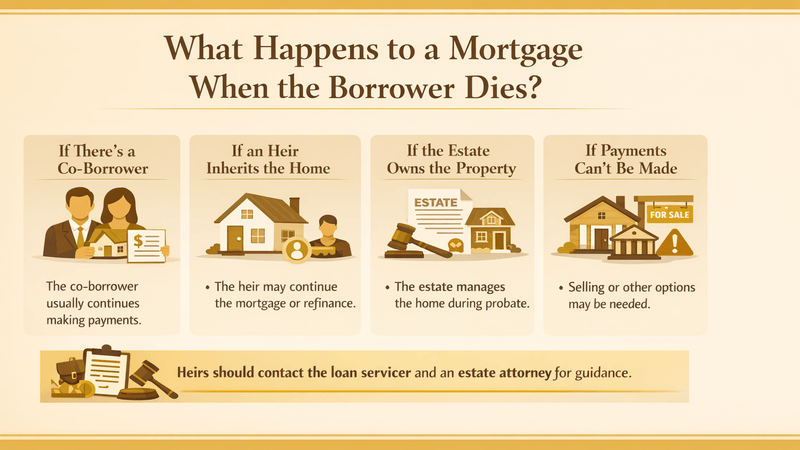
If There Is a Co-Borrower
If another person signed the mortgage as a co-borrower, that person usually remains responsible for the loan after the other borrower dies. They can generally continue making payments and keeping the home, as long as the loan stays current.
If the Heir Inherits the Home
If a family member inherits the property, they may be able to keep the home and continue making the mortgage payments. In some cases, they may later refinance the loan into their own name if they want long-term control of the property.
If the Estate Owns the Property
If the deceased person was the sole owner and no transfer has happened yet, the home may become part of the estate. During that period, the estate may need to keep the loan current while probate or transfer steps are completed.
If No One Can Afford the Payments
If the family cannot afford to keep making payments, they may need to sell the home, refinance if eligible, or discuss options with the loan servicer. Waiting too long can increase the risk of default or foreclosure.
The Property is Owned jointly With a Co-owner Who Is Not On The Mortgage
If the deceased borrower had a co-owner who did not sign the mortgage, such as a spouse who acquired ownership through marriage, they are not liable for the debt but may inherit it along with the property. They have several options. They can assume the mortgage and take over payments. They can refinance the mortgage and get a new loan. They can sell the property and use the amount to pay off the mortgage. They can let the lender foreclose on the property and walk away from the debt.
The Deceased Borrower Is The Sole Owner of The Property.
If the deceased borrower was the sole owner and borrower of the property, then the estate becomes responsible for paying off the mortgage. The estate executor must notify the lender of their death and work with them to determine the next steps. The estate may use its assets to pay off or continue paying the mortgage or transfer or sell the property to an heir or a third party. If there are not enough assets in the estate to cover the debt, or if no one wants to take over the property, the lender may foreclose on it and sell it to recover their money.
What Legal Protections Do Heirs Have When They Inherit a Mortgage?
 Heirs often worry that a lender can demand immediate payoff of the full loan balance as soon as they inherit a home. In many cases, that is not how it works. Federal law gives certain protections when a property is transferred after the borrower’s death, which may allow an heir to keep the home and continue making mortgage payments. These protections can limit how a lender applies a due-on-sale clause, which is a loan provision that may otherwise require full repayment when ownership changes. Because inheritance and servicing rules can vary by situation, heirs should also contact the loan servicer promptly and confirm what documents are needed.
Preparing Ahead Can Make Mortgage Decisions Easier
While this article focuses on what happens after a borrower dies, some advance planning can make the process easier for surviving family members. Staying on top of mortgage records and having clear estate documents makes it easier for the family or the estate to determine who’s in charge of the property, stay in touch with the loan servicer, and avoid missing payments when things get tough.
Create a Will or a Trust For The Mortgage After The Borrower Dies
After your passing, a will or trust serves as a legal document outlining your desired distribution of assets and debts. You can name an executor or a trustee to manage your estate and fulfill your wishes. You can also name beneficiaries who will inherit your property and other assets. A will or a trust can help you avoid probate, a court process that can be costly and time-consuming. It can also help you avoid disputes and conflicts among your heirs.
Designate Beneficiaries For The Mortgage After The Borrower Dies
A beneficiary will receive a specific asset or benefit from you upon death. You can designate beneficiaries for your bank accounts, retirement accounts, life insurance policies, and other investments with a payable-on-death or transfer-on-death feature.
Doing this lets you bypass probate and ensure that these assets go directly to your chosen people. A life insurance policy is a contract that pays out money to your beneficiaries when you die.
You can use this money to pay off your mortgage, cover your funeral expenses, or provide financial support to your family. You can choose the amount and type of coverage that suits your needs and budget. A financial planner or an estate attorney can help you create a comprehensive plan for your mortgage and other financial matters when you die.
Want to Keep the Home? Check Refinance Options
If assumption isn’t available or the loan needs to be restructured, we’ll review your income, credit, and equity to see the best refinance or buyout strategy.Hire Financial Planners or Estate Attorneys To Help With The Mortgage After The Borrower Dies
Hire an estate attorney or financial attorneys to pre-plan your will and estate planning. Financial Planners or an Estate Attorney have the expertise to provide guidance regarding optimal strategies and choices, which may include refinancing, prepaying, or transferring your mortgage.
Financial Planners or Estate Attorneys can also help you with your decisions’ legal and tax implications. Having a mortgage when you die is not the end of the world. It is possible to deal with it in a way that minimizes the impact on your family and heirs.
When dealing with a mortgage after the borrower dies, surviving family members may have more options than they realize. Understanding who owns the home, who is responsible for the loan, and what protections may apply can help families avoid costly mistakes. For guidance specific to a home loan scenario in these circumstances, borrowers can also speak with a qualified mortgage professional and an estate attorney when legal or inheritance questions arise.
Frequently Asked Questions About a Mortgage After the Borrower Dies:
Does a Mortgage Go Away When the Borrower Dies?
No. In most cases, the mortgage does not disappear when the borrower dies. The loan remains attached to the home, and someone must usually keep making payments if the family wants to keep the property.
Who is Responsible for the Mortgage After a Homeowner Dies?
Responsibility often depends on who inherits the home, whether there is a co-borrower, and how the property was titled. If there is a co-borrower, that person usually remains responsible. If the home passes to an heir, the heir may be able to continue making payments or refinance later.
Can Heirs Take Over a Mortgage Without Paying it Off Right Away?
In many cases, yes. Certain heirs may have protections that prevent the lender from demanding immediate full repayment just because the property transferred after the borrower’s death. This is one of the most important protections for families who want to keep their home.
What Should Family Members do First After a Borrower Dies?
Family members should contact the mortgage servicer as soon as possible and be prepared to provide documents such as a death certificate and estate or inheritance paperwork. This helps clarify who can speak with the servicer and which loan options are available.
What Happens if No One Can Afford the Mortgage Payments?
If the payments cannot be maintained, the family may need to sell the home, explore a refinance if eligible, or discuss available options with the servicer before the loan falls seriously behind. Even if the home is sold, mortgage payments, taxes, and insurance may still need to be handled in the meantime.
What Happens to a Reverse Mortgage When the Borrower Dies?
A reverse mortgage is not the same as a regular mortgage. Upon the borrower’s death, the loan becomes due and payable. Heirs may be able to sell the home, repay the balance, or transfer the property to the lender, but they usually face specific notice and timing rules.