
If you want to learn how to use money wisely, the first step is understanding that money is a tool, not something that should control your life. When you know how to budget, save, spend with purpose, and avoid costly mistakes, you put yourself in a stronger position financially. Learning how to use money is not about being rich or perfect with numbers. It is about making smart decisions that help you reduce stress, avoid unnecessary debt, and build a more secure future.
Many people work hard to earn their income, but still feel like money disappears too quickly. That usually happens when there is no clear plan for spending, saving, or setting financial goals.
When you learn how to use money the right way, you can take better control of your monthly budget, prepare for emergencies, pay down debt faster, and start building long-term wealth one step at a time. This guide explains simple ways to learn how to use money in everyday life. You’ll find out how to set up a budget, develop some solid money habits, dodge typical financial blunders, and get your cash to work for you instead of the other way around.
Why It Is Important To Learn How To Use Money
Learning how to use money well can help you avoid financial stress, reduce unnecessary debt, and make better decisions with your income. When you understand where your money goes each month, it becomes easier to plan ahead, handle emergencies, and work toward long-term goals. Good money habits do not require a high income. They require consistency, awareness, and a clear plan.
Learn How to Use Money and Gain Financial Freedom
Knowing what you’re doing with money can reduce stress and help you avoid relying on others for help.
- Grow Wealth Over Time: Good choices today can become bigger savings and investments tomorrow.
- Avoid Money Traps: You’ll avoid debt spirals and habits that drain your wallet.
Getting money management right lays the groundwork for a stable and successful life.
Why It Is Important To Learn How To Use Money
Start With a Simple Budget
The best way to learn how to use money is to start with a simple budget. A budget helps you see how much money comes in, where it goes, and how much you can realistically save each month. Without a budget, it is easy to overspend without noticing it. Begin by listing your monthly income and your regular expenses. Separate your spending into essentials, such as housing, groceries, insurance, and transportation, and non-essentials, such as dining out, subscriptions, and entertainment. A popular budgeting rule many folks use is the 50/30/20 rule. You spend 50% on needs like rent and bills, 30% on stuff you want, and save or chip away at debt with the remaining 20%. It’s a good idea to check in on your budget each month and tweak it as your life changes.
Build an Emergency Fund
An emergency fund serves as a safeguard during difficult times. Car repairs, medical bills, reduced work hours, and other unexpected expenses can quickly throw off your finances if you do not have savings set aside. A good goal is to build enough savings to cover three to six months of basic living expenses. If that feels too large at first, start smaller. Even saving your first $500 or $1,000 can make a big difference. Setting up automatic transfers to another savings account can simplify your finances and help you reach your savings goals.
Pay Off High-Interest Debt First
High-interest debt can keep you stuck financially because so much of your money goes toward interest instead of your future goals. Credit card balances are often the biggest problem because they can grow fast if only minimum payments are made. Begin by settling the debt that has the highest interest rate first. Make sure to keep making the minimum payments on your other debts. This is often called the avalanche method. As each balance is paid off, you can roll that payment into the next debt. If you have several debts, consolidation may also be worth exploring if it lowers your interest rate and simplifies your payments. The sooner you reduce expensive debt, the more freedom you have to save and invest.
Start Growing Your Money Over Time
Once you have a budget and a plan for debt, the next step is learning how to grow your money. Saving is important, but investing can help build long-term wealth. You do not need to be an expert to begin. Start by understanding basic options like stocks, bonds, mutual funds, index funds, and ETFs. Many beginners prefer low-cost index funds because they offer diversification and are easier to manage than choosing individual stocks. The key is to think long term. Smart investing is usually not about chasing fast returns. It is about building steady growth over the years through consistent contributions and patience.
Build Healthy Money Habits and Set Clear Goals
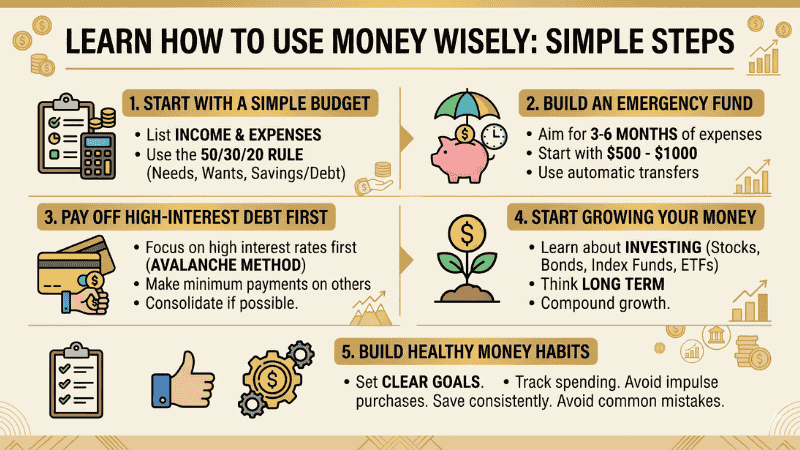
Learning how to use money well is not only about math. It is also about behavior. Your financial habits shape your results over time. Small, consistent choices can strengthen your finances more than occasional big efforts. Set clear goals so your money has a purpose. You may want to save for a home, pay off debt, build retirement savings, or create more monthly breathing room. When your goals are specific, it becomes easier to stay disciplined and make better decisions. It also helps to build habits that support those goals, such as tracking spending, avoiding impulse purchases, saving automatically, and thinking carefully before taking on new debt. A healthy money mindset also matters. When you see money as a tool instead of a source of stress, you are more likely to make calm, practical decisions. That mindset can help you avoid emotional spending and stay focused on what matters most.
Avoid Common Money Mistakes
Many financial problems come from a few repeated mistakes. Spending more than you earn, ignoring savings, relying too much on credit cards, and taking on unnecessary loans can all make it harder to get ahead. Try to live within your means even when your income rises. Avoid making major purchases just because you qualify for financing. Delay large non-essential purchases when possible, and give yourself time to decide whether something is truly necessary. It is also wise to begin saving for retirement as early as possible, because time and compound growth can make a major difference later on. The more you avoid common financial mistakes, the easier it becomes to stay in control of your money.
Keep Learning and Improving
Financial confidence grows over time. The more you learn, the easier it becomes to make sound decisions with your income, savings, and long-term plans. Keep improving your money skills by reading trusted financial resources, listening to educational podcasts, watching reliable videos, or speaking with knowledgeable people you trust. You do not need to learn everything at once. Even small improvements in your knowledge can lead to better habits and stronger financial decisions over time. If you want to learn how to use money wisely, focus on the basics first. Build a budget, save for emergencies, pay down high-interest debt, and develop habits that support your long-term goals. As your confidence grows, you can begin investing and making smarter financial decisions with less stress. Over time, these simple steps can help you take control of your finances and make your money work for you.
Limit Your Credit Card Use
Credit cards can be helpful financial tools, but they can also create long-term problems when they are used too often or without a repayment plan. High-interest balances can grow quickly, making it harder to save money or pay for essentials. The key is to use credit cards with discipline and avoid carrying debt that puts pressure on your monthly budget.
Final Thoughts On How To Learn How To Use Money
If you want to learn how to use money wisely, focus on a few habits that make the biggest difference. Start with a realistic budget, build emergency savings, pay down high-interest debt, and make spending decisions that support your long-term goals. You do not need to be perfect to improve your finances. Consistent small steps can help you build confidence, reduce stress, and make your money work better for you over time.
Frequently Asked Questions About How to Use Money:
How Can I Learn How to Use Money Wisely?
The best way to learn how to use money wisely is to start with the basics: track your income, build a simple budget, save for emergencies, and avoid high-interest debt. Once those habits are in place, it becomes easier to improve spending decisions and build long-term financial stability. Budgeting, saving, debt management, and investing are consistently treated as the core pillars of money management.
What is the Best Budget for Beginners Learning How to Use Money?
A beginner budget is usually the best place to start. A popular way to manage your money is the 50/30/20 method. This method splits your income into three groups: 50% for needs, 30% for wants, and 20% for savings or debt repayment. The most important part is not picking a perfect formula, but choosing a budget you can actually follow and adjust over time.
How Much Money Should I Save Each Month?
A common target is to save around 15% to 20% of after-tax income when possible, but many current guides also stress starting small if that feels more realistic. Even modest monthly savings can help build consistency and momentum, especially when paired with an emergency fund goal.
Should I Pay Off Debt or Save Money First?
In many cases, you should do both, but the balance depends on your situation. It usually makes sense to build a small emergency fund first, then focus aggressively on high-interest debt such as credit cards. That approach can help prevent new debt while still improving your overall financial position. Emergency savings and debt control are both treated as early priorities in current beginner money guides.
What are the Most Important Money Habits to Build First?
The most important early money habits are tracking spending, following a realistic budget, saving automatically, avoiding unnecessary debt, and setting clear financial goals. These habits matter because good money management is usually built through repeated behavior, not one-time decisions. Current beginner finance guides consistently emphasize those same foundational habits.
Where Can I Keep Learning How to Use Money Better?
You can keep improving by reading trusted personal-finance resources, listening to educational podcasts, taking beginner finance courses, and reviewing your budget regularly. Reliable educational sources commonly recommend ongoing learning because money management skills improve over time as your income, goals, and responsibilities change.
This article about “Learn How to Use Money and Not Let Money Use You” was updated on April 22nd, 2026.