Buying a home is exciting, but it also means taking responsibility for repairs, safety checks, and routine upkeep that a landlord may have handled in the past. Understanding home maintenance for first-time homebuyers can help them protect their property, prevent small problems from becoming expensive repairs, and prepare for the true cost of homeownership.
The most important part of home maintenance for first-time home buyers is identifying safety concerns, preventing water damage, and learning how the home’s major systems work.
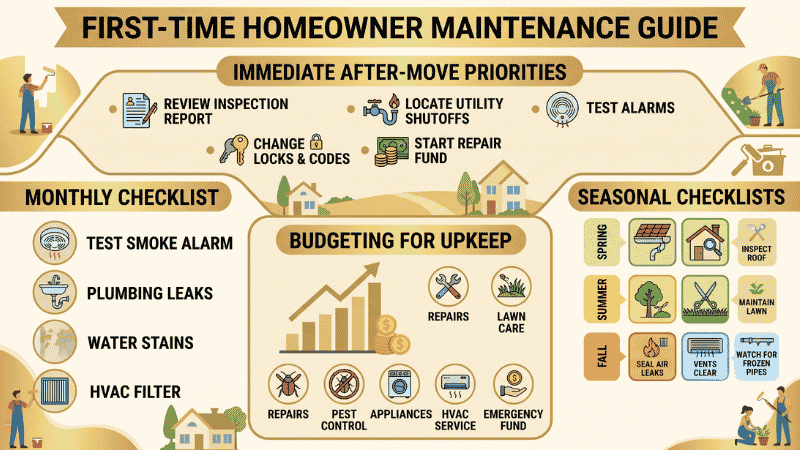
New homeowners should begin with the following priorities: Start by reviewing the home inspection report, locating the main utility shutoffs, testing smoke and carbon monoxide alarms, and checking key systems, including the roof, plumbing, heating, cooling, and electrical service. A simple monthly and seasonal maintenance plan can make caring for a new home more manageable while helping preserve its safety, comfort, and long-term value.
What Home Maintenance Should a First-Time Buyer Do?
During the First Few Days After Closing:
- Review the home inspection report.
- Change exterior locks and access codes.
- Locate the main water, gas, and electrical shutoffs.
- Test smoke and carbon monoxide alarms.
- Check beneath sinks and around appliances for leaks.
- Inspect the HVAC filter.
- Check the roof, gutters, downspouts, and exterior drainage.
- Create a repair schedule based on urgency.
- Start saving for maintenance and unexpected repairs.
- Store warranties, manuals, receipts, and service records in one place.
Why Home Maintenance Matters After Buying Your First Home
Routine Home Maintenance Can Help You:
- Catch small problems before they become major repairs.
- Reduce the risk of water, mold, fire, or structural damage.
- Extend the useful life of appliances and home systems.
- Keep the home safe and comfortable.
- Protect its condition and future marketability.
- Prepare for future repair and replacement costs.
Home Maintenance During the First 48 Hours
Review the Home Inspection Report Again
Divide the Inspector’s Findings Into Four Groups:
Immediate Safety Concerns:
- These may include exposed wiring, active leaks, loose railings, missing alarms, structural concerns, or unsafe equipment.
Repairs Needed Soon:
- Examples may include damaged gutters, failing caulk, minor plumbing leaks, loose fixtures, or worn exterior surfaces.
Older Systems to Monitor:
- Record the approximate age and condition of the roof, furnace, air conditioner, water heater, electrical panel, plumbing, windows, and major appliances.
Optional Improvements:
- Painting, landscaping, flooring, and cosmetic projects can usually wait until safety and water-related concerns have been addressed.
- A home inspection is a snapshot of visible conditions on the inspection date.
- There is no warranty that every component will continue to work after closing.
Change Locks and Access Codes
Rekey or Replace Exterior Door Locks and Update:
- Garage door codes
- Gate codes
- Alarm codes
- Smart locks
- Keypad entries
- Connected-home passwords
Locate the Main Utility Shutoffs
Locate and Label:
- Main water shutoff
- Individual sink and toilet valves
- Water heater valve
- Washing machine valves
- Gas shutoff
- Electrical panel
- Main electrical disconnect
- Outdoor faucet shutoffs
- Do not wait for a burst pipe or electrical emergency to find these controls.
- Keep a shutoff tool nearby when your water or gas valve requires one.
- Contact the utility company or a licensed professional if you are unsure how to operate a system.
Test Smoke and Carbon Monoxide Alarms
- Press the test button on every smoke and carbon monoxide alarm.
- Replace missing, damaged, outdated, or nonworking units.
- The U.S. Fire Administration recommends testing smoke alarms every month and replacing the entire alarm when it reaches 10 years of age.
- Battery-replacement requirements depend on the type of alarm and the manufacturer’s instructions.
- Write the installation or replacement date on each alarm, or record it in your maintenance records.
- Also, identify two possible escape routes from sleeping areas and choose a safe outdoor meeting place for the household.
Photograph the Home and Its Major Systems
Take Dated Photographs or Videos Of:
- Each room
- Appliances
- Electrical panel
- HVAC equipment
- Water heater
- Roof and exterior
- Basement or crawl space
- Garage
- Valuable personal property
Home Maintenance During the First 30 Days
Inspect for Water Leaks and Moisture
Check the Following:
- Beneath every sink
- Around toilets and bathtubs
- Behind the washing machine
- Around the dishwasher
- Near the refrigerator water line
- Around the water heater
- Beneath roof penetrations
- Inside the attic
- In the basement or crawl space
- Around doors and windows
Check the HVAC Filter and Equipment
Also:
- Find the thermostat manual.
- Learn which system serves each part of the home.
- Check whether vents are open and unobstructed.
- Keep furniture and storage away from HVAC equipment.
- Clear leaves and vegetation away from outdoor units.
- Schedule service if the system is noisy, leaking, short-cycling, or not heating or cooling correctly.
Inspect the Roof From the Ground
From the Ground, Look For:
- Missing or damaged shingles
- Sagging areas
- Damaged flashing
- Debris
- Moss or heavy vegetation
- Leaning gutters
- Damaged downspouts
- Stains beneath roof edges
- Tree branches touching the roof
Clean Gutters and Check Drainage
Watch the Property During or Shortly After Rain. Look For:
- Overflowing gutters
- Water running down the siding
- Disconnected downspouts
- Water is collecting near the foundation
- Soil sloping toward the home
- Basement or crawl-space seepage
- Erosion near walkways or patios
Clean the Dryer Lint System
Stop Using the Dryer and Call a Professional When:
- Clothes take unusually long to dry.
- The dryer becomes extremely hot.
- The laundry room feels unusually humid.
- The exterior flap does not open.
- You smell burning or hot lint.
Find Manuals, Warranties, and Service Records
Collect Documents For:
- HVAC equipment
- Water heater
- Roof
- Windows
- Appliances
- Sump pump
- Well and septic systems
- Solar panels
- Security system
- Garage door opener
- Builder warranty
- Home warranty
Monthly Home Maintenance Checklist
Test Safety Devices
- Test smoke and carbon monoxide alarms.
- Check fire extinguishers for damage, missing pins, low pressure, or expired inspection dates.
- Follow the manufacturer’s instructions for inspection and replacement.
Look for New Leaks
Pay Attention To:
- Higher-than-normal water bills
- Running toilets
- Low water pressure
- Stains on walls or ceilings
- Musty odors
- Damp flooring
- Sounds of running water when fixtures are off
Inspect the HVAC Filter
Walk Around the Exterior
Look for Changes Such As:
- Standing water
- Foundation cracks
- Damaged siding
- Peeling paint
- Loose trim
- Pest activity
- Roof debris
- Broken gutters
- Tree limbs touching the home
Run Water in Rarely Used Fixtures
Listen and Smell
Do Not Ignore:
- Buzzing or smoking electrical supplies
- Repeatedly tripping breakers
- Grinding appliances
- Burning, sewage, or gas odors
- Banging pipes
- Furnace or boiler noises
- A musty smell
- Safely turn off the system and call a professional.
Seasonal Home Maintenance Checklist
Spring Home Maintenance
Inspect the Roof and Gutters
- Look for shingles that are missing or damaged, and loose flashing.
- Check for gutters and downspouts that are damaged and dispersed in winter.
Examine Exterior Drainage
- Confirm that the drainage goes away from the home. Look for settlement, erosion, pooling water, or a wet basement.
Service the Cooling System
- It is best to have cooling systems checked before the hot part of summer. Remove debris from the outdoor system.
- Be careful not to damage the system.
Check Exterior Surfaces
- Examine all exterior surfaces and check for damage.
- Have all surfaces that are damaged, or impaired to pest or water entry, repaired.
Test the Sump Pump
- Get the sump pump tested prior to heavy spring rains if your home has one. Make sure the discharge line opens and directs water away from the home’s foundation.
- Call a plumber or waterproofing professional if you cannot figure out how to test the sump pump system safely.
Summer Home Maintenance
- Summer is the prime time to do exterior work and home prep for storms.
Trim Trees and Vegetation
- Make sure branches stay clear of the roofing/siding, utility lines, and outdoor HVAC.
- or large branches, trees with questionable health, and trees that need to be worked on that are near the lines, hire a tree service.
Inspect Decks and Outdoor Structures
- Check for loose fasteners, unstable railings, damaged steps, and movement and rot.
- A deck that passes the home inspection doesn’t automatically mean it is safe.
Check for Pests
- Look for evidence of pests like droppings, nests, wood damage, tunnels, and insects.
- Control water and food sources and close entry points instead of relying on common pest control methods.
Fall Home Maintenance
- Fall home maintenance is the preparation for the cold.
Service the Heating System
- Check the furnace, the boiler, and the heat pump early. Change the filters and schedule a service.
Clean Gutters Again
- By now, all (or most) tree debris has fallen, so pull the gutters and downspouts and check for clogs.
- Confirm that the downspouts empty away from the foundation, and remain fastened.
Seal Exterior Gaps
- Evaluate the condition of the weatherstripping and caulk for integrity around windows, doors, utility penetrations, and exterior trim.
- Do not obstruct any openings necessary for ventilation, drainage, combustion, or equipment operation.
Prepare Exterior Plumbing
- Depending on your climate, remove garden hoses and prepare exterior faucets, irrigation systems, and plumbing for exposure to freezing temperatures.
Check the Chimney and Fireplace
- Chimneys and wood-burning fireplaces should be checked and cleaned by a chimney professional.
- Do not use a fireplace with a blockage, damaged masonry, missing components, or an unknown service history.
Winter Home Maintenance
- Winter maintenance relies on the safety of the heating system, frozen pipes, ice, and storm damage.
Protect Plumbing
- Keep the home heated, and close openings to the crawl space when appropriate.
- Also, provide insulation for exposed plumbing in accordance with local conditions.
- Know how to shut off the main water supply before a freeze.
Keep Vents Clear
- Vents may become obstructed by snow, ice, leaves, or debris.
- The U.S. Fire Administration recommends keeping vents for the furnace, fireplace, stove, and dryer clear.
Look for Ice Dams and Roof Problems
- Watch for ice accumulation on the roof and icicles.
- Also, watch for stains on the interior and water entering the home.
- Do not climb on an icy roof.
- Call a roofing professional when water is entering the home, and ice creates a hazard.
Monitor Moisture Content
- Condensation on windows, ceilings, and exterior walls may indicate insufficient insulation, inadequate ventilation, or air leaks. This may also indicate a high humidity level.
- Instead of ignoring the source of the issue, try to identify the cause of the recurring moisture.
Annual Home Maintenance Tasks
- Professionals service HVAC Systems as needed
- Inspect Roofs
- Clean Gutters and Downspouts
- Clean Dryer Vents
- Inspect Chimneys and Fireplaces
- Service Water Heaters and Inspect Them
- Inspect for Plumbing Leaks
Homes with Aging Systems and Older Homes require an Electrical Safety Check
- Inspect for Pests
- Sump Pumps Test
- Service Wells and Septics as Necessary
- Check Insurance
- Update Home Inventory
- Check Expiring Warranties and Service Agreements
- Check the manufacturer’s instructions to determine the service schedule for an appliance, as these can vary.
Mortgage Approval Does Not Mean Every Home Is Affordable
A lender may approve the loan, but buyers still need room for repairs, appliances, landscaping, and routine upkeep. Get a realistic payment and maintenance budget before you commit.How Much Should First-Time Buyers Budget for Maintenance?
Consider the Following when budgeting for a home’s maintenance:
- The Inspection
- The Age of the Home
- The Age of the Roof
The Age and Condition of the HVAC and Water Heating Systems
- The Age and Condition of Appliances
- The Exterior
- The Condition of the Basement/Crawl Space
- The Well or Septic System
- The Condition of Landscaping and Trees
- The Climate and Weather Risks
- The Responsibilities of the Home or Condo Owner’s Association
- The CFPB suggests not using up all your savings for a down payment.
- Instead, save a portion of these funds for unexpected expenses and critical home maintenance.
Separate Maintenance From Improvements
Maintenance Includes the Following:
- Fixing leaks
- Replacing shingles
- Servicing HVAC
- Cleaning gutters
- Re-caulk showers
Improvement Examples:
- Kitchen remodels
- Decks
- Basements
- Luxury flooring
- Bathroom additions
- Before spending money on cosmetic improvements, ensure all safety maintenance and water-related maintenance is complete.
Essential Tools for the New Homeowner
A Good starter Kit Can Include:
- Flashlights and Batteries
- Basic Screwdrivers
- Adjustable Wrench
- Pliers
- Hammer
- Tape Measure
- Utility Knife
- Level
- Plunger
- Bucket
- Work Gloves and Safety Glasses
- Step Stool
- Voltage-free circuit labels and a Shut-off Tool
- Manufacturer-approved replacement filters
- Specialized tools may be purchased once the specific task is understood.
- Don’t undertake home improvement projects just because a tool is available.
- This is particularly important for tasks involving electrical, gas, roofing, structural, or significant plumbing work.
When to Call a Professional
Contact a Professional for the Following:
- Electrical Problems
- Sparking
- Burning and Warm Outlets
- Frequent breaker trips
- Flickering lights
- Exposed wiring
- Electrical Problems with Water
- Gas Problems
- Gas odor
- Carbon monoxide alarm
- Soot
- Boiler and furnace exhaust issues
- Gas Pipe Damage and Pilot/ Ignition Problems
- Leave the property and call the emergency service in the event of a gas or carbon monoxide emergency.
Structural Concerns
These May Include:
- Cracks
- Floors sagging
- Walls bowing
- Movement of the roof
- Settling of the foundation
- Failed supports
- Decks, stairs, railings, etc. unstable
Emergencies with Water and Sewers
This May Include:
- Burst pipes
- Sewage backups
- Leaks from the roof
- Flooded basements
- Water near electrical equipment
- Hidden leaks that damage a large area
- Roofing and Work that Involves Height
- If the work involves a steep roof, work that is close to electrical lines, or unfamiliar fall-protection work, hire a qualified professional.
Maintenance Responsibilities for Different Property Types
The Maintenance of Homes Purchased by First-Time Homebuyers Varies Based on the Type of Property Purchased.
Single-Family Houses
- The homeowner is generally responsible for all of the structural components of the home, roof, exterior, foundation, systems, landscaping, and the lot, unless a homeowners’ association takes care of some of these items.
Condominiums
- Unit owners may be responsible for all interior components of the unit, while the association is responsible for the maintenance of the common area and some exterior components.
However, Responsibilities May Vary Widely. Look at The:
- Declaration
- Bylaws
- Rules
- Insurance Documents
- Maintenance Chart
- Reserve Study
- Current Budget
Special Assessments
- Do not assume the association handles maintenance of the windows, balconies, plumbing lines, HVAC, and the unit’s interiors, or damage that occurs between units.
Townhomes
- Depending on the townhome, it may be a condo or a lot that is individually owned.
- The association may maintain the roof and exterior in one community but may not do that in another.
- Review the governing documents before assuming that exterior maintenance is covered by the monthly association fee.
Newly Built Homes
- New homes also require maintenance.
- Follow the warranty of the builder.
- Document defects in writing, meet the deadlines for notice, and keep photographs of the requests for the warranty.
- Settling, drainage issues, caulk separation, nail pops, appliance issues, and system adjustments can also manifest in new construction in the first year.
Effects of Deferred Maintenance on Future Sales and Refinancing
Effects of Deferred Maintenance Can Include:
- Interest from buyers
- Negotiations following the inspection
- Condition on appraisal
- Value of the property
- Sellability
- Insurance coverage
- Loans
- Repairs that are necessary
Fannie Mae has specific requirements to help determine the condition of a property and whether there are minor, normal, expected changes, or more serious maintenance issues. In some cases, a property’s condition would be considered so deficient that repairs must be completed prior to the mortgage.
HUD will insure a mortgage only when the property meets the necessary requirements for safety and soundness and the security of the investment.
Common Maintenance Mistakes of the First-Time Homebuyer
Doing Cosmetic Improvements Prior to Urgent Repairs
Small Water Stains
- A small stain may be the first visible sign of a much larger plumbing, roof, or condensation problem.
Assuming Home Inspection Found Everything
- Problems can remain hidden behind walls, furniture, insulation, or stored belongings and can appear after closing.
Unsafe DIY Repairs
- Every wiring system and roof condition are different.
- Online videos simply cannot account for every condition.
Not Reading HOA Documents
- A first-time buyer may assume the association maintains an item that is actually the homeowner’s responsibility.
Spending All Savings at Closing
- It is hard to resist buying new furniture or making cosmetic changes after closing on your new home.
- However, it is important to keep some savings in case you need to make repairs or in case of an emergency.
Failing to Keep Records
- Keeping records allows you to remember who the contractors were, when work was performed, what work was performed, the sizing of your air filters and when they need to be changed, and the terms of various warranties.
Create a Simple Home Maintenance System
Create a Digital or Physical Home Maintenance File Containing:
- Your home inspection report
- Closing documents
- Your home insurance policy
- HOA Documents
- Appliance manuals
- Appliance and home repair warranties
- Contractor invoices
- Permits
- Receipts
- Before and After photos
- Air filter sizing and/or ordering information
- Photographs or samples of paint used, and the date it was done
- The date and photographs of when a component of your home or appliance will be replaced
- Set up your calendar to remind you of home maintenance tasks on a monthly, seasonal, or annual basis.
- Walk through your home at the same time each month to create a new routine.
- It will make you more likely to notice needed changes.
Final Thoughts on Home Maintenance for the First-Time Home Buyer
Start with Maintaining the Items That Can Cause the Most Dangerous Rapid Deterioration to Your Home, Such As:
- Protection against fire and carbon monoxide
- Water leaks
- Roof and drainage issues
- Gas/Electrical hazards
- Leak/Faulty HVAC systems
- Stair and railing systems that are unstable
- Moving or shifting the structural integrity of your home
- Using the home inspection report, make a plan for the first year in your new home.
- The plan includes setting aside money for maintenance needs and completing monthly and seasonal maintenance tasks.
- The goal is not to make your home the most aesthetically pleasing home.
- The goal is to protect your home, make it safe, dry, and functional, and keep it financially manageable.
Create a Home Maintenance Budget
Some homeowners use a percentage of the property’s value as a general savings target, but no single formula works for every home. A newer condominium may have very different maintenance needs than an older single-family property on several acres. Actual costs can depend on:
- The age and condition of the home
- The roof, HVAC system, plumbing, and electrical components
- Local weather and climate
- The size of the house and lot
- Local contractor and labor costs
- Whether the property has a well, septic system, basement, pool, or other special features
- How much maintenance the homeowner can safely complete without hiring a professional
First-time buyers should review the home inspection report, identify aging systems, and estimate which items may need service or replacement over the next several years. Separating routine maintenance savings from an emergency fund makes it easier to cover planned repairs without dipping into money set aside for emergencies.
Seasonal Home Maintenance Checklist
Seasonal upkeep helps homeowners prepare for changing weather and address small problems before they cause damage to the property. The exact schedule will vary by climate, home type, and local conditions, but the following checklist provides a practical starting point for home maintenance for first-time home buyers.
Spring Maintenance
Spring is a good time to inspect the property for damage caused by snow, ice, wind, and freezing temperatures.
- Inspect the roof after winter. Inspect for absent or damaged shingles, insecure flashing, areas that are sagging, and indications of leaks.
- Clean gutters and downspouts. Remove leaves and debris, then confirm that water flows away from the house.
- Check foundation drainage. Look for standing water, soil erosion, or downspouts that discharge too close to the foundation.
- Inspect exterior caulking. Repair cracked or missing sealant around windows, doors, siding, and exterior openings.
- Service the air-conditioning system. Schedule professional maintenance when needed and clear debris from around the outdoor unit.
- Check decks, steps, and railings. Look for loose boards, unstable railings, rot, rust, or other safety concerns.
- Turn on exterior water lines carefully. Inspect outdoor water faucets and irrigation systems for any leaks or damage resulting from freezing temperatures.
- Inspect windows and screens. Repair damaged screens, test locks, and check for gaps that allow air or water inside.
Summer Maintenance
Summer maintenance usually focuses on landscaping, exterior surfaces, ventilation, pests, and moisture control.
- Maintain lawns and landscaping. Keep grass, shrubs, and trees under control while watching for drainage or erosion problems.
- Trim vegetation away from the house. Keep plants clear of siding, roofs, windows, and HVAC equipment to improve airflow and reduce pest activity.
- Inspect siding and exterior paint. Look for peeling paint, cracks, loose panels, rot, or storm damage.
- Check for insects and wood damage. Watch for termites, carpenter ants, bees, damaged wood, or unexplained sawdust.
- Clean bathroom exhaust fans. Remove dust and confirm that each fan vents properly to control indoor moisture.
- Inspect outdoor faucets. Check for dripping, loose connections, and leaks around hose attachments.
- Check basements and crawl spaces. Look for condensation, musty odors, standing water, mold-like growth, or signs of pests.
Fall Maintenance
Fall is the time to prepare the home for colder temperatures, falling leaves, snow, and reduced daylight.
- Service the heating system. Arrange maintenance before regular use and replace or inspect filters as required.
- Clean gutters after leaves fall. Clear gutters and downspouts to reduce the risk of overflow and ice buildup.
- Inspect the chimney or fireplace. Have wood-burning systems inspected and cleaned by a qualified professional when applicable.
- Disconnect and drain exterior hoses. Shut off outdoor water lines when required to help prevent frozen pipes.
- Seal air leaks. Inspect the weatherstripping and caulking surrounding windows and doors to minimize drafts.
- Prepare snow-removal equipment. Inspect shovels, snowblowers, ice melt, and other winter supplies before the first storm.
- Check attic insulation and ventilation. Look for moisture, blocked vents, damaged insulation, or evidence of roof leaks.
Winter Maintenance
Winter maintenance should focus on preventing frozen pipes, controlling moisture, and keeping vents and walkways clear.
- Keep exterior vents clear of snow. Check furnace, dryer, water heater, and appliance vents after heavy snowfall.
- Watch for frozen pipes. Pay attention to reduced water flow, cold areas near plumbing, and pipes located along exterior walls.
- Remove dangerous ice buildup. Clear slippery walkways and address heavy ice near entrances, gutters, and drainage areas.
- Check the basement during thaws. Look for seepage, standing water, or foundation leaks when snow and ice begin to melt.
- Monitor indoor humidity. Excess moisture can cause condensation, mold growth, and damage around windows and walls.
- Inspect for roof leaks and ice dams. Watch for ceiling stains, dripping water, damaged gutters, or heavy ice along the roof edge.
- Keep emergency supplies available. Store flashlights, batteries, blankets, drinking water, basic tools, and other items needed during a power outage or severe storm.
Homeowners should adjust this checklist based on the property’s location and features. A condominium, desert home, coastal property, or house in a warm climate may require different seasonal priorities than a single-family home in an area with freezing winters..
Why Mortgage Approval Does Not Guarantee the Home Is Affordable
Mortgage qualification focuses on documented income, debts, credit, assets, and the monthly housing payment used for underwriting. It does not predict every expense a homeowner may face after closing.
Routine maintenance, utility bills, landscaping, appliance failures, seasonal upkeep, and emergency repairs can all increase the true cost of owning a home.
Buyers should leave room in their monthly budget and savings rather than using every available dollar for the down payment, closing costs, and maximum loan amount. A mortgage approval shows that a borrower meets the lender’s qualification requirements. It does not guarantee that the payment and ongoing ownership costs will feel comfortable within the household’s personal budget.
Final Thoughts on Home Maintenance for First-Time Buyers
Home maintenance does not need to be completed all at once. Begin with safety concerns, active leaks, drainage problems, and other issues that could cause injury or expensive property damage. Then use the home inspection report to create a realistic monthly, seasonal, and annual maintenance schedule.
Keep receipts, warranties, service records, replacement dates, and photographs of completed work in one organized location. Set recurring reminders for tasks such as testing alarms, changing HVAC filters, cleaning gutters, and servicing major systems.
Gradually building repair savings can also make routine upkeep and unexpected expenses easier to manage. Planning for maintenance is an important part of responsible homeownership. Buyers who understand both the mortgage payment and the ongoing cost of caring for the property are better prepared to choose a home that fits their long-term budget. Homebuyers who have questions about mortgage qualification or want to compare loan options can contact Gustan Cho Associates at 800-900-8569 or gcho@gustancho.com..
Home Maintenance for Beginners: FAQ
What Should I Do Before Moving All My Stuff In?
Change the locks and test the security systems first. Next, check the home for active leaks, electrical issues, alarms, and utility shut-offs. Clean the home really good, and make sure to take pictures of all the empty rooms for your records.
How Often Should I Inspect the Outside of My Home?
It’s good practice to do a quick monthly walkthrough of the exterior of your home and another immediately after a big storm. You should check for damaged shingles, fallen branches, or siding and foundation damage. Also, check your gutters for standing water.
Do Newly Built Homes Need Their Own Maintenance Schedule?
Yes, newly built homes need their gutters cleaned and alarms and home systems checked regularly, just like older homes. You need to check the builder’s warranty for required maintenance, and during the warranty period, you need to report any defects.
Does Lack of Maintenance Impact a Future Home Refinance?
Yes. An appraisal for refinancing will focus on the same issues as a sale appraisal, such as the home’s safety and soundness. Worn items that are not a major concern are typically not a focus for the loan, but major defects in the roof, plumbing, electrical, or structural systems will affect the appraisal regardless.
When Should Home Maintenance Records be Cleared?
Records should be cleared once the home is sold. Warranties, permits, invoices, inspection records, reports, insurance, photographs of insurance, and records of major home modifications should be kept. Some records may be necessary for selling the home or speaking with a tax professional for tax purposes.
Do Home Warranties Eliminate the Need for Home Maintenance?
No. Home warranties are contracts for services, and have limitations on coverage, exclusions, fees for services, and requirements for claims. Home warranties do not cover maintenance, and claims may be denied if the failure was due to an excluded condition or if no maintenance was performed.
What is the Best Course of Action When Encountering an Expensive Repair?
Determine if the repair poses an immediate threat to safety or will cause further damage to the home. An appropriate professional should be contacted for a written diagnosis and cost estimate. Inquire about the possibility of a temporary safety measure, but do not rely on it. Before resorting to cost-prohibitive debt, consider the options available in emergency savings, the coverage offered by insurance, applicable warranties, local assistance programs, and legitimate financing options.
This article about “Home Maintenance for First-Time Home Buyers” was updated on July 30, 2026.