Fraudulent credit card charges can quickly create stress, especially when you do not recognize the merchant, the amount, or the time the transaction occurred. The first step is to act quickly. Reach out to your credit card provider, report the fraudulent transaction, lock or replace the card, and keep a record of the date, time, confirmation number, and every message you receive. Federal law may limit your responsibility for unauthorized credit card charges, but timing matters. You should not ignore a suspicious transaction or assume it will disappear on its own. The sooner you dispute the charge, the easier it may be to protect your account, prevent more fraud, and avoid problems with your credit report.
What Are Fraudulent Credit Card Charges?
Fraudulent credit card charges are transactions made without the cardholder’s permission. This can happen when someone steals your physical card, uses your card number online, gains access to your digital wallet, or uses saved payment information without your approval.
A fraudulent charge is not the same as a billing error, merchant dispute, or buyer’s remorse.
For example, a duplicate charge, an incorrect amount, a missing refund, or an item that was never delivered may be a billing dispute. A purchase you made but later regret is not fraud. Fraud usually means someone used your credit card or account information without your consent. If you see a charge you do not recognize, review the merchant name, transaction date, amount, and any authorized users on the account. Sometimes, a business name on the statement looks different from the store name. If you still do not recognize the transaction, contact your credit card issuer right away and report it as a possible fraudulent credit card charge.
What To Do Immediately If You See Fraudulent Credit Card Charges
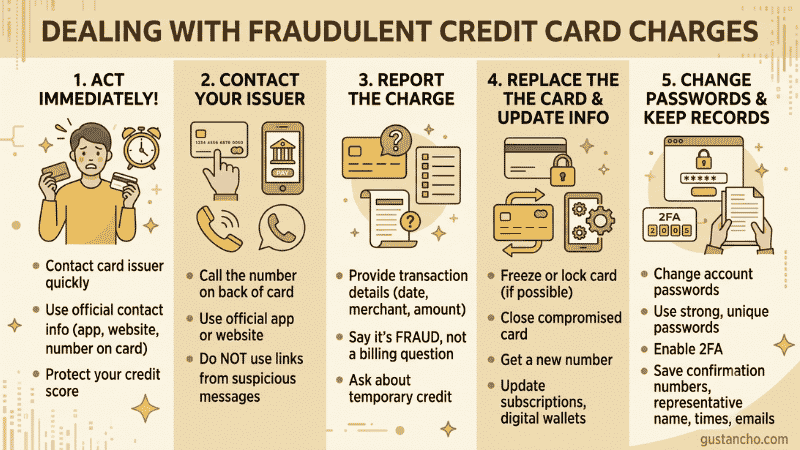
If you see fraudulent credit card charges, act quickly. Do not wait for the next statement or assume the charge will fix itself. Prompt action can help prevent additional unauthorized charges and protect your account.
Lock or Freeze the Card
Log in to your credit card issuer’s mobile app or online account and lock or freeze the card if that option is available. This can help block new charges while you review the account.
Contact the Credit Card Issuer
Call the number on the back of your credit card or use the issuer’s official website or mobile app. Do not call a number from a suspicious text, email, or pop-up message. Tell the issuer which charge you do not recognize. Give them the:
- Transaction date
- Merchant name
- Charge amount
- Any other details shown on your statement
Report the Charge as Fraud
Make sure the credit card issuer understands that you are reporting a possible fraudulent charge, not just asking a general billing question. Ask what steps they will take next and whether a temporary credit will be issued during the investigation.
Request a Replacement Card
Ask the issuer to close the compromised card and send a replacement card with a new number. After the new card arrives, update any trusted accounts where your old card was saved, such as subscriptions, digital wallets, online stores, and automatic payments.
Change Your Passwords
Change the password for your credit card account and any related banking accounts. Use a strong password you do not use anywhere else. If available, turn on two-factor authentication for extra protection.
Review Recent Transactions
Look through your recent and pending transactions. Fraud can start with one small test charge before larger charges appear. Check authorized users, recurring subscriptions, digital wallets, and linked cards.
Save Confirmation Numbers and Records
Before ending the call or chat, save the confirmation number or claim number. Also, keep the representative’s name, date, time, emails, letters, screenshots, and dispute notices. These records may help if the issuer asks for more information or if you need to appeal the decision later.
Fraudulent Credit Card Charges Versus Billing Errors
Fraudulent credit card charges and billing errors are not the same. Fraud usually means someone used your credit card or account information without your permission. A billing error usually means there was a mistake with a charge, payment, refund, or transaction details. A fraudulent charge may happen if your card number is stolen, your physical card is lost, or someone gains access to your online account. In this case, you did not authorize the transaction. A billing error may involve a charge you recognize but believe is incorrect. Common billing errors include:
- A duplicate charge
- The wrong purchase amount
- A payment that was not credited
- A refund or credit that was not posted
- A charge for an item you returned
- A charge for something you never received
A merchant dispute is also different from fraud. For example, if you bought a product but were unhappy with the quality, that is usually a dispute with the seller first. Buyer’s remorse is not fraud. If you made the purchase and later changed your mind, the credit card company may not treat it as an unauthorized charge. This difference matters because the dispute process may depend on the type of problem. If you did not make or approve the charge, report it as possible fraud. If the charge came from a merchant you used, but the amount, delivery, refund, or posting is wrong, report it as a billing error or merchant dispute.
How Long Do You Have To Dispute a Credit Card Charge?
 If you believe there is a billing error on your credit card statement, act quickly. Under federal billing dispute rules, you generally need to send a written billing error notice to your credit card company within 60 calendar days after the charge appeared on your statement. Calling customer service may help start the process, but a written notice is what helps protect your rights under the billing error rules.
Your written dispute should include your name, account number, the charge amount, the date of the charge, the merchant name, and a clear explanation of why you believe the charge is wrong. Send the notice to the address listed by the credit card company for billing inquiries, not the payment address. Keep copies of your letter, screenshots, receipts, emails, tracking number, and any response from the credit card issuer.
After the credit card company receives your billing error notice, it generally must acknowledge the dispute within 30 days unless it resolves the issue sooner. The issuer must generally complete the investigation within two complete billing cycles, but no later than 90 days after receiving the notice. Do not wait until the 60-day deadline is almost over. Report suspicious activity as soon as you see it, even if the charge is still pending. You can call or use the credit card company’s app first, but follow up in writing when needed. Prompt action gives you a better paper trail and may help prevent additional fraudulent credit card charges from appearing on your account.
Are You Responsible for Fraudulent Credit Card Charges?
You may have strong protection if someone uses your credit card without your permission. Under federal law, you’re liable for unauthorized credit card charges up to $50 or the amount charged before you inform the card issuer, whichever is less. The CFPB also explains that if unauthorized use happens before you report the card missing, the most you may owe is $50. Many credit card companies provide zero-liability protection. This means you may not have to pay anything for unauthorized charges if you report the fraud promptly and follow the issuer’s dispute process. Your exact protection can depend on your card agreement, the type of transaction, and how quickly you report the problem. Do not ignore a suspicious charge because you think the credit card company will catch it automatically. Report fraudulent credit card charges as soon as you notice them. Ask the issuer to confirm that the charge is being handled as a fraud case, request a replacement card, and save the claim or confirmation number. You should continue paying the parts of your credit card bill that are not in dispute. This helps protect your credit while the issuer investigates the fraudulent charge. If you are applying for a mortgage or planning to apply soon, keep copies of the fraud claim, dispute letters, account statements, and any final decision from the credit card company.
Dispute Credit Card Fraud the Right Way
Learn what to do first: contact the card issuer, lock or replace the card, save proof, follow up in writing, and track every response until the charge is resolved.What Happens During the Credit Card Investigation?
After you report fraudulent credit card charges, the credit card issuer will review the transaction and decide whether the charge should stay on your account or be removed. The issuer may ask for more details, such as the transaction date, merchant name, amount, where the card was used, and whether an authorized user made the purchase.
The Issuer May Give a Temporary Credit
Many credit card companies give a temporary credit, also called a provisional credit, while they investigate. This does not always mean the case is finished. It usually means the issuer is removing the disputed amount from your balance while it reviews the claim. You should still pay the part of your bill that is not in dispute. The CFPB says you do not have to pay disputed charges or related finance charges during the investigation, but you remain responsible for paying correct charges on time.
The Investigation Can Take Time
The credit card company generally has 30 days to confirm receipt of your written billing dispute, unless it resolves the issue sooner. It then has another two billing cycles to finish reviewing the dispute. The CFPB also explains that a written billing error notice helps protect your rights and should be sent within 60 calendar days after the charge appeared on your statement.
The Merchant May Respond
The merchant may be asked to provide records showing why the charge should be valid. This may include receipts, delivery records, online order details, signed documents, account history, or proof that the cardholder authorized the purchase. If the merchant provides evidence, the credit card issuer may compare that information with your fraud claim. This is why it is important to save screenshots, emails, text messages, receipts, police reports, identity theft reports, and any communication with the card issuer.
The Issuer Reviews the Evidence
The credit card issuer will review both sides. It may look at where the card was used, whether the chip or card number was used, whether the purchase was online or in person, the billing and shipping address, prior account activity, and any documents provided by you or the merchant. If the issuer agrees that the charge was fraudulent, it should be removed from your account. Any related interests or fees associated with that fraudulent charge should also be corrected.
You Should Receive a Final Decision
When the investigation is finished, the credit card company should explain the result. If the issuer determines the charge was incorrect, it must be removed. If the issuer decides the bill is correct, it must tell you in writing why, how much you owe, and when payment is due. Do not throw away your records after the first update. Keep the final decision letter, claim number, account statements, and any supporting documents. These records may help if the charge comes back, the issuer denies your claim, or you need to explain the dispute during a mortgage application.
What If the Credit Card Company Denies Your Fraud Claim?
If the credit card company denies your fraud claim, do not assume the decision is final. You may be able to appeal, submit additional proof, and request another review.
Ask for the Denial Reason in Writing
Request a written explanation from the credit card issuer. The response should explain:
- Why the charge was considered valid
- What evidence was reviewed
- How much the issuer says you owe
- When payment is due
- How can you appeal the decision
Review Why the Claim Was Denied
A fraud claim may be denied if the issuer believes the charge was made by:
- You
- An authorized user
- A household member
- Someone with access to your account
- A merchant that provided proof of delivery or account activity
Read the denial carefully before responding.
File an Appeal With Proof
If you disagree with the decision, send a written appeal to the credit card issuer. Keep it simple and organized. Include:
- Your account number
- Transaction date
- Merchant name
- Charge amount
- Original dispute or claim number
- A short explanation of why the charge was unauthorized
Submit Supporting Documents
Attach any proof that supports your claim. This may include:
- Screenshots
- Emails or text messages
- Receipts
- Shipping records
- Travel records
- Police reports
- FTC Identity Theft Report
- Any message showing you did not approve the purchase
Send the appeal to the correct fraud or billing dispute department, not the payment address.
File a CFPB Complaint If Needed
If the issuer still does not fix the problem, you can file a complaint with the Consumer Financial Protection Bureau. The CFPB accepts credit card complaints and forwards them to the company for a response.
Check for Identity Theft
If the fraudulent credit card charges may be part of a bigger problem, check your credit reports and other financial accounts. Watch for:
- New accounts you did not open
- Collection notices you do not recognize
- Address changes
- Suspicious bank activity
- More unauthorized charges
If you see signs of identity theft, visit IdentityTheft.gov and follow the recovery steps. You may also consider placing a fraud alert or credit freeze with the credit bureaus.
Will Fraudulent Credit Card Charges Hurt Your Credit?
Fraudulent credit card charges should not be treated the same as unpaid debt you agreed to pay. If someone used your credit card without permission and you reported the charge properly, the disputed amount should be reviewed separately from your regular balance. However, you still need to protect your credit while the investigation is pending. Continue paying the parts of your credit card bill that are not in dispute. Do not stop making payments on the entire account unless your credit card issuer specifically tells you that no payments are required during the review.
Monitor your credit reports after reporting fraud. Check for late payments, balance changes, new accounts, collections, or inquiries you do not recognize. A fraudulent charge can become a bigger problem if it leads to missed payments, identity theft, or incorrect reporting to the credit bureaus.
This is especially important if you plan to apply for a mortgage. Mortgage lenders review credit history, payment patterns, balances, and disputed accounts. A documented fraud dispute is different from an unpaid debt, but the lender may still ask questions if the account shows a high balance, late payments, or an active dispute. Before applying for a mortgage, keep copies of your fraud claim, dispute confirmation number, written letters, account statements, police report if applicable, Identity Theft Report if applicable, and the final decision from the credit card company. Good documentation can help explain the issue clearly and prevent unnecessary delays during mortgage underwriting.
Credit Card Fraud Versus Debit Card Fraud
Credit card and debit card fraud are both significant concerns, but they are addressed differently. A credit card is tied to a line of credit. A debit card is tied directly to money in your bank account. That difference matters when fraud happens. Federal law typically limits your responsibility for credit card fraud to $50, and many issuers provide zero-liability protection if you report fraud quickly. Debit card fraud can create a faster cash-flow problem because the money may leave your checking account right away. Your liability for unauthorized debit card transfers can depend on how quickly you report the loss or suspicious activity. The CFPB explains that debit card liability may be up to $50, up to $500, or even more, depending on the timing and facts. If you see fraud on a debit card, contact your bank immediately. Ask whether the card should be closed, whether a provisional credit may be issued, and how long the investigation may take. Also, review automatic payments, pending transactions, and your available balance so you do not accidentally miss other bills. For large purchases, online transactions, travel, or unfamiliar merchants, a credit card may offer stronger separation between the fraud and your actual bank funds. No matter which card was used, report the problem quickly, save confirmation numbers, and keep written records until the issue is fully resolved.
How To Prevent Fraudulent Credit Card Charges
You cannot stop every case of credit card fraud, but you can reduce your risk by monitoring your accounts and using stronger security habits. Small steps can help you catch suspicious activity before it becomes a bigger problem.
Turn On Account Alerts
Set up text, email, or app alerts for credit card purchases. You can usually choose alerts for:
- Every transaction
- Online purchases
- International charges
- Transactions over a certain dollar amount
- Balance changes
- Payments due
Alerts can help you spot fraudulent credit card charges quickly.
Use Virtual Card Numbers When Available
Some credit card companies provide virtual card numbers for online purchases. A virtual card number can help protect your real card number if a website or merchant account is compromised.
Use Strong Passwords
Make a strong, unique password for your credit card account. Don’t reuse it on other sites to protect your financial information from hacking.
Turn On Two-Factor Authentication
Two-factor authentication adds another layer of protection. Even if someone gets your password, they may still need a code from your phone, email, or authentication app to access your account.
Shop Only on Secure Websites
Before entering your credit card information online, make sure the website is secure and legitimate. Look for “https” in the website address and avoid entering payment information on websites that look suspicious, have misspelled words, or offer deals that seem too good to be true.
Avoid Public Wi-Fi for Purchases
Avoid entering credit card information while connected to public Wi-Fi at airports, hotels, coffee shops, or stores. Public networks may not be secure. Use your mobile data connection or a trusted private network when making purchases.
Watch Subscriptions and Saved Cards
Review recurring subscriptions and websites that store your card. Cancel services you no longer use and remove stored cards from accounts you do not trust. Old subscriptions and saved payment methods can lead to unwanted charges or make fraud harder to notice.
Check Statements Every Month
Check your credit card statements and monitor your online account transactions at least once a month. Look for small test charges, unfamiliar merchants, duplicate charges, and transactions from places you did not visit. If you find a charge you do not recognize, contact your credit card issuer right away. Fast reporting gives you a better chance to stop more fraud, protect your credit, and keep your account in good standing.
Final Thoughts on Fraudulent Credit Card Charges
Fraudulent credit card charges should be handled quickly. The sooner you report an unauthorized charge, the easier it may be to stop more fraud, protect your account, and preserve your rights under federal consumer protection rules. Do not rely only on a phone call if the issue is serious or the charge has already been posted. Keep written records of your dispute, claim number, transaction details, emails, letters, screenshots, and the final decision from the credit card company.
Good documentation can help if the issuer asks for more information, denies the claim, or if the account later appears incorrectly on your credit report.
Fraudulent charges should not be treated the same as debt you knowingly agreed to pay. However, you still need to pay the undisputed part of your bill, monitor your credit reports, and follow up until the issue is completely resolved. If you believe the fraud may be connected to identity theft, take extra steps right away. Check your other accounts, review your credit reports, consider setting up a fraud alert or implementing a credit freeze, and use official identity theft recovery resources. Responding quickly and maintaining well-organized records can distinguish between a temporary hassle and an ongoing credit issue.
FAQs About Fraudulent Credit Card Charges
Can You Dispute a Pending Credit Card Charge?
You can usually report a suspicious pending charge to your credit card issuer right away, but some issuers may require the charge to post before they can complete a formal dispute. Do not wait if the charge looks fraudulent. Contact the issuer immediately, ask them to note the account, lock or replace the card if needed, and follow their instructions once the charge posts.
Should You Contact the Merchant Before Reporting Credit Card Fraud?
If you believe the charge is truly fraudulent, contact your credit card issuer first. Fraud means you did not authorize the transaction. If the charge is from a merchant you recognize, but the amount, refund, delivery, or service is incorrect, contacting the merchant first may help resolve the issue more quickly. The FTC says billing disputes should be sent to the card issuer’s billing inquiry address, not the payment address.
Do You Need a Police Report for Fraudulent Credit Card Charges?
A police report is not always required for every fraudulent credit card charge, but it may help if the fraud is serious, repeated, or connected to identity theft. Your credit card issuer may ask for extra proof if the amount is large or if several accounts are affected. If your personal information was used to open accounts or make other unauthorized transactions, filing an identity theft report through official recovery resources may also help.
Can an Authorized User’s Purchase Be Reported as Fraud?
A purchase made by an authorized user is usually not treated the same as fraud because that person had permission to use the account. However, you should still contact the credit card issuer if the authorized user exceeded permission, stole the card information, or made charges after being removed from the account. The issuer can explain whether the transaction qualifies as fraud, a family dispute, or another type of account issue.
Can Fraudulent Charges Follow You to a New Credit Card Number?
Sometimes replacing the card stops unauthorized activity, but some recurring merchants may receive updated card information through card account updater services. If fraud continues after a replacement card is issued, call the issuer again and ask whether the merchant can be blocked, whether automatic updater access can be stopped, and whether a new account number is needed.
What Is Card-Not-Present Fraud?
Card-not-present fraud happens when someone uses your credit card information without having the physical card. This often happens online, by phone, through a mobile wallet, or through a saved payment account. You may still have the card in your possession, but the card number, expiration date, security code, login, or saved payment profile may have been compromised.
Should You Close Other Accounts After Credit Card Fraud?
You do not always need to close every financial account after one fraudulent credit card charge. Start by reviewing your other credit cards, bank accounts, credit reports, passwords, and saved payment accounts. If you see new accounts, unknown inquiries, suspicious bank activity, or address changes, treat the issue as possible identity theft and take stronger steps, such as fraud alerts, credit freezes, and official identity theft recovery procedures.
This article about “Fraudulent Credit Card Charges: How To Dispute and Protect Your Credit” was updated on July 9th, 2026.