Buying another home after foreclosure starts with knowing which waiting period applies to your situation. Before choosing a property or signing a purchase contract, have a lender review your foreclosure records, any related bankruptcy, and your current finances. This guide explains Fannie Mae guidelines on mortgages after foreclosure. For loans evaluated under the other conventional mortgage agency, see our separate guide to Freddie Mac foreclosure guidelines.
Can You Get a Fannie Mae Mortgage After Foreclosure?
Fannie Mae generally requires seven years after foreclosure completion. A three-year exception may be available with documented extenuating circumstances and additional restrictions. If the same mortgage debt was discharged in bankruptcy, a different waiting-period rule may apply. Meeting the timeline is one part of qualifying. The lender must also review your credit, income, debts, funds, property, and underwriting requirements.
When Does the Foreclosure Waiting Period Start and End?
Fannie Mae measures the waiting period from the documented completion of the foreclosure to the disbursement date of the new loan. Moving out, returning the keys, or stopping mortgage payments does not establish foreclosure completion. Ask your lender to identify the applicable completion date using the available records. County documents, court records, and servicer paperwork can help resolve conflicting dates. Avoid assuming that the recording date always establishes the correct starting point.
Why the Credit Report Date Can Affect Your Application
Desktop Underwriter (DU) starts by using the credit report date since it does not know the future disbursement date. The lender needs to make sure enough time has passed. If the report is pulled too soon, you might need to get an updated report and resubmit, or use manual underwriting if needed. For example, if your waiting period ends on October 15, talk with your lender about that date before agreeing to fund on October 1. Make sure your timeline is reviewed before you pay for services or set a closing date.
When Can Extenuating Circumstances Shorten the Wait?
To be eligible, a nonrecurring event beyond your control must have caused a substantial and sustained loss of income or a severe rise in financial obligations. Simply providing a hardship explanation is not enough to prove eligibility; the lender must provide evidence of what actually happened and how it resulted in the default.
Documents Must Connect the Hardship to the Foreclosure
The records you need will depend on your circumstances. These might include medical bills, layoff notices, severance papers, insurance records, or tax returns that show your income before and after the event. You should also write an explanation that links your records to why you could not pay your mortgage and shows that you had no reasonable way to avoid default. Arrange your explanation in order by date. Say when the hardship started, how it affected your household finances, and what happened next. A clear timeline helps the lender review your file, but you still need to include supporting documents.
Restrictions Apply to the Three-Year Foreclosure Exception
Between three and seven years after foreclosure, an approved exception permits a principal-residence purchase or an eligible limited cash-out refinance for any occupancy type. LTV, CLTV, and HCLTV cannot exceed the lesser of 90% or the transaction’s otherwise applicable maximum. Second-home purchases, investment-property purchases, and cash-out refinances must wait until seven years have elapsed. Tell your lender how you intend to use the property at the beginning of the review. Approval of the hardship explanation does not settle whether the proposed transaction qualifies.
Denied Because of a Prior Foreclosure? Get a Second Opinion
Some lenders apply overlays or calculate waiting periods too conservatively. We’ll review your foreclosure history, credit, AUS findings, and available mortgage options.What If the Mortgage Was Discharged in Chapter 7 Bankruptcy?
When the foreclosed mortgage obligation was discharged in bankruptcy, Fannie Mae allows the lender to apply the bankruptcy waiting period if the discharge of that debt is documented.
For Chapter 7, the standard period is four years from discharge; documented extenuating circumstances may permit two years. Without the necessary proof, the longer applicable bankruptcy or foreclosure period applies.
Listing a mortgage in bankruptcy paperwork does not, by itself, prove that the obligation was discharged. Give the lender the discharge order, relevant schedules, and any requested documents concerning the mortgage. If you signed a reaffirmation agreement, have your bankruptcy attorney clarify the obligation’s status before relying on the exception. Bankruptcy discharge and foreclosure completion are separate matters. A discharge can remove personal liability without eliminating the lien against the property, which helps explain why foreclosure may occur later.
Are Short Sales and Deeds in Lieu Treated the Same as Foreclosure?
For a completed short sale or deed in lieu, Fannie Mae’s standard waiting period is four years. Two years may be possible with documented extenuating circumstances. Ask your lender to confirm what really happened. If your credit report says something different from your transaction paperwork, share your settlement statement or signed documents for review. Don’t base your next purchase plans on an unclear account label.
What Credit Requirements Apply After Foreclosure?
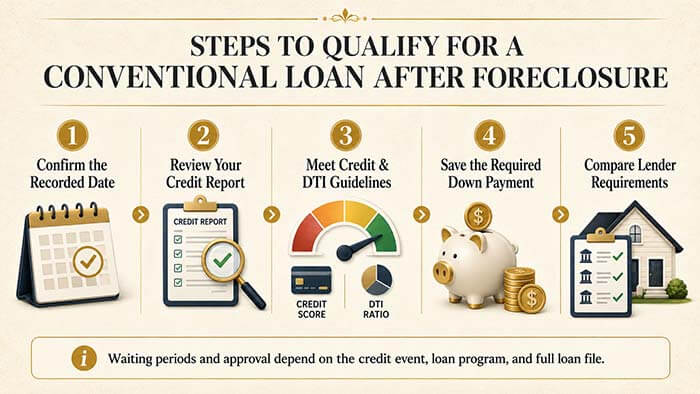 Fannie Mae guidelines on mortgage after foreclosure require re-established traditional credit. Nontraditional credit or a thin file does not satisfy that requirement after a significant derogatory event. Your recent financial behavior matters. DU evaluates payment history, revolving balances, debt obligations, down payment, reserves, and other risk factors together. Recent delinquencies or high credit card utilization can weaken a file even after the foreclosure timeline has been satisfied.
Is a 620 Credit Score Always Required?
Fannie Mae’s current guidance does not impose a minimum credit score on DU loan casefiles. DU assesses creditworthiness using its risk analysis. Manual underwriting follows separate score requirements, and lenders may impose additional requirements. This does not mean a low score guarantees approval. Ask the lender which underwriting method and lender requirements apply to your file. For broader qualification information, review our Fannie Mae conventional loan guidelines.
Documents to Gather Before Your Lender Review
Prepare a file that lets the lender evaluate both the past event and your proposed purchase. Depending on your situation, gather:
- Records identifying the foreclosure and its completion date.
- Bankruptcy discharge documents and relevant schedules, if applicable.
- Supporting hardship records if you are requesting an exception.
- Current income and employment documents.
- Statements showing funds available for the purchase.
- Information about current debts and housing payments.
The lender will determine the exact documentation required based on the loan program, underwriting findings, and the circumstances of your file. When requesting the review, explain your intended property use, target purchase price, available down payment, and preferred closing date. Ask what remains unresolved before you begin making offers.
Does Desktop Underwriter Approval Guarantee the Loan?
A favorable DU recommendation still requires lender review. The lender must verify the submitted information, satisfy the underwriting conditions, and investigate any contradictory or missing information. Keep your lender informed of any changes to your employment, income, debts, or funds during the process. For an explanation of what can remain outstanding, read our guide to mortgage approval conditions.
What If Fannie Mae Financing Is Not Available Yet?
Find out from your lender if there is another mortgage program that suits your situation and your plans to buy. Before deciding on an alternative, check the proposed payment, the cash required at closing, the fees, and the eligibility criteria. A more general article on mortgage alternatives after foreclosure looks at other methods of financing. When making the comparison, it should be based on the programs currently available to your specific borrower type.
Plan Your Next Home Purchase With a Clear Timeline
Before committing to a home, have your lender review the records that establish your eligibility and the finances supporting your purchase. That review should give you a practical next step: proceed with preapproval, obtain missing documents, or address a specific qualification issue. Gustan Cho Associates can help review your foreclosure history and discuss available mortgage options. Call (800) 900-8569 or email gcho@gustancho.com to get started.
Frequently Asked Questions About Fannie Mae Guidelines on Mortgage After Foreclosure
Does the Foreclosure Have to Disappear From My Credit Report?
No. Its presence on the report and your mortgage eligibility are separate issues. Conversely, an event’s absence from the report does not excuse the lender from reviewing relevant information in the application or loan file. Answer the application’s questions accurately.
Can I Ask a Lender to Review My Situation Before the Waiting Period Ends?
Yes. Request an early review to identify missing records, discuss your purchase budget, and understand what must be resolved. Ask whether any preapproval remains conditional on the timeline or additional documentation.
Should I Open Several Credit Accounts Before Applying?
Avoid opening accounts to make your file look stronger. Recent inquiries and newly obtained debts can affect underwriting, and new monthly payments must be considered when qualifying. Discuss proposed credit changes with your loan officer first.
Can a Larger Down Payment Shorten My Foreclosure Waiting Period?
Putting 20% or 30% down does not, by itself, shorten Fannie Mae’s foreclosure waiting period. A larger down payment may strengthen your application, but qualifying sooner still requires an applicable exception and the lender’s approval of its supporting documentation.
Can a Co-Borrower With Good Credit Help Me Qualify?
An eligible co-borrower’s income and assets may help you qualify, but their strong credit does not cancel your foreclosure history. DU evaluates all borrowers on the mortgage, including their debts and credit. You must still satisfy the waiting-period requirements that apply to your foreclosure.
What Should I Ask After a Lender Denies My Application?
Ask whether the denial resulted from a Fannie Mae requirement, the lender’s own lending standards, or missing documentation. Request a specific next step before applying again. If the issue concerns the lender’s additional requirements, consider requesting a second review elsewhere; changing lenders does not remove Fannie Mae’s eligibility requirements.
This article about “Fannie Mae Guidelines On Mortgage After Foreclosure” was updated on September 29th, 2026.