This GUIDE covers the experience with homeowners associations. Have you ever wondered where your HOA fee goes every month or every quarter when you pay it? Have you ever wondered why a friend of yours might pay as much or less than you do and they enjoy more amenities than you could imagine? I have wondered this as well, on the outside, some things just don’t seem to add up. I am not accusing anyone of wrongdoing per se, but the numbers just don’t add up. In this article, we will discuss and cover experience with homeowners associations.
What Are Homeowners Associations (HOA)?
A Homeowners Association (HOA) is a private, nonprofit organization built by a real estate developer or the homeowners themselves to manage and maintain a residential community. HOAs are typically found in planned subdivisions, condominiums, townhome communities, gated neighborhoods, and master-planned developments. Once the community is established, the HOA becomes the governing body responsible for setting rules, collecting dues, maintaining shared areas, and preserving property values.
Many homeowners who won a condo or townhouse had experience with homeowners associations. Homeowners associations (HOAs) are organizations that manage and enforce rules and regulations within a community or neighborhood, typically in planned developments, condominiums, or subdivisions. My experience is not personal, but I can provide you with general information and insights based on common experiences with homeowners associations people have had.
Positive Experience With Homeowners Associations
Amenities: HOAs often maintain common areas, parks, swimming pools, and other facilities for residents to enjoy. Property maintenance: They may oversee landscaping, exterior maintenance, and repair of common areas, which can help maintain property values. Community cohesion: HOAs can foster a sense of community by organizing events, neighborhood watch programs, and social gatherings.
Ready to Learn More About Your Homeowners Association?
Contact us today to get all the information you need about your HOA and how it enhances your community.
Rules and Regulations Experience With Homeowners Associations
HOAs have strict rules and regulations that homeowners must follow. These can govern anything from the color of your home to the type of plants you can have in your yard. Some homeowners appreciate the uniformity and order these rules bring, while others find them overly restrictive.
Homeowners Associations Fees

Homeowners are required to pay regular HOA fees to cover maintenance, repairs, and other community expenses. These fees vary widely depending on the community and its amenities. Failure to pay HOA fees can result in penalties and even a lien on your property. Dispute resolution:
Disagreements between homeowners and the HOA can arise, often related to rule violations or architectural changes. HOAs typically have a process for dispute resolution, which may involve mediation or legal action if necessary.
Some homeowners choose to get actively involved in the HOA by serving on the board or participating in committees. Being part of the HOA leadership allows homeowners to have a say in rule-making and community decisions.
The Structure of an HOA
Most HOAs follow a similar organizational structure:
- Board of Directors
The Homeowners Association board is typically elected by the community’s homeowners and consists of a President, Vice President, Secretary, Treasurer, and at-large members (optional). The board oversees daily operations, enforces rules, approves budgets, and makes key decisions on behalf of the association. - Management Company
Many Homeowners Association hire a professional property management company to assist with collecting dues, managing maintenance and repairs, organizing board meetings, enforcing violations, and handling legal compliance. - HOA Committees
Some larger HOAs have committees for specific functions such as landscaping, architectural review, events and social planning, and finance. These allow residents to participate in governance and bring specialized skills to the community.
Enforcement Experience With Homeowners Associations
HOAs have the authority to enforce rules through fines, penalties, or even legal action if necessary. While enforcement can maintain community standards, it can also lead to conflicts and disputes. Changes in leadership:
The composition of the HOA board can change over time, which can lead to shifts in policies and priorities. Homeowners may need to adapt to new leadership styles and agendas.
Research before buying: If you are considering buying a property in a community with an HOA, it’s essential to research the HOA’s rules, fees, and overall reputation. Speak with current homeowners to get a sense of their experiences. In summary, homeowners associations offer benefits like property maintenance and community amenities, but they also come with rules, fees, and potential conflicts. It’s essential to understand the HOA’s policies and your rights as a homeowner before buying a property in an HOA-managed community.
Experience With Homeowners Associations and HOA Fees
Let’s take for example my community, and I pay $35/month or $105/quarter, which in reality isn’t a huge price to pay at all! For this amount, we get a clubhouse, a swimming pool, a wildlife pond, and a park. We don’t have a ton of amenities, but for $35/month, I wouldn’t expect too much more. So let’s take it to another level, with 400 homes. There is a pot of over $150,000 collected every year from HOA fees.
Now I am not sure what they spend their money on. But the pool doesn’t work off and on throughout the summer for days at a time. The pond has absolutely zero upkeep and is overgrown and a huge breeding ground for mosquitoes.
The clubhouse requires $200 just to rent it. I would be very curious to see just where the funds go to support this. In theory, there is about $12,000 per month to be used on upkeep and bills. Being an accountant by trade, I want to put my auditors hat on and see what is going on. Now they could possibly have some bad contracts/agreements or it could just be mismanaged.
Experience With Homeowners Associations Budgets
The community we were looking at prior to moving to Hampshire, had a monthly HOA fee of $70 per month which is double what we are paying. However, they have more than double the amenities that we currently have. In their community they have the following:
- 3 swimming pools (indoor and outdoor)
- 3 fishing ponds that are stocked
- miles of walking paths and trails
- multiple parks for kids
- a clubhouse with party rooms
- a library, and workout facility
This in and of itself would probably cost more from Lifetime Fitness if you got a monthly membership for 1 person.
Experience With Homeowners Associations: Where Do HOA Fees Go?
Now how can this community, granted with more homes, be able to afford all these amenities for their residents, and I am stuck with a hit or miss pool that may or may not be heated on any given day? I would gladly pay more than what I currently am to get these options. This brings me full circle for the need of the HOA to be even more transparent in what their funds are actually going towards? I feel as if my HOA fees is wasting $150,000. This was because the money isn’t even getting saved as they are operating annually on a “break-even” basis. This means that we aren’t putting any money away should something catastrophic happen. We are staring at a special assessment at any given time things don’t go exactly right.
Experience With Homeowners Associations Effectiveness With Management
I understand that we don’t have the bankroll that other communities may have, but all I ask for is that the grounds be taken care of and amenities be in working order 99% of the time. Things can happen and I understand that. But it seems too many things are happening to affect the day-to-day functionality. I don’t think that I am asking for too much. But I would just like to see some answers.
If I were to find out there are certain items out of our control that affects us, then so be it, and I can deal with it. All I am looking for is some answers.
Let this be a lesson to all the home buyers out there that before purchasing a home, look into the HOA, and check the price that you are paying and what exactly you are getting. Talk with homeowners who had positive and negative experience with homeowners associations. Don’t live somewhere that will fill you with regret and anger, it isn’t worth it. Do your research and make an educated decision before you experience with homeowners associations!
Legal Authority of HOAs
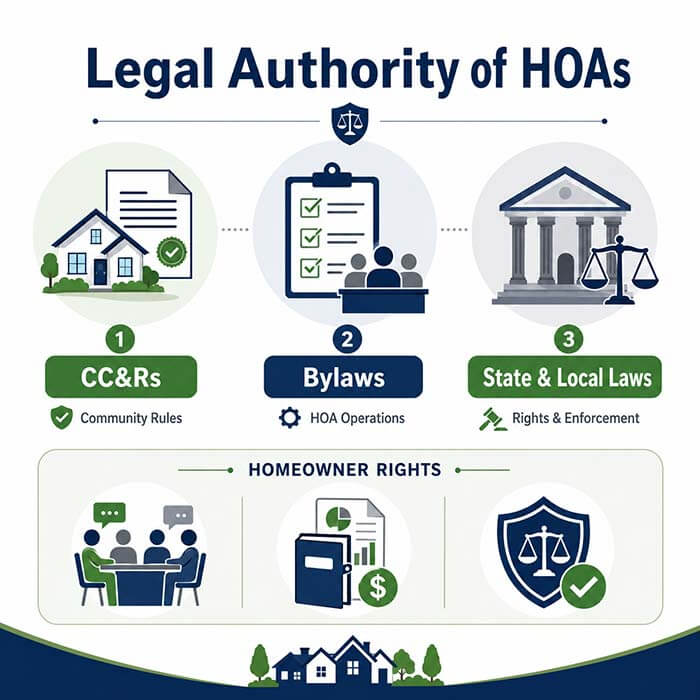
Homeowners Association is governed by:
- CC&Rs (Covenants, Conditions, and Restrictions)
This legal document outlines the community’s rules and standards, which homeowners agree to follow when purchasing property. - Bylaws
The bylaws define how the HOA operates, including voting procedures, board terms, and meeting requirements. - State and Local Laws
Each state has laws regarding HOA powers, homeowner rights, and dispute resolution. Some standard legal protections includes the right to attend meetings, the right to access financial records. limits on fee increases and fines, and requirements for fair enforcement
Advantages of Living in an HOA Community
Homeowners Association ensure clean common areas and neat landscaping, making the neighborhood attractive year-round. It has stable or rising property values by enforcing uniform standards and limiting unsightly changes, HOAs help keep home values strong. The HOA maintains gated entries, shared pools, gyms, walking trails, and community centers, which are included in dues. HOAs often step in to handle neighbor disputes or violations, reducing tension between residents. HOA meetings and events provide opportunities to get involved and have a say in how the neighborhood is run.
Disadvantages of Living in an HOA Community
It has restrictions on personal freedom like rules about paint colors, landscaping, or where you can park can feel limiting to some homeowners. Fees can be costly especially in amenity-rich communities and special assessments may be required for major repairs. HOA boards can be overly strict, inconsistent, or even negligent. Disagreements between residents and the board can lead to conflict. Fines for minor rule violations or inconsistent enforcement can be frustrating.
Tips for Homebuyers Considering an HOA
If you’re thinking of buying into a homeowners association-governed community, follow these steps:
- Read the CC&Rs and Bylaws – Know the rules before you commit.
- Review the HOA’s Budget and Reserves – Check for financial stability and maintenance planning.
- Ask About Special Assessments – Have any been issued in the past? Are any upcoming?
- Talk to Current Residents – Learn about their experience with the HOA.
- Check for Pending Lawsuits – A red flag that something may be wrong with the management.
- Consider the Fees – Make sure HOA dues fit comfortably in your monthly budget.
Overall Experience With Homeowners Associations
Dale Elenteny is an associate contributing editor of Gustan Cho Associates Mortgage Group. Dale is also a contributing writer for Gustan Cho Associates. Dale is a veteran mortgage banking professional by trade. Dale Elenteny is an expert in all areas of mortgage banking, from operations to sales. Dale can analyze complicated business tax returns and often has mortgage underwriters contact him for advice. We look forward to future articles by Dale Elenteny in the coming days and weeks. This guide on experience with homeowners associations was updated on January 11th, 2024.
Have Questions About HOA Rules and Regulations?
Contact us today to get the answers to your questions and ensure you’re in compliance with the HOA’s rules.