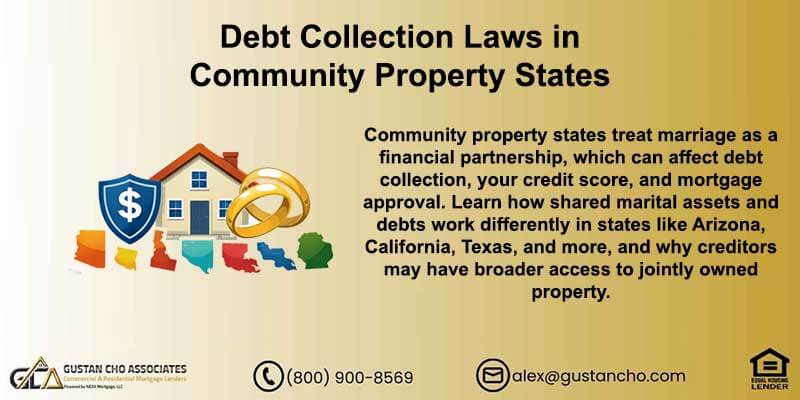
Debt Collection Laws in Community Property States: Spousal Liability, Creditor Rights, and Financial Protection Guide
In this guide, we will cover the debt collection laws in community property states and qualifying for a home mortgage. Debt Collection Laws In Community Property States do not make each person liable for each other’s debt. For example, if a spouse in a community property state were to rack up credit card debts, the spouse that is not on the card is not liable for the balance of the debt if the debt goes unpaid.
Learn the basics of debt collection laws in community property states, focusing on spousal liability and creditor rights for married couples. Find out which nine states use these rules, see who is responsible for different debts.
Debt collection laws in community property states can be challenging for married couples. In these nine states, creditors may pursue both spouses for debts, even if only one spouse’s name is on the account. This guide from Gustan Cho Associates explains the rules, shows who is responsible for debts, and gives practical tips to help protect your money, credit, and homeownership goals. In this guide, we will explore mortgage solutions on community property states. from Gustan Cho Associates. This guide on debt collection laws in community property states has been updated for 2026. In the following paragraphs, we will cover debt collection laws in community property states.
What is a Community Property State?

If you are married or planning to marry in a community property state like Arizona, Texas, or California, it is important to understand debt collection laws. These rules can impact your credit score, your ability to get a mortgage, and how your assets are protected. Gustan Cho Associates helps people across the country deal with collections and charge-offs, especially when community property laws are involved. more than just a relationship—it is a financial partnership.
Everything acquired during the marriage belongs to both spouses, regardless of whose name is on the documents. This shared ownership includes debts. Both partners are responsible for what either owes during the marriage.
While the District of Columbia and most states use equitable distribution, community property states work differently, allowing creditors to more easily access shared assets. In community property states, debt collection laws can differ slightly from non-community property states due to the concept of shared marital debt and assets. Here are some key points about debt collection laws in community property states: There are nine community property states. The nine community property states are Arizona, California, Idaho, Louisiana, Nevada, New Mexico, Texas, Washington, and Wisconsin (Alaska is an opt-in community property state). In this article, we will cover and discuss debt collection laws in community property states.
List of the Nine Community Property States in the US
The nine community property states are Arizona, California, Idaho, Louisiana, Nevada, New Mexico, Texas, Washington, and Wisconsin. Alaska, South Dakota, and Tennessee let couples choose these rules, but they do not apply them automatically. In California, Nevada, and Washington, domestic partnerships also follow community property laws. In these states, assets and debts are connected, which changes how debt collection works.
Laws in community property states differ significantly from those in equitable distribution states, especially regarding who is responsible for debts.
In community property states, creditors can go after all shared assets—joint bank accounts, shared homes, and sometimes even one spouse’s separate income—no matter who caused the debt. In equitable distribution states, creditors can usually go only after the debtor’s own property. One unpaid credit card, medical bill, or personal loan can quickly become a shared problem, making both spouses responsible. In contrast, spouses who did not cause the debt are usually protected in equitable distribution states.
Debt Collection Laws in Community Property States
In community property states, both spouses are usually responsible for debts incurred during the marriage. Creditors do not need both spouses’ signatures to claim shared property. This covers credit cards, personal loans, medical bills, and business debts that supported the household.
In community property states, any debt made during marriage is shared. Both spouses are responsible, even if only one signed or used the loan. Creditors can sue one or both spouses. Some places, a spouse can sue the shared estate.
Many couples are surprised to learn that separate accounts do not protect them. Community property laws can also apply to debts from before marriage. For example, in California, the shared estate might be used to pay a spouse’s old debt, though the other spouse’s separate property and some earnings are protected. Other states have similar rules, so couples should learn these laws carefully.
Marital Debt
In community property states, debts incurred by either spouse during the marriage are considered community debts, meaning both spouses are liable for repayment, regardless of whose name is on the debt.
Married and Worried About Your Spouse’s Debt?
Understand what they can and cannot go afterClaiming Rights Over Community Property and Income
In community property states, creditors can collect debts using a spouse’s income, shared property, and jointly owned assets. They can file legal claims on shared property or freeze and take money from joint accounts.
Because creditors have these powers, it is more important than ever to manage credit carefully and get expert advice. The Fair Debt Collection Practices Act (FDCPA) limits unlawful collection practices and protects consumers from abuse.
Debt collection in community property states is governed by both collection agency law and the FDCPA, which requires agencies to comply with federal standards. Agencies cannot threaten, harass, or misrepresent debts. State consumer laws may provide additional protections.
Collection Practices and How Community Property Laws Impact Credit Scores and The Ability to Get a Mortgage
Under community property laws, debt collection can affect both spouses’ credit reports, even if only one spouse misses payments. These issues can slow down mortgage approval, especially for FHA and VA loans, which closely review both partners’ credit histories.
Owners in community property states deal with collections and charge-offs. By working with lenders who follow agency and FHA rules without extra restrictions, the firm helps clients get mortgages even when others refuse.
With the right support, collections and charge-offs do not have to stop you. While the main ideas of community property debt collection are similar, each state has its own differences. For example, California’s broad rules are set out in its Family Code, while Texas, Arizona, and Washington have different exceptions. Wisconsin uses different terms for similar rules. Always check your state’s laws because they can change.
How to Protect Yourself from Unfair Debt Collection Practices
Knowing your rights under debt collection and community property laws is your best protection. Request proof of the debt, keep all communication with collectors in writing, and respond promptly to any legal notices. If debts become unmanageable, consider options like credit counseling, debt settlement, bankruptcy, or postnuptial agreements to separate shared and individual debts.
Borrowers in Community Property States with Debt Issues
Gustan Cho Associates has helped thousands of people in community property states get mortgages, even if they have collections, charge-offs, or credit issues. Their experience means each loan is carefully prepared and matched with lenders who do not add extra restrictions. Whether you need help with spousal debt or want to know how collections affect joint applications, their team offers fast, expert support nationwide. Unlike many lenders, they focus on removing credit obstacles so you can move forward without having to pay off every collection first.
How Does Separate Debt in Community Property States Work
Debts incurred before marriage or after legal separation are typically considered separate debts, and only the spouse who incurred them is responsible. Collection from Community Property: Creditors can pursue collection of community debts from both spouses’ incomes and any community property assets, even if only one spouse’s name is on the debt.
Some community property states have exemptions that protect certain assets from creditors, such as a portion of home equity or retirement accounts.
In some states, creditors must notify both spouses before initiating collection actions or lawsuits for community debts. In the event of divorce, community debts are usually divided equitably between the spouses, while separate debts remain the responsibility of the spouse who incurred them. It’s important to note that the specific laws and regulations regarding debt collection in community property states can vary, and it’s advisable to consult with a local attorney or legal professional for guidance on your particular situation.
What Ends Community Property
In the event the other spouse passes, divorces, or a postnuptial written consent agreement is signed and executed, this would end the liability of debts on community property states. In the event, that there is no community property, the person responsible for the debt will be the person who took out the debt.
Can Creditors Go After My Spouse For My Debts in Community Property States?
I get many questions concerning if a person is responsible for a credit card debt or any other debt for that matter if their spouse passes away. This depends on the individual state you reside in. In a community property state, if you are married, both you and your spouse’s income and debts are counted as joint income, assets, and debts during your marriage. If your husband or wife passes away, you will be responsible for his or her debt if he or she passes on a community property state but the individual is not liable.
Community Property States
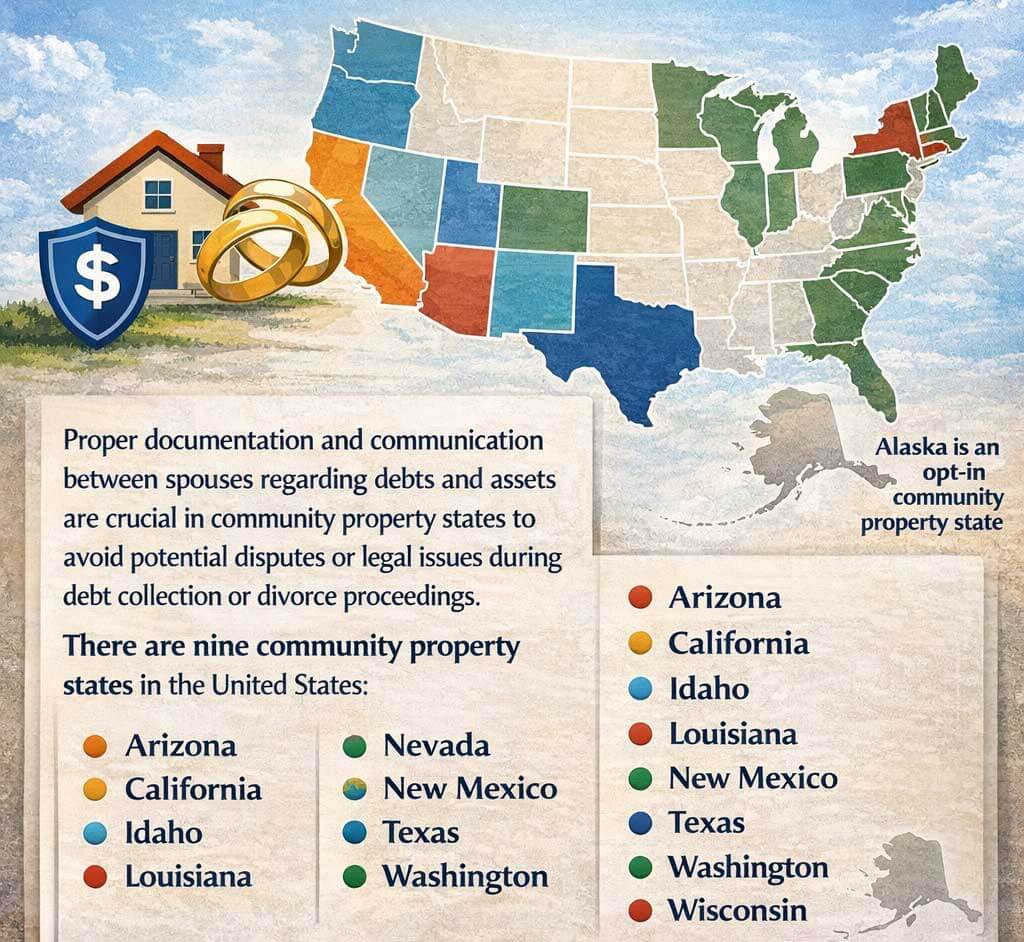
Proper documentation and communication between spouses regarding debts and assets are crucial in community property states to avoid potential disputes or legal issues during debt collection or divorce proceedings. There are nine community property states in the United States. The nine community property states are the following:
- Arizona
- California
- Idaho
- Louisiana
- Nevada
- New Mexico
- Texas
- Washington
- Wisconsin
The state of Alaska is known as an opt-in community property state where it gives both the husband and wife and/or vice versa the option of whether or not to make the property they own community property. Consumers living in a non-community property state, will not be responsible for their spouse’s debt.
Debt Collection Laws in The Community Property States Versus Non-Community Property States
For consumers who live in a non-community property state, the spouse’s estate could be responsible for his or her outstanding date. When the estate goes through probate, the estate’s executor is going to take inventory of your spouse’s assets and liabilities. Then makes a determination of which bills need to be paid and the order it needs to be paid. Community Property is any property that is acquired during a marriage between two people in a community property state. This includes the earnings of the other spouse who is not earning a wage. The liability does not follow the non-responsible spouse outside of marriage.
Am I Responsible For My Spouse’s Debts In Community Property States?
After paying all of the debts and liabilities of the estate, the remainder of the assets will be distributed to the deceased heirs. The distribution of assets will be paid to the heirs by the instructions on the deceased will. If there is no will, the executor of the estate will make that determination by the laws of the state in which the deceased has the assets. If there is a dispute among the heirs, then the courts will decide on the fate of the assets
Collection Agencies Are Governed By Federal Debt Collection Laws
Although you might live in a non-community property state and you are not responsible for your spouse’s debt, collection agencies will still try to call you and try to collect your spouse’s debt. Even if your spouse’s debt is charged off by the original creditor, there are scavenger collection agencies that will purchase old charged-off debts for pennies on the dollar. These scavenger debt collectors will try to collect the full amount of the original debt. Check laws in the individual states and find out the statute of limitations on debt.
Check To See The Community Property States and Debt Laws
If a collection agency calls you and tries to collect your spouse’s debt, kindly tell them not to contact you anymore because the debt does not belong to you and the responsible person for the debt has passed away. If they do not leave you alone, contact your state Attorney General’s office and file a complaint because this practice is prohibited and illegal.
Debt collection laws in community Debt collection laws in community property states do not have to stop you from reaching your financial or homeownership goals.
With the right information and a trusted mortgage partner, you can move forward confidently. Gustan Cho Associates offers solutions tailored for borrowers facing these unique challenges. informative, rather than providing any form of legal guidance or financial advice. Because laws vary by state, it is best to contact an attorney in your state. This guide on debt collection laws in community property states was last updated in April 2026.
Frequently Asked Questions On Debt Collection Laws in Community Property States
Are Both Spouses Responsible For Debts In Community Property States?
Yes. Community property states presume both spouses are responsible for the debt, regardless of how their names appear on the account.
Can One Spouse’s Debt Impact The Other Spouse’s Income?
In most cases, debt collection laws in community property states allow creditors to access community income and property. However, certain earnings may be legally protected, depending on the state and type of debt.
Do Premarital Debts Become Shared In Community Property States?
Usually yes. Many community property states allow creditors to access community property for one spouse’s premarital debts, though the non-debtor spouse’s separate property is typically protected.
How Do The Debt Collection Laws In Community Property States Impact A Mortgage Approval?
Collections and judgments affect both spouses’ credit scores and complicate underwriting. Gustan Cho Associates works with no-overlay lenders who follow FHA and agency guidelines, enabling approvals even with outstanding collections.
What Federal Laws Are In Place To Guard Consumers Against Debt Collectors In Community Property States?
The FDCPA is a federal law applicable in all states that prohibits the unlawful conduct described above.
Can One Spouse Bankrupt A Community Debt To Stop Collections On Community Debts?
In many cases, one spouse’s bankruptcy filing will discharge the community debt and preserve community property. Both spouses should consult a bankruptcy attorney familiar with these laws.
This Guide On Debt Collection Laws In Community Property States Was Updated On April 2, 2026.