
Opening a new loan may seem like a smart way to build credit before buying a home. A credit-builder loan can help some borrowers build positive payment history, but it can also add a monthly debt payment that may affect mortgage approval. The right choice depends on your current credit, income, debt-to-income ratio, and how soon you plan to apply for a mortgage. Before taking out any new installment loan, understand how it will be reported, what it will cost, and whether the payment could reduce your buying power. This guide explains when a credit-builder loan may help, when it may hurt, and what to consider before adding new credit ahead of a mortgage application.
What Is a Credit-Builder Loan?
A credit-builder loan is a small loan aimed at helping borrowers build or improve their credit history. It is different from a traditional personal loan because you usually do not receive the money upfront to spend.
With many credit-builder programs, the lender deposits the loan amount into a locked savings or certificate account. You make fixed monthly payments over the agreed term. After the loan is paid in full, you receive the money that was set aside, less any applicable interest or fees.
The potential credit benefit comes from making payments on time. However, a credit-builder loan can only help build mortgage-ready credit if the provider reports the account and payment history to one or more major credit bureaus. Before opening an account, ask whether it reports to Equifax, Experian, and TransUnion, how often it reports, and whether the account will appear as an installment loan on your credit reports. A credit-builder loan is not a guaranteed way to raise your score or qualify for a mortgage. It may help borrowers with limited credit history, but the new monthly payment can also affect the debt-to-income ratio when it is time to apply for a home loan.
Credit-Builder Loan vs. Personal Loan vs. Payday Loan
These three products may all involve monthly payments, but they serve very different purposes. Understanding the difference matters when you are preparing for a mortgage.
Credit-Builder Loan
A credit-builder loan is designed to help a borrower establish a payment history and build savings. Instead of receiving the loan proceeds right away, the lender may hold the money in a savings or secured account while you make fixed payments. Once the loan is paid off, you may receive the balance, minus any interest or fees. The credit benefit relies on the lender reporting your on-time payments to credit bureaus.
Personal Loan
A personal loan usually gives you the money upfront. Borrowers may use it for debt consolidation, home repairs, medical bills, or other expenses. Unlike a credit-builder loan, the main purpose is access to cash, not building savings. A new personal loan also creates a monthly payment that may affect your debt-to-income ratio and reduce how much you can qualify to borrow for a home.
Payday Loan
A payday loan is a short-term loan meant to be repaid with a future paycheck. It should not be viewed as a credit-building tool. The Consumer Financial Protection Bureau says payday loans are generally not reported to the three major credit reporting companies, so on-time payments are unlikely to help build credit. Unpaid payday-loan debt can still damage credit if it is sent to collections. For borrowers planning to buy a home, a credit-builder loan may be worth considering only when it fits the budget, reports payments to the credit bureaus, and will not interfere with mortgage qualification. Do not open any new account before speaking with your loan officer if you expect to apply for a mortgage soon.
Low Credit Score? You May Still Have Mortgage Options
FHA, VA, USDA, Conventional, and Non-QM loans may have different credit requirements. We’ll review your full profile—not just your score—and show the best path forward.
Can a Credit-Builder Loan Improve Chances of Mortgage Approval?
A credit-builder loan may help create or rebuild credit history when the lender reports your account and timely payments to the main credit bureaus. Payment history is an important part of most credit scores, so making every payment on time can help show that you manage credit responsibly.
However, a credit-builder loan does not guarantee a higher credit score or mortgage approval. Credit scores are based on information in your credit reports, and the impact of a new account can vary from one borrower to another. A new loan application may also create a hard inquiry, which can have a small negative effect on a credit score.
Mortgage approval involves more than credit. Lenders generally review your income, employment, assets, existing monthly debts, credit history, and ability to repay the new mortgage. The loan program, property, down payment, and overall file also matter. A credit-builder loan may be useful when you have limited credit history and enough time before applying for a mortgage. But if you plan to buy soon, the new monthly payment could increase your debt-to-income ratio and reduce your buying power. Speak with your loan officer before opening any new account during the mortgage process.
When a New Installment Loan Can Hurt Mortgage Approval
Opening a new installment loan before applying for a mortgage can lead to complications, even if you make all your payments on time. Lenders typically perform a hard credit inquiry during the mortgage application process, which can slightly lower your credit score. Opening a new account can lower the average age of your credit accounts. This change can affect your credit score, especially if your credit history is short. One significant issue with a new loan is the effect on your debt-to-income (DTI) ratio. Lenders assess your DTI to compare your monthly debt payments to your income. Taking on a new loan, such as a personal or auto loan, can increase your DTI. This might reduce the mortgage amount you’re eligible for or cause trouble if you’re already close to the lender’s maximum DTI limit. For conventional loans backed by Fannie Mae, installment debts with more than 10 payments remaining must generally be counted as recurring monthly debts for mortgage qualification. Even if you have debts with fewer than 10 payments left, you should still think about how they affect your ability to make a new mortgage payment. For instance, a $50 monthly payment on a credit-builder loan may seem minor, but it can be significant if you’ve got limited income and other debts. A small new obligation might affect your home-buying budget. Before opening a new installment loan, consult a loan officer to review your credit, income, current debts, and timeline for buying a home. While a credit-builder loan can benefit someone with poor credit and ample time to improve their credit history, if you’re planning to apply for a mortgage soon, it’s wise to avoid taking on new debt.
Questions To Ask Before Opening a Credit-Builder Loan
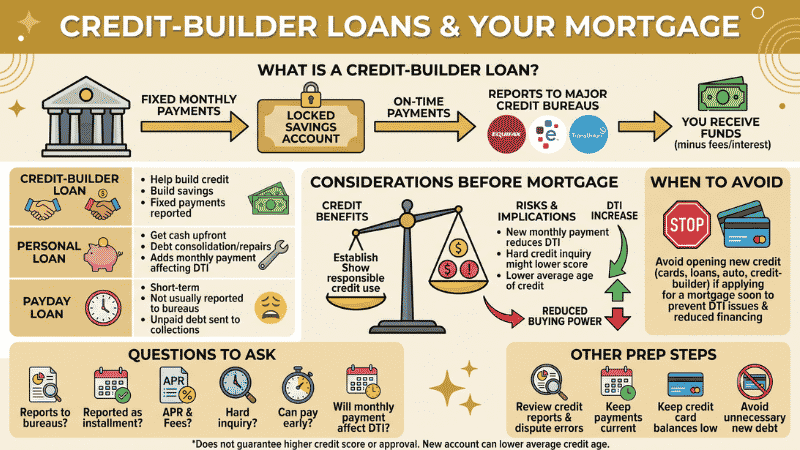 Before opening a credit-builder loan, ask these questions:
- Does the provider report to Equifax, Experian, and TransUnion? A loan cannot help build a reported credit history unless the provider reports your payment activity to the credit bureaus.
- Will the account be reported as an installment loan? Verify how the account will show up on your credit reports.
- What are the APR, fees, and total cost? Ask about application fees, monthly account fees, late fees, and the total amount you will pay.
- Will the application create a hard credit inquiry? A hard inquiry may have a small, temporary effect on your credit score.
- Can I make payments early? Ask whether making early payments or paying off the loan early affects how the account is reported.
- When will the account appear on my credit reports? Find out when reporting begins and how often the lender reports your payment history.
- Will this monthly payment affect my mortgage debt-to-income ratio? Even a small installment payment can reduce buying power. Conventional lenders generally count installment debt with more than 10 payments remaining as a monthly liability.
A credit-builder loan may be helpful when you have time to build payment history before applying for a mortgage. But if you plan to buy soon, ask a loan officer whether opening a new account could hurt your chances of approval.
When To Avoid Opening New Credit Before Buying a Home
Do not open a new credit card, personal loan, auto loan, or credit-builder loan simply because you hope it will raise your credit score quickly. A new account can add a hard inquiry, lower the average age of your accounts, and create a monthly payment that affects your debt-to-income ratio.
This is especially important when you plan to apply for a mortgage soon. Recent credit inquiries and new accounts may indicate that a borrower is increasing their debt, which can lower their available mortgage financing.
Before opening any new account, have a mortgage professional review your credit, income, existing debts, and buying timeline. In some cases, building a more positive payment history may be helpful. In other cases, the better move is to avoid taking on new debt, keep all current accounts paid on time, and allow your mortgage application to proceed without further changes.
Other Ways To Prepare for Mortgage Approval
A credit-builder loan is only one possible step. Many borrowers can prepare for mortgage approval by improving the parts of their financial profile that lenders review most closely. Start by reviewing your credit reports for incorrect balances, late payments, accounts that do not belong to you, or other errors. Credit-report mistakes can lower your score and affect the loan terms available to you, so dispute inaccurate information well before applying for a mortgage. Keep every account current. Payment history is one of the most important factors in most credit scores, and a recent late payment can create problems even when your score is otherwise strong. Keep credit card balances manageable. High revolving balances can increase your credit utilization and may lower your scores. Paying down balances can help, but avoid closing older credit card accounts without first understanding the potential impact on your credit profile. You should also organize your income and asset documents early. Gather recent pay stubs, W-2s or tax returns, bank statements, and documentation for deposits that may need an explanation. This can help prevent underwriting delays once you apply. Finally, avoid unnecessary new debt before and during the mortgage process. Opening new credit cards, financing furniture, leasing a vehicle, or taking out a personal loan can increase your monthly payments and affect your debt-to-income ratio. Stronger credit is usually built through consistent on-time payments and responsible credit use over time, not by making last-minute changes before buying a home.
Before You Open a New Account
A credit-builder loan may help some borrowers establish positive payment history, but it is not the right move for everyone. Before applying, consider your current credit, monthly debts, income, and how soon you expect to apply for a mortgage. A new account can help over time, but it can also add a payment that affects your debt-to-income ratio and buying power. Before opening new credit, have your mortgage file reviewed with your credit report, debts, income, assets, and home-buying timeline in mind. That review can help you decide whether a credit-builder loan supports your mortgage goals or whether keeping your current accounts paid on time is the better next step.
Frequently Asked Questions About Credit-Builder Loans:
How Long Does it Take for a Credit-Builder Loan to Help Your Credit?
There is no guaranteed timeline. Your account must first be reported to the credit bureaus, and the impact depends on your existing credit history, other accounts, balances, and payment record. For someone with no credit, a FICO Score generally requires at least one account that has been open and reported for 6 months. Small score changes may take three to six months, while stronger credit improvement can take longer.
Does Paying Off a Credit-Builder Loan Early Hurt Your Credit?
Paying off a credit-builder loan early is not automatically harmful, but it ends the active monthly payment history from that account. A paid-off loan may remain on your credit report, but it will no longer add new on-time payments. Before paying early, ask the provider whether there is a prepayment penalty and whether early payoff changes the account’s reporting.
What Happens if You Miss a Payment on a Credit-Builder Loan?
Missing a payment can incur late fees and may be reported to credit bureaus by the lender. Late payments can hurt credit scores, and negative account payment information may remain on a credit report for up to 7 years. Set up automatic payments or reminders if the payment fits your budget.
Are Credit-Builder Loans Worth it?
A credit-builder loan may be worthwhile when you have limited credit history, can comfortably afford the payment, and have confirmed that the provider reports to the major credit bureaus. It may not be worthwhile when high fees, interest, or a new monthly payment create financial strain or interfere with a near-term mortgage application. CFPB research found that these loans can help some consumers establish a credit record or improve repayment history, but results vary by borrower.
Is a Credit-Builder Loan Better Than a Secured Credit Card?
Neither product is automatically better. A credit-builder loan may be useful for someone who wants a fixed payment and savings at the end of the term. A secured credit card can be beneficial for individuals who can make a deposit, maintain low balances, and pay the balance in full each month. The best option depends on cost, reporting, budget, and whether you need to avoid adding a payment before applying for a mortgage.
Can You Get a Mortgage with no Credit Score?
In some cases, yes. Certain loans may allow manual underwriting or alternative credit documentation when a borrower does not have enough traditional credit to generate a score. The lender may review payment references and other documented financial history, but requirements vary by loan program and lender.
How do You Know Whether a Credit-Builder Loan is Reporting Correctly?
Check your credit reports after the provider’s stated reporting period. Look for the account, confirm that the balance and monthly payment history are accurate, and make sure it appears with the correct status. Free weekly online reports are available from Equifax, Experian, and TransUnion through AnnualCreditReport.com. Dispute any inaccurate information directly with both the credit reporting agency and the lender that supplied the data.
This article about “Can a Credit-Builder Loan Help You Qualify for a Mortgage?” was updated on July 1st, 2026.
Can a Credit-Builder Loan Help You Qualify for a Mortgage?
A credit-builder loan may help establish positive payment history, but timing matters before a mortgage application. Get a clear review of your credit profile and homebuying timeline before opening new credit.