Clearing Conditions For Clear To Close on Home Purchase: What Buyers Need To Know
This guide covers clearing conditions for clear to close on home purchases. Once mortgage borrowers have signed the mortgage application and the mortgage processor has processed it, it gets submitted to underwriting. A mortgage underwriter gets assigned to the file. After the underwriter thoroughly reviews the borrower’s applications and documents, the borrower will get conditional mortgage approval. In the following paragraphs, we will cover clearing conditions for clear to close on home purchase.
What Does Clear To Close Mean on a Home Purchase?
Dustin Dumestre, a senior loan officer at Gustan Cho Associates and the Editor of Chief at F-1 Mortgage Group and host of Friday Mortgage Minutes explains about clearing conditions for clear to close as follows:
Conditional loan approval does not guarantee the home loan will get clear to close. Once all the conditions have been met, borrowers will get clear to close.
Conditional mortgage approval is a great sign that the mortgage will soon close. It’s the road to a clear to close. Once borrowers get conditional loan approval, they should work on clearing conditions as soon as possible. Not clearing conditions for clear to close promptly delays a clear to close. In this article, we will discuss clearing conditions for clearing to close on home purchases and refinances.
How Close to Closing Do You Get Clear to Close?

Understand how to clear conditions for clear to close on a home purchase, what underwriters look for, the typical delays, and how to get to the closing table more quickly.
Generally, a clear to close is issued after all underwriting conditions have been met and the lender has verified all required documentation. In the following sections, we will cover a general timeline of when you might expect to receive a clear to close:
Initial Underwriting Approval:
- This typically happens after your loan application has been submitted and the lender has reviewed your financial documents, credit history, and other relevant information.
- Initial approval has yet to guarantee a clear to close.
Conditional Approval:
- Once the initial underwriting is complete, the lender may provide a conditional approval that includes a list of conditions or additional documents required to finalize the loan.
Submission of Conditions:
- You and your loan officer work to satisfy the conditions listed in the conditional approval.
- This may involve providing updated financial documents, explanations for certain items, or additional information requested by the underwriter.
Underwriter Review:
- Once you’ve submitted all required documents and conditions, the underwriter reviews everything to ensure compliance with the lender’s guidelines and any applicable regulations.
Clear to Close:
After the underwriter is satisfied with all documentation and conditions that have been met, they issue the clear to close. This indicates that the loan is ready for closing, and the final steps can be initiated. The timing of the clear to close can vary. Some lenders may issue it a week or more before closing, while others might do so just a few days before. Factors such as the complexity of the loan, the responsiveness of all parties involved, and any last-minute issues that arise can influence the timing.
Examples of Clearing Conditions For Clear To Close on Home Purchase
Mortgage underwriters give borrowers time to submit the conditions on the conditional loan approval. It is the job of the mortgage processor to clearing conditions for clear to close. It is best to get started as soon as possible in getting all the conditions to the processor so they can submit it to underwriting. Processors normally make sure all of the conditions are complete before submitting the conditions to underwriters.
If the processor submits partial conditions, the whole mortgage loan package will be kicked back. The whole process will need to get restarted and will cause delays.
For example, if all conditions have been collected and submitted to the underwriter, the underwriter will not drop whatever he or she is doing and sign off on a clear to close. Once all conditions have been submitted for a clear to close, the underwriter normally takes 24 to 48 hours or more to review the conditions and sign off on the clear to close. If any of the conditions is missing or the file is incomplete, it gets sent back to the processor, and this will cause delays in getting clear to close. This is why delays in clear to close happen. If clearing conditions for clear to close is not expedited by the mortgage processor, the real estate, closing gets delayed.
What is Conditional Approval?
It’s important to stay in close communication with your loan officer and be prepared to promptly provide any additional information or documents requested to help expedite the process and ensure a smooth closing. Once a borrower’s financial documents, credit history, and other relevant information have undergone an initial underwriting review, conditional approval in the mortgage process is a significant step toward securing a loan.
Buyer’s Guide to Clearing Conditions for Clear to Close
Home Purchases and Clear to Close
The mortgage process has many steps, but clearing conditions for clear-to-close is one of the last. When a lender has a clear to close, it means the underwriter has reviewed the file, and the conditions are ready to complete the closing documents for the last time and schedule a settlement. At this stage in home mortgage processing, most buyers have conditional mortgage approvals.
Clear To Close vs Closing Disclosure: What Is the Difference?
Borrowers receive a Closing Disclosure and schedule a Closing three days later. has detailed rules that make this review period so significant.
Another misconception is that loan approvals come with pre-approvals. This is not the case. There are many steps to getting a mortgage for a home.
Approvals come in stages. An underwriter fully approves a file only after other documents are explained or provided. These documents are called mortgage conditions or final items. Clearing final items moves a mortgage condition toward closing. The final approval stage is critical in the mortgage process. Informed buyers experience less stress and more efficient closings. Understanding this phase clarifies expectations and facilitates timely document submission to the loan officer or processor.
Conditions of Closing: What’s Clear to Close Anyway?
Most lenders will not issue a mortgage loan until the conditions prior to closing have been reviewed. Conditions of closing vary by lender; what the lender is trying to confirm one last time regarding the borrower, the property, income, assets, and title, and if it meets requirements for the loan program at the time of closing.
Clearing conditions is essential because various changes can occur between the loan application and closing that may complicate the process.
Examples include job changes, new credit accounts, delinquent payments, large undocumented deposits, missing updated bank statements, unpaid bills, or late-arising title issues. Any of these issues can prevent a file from reaching a clear-to-close status.
Why Underwriting Conditions Must Be Cleared Before Closing
Aside from the purchase conditions, the clearing conditions for clear to close are really about ensuring the file remains consistently clear, accurate, and stable. The underwriter does not want any remaining questions before the lender issues final approval.
Clearing Conditions to Get Clear to Close—Know Exactly What to Do Next
Most closing delays happen when conditions aren’t answered correctly the first time. Get a simple plan to clear underwriting conditions fast and keep your home purchase on scheduleConditions for Clear to Close on Home Purchase
No two mortgage files are alike; however, many home buyers tend to face the same criteria. These criteria can be standard or more complicated and nuanced. The sooner the borrower understands the criteria, the sooner the file will be complete.
Income and Employment Conditions
Income and employment requirements are typical in the underwriting process. A lender may request more recent pay stubs, tax return documentation, employment verification letters, employment gap letters, or W-2s.
Self-employed borrowers may face more stringent requirements, as underwriters may also require business documentation.
Many lenders also conduct employment re-verifications just before loan closing to ensure the borrower has not changed jobs or professions. Employment verification is also one of the requirements in Fannie Mae’s current documentation standards, along with income verification, for borrowers to qualify.
What Can Delay Clear To Close Before Settlement?
New underwriting requirements may be required if the income documentation shows a figure different from the one originally provided. This is one of the reasons job changes during the mortgage process are discouraged; borrowers should consult their loan officers before making any changes.
Asset and Bank Statement Conditions
Asset conditions are a major category of conditions. The underwriter must confirm that the borrower has the funds for the down payment, closing costs, and other expenses, as well as any required reserves. This may involve the borrower providing updated bank statements, documentation for large deposits, or proving the source of funds.
Income and Employment Conditions
When a transfer occurs between accounts, the borrower may be required to provide documentation for both the withdrawal and the deposit. If the funds originated from a gift, a bonus, the sale of an asset, or an asset that was previously liquid, the lender may request more exhaustive documentation to ensure the funds are permissible.
Gift Fund and Earnest Money Documentation
Some buyers mistakenly believe that lenders are only concerned with the presence of funds, which can lead to misunderstandings about delays. The primary concern is verifying the source of funds and ensuring they comply with mortgage guidelines.
Credit and Liability Conditions
The underwriter may also issue conditions related to credit, debts, or liabilities. These conditions may include letters of explanation for recent inquiries, proof of payment, updated account statements, or documentation of payment arrangements.
How Lender Overlays Can Affect Clear To Close on Home Purchase
If a borrower applies for new credit before closing, that can trigger a new review. If monthly debts change, the debt-to-income ratio may need to be recalculated. In some cases, the loan can still be approved. In other cases, the borrower may no longer qualify under the original terms. Therefore, maintaining consistent credit activity from application through closing is essential.
Appraisal and Property-Related Conditions
The conditions for Title work and the clearing conditions for a clear-to-close on a home purchase are very important.
Title conditions may also include outstanding liens and other legal issues that may affect the estate.
These include corrected title commitments, payoff statements, clarifications of commitments, and revised documentation for easements or judgments. The lender needs to verify that the home has no title defects and that ownership is clear.
Title and Homeowners Insurance Conditions
Homeowners insurance is another common condition. Before the loan is approved, the insurance policy must cover a condition, the insurance declarations page, the premium, and the effective date, and the lender will request the documentation of the policy.
Appraisal and Property-Related Conditions
Appraisal-related property conditions, lender-related restriction conditions from the appraisal, and inspection completion conditions.
If the appraiser specifies repairs, safety concerns, or unfinished construction, the underwriter will request additional documentation to clear to close.
Agency instructions state that a loan cannot be sold unless verification of completion of the required property-related conditions is provided. This is more critical for homes with repairs, new construction, or properties that had appraisal conditions. Even if a borrower is completely approved, if the property does not comply with the final lending requirements, the case will be postponed.
Gift Fund and Earnest Money Documentation
Home purchase loans allow gift funds, but they are often required to be documented. These may include a gift letter, proof of the source of the funds, proof of the transfer, and proof of the transfer to the borrower or closing agent, in a permissible manner.
Fannie Mae’s guidance specifically mentions documenting gift funds transferred before or at the time of settlement.
Earnest money can also pose a problem. If the earnest money deposit is underlined, it is not approved, and the lender may require proof of its origin and how it cleared. Although these requests are standard, they are sensitive. One small piece of the paper trail could lead to an unnecessary strain in the underwriting process.
How Buyers Can Quickly Remove Conditions on Their Mortgages
While many applicants believe they have fulfilled all requirements, those who consistently satisfy mortgage conditions demonstrate organization, promptness, and a strong sense of responsibility.
Underwriters tend to agree that reviewing documents before sending them to an underwriter is the best thing a buyer can do.
This is important when deciding whether to include blank pages that are required, and whether names, account numbers, dates, and balances are all visible. When an underwriter requests a buyer’s letter of explanation, it is crucial that the buyer remains on point and sticks to the subject matter.
How Buyers Can Clear Mortgage Conditions Faster
When an underwriter requests updated documents, a buyer should always provide the latest version.
Timely communication is crucial. When an underwriter requests documentation, prompt same-day responses increase the likelihood of staying on schedule.
Delays are more often caused by unaddressed requests than by the complexity of the conditions themselves.
What is Next After The Conditional Loan Approval
The lender tentatively approves the loan application subject to specific conditions being met. These conditions could include providing additional documentation, explaining certain financial transactions, resolving outstanding credit issues, or meeting specific debt-to-income ratio requirements. The final steps towards closing the loan can be initiated.
How Lender Overlays Can Affect Clear To Close on Home Purchase
It’s important for borrowers to actively participate in addressing conditions during the conditional approval stage to help ensure a smooth transition to clear, close, and finalize the loan process.
The borrower and their loan officer work together to satisfy these conditions, submitting any required documents or clarifications as requested by the underwriter.
Once all conditions are met, the underwriter conducts a final review to ensure compliance, after which a clear to close is issued, indicating that the loan is fully approved.
Delays With Clearing Conditions For Clear To Close
Sometimes, delays happen in getting conditions, not from borrowers but from the source itself. For example, if borrowers had multiple jobs in the past two years, we need employment verification from all previous employers.
Many previous employers are in no hurry to help ex-employees. Many get the proper verification of employment form signed and back to the processor.
Other common delays include errors on the borrower’s credit report. A credit supplement needs to get done, which can take up to a week, and because of a delay in a clear to close. Rapid Rescores take anywhere between 3 to 5 business days.
Delays Clearing Conditions For Clear To Close Delays The Closing
In some cases, the mortgage processor submits all of the conditions to the underwriter, and the underwriter checks off the submitted conditions but requests additional conditions on the mortgage file. This will cause delays in getting a clear to close and most likely delay the mortgage loan closing.
Reasons for Delay Clear to Close
Several factors can delay a file even when the process seems straightforward. Common causes include missing documents, recent paycheck stubs, bank statements, unresolved title issues, low appraisals, insurance concerns, misclassified employment, and manual credit report changes.
Why Last-Minute Changes Can Create New Conditions
Discrepancies between the original and closing files are common. For example, overtime or bank balance may increase, or new debt may appear during a credit check. These changes require the underwriter to review the file again, which can create new conditions and frustrate borrowers who thought their file was cleared. Documentation also affects the closing timeline. Federal regulations require borrowers to receive the Closing Disclosure at least three business days before closing. If changes to the loan term require reissuing the document, the closing date will be delayed.
Mortgage loans require careful attention, especially in the final stages. Minor actions like an overdraft, credit inquiry, or significant balance reduction can cause major issues as closing approaches.
These frustrations often cause stress early in the process. The most challenging phase usually occurs between mortgage approval and the lender completing file validation. should prioritize financial stability until closing.
Closing Disclosure vs. Clear to Close
It’s understandable why people confuse Clear to Close with the Closing Disclosure. Clear to close indicates internal progress at the lender’s office that the file is ready to close. The Closing Disclosure is the first official document detailing the final loan terms, estimated monthly payments, and closing costs down to the penny.
Closing Disclosure
According to the Consumer Financial Protection Bureau, the Closing Disclosure is considered formally delivered to the borrower, and the 3-day countdown period begins upon receipt. He or she will have at least 3 days to compare the terms and costs to the final loan estimate that they have.
How To Avoid Delays Before Closing Day
Most lenders aim to issue clear-to-close at the same time as the Closing Disclosure, but this does not always happen. Borrowers should understand that clear to close is a process milestone, while the Closing Disclosure is a required document. Lender overlays mean one lender may require stricter conditions than another, even for the same loan.an.
Lender Overlays
Lender overlays are stricter internal policies that exceed minimum agency, government, or investor requirements. They affect the number of conditions, required documentation, and the speed of reaching clear-to-close.
For example, one lender may accept a simple explanation letter, while another may require additional documentation or a more thorough review.
This leads to different experiences for borrowers with similar qualifications. This is important for home buyers, as lenders with more overlays may introduce delays. Lenders with fewer overlays can process the same file with fewer conditions and less required communication.
Final Steps After You Are Cleared To Close
Once the file is cleared to close, the next steps are confirming the final Closing Disclosure, coordinating the closing date with the title company or attorney, providing certified funds, and completing the signing appointment. losing Day Borrowers should stay accessible, regularly check their email, and maintain contact with their loan officer and real estate agent. They should confirm the required closing funds, payment method, and necessary identification or documents for settlement.
Ready to Close? Let’s Clear Your Conditions Fast
Send your scenario or start your application. We’ll guide you step-by-step to Clear to Close on your home purchaseCommon Conditions Needed for a Clear To Close on a Home Purchase
A careful review of the final figures is essential. Borrowers should compare these numbers to previous estimates and seek clarification for any discrepancies. Attention to detail before settlement is critical.
The process can feel overwhelming due to the volume of simultaneous tasks. However, the process can feel overwhelming due to many simultaneous tasks.
However, when all conditions are cleared and the file is managed efficiently, closing day typically proceeds smoothly. A clear-to-close on a home purchase is the final checkpoint between a conditional mortgage approval and getting the keys to your new home. It is where the lender confirms that the income, assets, credit, property, title, and final disclosures all line up.
What Clearing Conditions For Clear To Close Really Mean
Buyers who understand this stage are usually better prepared and experience less stress. They know why documents are requested, realize final approval depends on meeting all conditions, and see that prompt, accurate responses help ensure timely closings. If you are currently in the mortgage process, stay organized, avoid major financial changes, and respond promptly to all requests. This is the most effective way to move from conditional approval to clear-to-close without unexpected issues.
Final Steps After You Are Cleared To Close
Homebuyers who need to qualify for a mortgage with a lender licensed in 48 states, including Washington, DC, Puerto Rico, and the U.S. Virgin Islands, with no overlays on government and conventional loans, please get in touch with Alex Carlucci the National Development Manger at Gustan Cho Associates at 800-900-8569 or text us for faster response. Or email us at alex@gustancho.com. The team at Gustan Cho Associates closes on all of our pre-approvals.
The Importance of a Solid Pre-Approval
We do not issue pre-approvals if we have any doubts about closing. Not just closing but closing on time. The team at Gustan Cho Associates does TBD underwriting pre-approvals.
TBD underwritten pre-approvals at Gustan Cho Associates are full credit approvals underwritten and signed off by mortgage underwriters.
The only thing missing with TBD underwriting pre-approvals is the property. Once the homebuyer gets into a written executed real estate purchase contract, the underwriter will underwrite the property and issue a clear to close.
What if My Credit Score Changes Before Closing?
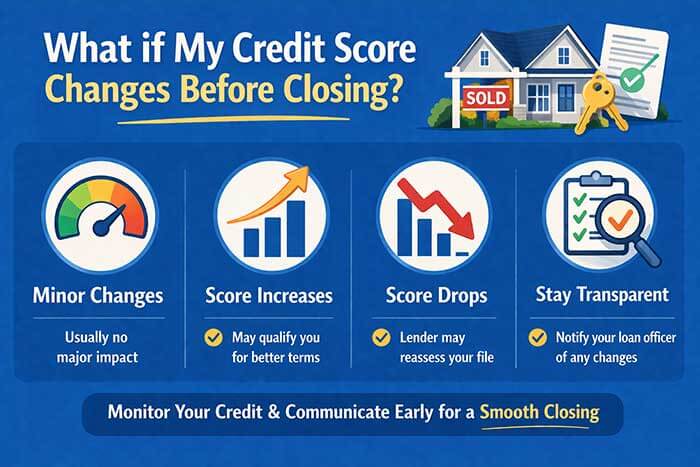 If your credit score changes before closing on a mortgage loan, it can have varying impacts depending on the extent of the change and the lender’s policies.
Minor fluctuations, such as small increases or decreases, may not significantly affect your loan approval if your score exceeds the lender’s minimum requirements.
Major changes, such as a substantial increase or decrease in your score, can lead to a reassessment of your loan application by the lender. Strengthening your score significantly could enhance your application and lead to better loan terms, like a lower interest rate.
Final Steps After You Are Cleared To Close
Strengthening your application with a significant increase in your score may lead to better loan terms, such as a lower interest rate.
A significant drop in your score might raise concerns for the lender and necessitate a review of your financials to ensure continued compliance with their underwriting guidelines.
It’s crucial to inform your loan officer promptly about any significant credit score changes and be prepared for potential adjustments in your loan terms based on the updated credit information and the lender’s reassessment.
How To Close a Mortgage Loan on Time
If you have any questions about Clearing Conditions for Clear to Close on Home Purchase or you need to qualify for FHA loans with a lender with no overlays on government or conforming loans, please contact us at Gustan Cho Associates at 800-900-8569. Text us for a faster response. Or email us at alex@gustancho.com . The team at Gustan Cho Associates is available 7 days a week, on evenings, weekends, and holidays.
FAQs About Clearing Conditions for a Clear To Close on a Home Purchase
What Does Clearing Conditions For Clear To Close On A Home Purchase Mean?
It means the borrower has satisfied the lender’s final underwriting requirements before closing. These conditions can include updated income documents, bank statements, title items, insurance documents, and explanations for credit or deposit questions. Once the lender accepts all required items, the loan can proceed to final closing.
How Long Does It Take To Clear Conditions For A Clear-To-Close?
It depends on the file’s complexity and the borrower’s response time. Some loans clear conditions in a day or two, while others can take longer if there are appraisal issues, title problems, documentation gaps, or last-minute changes to the borrower’s financial profile.
Can A Loan Be Denied After Conditional Approval?
Yes. A conditional approval is not the same as final approval. If the borrower does not satisfy the conditions, changes jobs, adds new debt, has unexplained asset activity, or if a property or title issue appears, the lender can delay or deny the loan.
What Are The Most Common Mortgage Conditions Before Clear-To-Close?
The most common conditions include updated pay stubs, bank statements, letters of explanation, verification of employment, proof of homeowners’ insurance, title documentation, appraisal-related items, and sourcing of gift funds or earnest money.
Does Clear To Close Mean I Am Guaranteed To Close?
Clear to close is a major milestone, but borrowers still need to complete the closing disclosure review period, sign documents, and meet any final settlement requirements. Buyers should still avoid credit changes, job changes, and unusual financial activity until after the closing is complete.
Can Lender Overlays Affect A Clear-To-Close On A Home Purchase?
Yes. Lender overlays can increase documentation requirements and create additional underwriting conditions beyond baseline program guidelines. This is one reason different lenders may have different requirements for the same borrower profile.
What Happens After Conditional Approval Is Granted?
After conditional approval is granted, the borrower and their loan officer work together to satisfy the conditions outlined by the lender. This may involve providing updated financial documents, explanations, or clarifications as requested by the underwriter.
What Is The Significance Of Clearing Conditions For Clear To Close?
Clearing conditions for clear to close is a crucial step in the mortgage process. It indicates that all required documentation and conditions have been met, and the loan is ready for closing. Please clear conditions promptly to avoid delays in obtaining a clear to close.
What Can Cause Delays In Clearing Conditions For Clear To Close?
Delays in clearing conditions for clear to close can occur for various reasons, such as errors on the borrower’s credit report, delays in obtaining required documentation, or additional conditions requested by the underwriter after initial submission.
What Is The Role Of The Mortgage Processor In Clearing Conditions For Closing?
The mortgage processor is crucial in clearing conditions for closing. They are responsible for gathering all required documentation, ensuring completeness and accuracy, and submitting the conditions to the underwriter for review.
How Does A Change In Credit Score Before Closing Impact The Mortgage Loan?
A change in credit score before closing can impact the mortgage loan terms and approval. Minor fluctuations may not have a significant impact, but major changes could lead to a reassessment of the loan application and potential adjustments in loan terms or requirements.
What Should Borrowers Do If Their Credit Score Changes Before Closing?
Borrowers should promptly inform their loan officer about any significant changes in their credit score before closing. Proactive and providing updated information can help address potential impacts on the loan application and ensure a smoother closing process.
What Are Some Common Delays In The Clear-To-Close Process?
Common delays in the clear-to-close process can include errors in documentation, delays in obtaining required information or verifications, additional conditions requested by the underwriter, or issues with third-party vendors involved in the loan process.
This Guide About Clearing Conditions For Clear To Close On Home Purchase Was Updated On April 16, 2026.