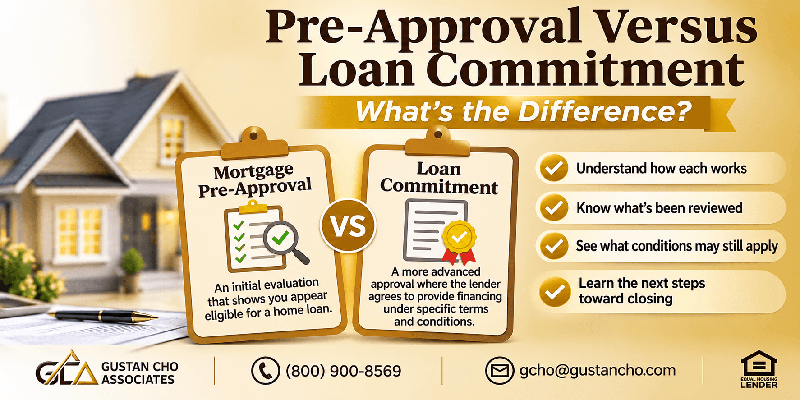
Pre-approval versus loan commitment: What’s the difference? A mortgage pre-approval indicates that a borrower appears eligible for a home loan based on the financial information and documentation reviewed by the mortgage company. A loan commitment generally represents a more advanced stage of the mortgage approval process, when the lender has reviewed the application and agreed to provide financing subject to specified conditions.
However, mortgage companies do not use these terms uniformly. A pre-approval or loan commitment does not automatically guarantee that a mortgage will close. Borrowers should understand what has been verified, which conditions remain outstanding, and whether the loan has received final underwriting approval.
Buying a home involves several stages of the mortgage approval process. Two terms that frequently confuse homebuyers are mortgage pre-approval and loan commitment. Although both indicate progress toward obtaining financing, they do not necessarily represent the same level of approval. A mortgage pre-approval helps buyers understand their potential borrowing capacity before making an offer. A loan commitment generally indicates that the mortgage company has advanced further in its review of the application and is prepared to provide financing under specified terms and conditions. Understanding the difference between these stages is important when negotiating a purchase contract, meeting financing deadlines, and preparing for closing.
What Is a Mortgage Pre-Approval?
A mortgage pre-approval assesses a borrower’s eligibility for a mortgage. The mortgage company typically reviews the applicant’s credit, income, employment, assets, and existing debts to determine whether the borrower appears eligible for financing.
The level of review depends on the mortgage company’s procedures. Some pre-approvals involve a detailed review of supporting documents and automated underwriting findings. Others are based on information supplied by the borrower with more limited verification.
A thorough mortgage pre-approval generally involves reviewing:
- Credit reports and credit scores.
- Employment history and current income.
- Tax returns, W-2s, pay stubs, or other applicable income documentation.
- Bank statements and available assets.
- Existing monthly debt obligations.
- Debt-to-income ratio.
- Down payment and estimated closing costs.
- Applicable mortgage program requirements.
The loan officer can submit the application using an automated underwriting system (AUS), such as Fannie Mae’s Desktop Underwriter or Freddie Mac’s Loan Product Advisor, if applicable. Automated underwriting findings can provide an initial assessment of the borrower’s eligibility and identify documentation or other requirements. However, an automated approval does not mean every aspect of the mortgage has been fully verified. A pre-approval letter generally identifies the estimated loan amount, proposed mortgage program, and other preliminary financing terms. Buyers commonly submit this letter with their purchase offers to demonstrate that they have taken steps to arrange financing. However, a pre-approval is not a guaranteed mortgage approval. The final decision depends on the accuracy of the information supplied, verification of the borrower’s financial circumstances, property eligibility, and satisfaction of applicable underwriting requirements.
What Is a Mortgage Loan Commitment?
 A mortgage loan commitment is generally a written statement indicating that the mortgage company is prepared to provide financing under specified terms, subject to the conditions identified in the commitment. A commitment letter may identify the approved loan amount, interest rate or applicable rate-lock terms, mortgage program, repayment period, expiration date, and outstanding conditions that must be satisfied before closing.
Unlike a preliminary pre-approval, a loan commitment generally follows a more advanced review of the mortgage application. The underwriter may have evaluated the borrower’s income, employment, credit, assets, debts, and other applicable eligibility requirements.
Depending on the lender’s procedures, the commitment may still be subject to outstanding conditions involving the borrower, property, title, insurance, or other requirements. For example, a mortgage company may issue a commitment after reviewing the borrower’s financial qualifications, even if certain property-related items remain outstanding. A loan commitment does not necessarily mean that the mortgage is ready to close. Borrowers must satisfy the conditions stated in the commitment and complete any remaining underwriting requirements. The precise meaning of a loan commitment depends on the language in the commitment letter, the mortgage company’s procedures, and applicable law. Borrowers should review the actual terms rather than assume that the word “commitment” means the loan is guaranteed.
Pre-Approval Versus Loan Commitment: What Is the Difference?
The key difference between mortgage pre-approval and a loan commitment lies in when they occur in the financing process and in how thoroughly the mortgage company has reviewed your information.
Pre-approval usually means the lender thinks you qualify based on the information they’ve checked before or during your home search. Loan commitment means the lender has gone further and is ready to offer financing if certain conditions are met.
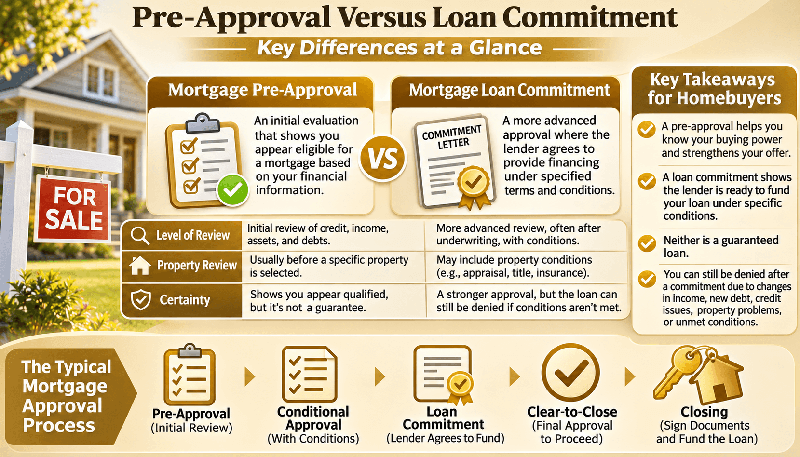
You can get pre-approved even before you find a property. Depending on the lender, you might also get a loan commitment before all the property requirements are finished. Here are some important differences to keep in mind: Financial review: Pre-approval usually involves a basic check of your credit, income, assets, and debts. A loan commitment follows a deeper review and often indicates that your finances have been verified. Property review: Pre-approval isn’t a final okay for any specific property. A loan commitment might include certain property conditions, and an appraisal or other requirements could still be pending. Underwriting: A pre-approval may be based on an initial assessment or automated underwriting findings. A loan commitment generally reflects a more advanced underwriting decision, although conditions may remain. Financing certainty: Neither document automatically guarantees closing. The strength of either approval depends on the work completed, the conditions imposed, and the lender’s actual commitment. Homebuyers should ask their loan officer what’s already been reviewed, what’s still missing, and if the mortgage has conditional or final underwriting approval.
Move From Pre-Approval to Mortgage Commitment
Getting pre-approved is exciting, but your loan still needs to meet underwriting requirements before final approval.Is a Loan Commitment the Same as Conditional Approval?
No. A loan commitment and conditional approval are related mortgage terms, but they are not necessarily interchangeable.
Conditional approval generally means that an underwriter has reviewed the mortgage application and determined that the borrower meets the applicable requirements subject to additional documentation or other conditions.
For example, an underwriter may issue conditional approval while requesting:
- Updated bank statements.
- Additional income documentation.
- Verification of employment.
- Explanations of large deposits.
- Documentation supporting the source of the down payment.
- Additional property or title documentation.
Once the borrower and other parties satisfy the applicable conditions, the mortgage file can proceed toward final underwriting approval and closing. Some mortgage companies use the term “loan commitment” to refer to an approval that remains subject to underwriting conditions. Others reserve the term for a more advanced stage of the process. This is why borrowers should not assume that receiving a conditional approval or commitment letter means all underwriting requirements have been completed.
Can a Mortgage Be Denied After a Loan Commitment?
A mortgage can still fail to close after a loan commitment has been issued. A commitment represents an important step in the financing process, but outstanding conditions and changes in the borrower’s financial circumstances can affect the final outcome. Several situations can create problems after a commitment. Changes in employment or income: Losing a job, changing employers, reducing working hours, or experiencing a significant change in income can affect mortgage eligibility. The lender may need to reevaluate the borrower’s ability to repay the loan. New debt: Taking out a car loan, financing furniture, opening new credit cards, or accumulating additional monthly obligations can increase the debt-to-income ratio. New debt can affect the final underwriting decision. Credit changes: Missed payments, newly reported collections, increased credit card balances, or other significant credit changes can affect eligibility. Unverified assets: The lender may discover unexplained deposits, insufficient funds, or problems with documentation of the source of the down payment and closing costs. Appraisal and property issues: An appraisal that does not support the purchase price, unacceptable property conditions, title problems, or insurance issues can delay or prevent closing. Outstanding underwriting conditions: Failure to provide the required documentation or satisfy the conditions in the commitment can prevent the mortgage from reaching clear-to-close status. Expired commitment or rate lock: A commitment letter and an interest rate lock are not necessarily the same thing. Both may have expiration dates, and borrowers should understand the requirements and consequences of expiration. Homebuyers should avoid making major financial changes during the mortgage process. They should also promptly communicate any changes in employment, income, credit, or assets to their loan officer.
What Happens After Receiving a Loan Commitment?
Receiving a loan commitment generally means the mortgage application has progressed substantially. However, the loan may still need additional documentation and final verification before closing. The remaining steps depend on the mortgage program, lender, and conditions listed in the commitment. The mortgage company may need to complete the following: Clear outstanding underwriting conditions: The borrower must provide any remaining documents requested by the underwriter. The processor and loan officer work with the borrower to satisfy these requirements. Complete property requirements: The lender may need the appraisal, title work, homeowners insurance, condominium documentation, or other property-related items. Verify employment and financial information: The mortgage company may conduct additional employment and asset verification before closing. Updated documentation or a final credit review may also be required. Complete final underwriting review: Once the required conditions have been submitted, the underwriter reviews the outstanding items and determines whether they can be cleared. Issue clear-to-close: Clear-to-close generally means the lender has completed the necessary underwriting and closing requirements and has authorized the loan to proceed to settlement, subject to final closing procedures. Clear-to-close is a more advanced stage than a preliminary pre-approval or conditional commitment. Even then, borrowers must complete the closing process, sign the necessary documents, and satisfy any applicable funding requirements.
Is a Fully Underwritten Pre-Approval Better Than a Standard Pre-Approval?
A fully underwritten pre-approval can provide an advantage over a standard pre-approval because the mortgage company reviews the borrower’s financial qualifications before the buyer identifies a property. This process is sometimes referred to as a TBD (to-be-determined) underwritten approval because the property has not yet been selected.
The underwriter may review the borrower’s credit, income, employment, assets, debts, and other applicable requirements before the home search is completed.
A fully underwritten TBD approval can help identify financial or documentation issues early. It may also strengthen a purchase offer because the seller can see that the buyer has completed a more extensive financing review. However, the property must still meet the applicable requirements of the appraisal, title, insurance, and mortgage programs. A fully underwritten pre-approval is not a guarantee that any property the buyer selects will qualify. Read more about fully underwritten TBD mortgage approval.
Frequently Asked Questions About Pre-Approval Versus Loan Commitment
Is a Mortgage Pre-Approval a Guaranteed Loan?
No. A mortgage pre-approval is an initial assessment of a borrower’s eligibility based on the information reviewed by the mortgage company. The final mortgage approval depends on verification of the borrower’s financial information, property eligibility, and satisfaction of underwriting requirements.
Does a Loan Commitment Mean the Mortgage is Approved?
A loan commitment generally indicates that the mortgage company is prepared to provide financing under specified terms and conditions. However, outstanding conditions may remain. Borrowers should review the commitment letter to understand what must happen before closing.
Can a Lender Issue a Loan Commitment Before an Appraisal?
Yes. Some mortgage companies issue commitment letters before the appraisal is completed. The commitment may remain subject to an acceptable appraisal and other property-related requirements.
How Long Does a Mortgage Loan Commitment Last?
The expiration date depends on the mortgage company’s commitment letter and the specific loan transaction. Borrowers should review the expiration date and understand whether additional time is available if the closing is delayed.
Can a Mortgage Commitment be Revoked?
A mortgage commitment may be withdrawn or become ineffective under circumstances permitted by its terms and applicable law. Material changes in the borrower’s financial circumstances, failure to satisfy required conditions, property eligibility problems, or other significant issues can affect the transaction.
What is the Difference Between Conditional Approval and Clear-to-Close?
Conditional approval means the underwriter has approved the mortgage subject to outstanding requirements. Clear-to-close generally means the lender has completed the necessary underwriting and closing requirements and authorized the loan to proceed to settlement.
Should Homebuyers Request a Fully Underwritten Pre-Approval?
A fully underwritten pre-approval can be beneficial because it allows the mortgage company to review the borrower’s financial qualifications before a property is selected. However, the property must still meet the applicable mortgage requirements before the loan can close.
Final Thoughts on Pre-Approval Versus Loan Commitment
Mortgage pre-approval and loan commitment are both key stages in the home-buying process, but they don’t necessarily provide the same level of financing certainty in every case. A pre-approval will give a buyer an idea of their eligibility before making an offer. A loan commitment, on the other hand, typically results from a more in-depth review and represents a greater degree of assurance that the lender is willing to lend.
As the mortgage companies use the terms differently, the buyer must understand precisely what their approval letter means and what the outstanding requirements are.
The single most important thing that a buyer can do is keep in close contact with their loan officer throughout the mortgage process. Don’t take on any new debt, don’t make any large unexplained deposits, don’t change jobs without discussing the impact on the mortgage, and so on. You must understand the difference between pre-approval, conditional approval, loan commitment, and clear-to-close. You can’t assume you’ll be approved for the loan just because you’ve got pre-approval. You have to be absolutely clear as to where you are at each stage of the process.
This article about “Pre-Approval Versus Loan Commitment: What’s the Difference?” was updated on November 12th, 2026.
Avoid Mortgage Surprises Before Closing
A pre-approval gives you an estimate of what you may qualify for, while a loan commitment generally follows a more detailed underwriting review and may still include conditions.