


Is Buying a Home Near a School a Good Idea for First-Time Buyers?
For many first-time homebuyers, buying a home near a school can offer real advantages. Properties in school zones often have better resale potential, strong family appeal, and added convenience for households with children. But living near a school can also mean heavier traffic, more noise, and higher property costs depending on the neighborhood.
That’s why it’s a good idea for buyers to consider the ins and outs before buying a home near a school. A home near an elementary school may feel very different from a home near a high school or college campus. School ratings, street traffic, parking activity, and neighborhood layout can all shape whether the location feels like a good long-term fit.
This article breaks down the pros and cons of buying a home near a school, looks at how school locations can impact home value, and shares what first-time buyers should keep in mind before making a purchase.
Issues With Buying a Home Near a School
Living near a school can offer real benefits, but it also comes with trade-offs that buyers should think through before making an offer. Many homes near schools appeal to first-time homebuyers because of their convenience, family-friendly surroundings, and strong resale potential. At the same time, these locations can bring heavier traffic during drop-off and pickup times, more neighborhood noise, and higher home prices in desirable school districts.
The overall experience depends on the type of school and the location of the property. A home near an elementary school may feel very different from one near a high school, college, or large campus. Some buyers may appreciate nearby playgrounds, walkability, and the sense of community. In contrast, others may see busy streets, limited parking, and daily activity as drawbacks. Getting a feel for both sides helps you decide whether buying a home near a school works for you and your long-term plans.
What to Consider Before Buying a Home Near a School
Before buying a home near a school, it is important to look beyond the home itself and think about how the location may affect your daily life. A nearby school can add convenience, neighborhood appeal, and resale potential, but it can also bring traffic, noise, parking challenges, and higher costs in some areas. Taking time to evaluate the setting will help you make a more informed decision.
Type of School
The type of school nearby can make a big difference in how living there feels. A home near an elementary school may offer a quieter, more family-focused environment, while a home near a high school may see more traffic, sporting events, and student activity. A property near a college, university, or technical school may have even more parking demand and foot traffic.
Traffic, Noise, and Daily Activity
One of the most important factors is how busy the neighborhood becomes during school hours. Drop-off and pickup times can create traffic backups, crowded streets, and extra noise from buses, playgrounds, and events. Visiting the area in the morning and afternoon can give you a clearer picture of what daily life will look like.
Whether the Location Fits Your Family
If you have children or plan to have them in the future, living close to a school can offer real convenience. A shorter commute, easier access to school activities, and the option to walk or bike can all be major benefits. If your household will not use the school, you may place more value on privacy, quieter streets, and less daily activity.
School Reputation and Long-Term Value
A school’s reputation can influence how attractive the home will be to future buyers. Homes near well-regarded schools often have stronger resale appeal because many buyers consider school location when choosing a neighborhood. Even if schools are not a priority for you right now, they may still affect the home’s future marketability.
City, Suburb, or Rural Setting
The location of the home also matters. In a city, living near a school may mean more foot traffic, tighter parking, and denser streets. In suburban neighborhoods, the setting may feel more residential and family-oriented. In rural areas, a nearby school may reduce overall congestion, but road access and travel patterns should still be considered.
Considering all these factors together can help first-time homebuyers decide whether buying a home near a school is the right fit for their lifestyle, budget, and long-term plans.
Benefits of Buying a Home Near a School
Buying a home near a school can offer more than just a convenient location. For many first-time homebuyers, it can offer practical day-to-day benefits, stronger long-term resale appeal, and access to neighborhoods designed with families in mind. While every location is different, homes near schools often stand out for several reasons.
Convenience for Families
One of the biggest advantages is convenience. Families with children may appreciate a shorter school commute, easier morning routines, and the option to walk or bike instead of driving every day. Living nearby can also make it easier to attend school events, parent meetings, and after-school activities without spending extra time on the road.
Resale Value
Homes near well-regarded schools often attract consistent buyer interest. Even buyers without children may benefit from this because future homebuyers often place a premium on school location. In many markets, a home in or near a desirable school zone can have stronger resale potential. It may appeal to a wider group of buyers when it is time to sell.
Neighborhood Appeal
Neighborhoods near schools often attract households looking for stable, community-oriented surroundings. These areas may feel more family-friendly and established, especially in neighborhoods where schools are central to daily life. For first-time buyers, this can make the area feel more welcoming and livable over the long term.
Walkability and Community Features
Another benefit is access to walkable amenities and shared community spaces. Some homes near schools are close to playgrounds, parks, sports fields, sidewalks, and crosswalks that support a more active lifestyle. These features can make the neighborhood more appealing not only to families with children but also to buyers who value outdoor space and a stronger sense of community.
Together, these benefits are why many first-time homebuyers find homes near schools attractive. The key is to balance these positives against factors such as traffic, noise, and price to decide whether the location fits your needs.
What Experts Say About Buying a Home Near a School
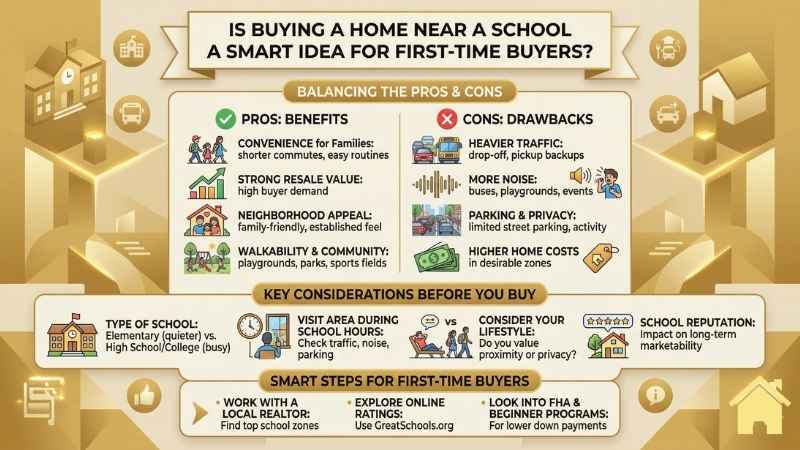
Experts generally agree that homes near desirable schools often attract stronger buyer demand because of their convenience, family appeal, and resale potential. At the same time, buyers should weigh the potential downsides, including traffic during school hours, increased noise, and reduced privacy, depending on how close the home is to the campus. The right choice depends on the type of school, the neighborhood, and how well the location fits your lifestyle and long-term goals.
Why School Location Matters When Buying a Home
When buying a home, the location matters as much as the property itself. A home near a school can shape your daily routine, affect the neighborhood atmosphere, and influence the home’s future resale value. For first-time homebuyers, school location is often an important factor because it can impact convenience today and buyer demand later.
Homes near well-known schools often attract families seeking shorter commutes, walkable neighborhoods, and access to community amenities. Even buyers without children may benefit from choosing a home in a desirable school area because future buyers often place strong value on school location.
At the same time, not every school-adjacent property offers the same experience. Traffic, noise, parking, and privacy can vary depending on the type of school and the neighborhood layout.
That is why school location should be evaluated as part of the full homebuying decision. Considering both the benefits and trade-offs can help buyers choose a home that fits their lifestyle, budget, and long-term plans.
Smart Steps for First-Time Homebuyers Near Schools
Work With a Local Realtor
A good local realtor knows which areas are hot for families. They’ll help you find homes close to schools with rankings that families want, saving you time and energy.
Explore Online Ratings and Maps
Use tools like GreatSchools.org and your local education department’s site to check school ratings and reviews when comparing neighborhoods. They show you test scores and parent reviews side-by-side.
Look Into FHA and Beginner Programs
If your budget is tight, consider FHA loans and first-time buyer programs. They usually have lower down payments and flexible credit, letting you buy sooner in good school zones.
Pros and Cons of Buying a Home Near a School
Buying a home near a school can be a smart choice for many first-time buyers, but it depends on your priorities. The main advantages are convenience, strong resale potential, and access to neighborhoods that often appeal to families. The main drawbacks are heavier traffic during school hours, increased noise, and, in some cases, higher home prices or property taxes.
For some buyers, the benefits will easily outweigh the negatives. For others, privacy, quiet, and easier street access matter more. That is why it is important to visit the neighborhood during school hours and decide whether the location fits your lifestyle and long-term goals.
Wrapping Up Buying by Schools
A home near schools is a smart buy for first-timers. Whether you have kids now or plan to, being near schools means convenience and future resale value. Gustan Cho Associates guides first-time buyers through FHA and conventional loans, so you can confidently buy that school-zone home you love.
Making the Final Decision
Buying a home near a school can be a smart choice if the location matches your lifestyle, budget, and long-term plans. For many buyers, the biggest advantages are convenience, neighborhood appeal, and future resale potential. The most important step is to visit the area during school hours so you can judge the traffic, noise, and overall feel for yourself before making an offer.
If you are planning your first home purchase, focus on choosing a location that works not only for today, but also for your future needs. Gustan Cho Associates can help you explore your mortgage options and prepare with confidence before you buy.
Frequently Asked Questions About Buying a Home Near a School:
Is Buying a Home Near a School a Good Idea?
- Buying a home near a school can be a good idea if you value convenience, long-term resale appeal, and family-friendly surroundings. It may be especially attractive for buyers who want walkability or expect future buyers to care about school access. However, it is still important to weigh traffic, noise, and privacy before making a decision.
Does Living Near a Good School Increase Home Value?
- In many markets, homes in highly rated or desirable school districts attract stronger buyer demand and can have better resale potential. Buyers often place a premium on location, and school district quality is one factor that can influence perceived value.
Are Homes Near Schools More Expensive?
- They often can be, especially when the property is located in a sought-after school district. Higher demand from buyers who want access to those schools can push prices up. That does not mean every home near a school is overpriced, but buyers should compare value, neighborhood activity, and long-term resale potential.
What are the Downsides of Living Near a School?
- The most common drawbacks are heavier traffic during drop-off and pickup times, more street congestion, playground or sports noise, and less privacy if the home is very close to the campus. The impact can vary depending on whether the school is elementary, high school, or college.
Should You Buy a House Based on the School District Even if You Do Not Have Kids?
- It can still make sense because many future buyers do care about school districts. Even if schools are not important to your household today, they may still influence resale value and buyer demand later. School districts can also affect property taxes, so they matter beyond family planning alone.
How Do I Check Which School a Home is Zoned for Before I Buy?
- Start by checking the local school district directly, because boundaries and enrollment rules are set locally and can change. You can also use school boundary tools and school-rating websites as a starting point, but it is best to verify the assigned school with the district before closing.
This article about “Buying a Home Near a School: Smart or Risky?” was updated on April 6th, 2026.
Find the Perfect Home Near Top Schools
Make your first home purchase smarter—choose a location that benefits your family.










The blogs on Gustan Cho Associates are so informative. Like to say thanks to the editorial staff of Gustan Cho Associates and Gina Pogol the managing editor of Gustan Cho Associates for explaining that while living next to a school is great for convenience while your child is attending, it is less great during drop-off and pickup times. My husband and I have started looking for residential properties closer to his office. Since he’ll not want to deal with traffic on the way to work, I will suggest that we look for properties a bit further away from schools.