
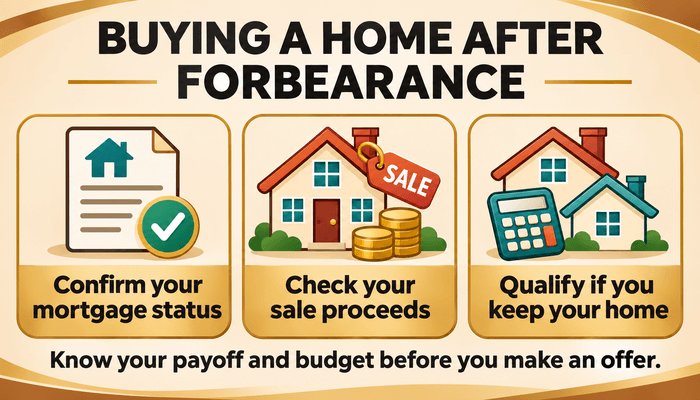
Buying a home after mortgage forbearance is possible. Before you make an offer, find out whether your current mortgage is back on schedule, how the paused payments were handled, and whether you plan to sell or keep your home. A deferred balance or separate lien could reduce the money you receive from a sale. If you keep the home, its payment may affect how much you can borrow. Your loan program and documented mortgage history will determine when you can move forward.
A past forbearance does not tell you how much home you can buy today. For that, you need a clear picture of your current mortgage and a plan for the property it belongs to.
Find Out What Happened to the Paused Payments
Forbearance temporarily reduces or pauses payments. It does not erase them. When your plan ended, you may have caught up, entered a repayment plan, received a payment deferral, or modified your loan. Some FHA borrowers also have a partial claim, which creates a separate balance secured by the home.
Ask your mortgage servicer for your current statement, payment history, and the documents showing how the forbearance was resolved. If you are still in an active plan or are unsure what you owe, get those answers before shopping for another home. The type of mortgage you apply for next matters more than a broad rule about your old loan.
If You Plan to Sell Your Current Home
Find out what you will actually receive at closing, rather than estimating your down payment from the home’s value and your first mortgage balance.
Request a current payoff statement. If you have a payment deferral or partial claim, ask whether it is included in that payoff or requires a separate one. Your title company or closing company should account for every lien, as well as selling costs and other amounts due at closing.
For example, a $350,000 sale with a $240,000 first mortgage payoff, a $20,000 partial claim, and $25,000 in selling costs would leave about $65,000 before any other charges. Planning around $110,000 of apparent equity could leave you short of the cash needed for your next purchase.
The closing dates matter, too. If you need the sale proceeds for your down payment, your new purchase depends on that sale closing in time. If you buy before the old home sells, the payment on that home may affect your qualification. Have your loan officer review both dates before you commit to a purchase contract.
If You Plan to Keep Your Current Home
Tell your loan officer whether the home will remain a second home, become a rental, or serve another purpose. You may need to qualify while carrying both properties, including mortgage payments, taxes, insurance, and any association dues.
If you plan to rent the old home, do not assume the full advertised rent will offset its payment. The amount that can be used to qualify depends on the new loan program and the documents available. Have that calculation reviewed before relying on rent to support an offer.
You should also be clear about how you intend to use the new property. A loan for a new primary residence must reflect a genuine plan to occupy it as your primary home.
Get Preapproved Around Your Actual Plan
A good pre-approval will tell you whether the previous home is being sold or retained. Pass the forbearance and exit documents, a recent mortgage statement, and the payment history your servicer can provide to your loan officer. If you’re selling, then provide the payoff info and any sales contract. If you’re retaining the property as a rental, discuss the rental docs you have or plan to have.
Ask what still needs to be done before you can close. That could be a verified payment history, a completed sale, sufficient funds after all payoffs, or income to support both properties. Understanding your requirements will help you choose an offer and closing date that you can meet.
Prepare for Changes Before Closing
A preapproval is based on the information available at the time it is issued. A delayed sale, a larger-than-expected payoff, or rental income that cannot be used as planned may affect approval.
Keep your loan officer informed as soon as a sale date or payoff amount changes. If the records from your servicer and credit report disagree, request a written payment history and work to resolve the discrepancy early. Those are easier problems to address before you are days away from closing.
FAQs about Buying a Home After Mortgage Forbearance
Does Forbearance Mean My Home was Foreclosed on?
- No. Forbearance is an agreement to temporarily reduce or pause payments. Foreclosure is a separate process. Your loan application will still be reviewed based on your current mortgage status and payment history.
Can I Buy a Second Home After Forbearance?
- Possibly. A second-home purchase has its own qualification and occupancy requirements. Your current housing payment and the proposed second-home payment may both affect the amount you can borrow.
What if a Different Company Now Services My Mortgage?
- Ask your current servicer for a complete payment history and any available records of the forbearance and its resolution. Keep the original agreement and correspondence you received from the prior servicer as well.
Can Gift Funds Help if My Sale Leaves Less Cash Than Expected?
- An eligible gift may help with funds needed for the purchase, depending on the loan program and documentation. It does not change the amount required to pay off liens on the home you sell.
Does Preapproval Guarantee I Can Close Before My Current Home Sells?
- No. Your approval may depend on receiving the sale proceeds or on how the current home’s payment is treated. Make sure your loan officer has reviewed the planned order of both closings before you agree to a date.
Final Thoughts on Buying a Home After Mortgage Forbearance
The first step is to settle the question of your current home: sell it, keep it, or buy before its sale closes. Once you know the payoff, available cash, and payments you must qualify with, you can shop with a more dependable budget. Gustan Cho Associates can review those details with you before you make an offer.
This article about “Buying a Home After Mortgage Forbearance” was updated on November 17th, 2026.
Refinance your mortgage and take control of your financial future today
Apply Now And Get recommendations From Loan Experts