Buying a home involves paperwork, and it can be frustrating when your lender asks for additional documents after you have already sent pay stubs or bank statements. The documents needed for a mortgage help the lender verify your income, assets, debts, and the details of the home you want to buy. Every loan file is different. A W-2 employee may need different paperwork than a self-employed borrower, someone using gift funds, or a buyer selling another home. Knowing what lenders may request before and during underwriting can help you stay organized and avoid delays that could push back your closing date.
Why Lenders Ask for Mortgage Documents
Mortgage lenders require specific documents needed for a mortgage to verify the information provided for your loan approval. This verification process includes details about your income, available funds, monthly debts, identity, employment, and information regarding the home you are purchasing or refinancing. Relying solely on the information in the loan application is not sufficient for the lender.
You will not need every possible mortgage document on the first day. Your loan officer may start with basic items such as pay stubs, bank statements, W-2s, and identification. As underwriting reviews your file, they may request more information based on your income type, recent deposits, credit report, down payment source, or property details.
A follow-up request does not automatically mean there is a problem with your loan. Often, the underwriter needs a clearer paper trail or an updated document before approving the file. Sending complete, readable documents as quickly as possible can help prevent unnecessary delays.
Documents You May Need Before Applying
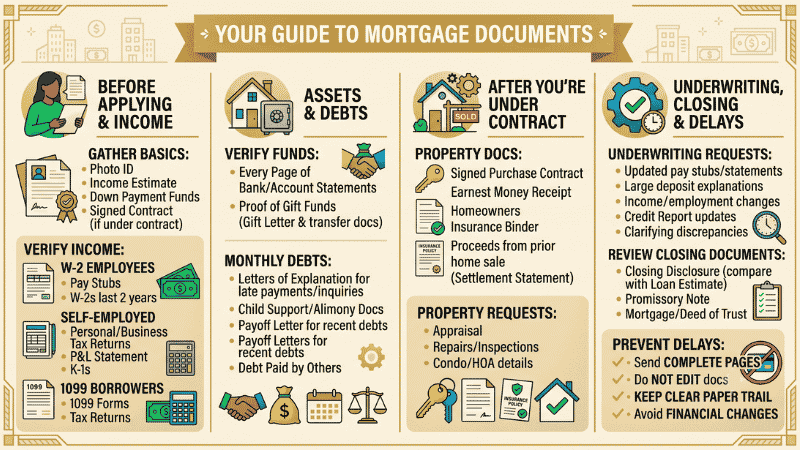
Before you apply for a mortgage, it helps to gather a few basic details about your finances. This may include a government-issued photo ID, a rough estimate of your household income, how much money you have available for a down payment and closing costs, and any information you already have about the home you want to buy. If you are under contract, keep a copy of the signed purchase agreement and earnest-money receipt available for later in the process. You don’t need to have all the documents needed for a mortgage prepared in order to receive a Loan Estimate. For most purchase and refinance loans, a lender must provide a Loan Estimate once they have your name, income, Social Security number, property address, estimated property value, and requested loan amount. The lender is not allowed to request tax returns, pay stubs, bank statements, or a signed purchase contract before issuing the estimate. Once you decide to move forward with a lender and express your intent to proceed, the lender may request documents to verify the information on your application. Having recent pay stubs, W-2s, bank statements, and identification ready can make that next step easier, but the exact documents will depend on your loan program and financial situation.
Income Documents Needed for a Mortgage
Lenders must verify your income sources, the amounts you earn, and the likelihood that that income will continue. The specific documents needed for a mortgage will vary based on your job, payment method, the loan program, and the details provided in your application.
W-2 Employees
W-2 employees are usually required to provide recent pay stubs and W-2 forms from the last two years. Tax returns may also be requested when you have overtime, bonus income, unreimbursed business expenses, multiple jobs, or another situation that needs more review.
Self-Employed Borrowers
Self-employed borrowers may need personal and business tax returns, year-to-date profit-and-loss statements, business bank statements, and K-1 forms for partnerships or S corporations. The exact documents depend on how long you have owned the business, your percentage of ownership, how the business is structured, and the loan program you are using. Not every self-employed borrower will need the same records. Some files require additional documentation because income has changed, the business has seasonal income, or the lender needs to confirm the business is still active.
Commission, Bonus, Rental, Retirement, Social Security, or Disability Income
Borrowers using income beyond a regular base salary may need documents that show the amount received and whether it is expected to continue. This can include pay stubs, W-2s, tax returns, lease agreements, retirement account statements, Social Security award letters, disability award letters, or payment-history records. The lender will review whether the income is stable enough for mortgage qualification. A one-time payment or income that is expected to end soon may not be counted the same way as regular ongoing income.
1099 Borrowers
1099 borrowers may be asked for recent 1099 forms, personal tax returns, and documents showing current income. Depending on the mortgage program, the lender may also request bank statements, a profit-and-loss statement, or other records to confirm the borrower’s income pattern. A 1099 form alone does not always show the full income picture because business expenses may reduce the qualifying income shown on tax returns. Your loan officer can explain which records apply to your situation before you begin the full application process.
Asset and Down Payment Documents
Lenders evaluate the documents needed for a mortgage to ensure you have sufficient funds for the down payment, closing costs, and any necessary reserves. They also need to verify the source of these funds. This process is used to confirm that the money used for your mortgage is both available and properly documented, meeting the requirements of the loan program. You may be asked for recent statements from checking, savings, money market, retirement, or investment accounts. Send every page of a statement, including blank pages when the institution includes them as part of the statement. Do not crop screenshots or send only the first page, as missing pages can lead to an unnecessary follow-up request.
If part of your down payment comes from a gift, the lender may request a gift letter, proof of the donor’s ability to give the money, and documents showing how the funds moved into your account or to the closing agent. Requirements can vary by loan program and the relationship between you and the person giving the gift.
Large or unexplained deposits can also lead to questions during underwriting. A deposit may be acceptable, but the lender may need a clear explanation and documents showing its source. For example, you may need to provide a copy of a check, a sale receipt, a deposit slip, or an account record if the money came from the sale of an asset, a bonus, a gift, or another verified source. It’s important to maintain a clear paper trail when moving money between accounts. Before you transfer funds, deposit cash, or accept a significant gift, consult with your loan officer about the documents needed for a mortgage to ensure that the funds do not cause any delays in your closing process.
Documents for Debts, Credit Questions, and Monthly Obligations
Your credit report serves as an initial reference for the lender, but it might not include every balance, payment, or credit event. When clarification is needed regarding a debt, payment history, or monthly obligation, underwriting may request additional documents needed for a mortgage.
Letters of Explanation
A letter of explanation is usually needed only when the underwriter asks for one. It may be used to clarify a late payment, recent credit inquiry, employment gap, address difference, overdraft, or another item that is unclear from your file. Keep the letter short and factual. Explain what happened, when it happened, and whether the issue has been resolved. Include supporting documents when available.
Child Support and Alimony
If you pay child support or alimony, the lender may request a divorce decree, court order, or separation agreement. These documents help confirm the monthly amount that must be counted in your debt-to-income ratio. If you receive child support or alimony and want to use it as income, the lender may also need documents showing the payments are being received.
Debts That Were Recently Paid Off
A debt that was paid off may still appear on your credit report. The lender may request a payoff letter, an account statement showing a zero balance, or proof that the payment cleared your bank account. Do not assume a debt will be removed from your qualifying ratios until the lender has reviewed the documentation.
Disputed Accounts
If you have disputed an account on your credit report, underwriting may ask for dispute records, creditor correspondence, or an updated credit report. The lender needs to determine whether the account should be included in your monthly debts.
Debts Paid by Someone Else
Sometimes a debt is in your name, but another person makes the payments. This may include a vehicle loan, student loan, or other joint obligation. The lender may request canceled checks, bank statements, or payment-history records to show who has been making the payments. Even when someone else pays the debt, it may still need to be counted depending on the loan program and documentation available. Share the full details with your loan officer early so the lender can determine how to handle the debt.
Property Documents Needed After You Are Under Contract
After your offer is accepted, the lender starts reviewing the documents needed for a mortgage. These documents help verify the purchase terms, your funds for closing, the property’s value, insurance coverage, and the status of the title.
Signed Purchase Contract
Your lender will need a complete copy of the signed purchase contract, including all addenda, disclosures, and changes agreed to by you and the seller. The contract confirms the purchase price, closing date, seller concessions, earnest-money amount, and other terms that may affect your loan.
Earnest Money Documentation
If you paid earnest money, the lender may request a copy of the check, a wire receipt, or a bank record showing that the payment cleared. This helps verify that the funds came from an acceptable source and are properly credited toward your cash-to-close.
Homeowners Insurance
Before closing, you will need homeowners’ insurance that meets the lender’s requirements. Your insurance agent will usually provide an insurance binder or declarations page showing the property address, coverage amount, policy dates, and lender information.
Gift Funds for the Purchase
When using gift money for your down payment or closing costs, lenders may require a gift letter, along with the documents needed for a mortgage, detailing the source and transfer of the funds. The specific documentation will vary based on the loan program and your relationship with the individual giving the gift.
Appraisal and Property Requests
The lender orders the appraisal, but underwriting may request additional property information if the appraisal raises questions. This could include documents about repairs, inspections, permits, condo or homeowners association details, or proof that required repairs were completed.
Title and Closing Items
The title company or closing attorney will review ownership records, liens, taxes, and other title matters. Your lender may request documents if there is an unresolved lien, a name discrepancy, a recent transfer of ownership, or another issue affecting the property’s title.
Documents From a Prior Home Sale
A prior Closing Disclosure, settlement statement, or other sale documents may be requested when proceeds from a home sale are being used for the new purchase. These records help the lender verify where your down payment funds came from and confirm that the prior mortgage was paid off.
Documents Lenders May Request During Underwriting
It’s quite normal for lenders to ask for more documents after you submit your initial paperwork. A new request for documents needed for a mortgage doesn’t necessarily indicate that there’s an issue with your loan. During the underwriting phase, the lender examines the entire file to ensure that the information used for approval is accurate, complete, and consistent.
Updated or Expired Documents
Mortgage documents can expire during the loan process. For example, a pay stub, bank statement, or identification document may no longer be current by the time the underwriter reviews the file. The lender may ask for an updated version before issuing final approval.
Questions About Bank Deposits
An underwriter may ask about a large deposit or transfer that does not match your usual account activity. You may need to provide a deposit slip, a copy of a check, a sale receipt, a gift letter, or other record showing where the funds came from.
Employment or Income Changes
If you changed jobs, received a raise, had your hours reduced, started overtime, or began receiving bonus or commission income, the lender may need updated pay stubs, an employment letter, or other records. The goal is to confirm that the income being used to qualify is still accurate.
Credit Report Updates
A credit account can change while your loan is in process. A new balance, recently paid-off debt, credit inquiry, new account, or disputed item may lead to a follow-up request. The lender may ask for an updated account statement, a payoff letter, a letter of explanation, or proof that the balance was paid.
Information That Does Not Match
Sometimes documents show different addresses, names, dates, account numbers, or income amounts. When this happens, the underwriter may request clarification or supporting records. Responding quickly with complete documents can help keep the file moving toward closing.
Documents to Review Before Closing
The documents needed for a mortgage that you review before closing differ from those requested by your lender during the underwriting process. At this point, the loan is nearing completion, and it’s important to carefully review the final terms, costs, and legal documents before signing.
Closing Disclosure
You need to get the Closing Disclosure at least three business days before closing on most mortgage loans. This document outlines the final loan amount, interest rate, monthly payment, closing costs, cash required at closing, and other key terms. Compare the Closing Disclosure with your earlier Loan Estimate. Contact your lender or closing agent if any fees, payments, or loan terms differ from what you expected.
Promissory Note
The promissory note is your written commitment to pay back the mortgage. It includes the loan amount, interest rate, payment terms, late-payment rules, and what happens if you do not repay the loan as agreed. Review the note carefully to make sure the loan terms match what you accepted.
Mortgage or Deed of Trust
A mortgage or deed of trust gives the lender a claim on your home as security. It explains the lender’s rights if the loan is not repaid and outlines your responsibilities as the borrower. The exact document depends on the state where you are buying or refinancing.
Other Closing Documents
You may also receive title documents, tax forms, escrow disclosures, occupancy affidavits, insurance documents, and state- or transaction-specific forms. Your closing agent or attorney can explain the purpose of each document before you sign. Take time to review the paperwork. Closing day can move quickly, but you should not sign documents you do not understand.
How To Prevent Document Delays Before Closing
Mortgage delays often happen because documents needed for a mortgage are incomplete, unclear, or outdated. Staying organized from the start can reduce avoidable back-and-forth with your lender and underwriter.
Send Complete, Readable Documents
Send every page of each document, even when a page appears blank. Make sure statements, pay stubs, tax returns, and identification are clear and easy to read. Blurry photos, cropped screenshots, and missing pages can lead to another request.
Do Not Edit Your Documents
Do not alter, crop, highlight, or redact account numbers unless your lender specifically tells you to do so. Underwriting may need to see full account details, page numbers, transaction history, and the institution’s name to verify the document.
Keep Records for Large Deposits
Explain large deposits before underwriting asks about them. Keep copies of checks, deposit slips, sale receipts, gift letters, and transfer records so you can show where the money came from. A clear paper trail can prevent a last-minute condition.
Avoid Unnecessary Money Transfers
Moving money between accounts is not always a problem, but it can create questions when the lender cannot trace the funds. Keep records of each transfer, including statements from both accounts, until your loan closes.
Avoid Major Financial Changes
Do not open new credit cards, finance a vehicle, take on new debt, co-sign for someone, or change jobs without first speaking with your loan officer. These changes can affect your credit, debt-to-income ratio, income verification, or final approval.
Ask Before Sending a Guess
Respond quickly when the lender requests a document, but do not send random paperwork and hope it works. Ask what specific document will satisfy the condition, how current it must be, and whether every page is needed. That can prevent extra requests and keep your closing on track.
Keep the Documents Needed for a Mortgage Organized
Mortgage paperwork is easier to manage when you know why the lender is asking for it. Your lender is verifying the information used to approve the loan, not asking for documents to create extra work. Organize all your income, bank, and property records in one location until the loan closes. Submit the complete documents needed for a mortgage promptly when requested, retain proof of significant deposits or transfers, and don’t hesitate to ask questions if any conditions are unclear. Pay attention to details to prevent delays. Keep a clear paper trail to expedite your mortgage process.
Frequently Asked Questions About the Documents Needed for a Mortgage
Does a Mortgage Lender Check Credit Again Before Closing?
Many lenders check for credit changes shortly before closing. An updated credit report, or credit refresh, may show new accounts, higher balances, recent inquiries, or debts not on the first report. Avoid applying for new credit, financing a vehicle, or increasing credit card balances until your loan has closed.
Can You Get a Mortgage Without Tax Returns?
It depends on how you earn income and the loan program. Many W-2 employees can qualify with pay stubs and W-2 forms, although tax returns may still be requested in certain situations. Tax returns are more commonly required for self-employed borrowers and for borrowers with rental, commission, bonus, or other variable income.
Does Receiving a Closing Disclosure Mean You Are Cleared To Close?
Not always. The Closing Disclosure shows the final loan terms and costs, but the lender may still need to complete a final review or satisfy any remaining conditions. Keep your job, income, bank accounts, and credit profile stable until the loan has funded.
What Should I Do If I Find an Error on My Closing Disclosure?
Contact your loan officer or settlement agent right away. Do not wait until the closing appointment if you notice an incorrect loan amount, interest rate, payment, fee, name, or cash-to-close figure. Some errors can be fixed quickly, but others might postpone the closing date.
Can I Refuse To Sign Mortgage Documents at Closing?
Yes. You do not have to sign documents you do not understand or whose terms do not match your agreement. Ask the closing agent or lender to explain the document and correct any mistakes. Keep in mind that refusing to sign may delay the transaction or affect your purchase contract.
Will My Lender Verify My Employment Again Before Closing?
Your lender may verify that you are still employed shortly before closing. This may be done through your employer, a verification service, recent pay stubs, or another approved method. Tell your loan officer immediately if you change jobs, reduce your hours, take leave, or expect any change in income before closing.
Which Mortgage Documents Should I Keep After Closing?
Keep a copy of your Closing Disclosure, promissory note, mortgage or deed of trust, deed, title insurance policy, purchase contract, appraisal, inspection reports, and homeowners’ insurance records. Keep both digital and paper copies in a secure location. You might need them for taxes, refinancing, insurance claims, or when selling your home.
This article about “Documents Needed for a Mortgage: A Simple Buyer’s Checklist” was updated on June 26th, 2026.